How to Create a Garden Entertainment Area That Actually Gets Used

A garden entertainment area works best when it is split into clear zones, built on a hard surface that can handle a crowd, and finished with shelter, lighting and weatherproof furniture that let you use it for most of the year, not just three warm weekends in summer.
The mistake I see most often is homeowners buying a nice table and chairs and calling it done, then wondering why the space feels flat the moment guests arrive. A garden entertainment area is closer to designing a small outdoor room than picking furniture. Here is how to build one that earns its keep.
Start by Zoning the Space
Before you buy anything, decide what the garden actually needs to do. A garden entertaining area that tries to be a dining room, a lounge, a bar and a play area all at once ends up feeling cramped and unfinished, even on a large plot.
Walk out into the garden and stand where you would naturally look from the back door or kitchen window. That sightline usually tells you where the main seating zone should go. From there, split the space into two or three zones rather than one big furniture arrangement:
- A dining zone near the house for easy plate carrying
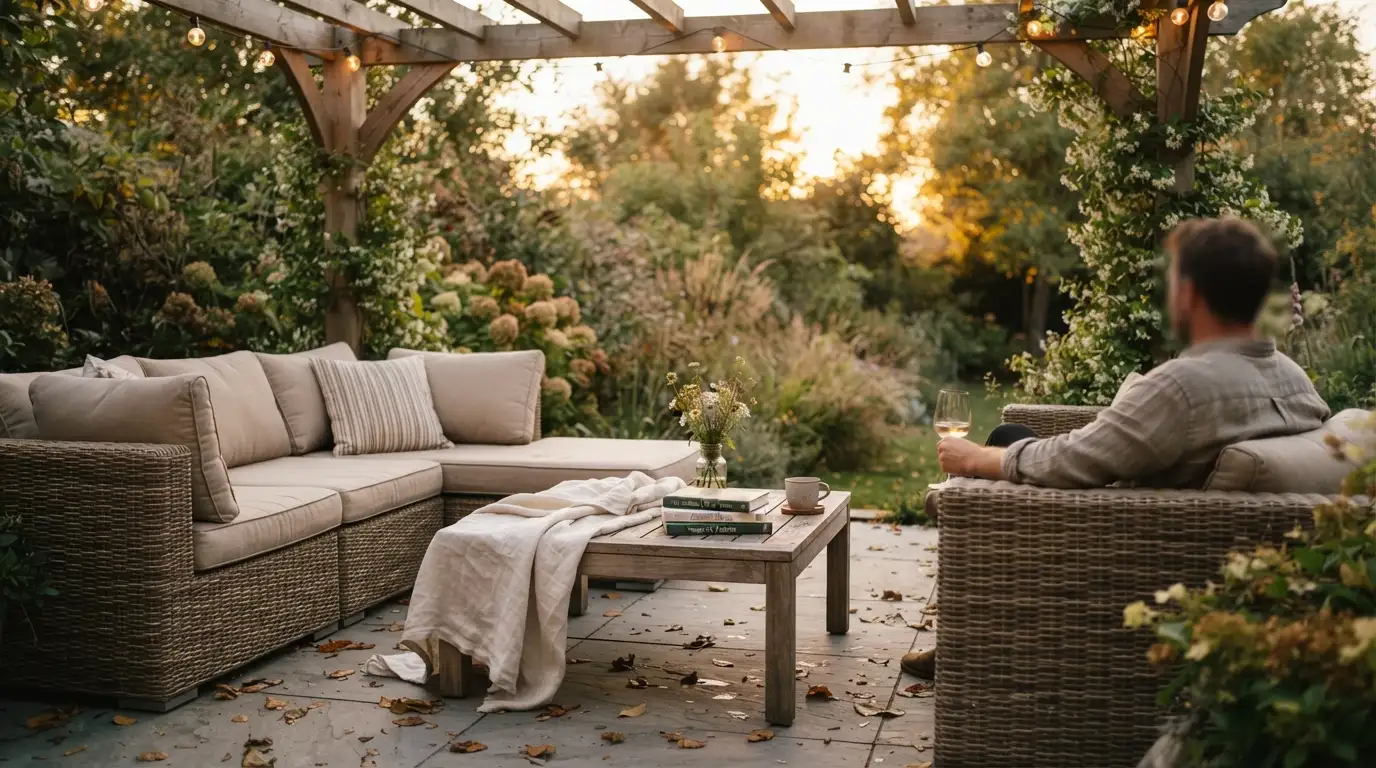
- A lounge zone slightly further out for relaxing after the meal
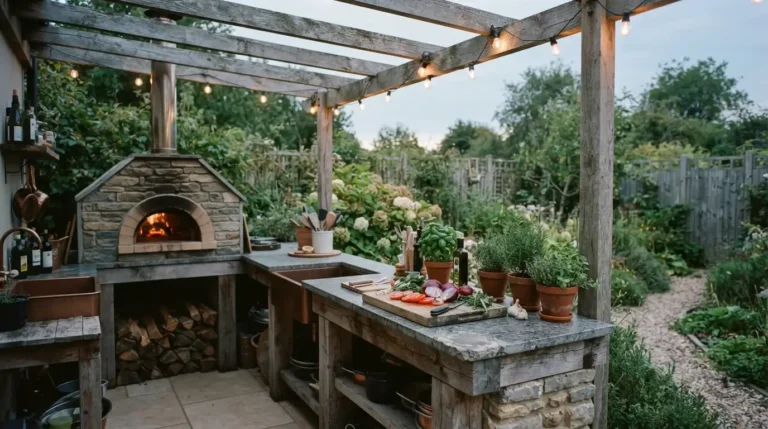
- A cooking or bar zone, if space allows, positioned with some shelter and ventilation
Small gardens can still zone effectively with a change in paving material or a low planted divider rather than a physical wall. The goal is a sense of separate rooms without losing the open, connected feel that makes a garden good for entertaining in the first place.
Choose a Hard Surface That Can Handle a Crowd
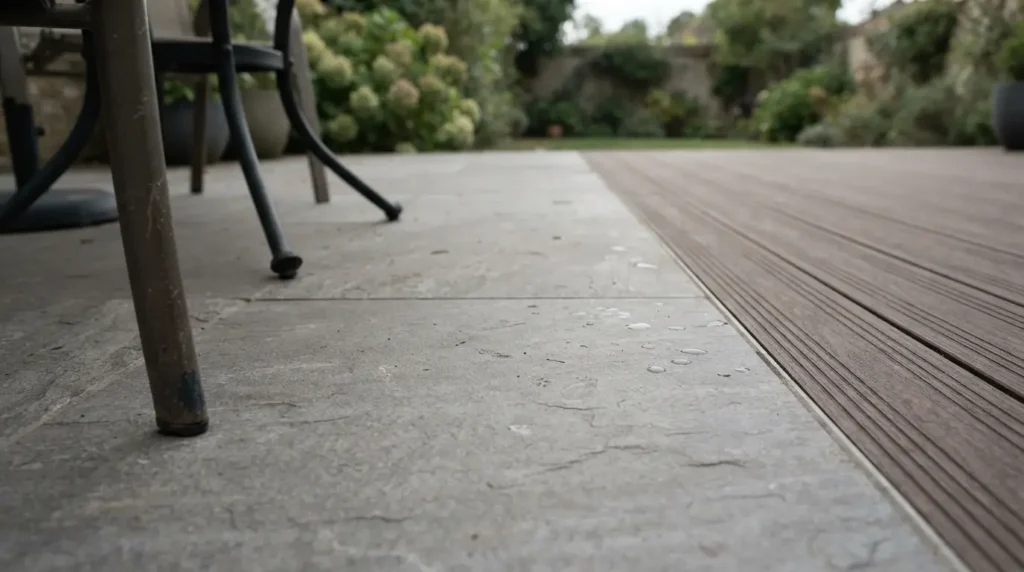
The floor of your garden entertainment area matters more than most homeowners expect, because it has to survive spilled drinks, dragged chairs and muddy shoes at the same time as looking good in photos.
Porcelain paving has become the go to choice in most projects I see, and for good reason. It resists staining better than natural stone, doesn’t need sealing, and comes in large format slabs that reduce the number of grout lines a mop has to fight through. Expect to pay roughly £40 to £90 per square metre for porcelain paving supplied and laid, depending on your region and the finish you choose.
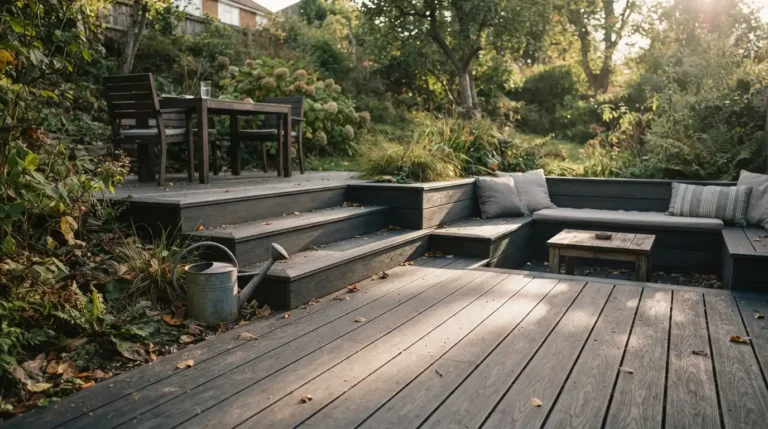
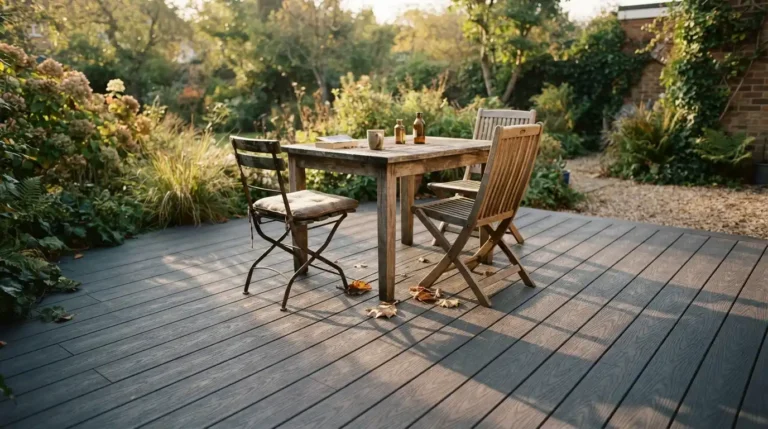
Composite decking is the other common route, particularly where the garden sits above a slope or needs a raised platform. It looks warmer underfoot than stone and needs almost no maintenance beyond an occasional wash, though it does get noticeably hot in direct summer sun, which matters if anyone in the household goes barefoot.
Gravel is the budget option and works well for a lounge or fire pit zone, but it is a poor choice directly under a dining table, since chair legs sink and shift over time. A good rule of thumb is to reserve gravel for areas with lounge furniture and use a solid surface anywhere a table and chairs will live permanently.
Add Shelter With a Pergola, Gazebo or Louvered Roof
Shelter is what turns a garden entertainment area from a fair weather feature into something you use several evenings a week. A basic wooden pergola with a canopy or climbing plants gives dappled shade and a sense of enclosure for under a few hundred pounds in materials if you build it yourself.
Louvered pergolas sit at the premium end of the market. The slats rotate to track the sun or close fully against rain, which is genuinely useful given how unpredictable outdoor entertaining weather can be in most temperate climates. They cost considerably more than a fixed structure, often running into several thousand pounds installed, but homeowners who invest in one consistently report using their garden far more often across the shoulder seasons, not just peak summer.
A simple gazebo is the middle ground. It is faster to install than a permanent structure and can be moved if you change the garden layout later, though the fabric roof will need replacing every few years depending on sun exposure.
Set Up an Outdoor Kitchen or Bar Zone
If the garden has room and the budget stretches to it, a dedicated cooking or bar zone becomes the natural centre of gravity for any gathering. It does not need to be elaborate to work.
A functional outdoor kitchen typically includes:
- A built in gas grill or barbecue
- A side burner for sauces or sides
- Weatherproof storage or cupboards
- A small outdoor fridge
Keep cooking and refrigeration units separated where possible, since both generate heat and need airflow to run efficiently and safely. If you are working with a smaller garden, a simple drinks trolley or a repurposed shed with a serving hatch cut into the side gives you most of the entertaining value of a full outdoor kitchen at a fraction of the cost and footprint.
Choose Furniture That Survives the Weather
This is where most garden entertainment areas quietly fail. Furniture that looks stunning in a showroom photo often can’t handle a full season left outdoors.
Rattan and synthetic wicker sets are popular because they look relaxed and cost less than teak, but cheaper synthetic weave can turn brittle and crack within two or three years if it is not UV stabilised. Ask specifically about UV rating before buying, not just water resistance.
Teak is the material most designers reach for on higher budget projects because it genuinely lasts. Left untreated, it weathers to a soft silver grey rather than rotting, and a light oil treatment once a year keeps the original honey tone if you prefer that look. It costs more up front, often two to three times a comparable rattan set, but it rarely needs replacing.
Modular outdoor sofas have become the standard for lounge zones because they can be reconfigured for different guest numbers, and most 2026 ranges use quick dry foam cushions that won’t hold water the way older foam did. Still bring cushions in or under cover during heavy rain if you want them to last more than a couple of seasons.
Style the Outdoor Coffee Table as the Heart of the Lounge Zone
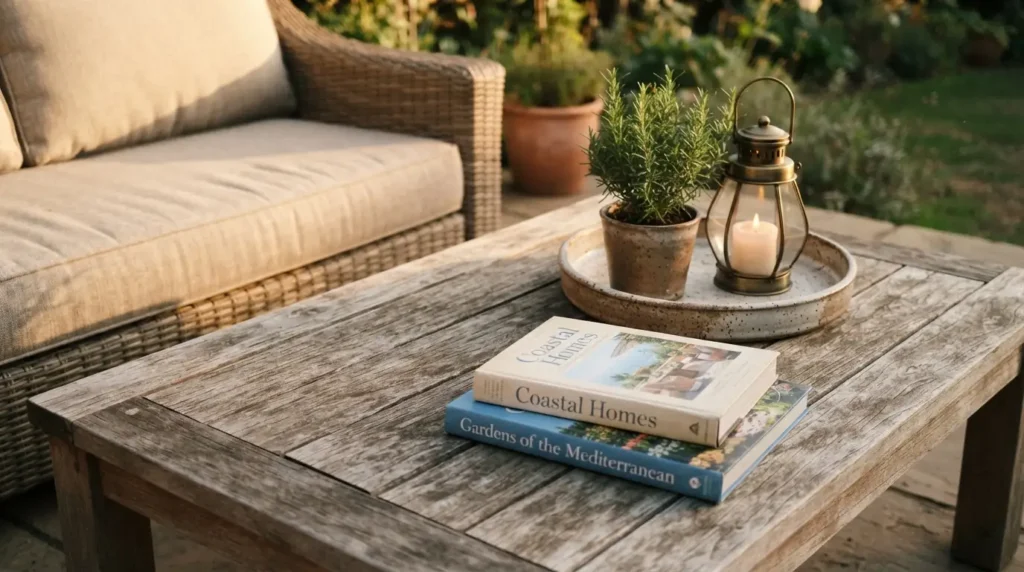
A lounge zone is only as inviting as its coffee table, and outdoor coffee table styling follows most of the same rules as indoor coffee table decor, just with a weatherproof twist.
If you are wondering how to style a coffee table outdoors, the short answer is to layer three elements: a tray to anchor smaller items and stop them blowing away, a stack of one or two coffee table books with weatherproof or laminated covers, and a small planted piece or lantern for height. Avoid overloading the surface. A common mistake is treating an outdoor coffee table like an indoor one and covering it with delicate coffee table accessories that need to be brought in every time it rains.
When decorating a coffee table for a garden lounge, stick to materials that don’t mind the occasional shower, such as ceramic, teak, stone or powder coated metal trays. If you love the idea of coffee table books as part of the display, choose ones you don’t mind ageing slightly, or bring them in overnight and treat them as an evening prop rather than a permanent fixture. This is one of the small details that separates a garden that looks properly styled from one that simply has furniture in it.
Layer Lighting for Evening Use
Lighting is what keeps a garden entertainment area alive after sunset, and layering multiple light sources does far more for atmosphere than one bright overhead fixture.
Combine three layers where possible: warm string lights strung above the main seating zone for overall glow, low level path or step lighting for safety, and a few table lanterns or candles for a softer, personal light closer to where people sit and talk. Solar powered fixtures have improved enough by 2026 that they are a genuinely reasonable option for path lighting, though they still underperform on cloudy winter days compared with a wired low voltage system.
Add a Fire Pit or Fire Table for the Cooler Months
A fire pit or fire table extends the usable season of a garden entertainment area more than almost any other single addition, since it gives people a reason to stay outside once the temperature drops.
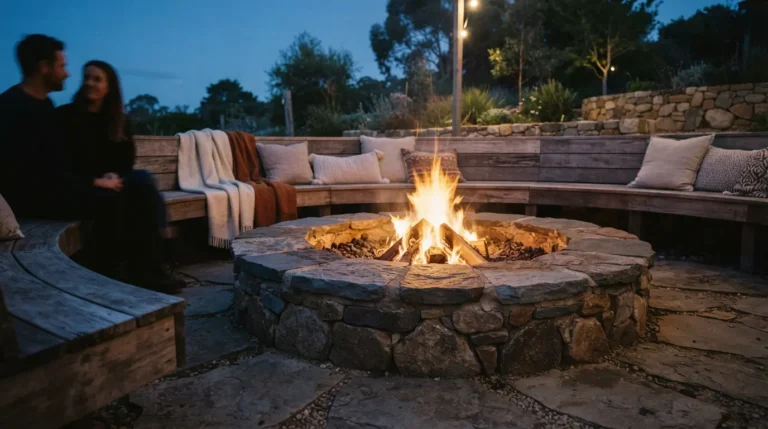
Wood burning fire bowls create the strongest atmosphere and the classic campfire smell, but they need a clear ash disposal routine and a bit more supervision around children and pets. Gas fire tables cost more initially, generally starting from a few hundred pounds for a basic model, but they light instantly, produce no smoke, and double as a stylish table surface when not in use. Whichever you choose, leave enough open space around it for people to move safely, particularly if seating is arranged in a full circle.
How Much Does a Garden Entertainment Area Cost?
| Element | Typical Cost Range (GBP) |
| Porcelain paving, supplied and laid | £40 to £90 per square metre |
| Composite decking | £70 to £150 per square metre |
| Basic wooden pergola (DIY) | £200 to £600 in materials |
| Louvered pergola, installed | £3,000 to £10,000+ |
| Outdoor kitchen module or built unit | £1,500 to £8,000+ |
| Modular rattan sofa set | £600 to £2,500 |
| Teak lounge or dining set | £1,200 to £4,000+ |
| Gas fire table | £300 to £1,200 |
Costs vary significantly by country, supplier and finish, so treat these as a starting point for budgeting rather than a fixed quote. Most homeowners get the best value by phasing the project: hard landscaping and shelter first, furniture and lighting second, and extras like an outdoor kitchen or fire feature once the core space is proven to get used.
Common Mistakes to Avoid
The biggest mistake I see in garden entertainment areas is oversized furniture crammed into a space that can’t accommodate it, which kills circulation and makes even a generous garden feel tight. A close second is skipping shelter entirely and then only using the space a handful of weekends a year.
Cheap, non UV rated furniture is another repeat offender, since it looks identical to the good version in a showroom but fails within a season or two outdoors. Finally, many gardens end up with one bright, harsh light instead of layered lighting, which flattens the atmosphere that makes an entertaining area feel worth sitting in after dark.
Conclusion
A garden entertainment area comes together through layers, not a single big purchase. Start with zoning and a hard surface that can take real use, add shelter and weatherproof furniture, then finish with lighting, a fire feature and a properly styled coffee table to pull the lounge zone together. Build it in that order and you end up with a space that gets used through most of the year, not just packed away after one summer party.
FAQs
How much does it cost to create a garden entertainment area?
A modest setup with paving, basic furniture and lighting can be done from around £2,000 to £5,000, while a fully featured space with a pergola, outdoor kitchen and premium furniture can run well past £15,000. Costs vary widely by country and region.
What is the best flooring for an outdoor entertaining area?
Porcelain paving is the most durable, low maintenance option for dining zones, while composite decking suits raised areas and gravel works well for lounge or fire pit zones only.
Do I need a pergola for a garden entertainment area?
Not strictly, but some form of shelter significantly increases how often the space gets used across the year, since it protects against both sun and light rain.
How do I style a small outdoor coffee table?
Keep it to three layers: a tray for smaller items, a stack of one or two weather tolerant coffee table books, and a small lantern or plant for height, then avoid overloading the surface.
What furniture lasts longest outdoors?
Teak generally outlasts rattan and synthetic wicker by several years if properly UV rated, though it costs more upfront.