What Are French Doors and How Are They Different from Bi-Fold Doors?

French doors are a pair of hinged glass panels that swing open from the centre like a traditional double door, while bi-fold doors are made from several panels that fold and stack concertina-style to one side of the opening. Both connect a room to the garden, but the actual mechanism behind each creates real, practical differences in how much of the opening you can use, what it costs, and which property styles it genuinely suits.
What Are French Doors, Exactly?
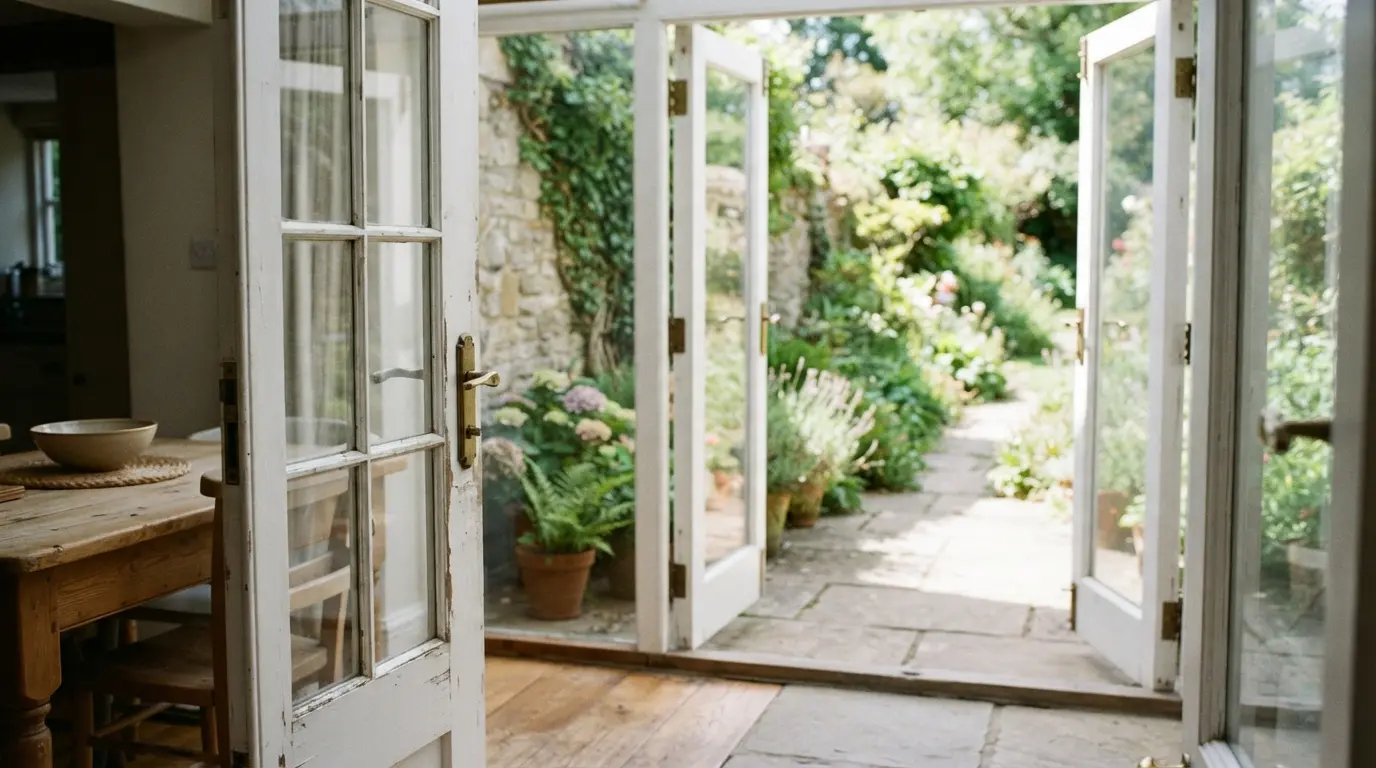
French doors bring a genuinely timeless, classic look to a home, built from two glazed panels hinged at either side of the frame and meeting in the centre when closed. Opening them lets in fresh air and creates a clear, uninterrupted transition between inside and outside, and while they’re often associated with period and traditional properties, the style suits almost any home rather than being restricted to older builds specifically.
How a Bi-Fold Door’s Mechanism Genuinely Differs
A bi-fold door works on a completely different principle, multiple individual panels, sometimes called leaves, connected and hinged so they fold against each other and stack neatly to one side, or occasionally both sides, of the opening. This concertina action lets a bi-fold system span a genuinely large opening, in some installations effectively replacing an entire wall, and the doors can be specified with a low, flush threshold that sits level with the floor for a seamless step between rooms.
Why Material Choice Affects Each Door Type Differently
Both door types are available in aluminium, timber, or uPVC, but the material choice actually interacts differently with each mechanism. Aluminium’s genuine strength is why it’s such a popular choice specifically for bi-fold doors, the material’s rigidity allows for slimmer frame sightlines and larger individual glass panes than a weaker material could support, which matters more here since a bi-fold system has several separate frames all needing to hold their shape under regular folding and stacking. Timber suits French doors particularly well instead, its natural insulating properties and classic appearance reinforcing the traditional, considered look the style is generally chosen for. uPVC works reasonably well across either door type, offering a genuinely cost-effective, low-maintenance option regardless of which mechanism you choose.
How Much of the Opening Actually Gets Used Day to Day
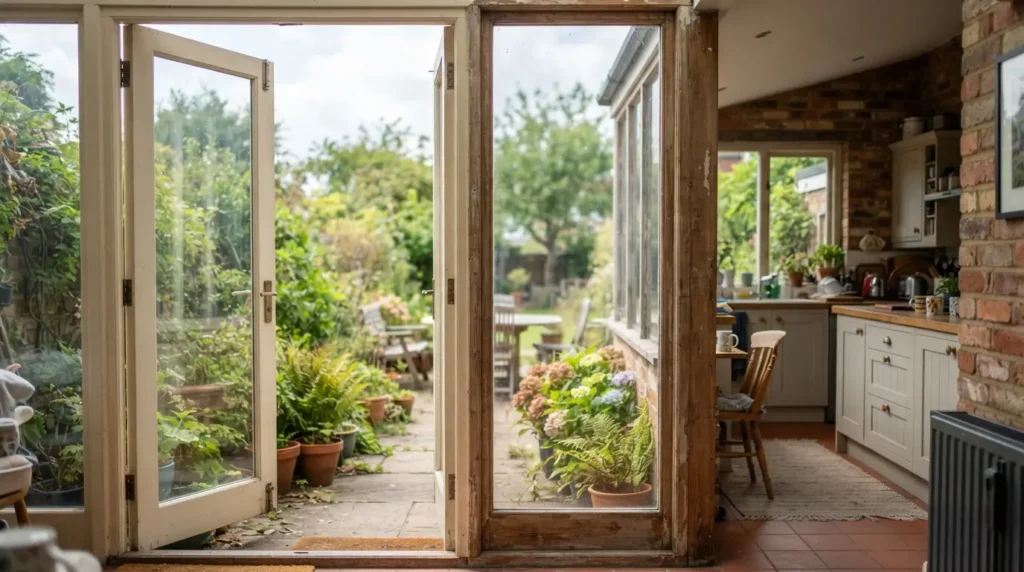
This is worth thinking through honestly before choosing between the two. A bi-fold door’s opening width scales directly with how many panels you specify, a wider bi-fold installation genuinely opens wider, giving you a fully flexible connection to the garden that grows with the size of the opening itself. French doors, by contrast, always open to the width of just two panels, regardless of how wide the overall glazed opening is, since any additional width beyond the two hinged doors is typically made up of fixed glass panels that don’t open at all. This means a bi-fold suits a situation where you want the entire wall to genuinely open up, while French doors suit an opening where a clear, functional double-door width is all you actually need, with any additional glazing there purely for light and view rather than access.
Real Cost Differences Between the Two
French doors are generally the more affordable option of the two, largely because the mechanism itself is simpler, two hinges and two panels, compared with the multiple hinges, running gear, and folding mechanism a bi-fold system needs across several panels. This cost gap tends to widen as the total opening gets larger, since a bigger bi-fold installation means more panels, more hardware, and more moving parts, while a wider French door opening beyond the functional two panels is often achieved with comparatively simpler fixed glazing alongside them.
Which Property Styles Genuinely Suit Each Door Type
French doors carry a genuinely universal appeal, working as comfortably in a period property as they do in a contemporary new-build, which makes them a safer choice if you’re not entirely confident the rest of your home’s style will support a bolder statement. Bi-fold doors lean toward a more modern, desirable aesthetic, and while they suit a newer property naturally, they can also bring a considered contemporary contrast into an older home when that’s genuinely the effect you’re after. Neither is objectively better here, it depends on whether you want the door to blend into your property’s existing character or introduce a deliberate contrast against it.
Security and Weatherproofing Are Comparable Between Both
This is one area where the two door types genuinely don’t differ much. Both are typically secured with multi-point locking systems, hook locks positioned at several points around the frame, and both use toughened glass within rigid frames for genuine structural security. Whichever mechanism you choose, look for the same baseline security specification rather than assuming one door type is inherently safer than the other, the real security comes from the specific locking system and glass specification, not from whether the door folds or swings open.
Final Thoughts
Choosing between French and bi-fold doors really comes down to how much of the opening you genuinely want to use day to day, and how much of a style statement you want the door itself to make. French doors offer a classic, genuinely versatile look at a lower cost with a fixed, functional opening width, while bi-fold doors deliver a fully flexible, wide-opening connection to the garden at a higher price and a more distinctly modern aesthetic. Match the choice to how you’ll actually use the space, not just which looks more striking in a single photo.
FAQs
Are French doors cheaper than bi-fold doors?
Generally yes, since the simpler two-panel, two-hinge mechanism costs less to manufacture and install than a bi-fold system’s multiple panels and folding hardware. This gap tends to widen further as the overall opening size increases.
Can French doors open as wide as bi-fold doors?
No, French doors always open to the width of just two hinged panels regardless of the total glazed opening, while any additional width is usually made up of fixed glazing. Bi-fold doors scale their opening width directly with the number of panels specified, giving genuinely more flexible access to a wide opening.
Do French doors suit a modern house?
Yes, despite their traditional reputation, French doors work well in both period and contemporary properties, making them a genuinely versatile choice regardless of your home’s architectural style.
Which door type has better security?
Neither is inherently more secure than the other. Both typically use multi-point locking systems and toughened glass, so the real security comes down to the specific locking hardware and glass specification you choose, not the door’s opening mechanism.
What’s the main mechanical difference between French and bi-fold doors?
French doors are two hinged panels that swing open from the centre like a traditional double door, while bi-fold doors are multiple panels that fold and stack concertina-style to one side of the opening, allowing a considerably wider functional opening on a larger installation.