12 Dining Room Decor Ideas to Add Character to Your Space

Dining room decor ideas work best when they add genuine character rather than simply filling empty surfaces, since a room can have beautiful furniture and still feel flat without the right layering on top. The 12 ideas below cover the accessories and details worth considering, along with a few honestly functional reasons certain choices work harder than others.
1. A Gallery Wall of Art or Framed Prints for Personality
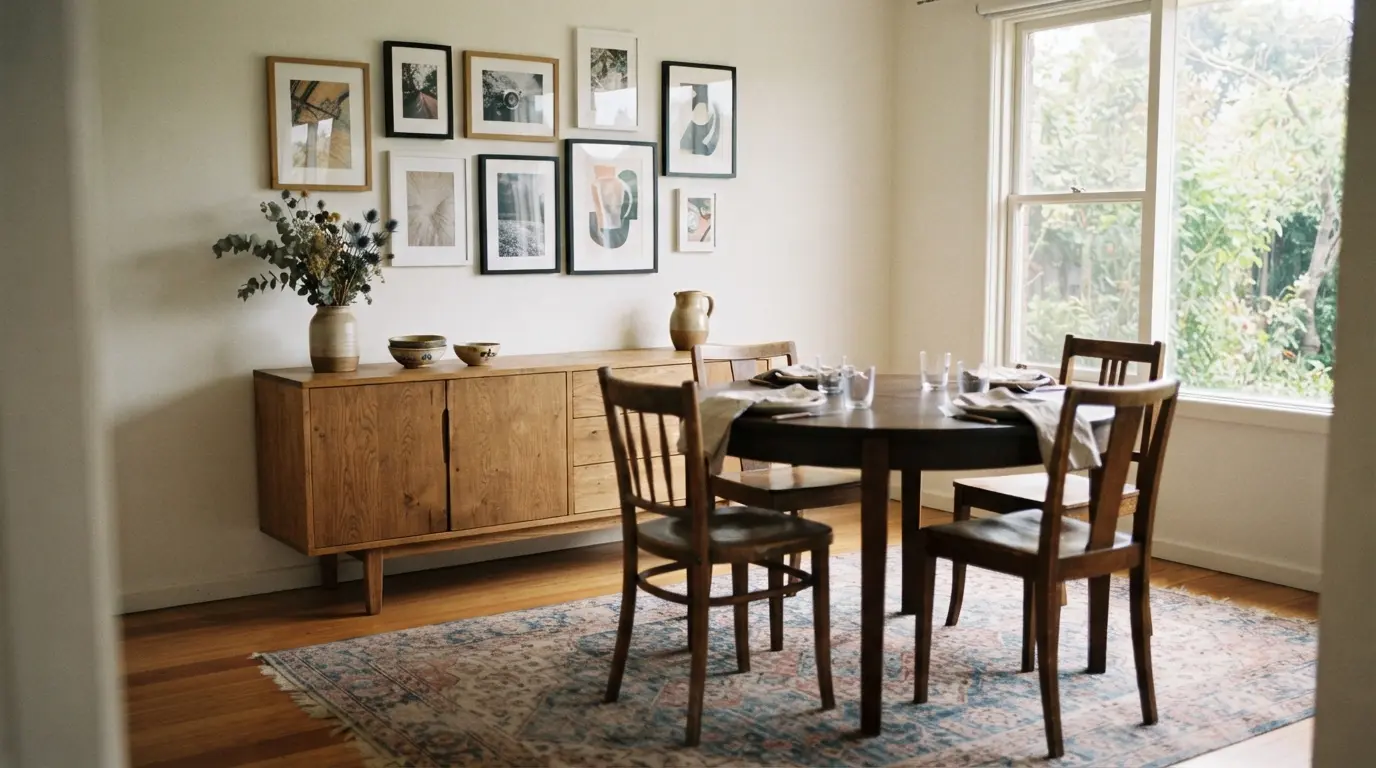
A considered arrangement of art or framed prints brings genuine personality into a dining room, turning a blank wall into something that tells you about the people who live there rather than just filling space. This works particularly well on a wall behind a sideboard or opposite the main seating, somewhere it’s genuinely seen during meals rather than tucked away where nobody looks.
2. A Rug to Anchor and Define the Dining Zone
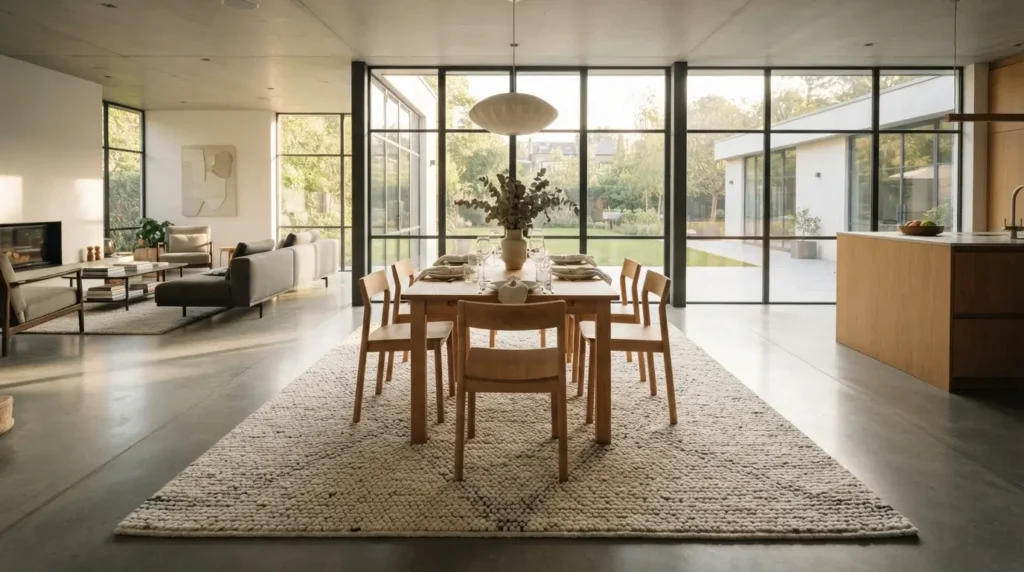
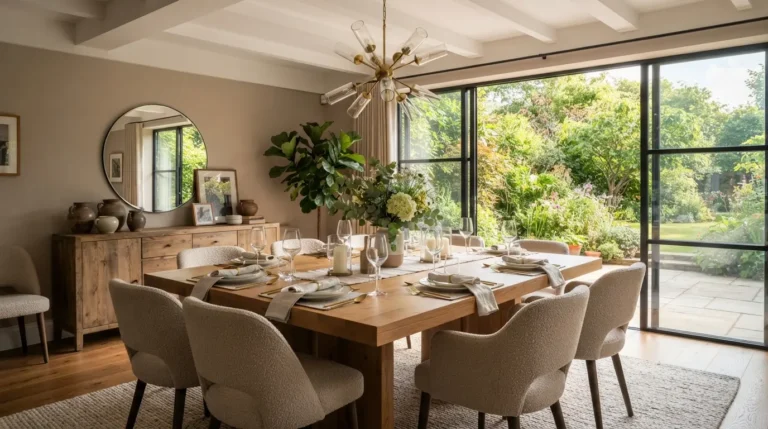
A rug does real functional work beyond simply looking good underfoot, it visually anchors the table and chairs as a defined zone, particularly useful in an open-plan space where the dining area needs to read as its own distinct part of the room. It also genuinely softens the acoustics of a room full of hard surfaces, table, chairs, flooring, taking some of the harsh, echoey edge off conversation during a busy dinner.
3. A Statement Mirror to Bounce Light and Add Depth
A well-placed mirror does two jobs at once: it bounces natural or artificial light around the room, and it creates a genuine sense of added depth and space, particularly valuable in a smaller or darker dining room. Choose one with a considered frame so it doubles as wall decor in its own right, rather than a purely functional piece that adds light but nothing to look at.
4. A Display Cabinet to Showcase Glassware and Ceramics
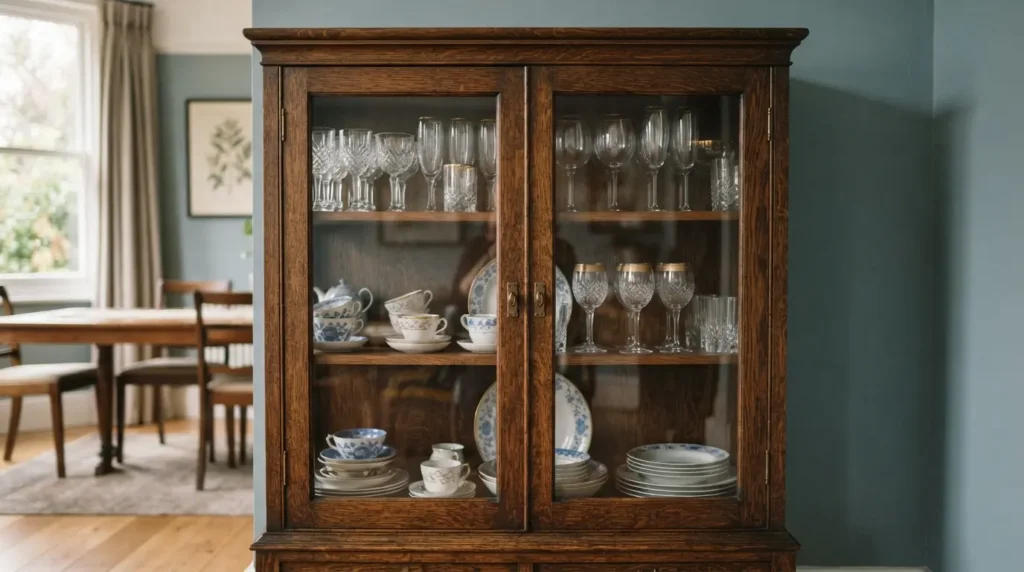
A glass-fronted cabinet or open display unit gives your best glassware, ceramics, or collected pieces somewhere to actually be seen rather than hidden away in a cupboard for years between uses. This adds genuine character to the room while doing real practical work too, keeping everyday storage separate from the pieces you actually want on display.
5. Layer In Textural Curtains or Blinds for Warmth
Curtains or blinds bring genuine softness into a room otherwise dominated by hard surfaces, wood, glass, ceramic, and they’re worth choosing with real texture in mind, a heavier linen or a subtle weave adds considerably more warmth than a flat, smooth fabric. This is a particularly easy layer to update seasonally or as your taste evolves, without needing to touch any of the room’s larger furniture.
6. A Vintage or Antique Piece for Instant Character
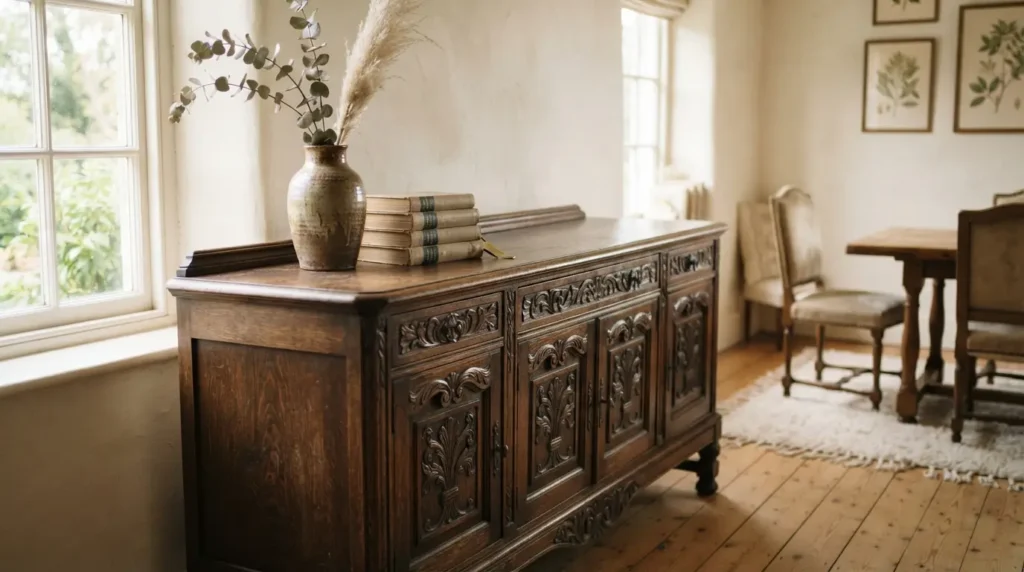
A single genuine vintage or antique find, an old sideboard, a characterful mirror, an interesting light fixture, brings a sense of history and personality that new furniture alone rarely achieves on its own. This doesn’t need to be an expensive investment piece, a well-chosen find from a salvage yard or secondhand source often does more for a room’s character than something bought brand new specifically to look “vintage.”
7. Open Shelving for Curated, Everyday Display
Open shelving gives you a genuinely flexible display space for everyday items, cookbooks, a few considered ceramics, a small plant, that changes and evolves as your collection does. Unlike a fully closed cabinet, open shelving keeps the room feeling lived-in and personal, provided you edit what goes on it rather than letting every item you own end up displayed at once.
8. A Drinks Trolley or Bar Corner for Effortless Entertaining
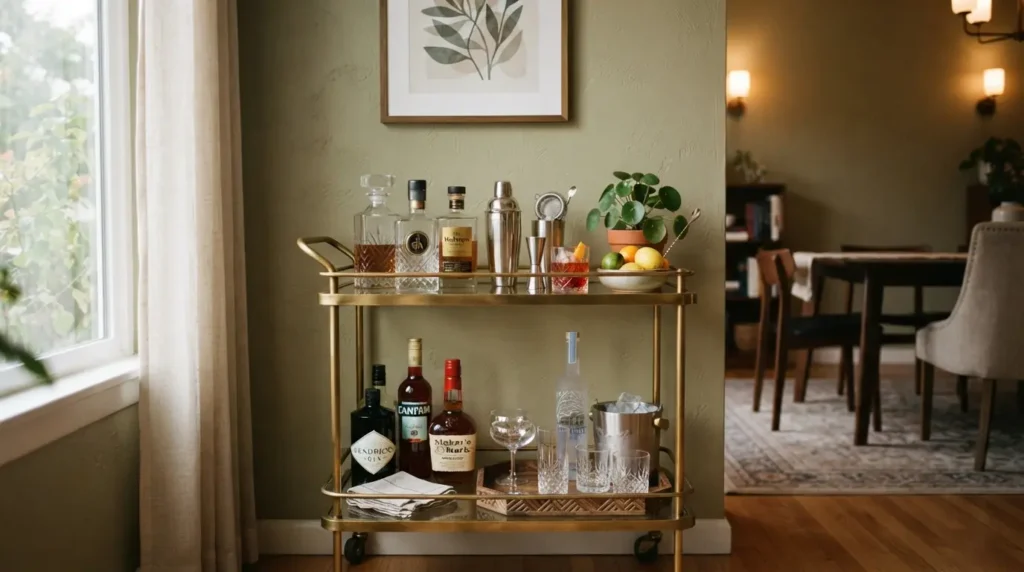
A small drinks trolley or a dedicated bar corner brings genuine function alongside style, giving guests somewhere obvious to help themselves during a dinner party without you needing to keep leaving the table. This is a particularly good addition to a dining room that regularly hosts, since it removes one small but genuine friction point from entertaining.
9. Rotate Accessories Seasonally to Keep the Room Feeling Fresh
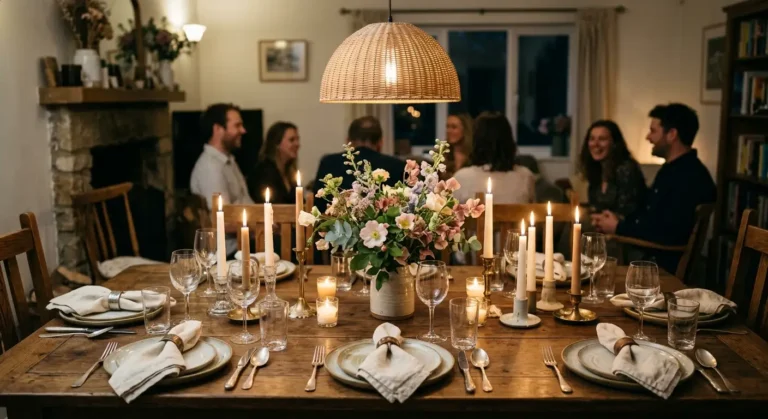
Swapping smaller decorative details, a table runner, cushion covers on dining bench seating, the flowers or foliage on display, with the seasons keeps a dining room feeling genuinely considered rather than static year-round. This is a low-cost way to keep the room feeling fresh without touching any of the larger furniture, and it gives you a natural, recurring reason to reassess and edit what’s currently on display.
10. Layer Textiles Beyond the Table for a Finished Feel
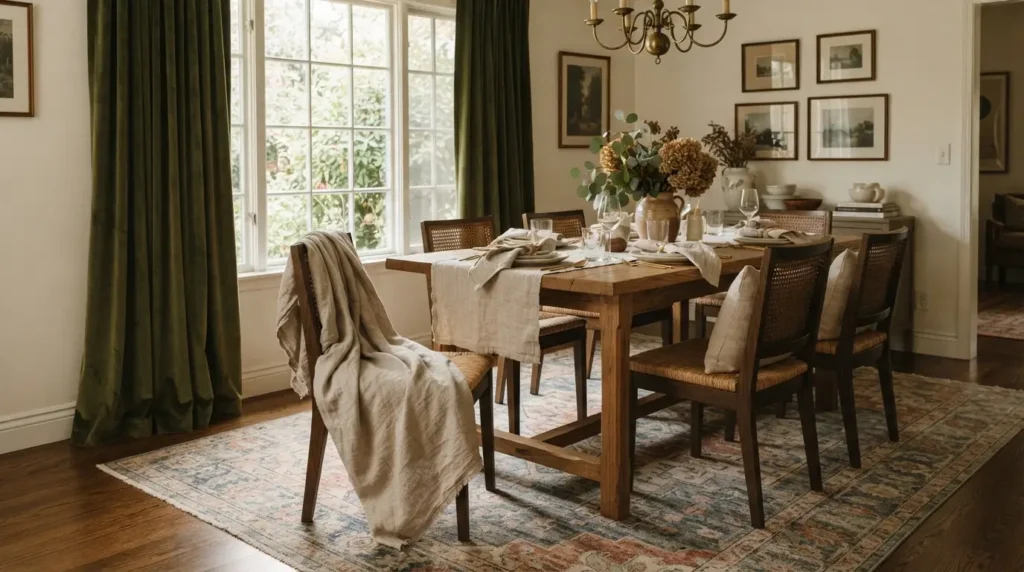
Beyond the table itself, textiles elsewhere in the room genuinely add to the finished feel, a table runner for texture even when the table isn’t formally set, cushions on bench seating if you have it, a considered throw over a nearby chair. These smaller textile layers do real work softening a room that can otherwise feel dominated by hard surfaces and straight lines.
11. A Considered Collection of Objects Rather Than Random Trinkets
This is the detail that separates a genuinely curated dining room from a cluttered one. A handful of objects that relate to each other, in colour, material, or theme, reads as intentional and considered, while a scattering of unrelated trinkets accumulated over time reads as clutter regardless of how nice any individual piece is. Before adding a new decorative object to the room, it’s worth asking honestly whether it actually relates to what’s already there, rather than simply finding it somewhere to sit.
12. Choose Upholstered Chairs for Comfort and Genuine Acoustic Softening
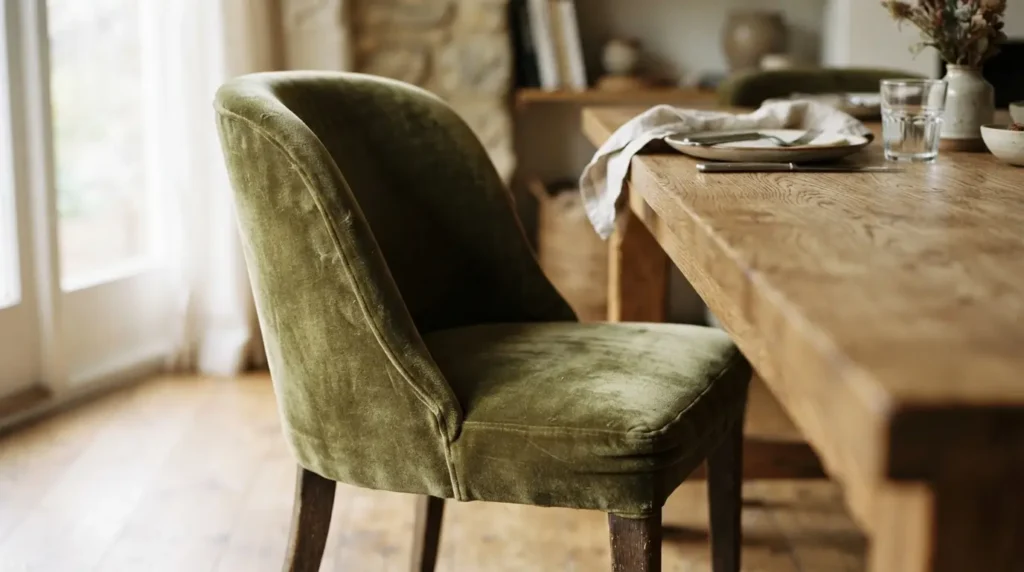
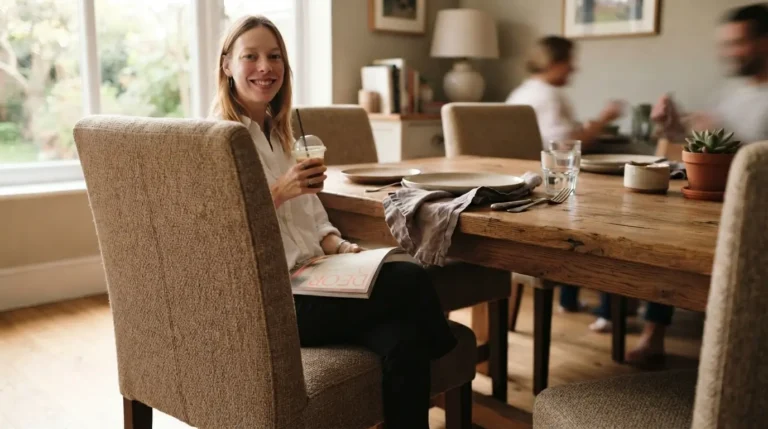
Upholstered dining chairs, in a rich fabric like velvet or a substantial linen, do more than add comfort and visual refinement, the fabric genuinely absorbs some of the sound in a room otherwise filled with hard surfaces, making busy dinners feel calmer and conversation flow more easily than it does in a room full of bare wood and glass. This is worth weighing seriously if your dining room tends to feel loud or echoey during gatherings, since it’s a genuine functional benefit alongside the obvious style upgrade.
Final Thoughts
The best dining room decor ideas add genuine character through considered layering, art, textiles, a curated collection of objects, rather than simply filling every available surface. Choose accessories that relate to each other and to how you actually use the room, and the space will feel considered and personal every day, not just when it’s freshly styled for a photo.
FAQs
What accessories make a dining room feel more finished?
A considered mix of a few key layers, art, a rug, textural curtains, and a small curated collection of objects, does more for a finished feel than any single statement piece alone. The key is choosing accessories that genuinely relate to each other rather than adding items at random.
Does a rug really help in a dining room?
Yes, beyond visually anchoring the table and chairs as a defined zone, a rug genuinely softens the room’s acoustics, taking some of the harsh echo off a space otherwise filled with hard flooring, wood, and glass.
How do I add personality to a plain dining room without a big renovation?
Focus on accessible layers rather than structural changes, art, a statement mirror, a vintage find, open shelving with curated display items. These additions bring genuine character without touching the walls, floor, or larger furniture.
Should dining room decor be seasonal?
It doesn’t need to be, but rotating smaller details, textiles, a table runner, the flowers on display, with the seasons is a low-cost way to keep the room feeling fresh and considered throughout the year rather than static.
Do upholstered chairs actually make a room quieter?
Yes, genuinely. Fabric-upholstered chairs absorb some of the sound that hard surfaces like wood and glass reflect, which can make a noticeable difference to how a busy dinner actually feels and sounds compared with an all-hard-surface room.