15 Armchair Ideas to Complete Your Living Room

The right armchair does more than fill a gap next to the sofa: it adds a second seating personality to the room, whether that’s a quiet reading spot, a bold splash of colour, or a design-led focal point. These 15 armchair ideas cover the styles worth considering and the practical checks, on scale, fabric, and frame, that separate a chair you’ll love in five years from one that looks tired in one.
| Idea | Best For | Cost Tier |
| 1. Wingback | Dedicated reading corners | Mid |
| 2. Eames lounge chair | Design-led, longer-term investment | High |
| 3. Velvet statement chair | Low-traffic, admired-more-than-used spots | Mid |
| 4. Leather club chair | Everyday use, ages well | Mid-High |
| 5. Rattan/wicker | Sunlit corners, natural schemes | Budget-Mid |
| 6. Swivel armchair | Multi-use rooms | Mid |
| 7. Bold pattern/patchwork | Rooms with a calm, neutral base | Budget-Mid |
| 8. Mid-century tapered leg | Small and large rooms alike | Mid |
| 9. Oversized cocoon chair | Maximum comfort, casual rooms | Mid-High |
| 10. Armchair-and-ottoman | Stretched-out lounging | Mid |
| 11. Compact slipper chair | Small rooms, occasional use | Budget-Mid |
| 12. Sculptural shape | One bold focal point | Mid-High |
| 13. Tufted Chesterfield-style | Traditional, transitional interiors | Mid-High |
| 14. Frame-first buying | Any statement piece, before you buy | N/A |
| 15. Reupholstered existing chair | An existing chair with good bones | Budget-Mid |
1. Classic Wingback for a Reading Corner
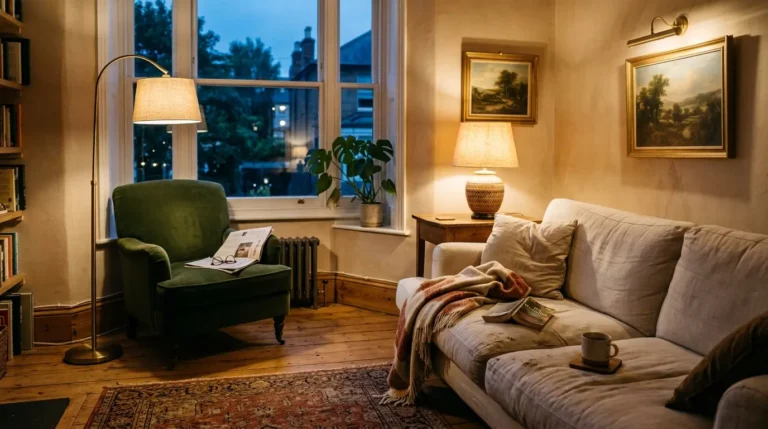
A wingback’s tall sides and high back genuinely block draughts and distraction, which is why it’s stayed a reading-corner staple for centuries rather than just a trend. It needs a bit of ceiling height to look right, a wingback crammed under a low sloped ceiling loses its presence, so measure the space before committing to this shape. Pair it with a floor lamp positioned over the shoulder rather than overhead for actual reading light, and expect to pay a little more than a simpler armchair shape, since the wings and higher back use noticeably more fabric and frame.
2. The Iconic Eames Lounge Chair and Ottoman
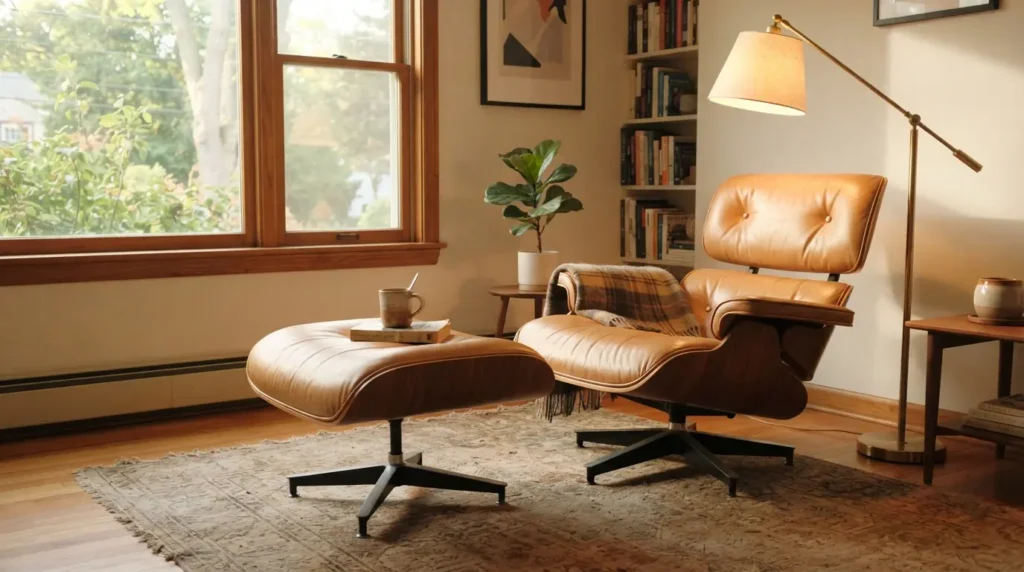
The moulded plywood shell and leather cushions of the Eames lounge chair have shown up in everything from Chicago libraries to Miami reading nooks for a reason: the proportions work in almost any room, traditional or modern. It’s a genuine investment piece, but designers regularly reupholster older or vintage examples in a bold new fabric rather than replacing them, which is often the more interesting and better-value route than buying new if you find one with a sound frame. It’s also one of the few armchairs that genuinely works paired with its matching ottoman as a complete lounging setup, rather than the ottoman feeling like an optional extra.
3. Plush Velvet Statement Chair
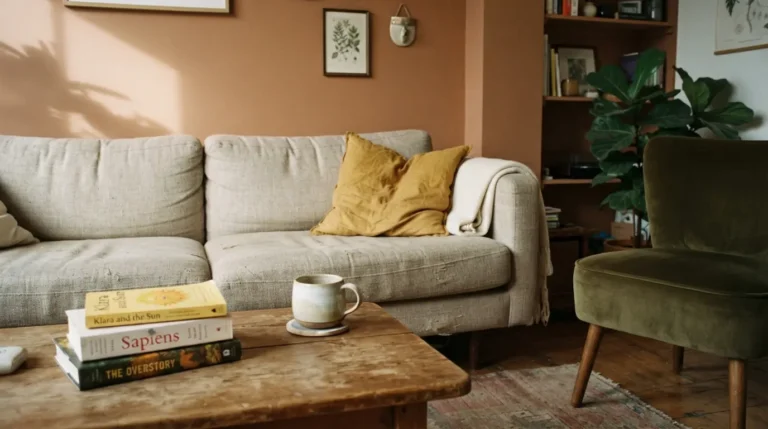
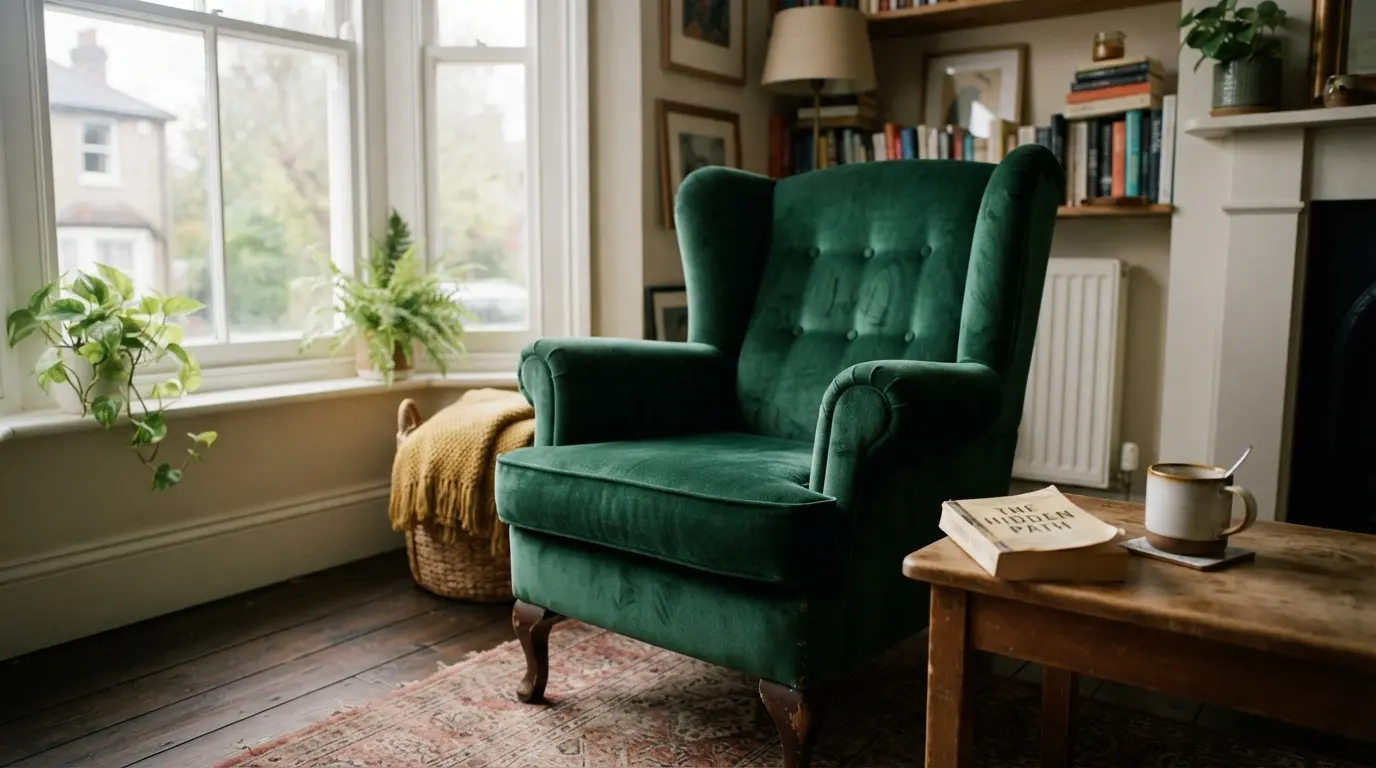
Velvet in a rich jewel tone, emerald, navy, deep plum, adds a depth of colour no other fabric matches, and it catches light in a way that makes even a simple chair look considered. The honest trade-off: velvet shows pressure marks over time and needs regular brushing to stay looking sharp, so it suits a chair that’s admired more than sat in constantly rather than an everyday seat.
4. Leather Club Chair That Ages Well
A leather club chair’s low back and wide arms make it an easy, relaxed seat, and unlike most fabrics, leather actually improves with age, developing a patina rather than just wearing out. It’s a higher upfront cost than fabric, but it wipes clean, resists everyday wear, and rarely needs replacing, so the cost per year of ownership often works out lower than a cheaper chair replaced twice. Full-grain leather costs more than bonded or split leather but develops that patina far more convincingly, so it’s worth asking which grade you’re actually buying before comparing prices between two seemingly similar chairs.
5. Rattan or Wicker for a Sunlit Corner
A woven rattan or wicker frame brings warmth and texture without the visual weight of a fully upholstered chair, and it suits a sunroom or a bright corner especially well. One honest caveat: natural rattan can dry out and turn brittle with prolonged direct sun or constant dry heat, so a spot with good light but not all-day glare keeps it looking right for longer.
6. Swivel Armchair for a Multi-Use Room
A swivel base earns its slightly higher cost in any room that serves more than one purpose, TV watching, conversation, reading, since it saves constantly repositioning a fixed chair. Choose one with a soft, curved shape rather than a boxy silhouette if the room is otherwise fairly traditional, so the swivel mechanism doesn’t feel like the only modern note in the space. Check the swivel action in person if you can; cheaper mechanisms can feel loose or catch after a year of daily turning, while a well-built base stays smooth for the life of the chair.
7. Bold Pattern or Patchwork Statement Piece
A single chair in a striking patchwork or bold print, tweed mixes and multi-fabric patchwork upholstery are a genuine UK design tradition worth borrowing anywhere, reads as an intentional design choice when the rest of the room stays calm. Keep the sofa and walls solid so the one patterned chair actually gets to be the statement, rather than competing with other busy pieces for attention.
8. Mid-Century Tapered-Leg Armchair
Tapered wooden legs and a simple upholstered shell define this style, and its balanced proportions genuinely suit both small and large rooms in a way some bulkier armchairs don’t. Pair it with warm wood tones elsewhere in the room, a coffee table or shelving in a similar finish, so the leg style feels intentional rather than like an odd note against otherwise unrelated furniture. This is also one of the more forgiving styles to buy secondhand, since the simple joinery is easy to check for wobble before you commit.
9. Oversized Cocoon Chair for Ultimate Comfort
An oversized, deep-seated armchair trades a compact footprint for genuine curl-up comfort, and it works best as the one relaxed, casual piece in a room rather than paired with equally large furniture, which can make the whole space feel oversized. Check the seat depth before buying: over roughly 60cm and it starts to feel more like a lounger than a chair for shorter users, so it’s worth sitting in one in person if the chair is meant for daily use rather than occasional lounging.
10. Armchair-and-Ottoman Pairing
Adding a matching or coordinating ottoman turns any armchair into a genuine lounging setup rather than just a seat, and it’s a cheaper upgrade than buying a larger reclining chair to get the same stretched-out comfort. Keep 45-60cm of clearance between the ottoman and any coffee table so the two pieces don’t compete for the same floor space.
11. Compact Slipper Chair for Small Rooms
An armless slipper chair with a slim profile and raised, visible legs keeps a small room feeling open in a way a bulkier armchair can’t, since the floor space visible underneath the chair reads as breathing room. It sacrifices some arm support, so it suits a chair used for shorter stretches, an accent or occasional chair, rather than one meant for hours of daily sitting. Because the frame is smaller, it’s also one of the cheaper ideas on this list to have custom-upholstered if you want a specific fabric without the cost of a full-sized armchair.
12. Sculptural Shape as a Focal Point
A chair with a genuinely unusual silhouette, curved, asymmetrical, sculptural, works as much as an art piece as a seat, and it needs simpler surrounding furniture to actually read as the statement it’s meant to be rather than competing with other bold shapes. Test unusual proportions in person where possible, since an eye-catching shape doesn’t always translate to a genuinely comfortable everyday sit, and factor in that unusual shapes are often harder to reupholster later if the fabric ever needs replacing, since the pattern cutting is more complex than a standard armchair.
13. Tufted Chesterfield-Style Armchair
Deep button-tufted upholstery, in fabric or leather, brings a traditional, structured look that pairs naturally with both classic and transitional interiors. The tufting itself adds real durability, since the buttons hold the padding in place and stop it shifting or sagging unevenly the way a plain cushion can over years of use, which is a genuine practical advantage as well as a style choice. Leather tufted pieces in particular tend to be among the longer-lasting statement chairs on this list, provided the frame underneath matches the quality of the upholstery.
14. Check the Frame Before You Fall for the Fabric
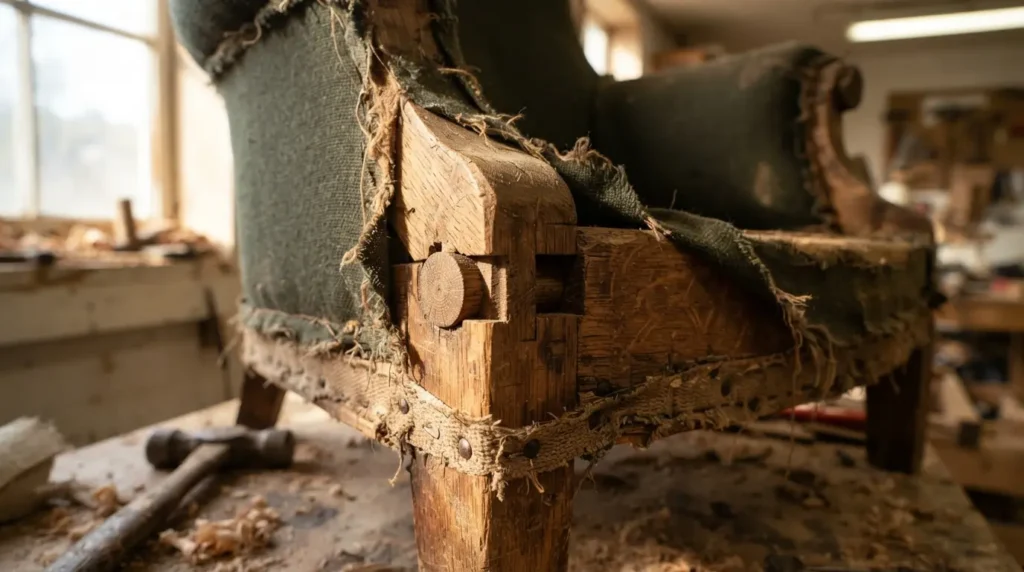
This is the idea most buying guides skip, and it’s the one that actually decides how long any of the chairs above will last: a hardwood frame (beech, oak, or ash) joined with dowels, glue, and screws will outlast a stapled softwood or particleboard frame by a decade or more, regardless of how good the upholstery looks on day one. Ask about frame material and spring type before buying any statement piece, since it’s the one detail you’ll never see again once the fabric is on.
15. Reupholster an Existing Chair for Instant Character
If a chair already in your home has a solid frame and springs with genuine bounce left in them, reupholstering it in a bolder fabric is often cheaper than buying an equivalent new piece, and it delivers more real character than most off-the-shelf options simply because nobody else has that exact chair. Get a quote before choosing the fabric, since labour is usually the larger part of the bill, not the material, so a bolder or pricier fabric than planned often adds relatively little to the total. This is genuinely the most sustainable idea on the list too, since it keeps a well-built frame out of landfill rather than replacing it purely because the fabric has dated.
Final Thoughts
The best armchair ideas balance genuine character with a few practical checks most guides skip: frame quality, honest fabric trade-offs, and how the chair’s scale actually sits against your sofa. Pick the idea that matches how the space really gets used, not just how it looks in a photo, and it’ll still be earning its place in the room in five years rather than looking like a passing phase. Whether that’s a wingback bought for its shape or a tired chair given new life through reupholstery, the same rule holds: check the bones before you fall for the fabric.
FAQs
What is the difference between an armchair and an accent chair?
An armchair is generally built for regular, comfortable daily use with a deeper seat and full arm support. An accent chair prioritises visual character and often suits occasional rather than all-day sitting, though many chairs genuinely serve both roles.
How do I choose the right size armchair for my living room?
Match the chair’s seat height to within a few centimetres of your sofa’s so the room feels level when seated, and leave roughly 45-60cm of walkway clearance around it. Mark the footprint on the floor with tape before buying to see how it actually sits in the space.
Do armchairs need to match the sofa?
No. A deliberate contrast in colour or material, tied together with a shared leg finish or a repeated cushion colour, usually adds more character to a room than an exact match.
What is the best armchair fabric for a home with pets or kids?
Leather and tightly woven performance fabric are the most practical choices, resisting stains, scratches, and daily wear far better than velvet or loose-weave linen.
Is it worth buying a designer chair like the Eames lounge chair?
It’s a genuine investment piece, but the proportions and build quality mean it tends to hold its value and its comfort for decades, and a well-maintained example can often be reupholstered rather than replaced if the style needs refreshing.
How do I know if an armchair frame is good quality?
Ask what the frame is made from, hardwood like beech, oak, or ash with dowelled, glued, and screwed joints is the sign of genuine durability, and check whether it uses sinuous or pocket springs rather than webbing alone.