How to Choose the Right TV Unit for Your Living Room

Choosing the right TV unit starts with the size of your television and the space available in a typical UK living room. A well-chosen unit keeps cables tidy, supports the screen at a comfortable height and leaves clear space for walking. Measure the wall, note any sockets and radiators, then match the unit style to the rest of the furniture. This guide covers practical decisions on dimensions, materials and layout so the unit works for daily use.
Measure the Space and the Television
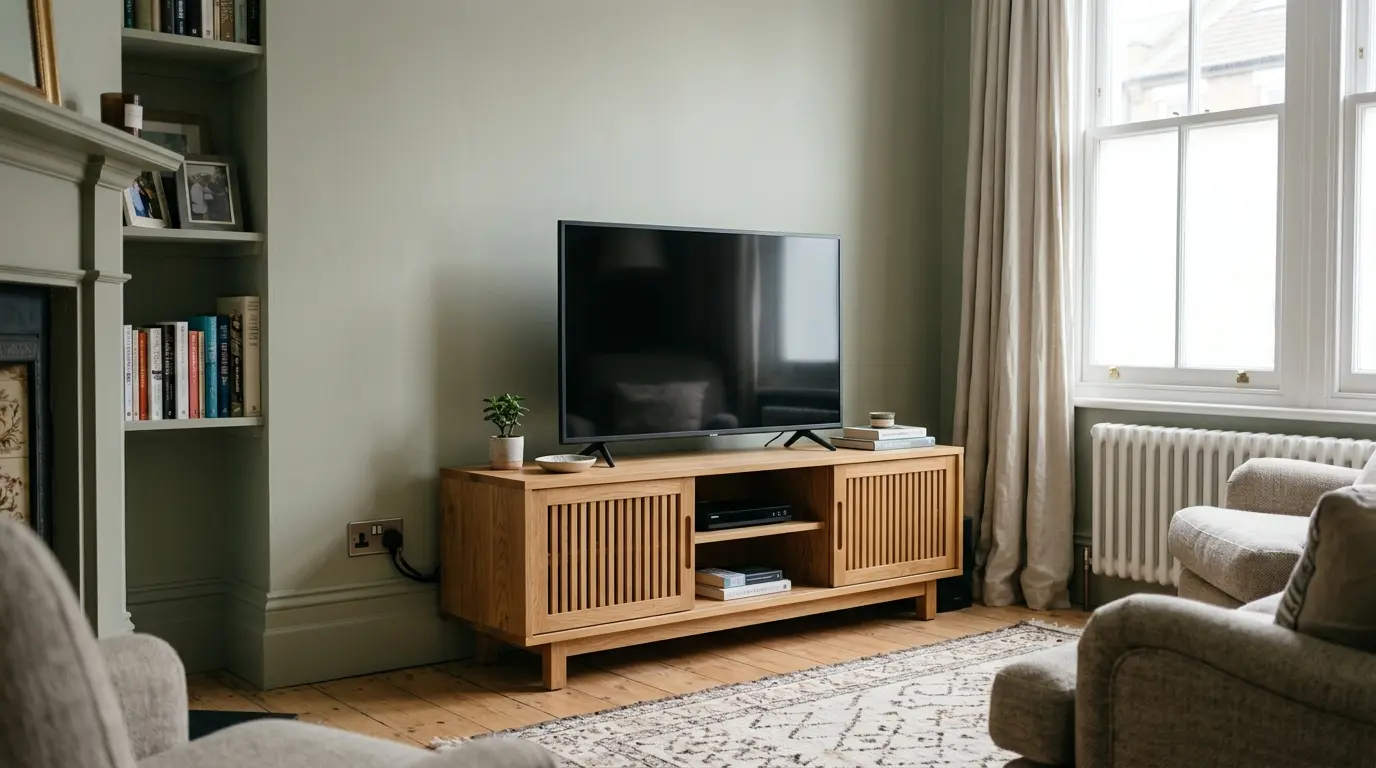
Start by measuring the width of the wall where the TV unit will sit. Leave at least 200 mm clear on each side of the unit so it does not feel cramped against doorways or other furniture. Note the height of the nearest skirting and any radiators that might limit depth. For a standard 55-inch television, a unit around 1400–1600 mm wide usually looks balanced. Larger screens need wider units so the television does not overhang the edges.
Check the viewing height. The centre of the screen should sit roughly at eye level when you are seated on the sofa. Most TV units place the screen between 400 mm and 600 mm from the floor. Measure from the floor to the sofa seat height and add the recommended viewing angle. How to plan the perfect living room layout helps you position the unit relative to seating.
Decide Between Free-Standing and Wall-Mounted Units
Free-standing TV units offer storage and can be moved later if you rearrange the room. They usually need 400–500 mm depth to hold a soundbar and media players. Wall-mounted units free up floor space and work well in smaller living rooms, but they need a solid wall for fixing. Check for pipes or wiring before drilling. Allow 100 mm clearance above a wall-mounted unit if you plan to hang the television directly above it.
Floating TV units look lighter but still need a sturdy bracket. Confirm the weight rating of the wall fixings matches the unit plus the television. In older UK homes, check whether the wall is solid brick or stud before ordering a heavy unit.
Choose Materials That Suit Everyday Use
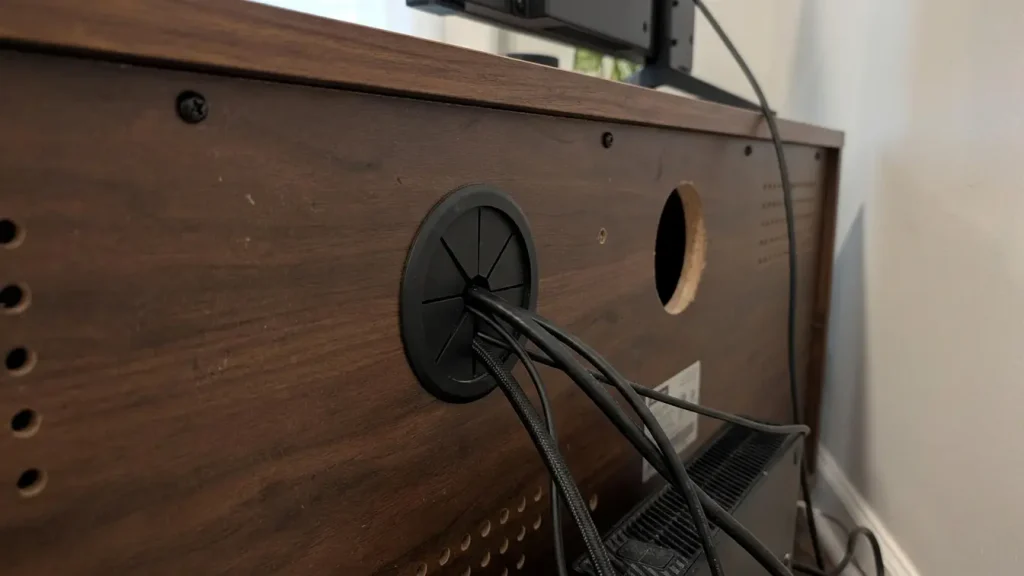
Solid oak or engineered oak TV units handle daily knocks better than thin MDF in high-traffic rooms. Painted MDF is affordable and easy to match to existing furniture, but edges can chip if the unit is used as a seat or step. Look for units with soft-close doors if you have children. Cable management holes or channels keep the area neat; check they align with your wall sockets.
Glass shelves look clean but show fingerprints. Solid shelves hold heavier items more safely. If the unit will hold a soundbar, confirm the shelf height and depth leave enough space without blocking the screen.
Plan Storage and Cable Management
Decide what needs to live in the unit: games consoles, media players, spare cables and remotes. Open shelves make access easier but show clutter. Cupboard doors hide items but need good ventilation if electronics sit inside. Leave at least 50 mm clear space behind closed doors for airflow.
Route cables through grommets or rear channels so they do not hang in front of the unit. Label cables before you tidy them so you can swap devices later without pulling everything apart. A common mistake is ordering a unit with no cable access, then having to drill holes after delivery.
Match Style and Scale to the Room
A low TV unit keeps sight lines open in smaller rooms. Taller media units add storage but can dominate a compact living room. Match the leg height or plinth to your other furniture so the room feels coordinated. In period homes, a traditional wood finish often works better than a high-gloss modern unit.
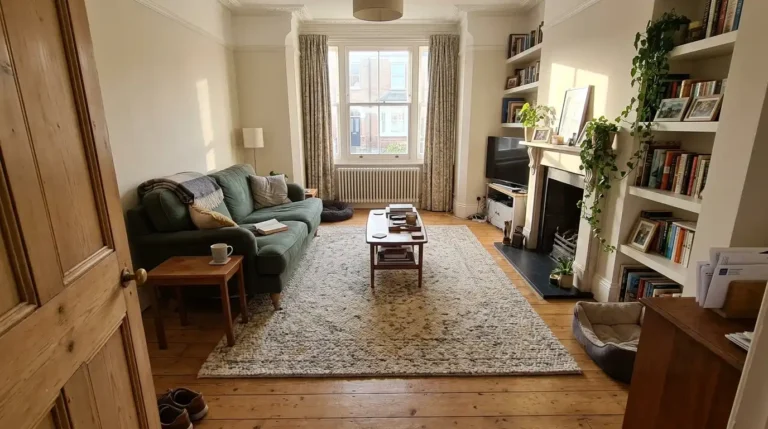
Consider the sofa position. The unit should face the main seating without blocking a doorway or radiator. Leave 900 mm or more between the sofa and the unit for comfortable movement.
Check Delivery and Assembly Before Ordering
Measure the tightest doorway, hallway turn and staircase if the unit is not flat-packed. Many TV units arrive in large boxes that need two people to carry. Confirm whether assembly is included or if you need tools and time. Check the returns policy in case the unit does not fit once assembled.
In terraced houses and flats, access routes are often narrow. A unit that is 1800 mm wide may need to be assembled in the room. Ask the supplier for the packed dimensions and the largest single piece size. If the unit has glass doors, confirm they are toughened and that spares are available if one breaks during delivery.
Lighting and Ventilation Considerations
Electronics inside a closed TV unit generate heat. Leave ventilation gaps or choose units with open backs. Avoid placing the unit directly in front of a radiator, as heat can warp some materials over time. If you plan LED strip lighting under shelves, check that the unit has a cable channel and that the power supply can sit out of sight.
Consider the room’s natural light. A high-gloss finish can reflect window light onto the screen and cause glare. Matte finishes reduce this problem. Test a sample in the actual room if possible before committing to a large unit.
The right TV unit fits the television, the wall space and the way you use the living room every day. Measure carefully, leave clearances for walking and cable access, and choose materials that match the level of wear the room sees. A well-planned unit keeps the screen at a comfortable height and the surrounding area tidy.
FAQs
How wide should a TV unit be for a 55-inch television?
A unit around 1400–1600 mm wide usually suits a 55-inch screen so the television sits fully on the surface without overhanging. Always check the exact television base width against the unit top.
What height should the television sit on a TV unit?
Aim for the centre of the screen at seated eye level. Most units place the screen between 400 mm and 600 mm from the floor, depending on sofa height and viewing distance.
Do I need extra clearance behind a TV unit?
Leave at least 50 mm behind closed doors for ventilation and cable space. Free-standing units often need 20–30 mm from the wall so plugs can sit flush.
Can a wall-mounted TV unit go on a stud wall?
Yes, if you use appropriate fixings that reach the studs or use suitable plasterboard anchors rated for the weight. Check the wall construction before ordering a heavy unit.
What is the best material for a busy living room TV unit?
Solid or engineered oak handles daily use well. Painted MDF is more affordable but can chip on edges. Look for soft-close hinges and a durable finish.
How much space should I leave in front of the TV unit?
Keep at least 900 mm clear between the sofa and the unit so people can sit and stand comfortably without moving furniture.