How to Style a Sofa in Your Living Room Like a Designer

Styling a sofa is the step that turns a functional seat into the focal point of a living room. In UK homes the sofa often has to work hard, so the cushions, throws and artwork above it need to look considered without blocking everyday use. The practical approach is to start with the scale of the cushions relative to the seat, then layer texture and colour that match the light in the room. Done well, the styling feels effortless and still leaves the sofa comfortable to sit on. The difference between a sofa that looks styled and one that looks staged is usually the amount of clear sitting space left in the middle. Taking time to measure cushion sizes against the actual seat depth prevents the most common styling failures.
Start With the Right Cushion Sizes and Arrangement
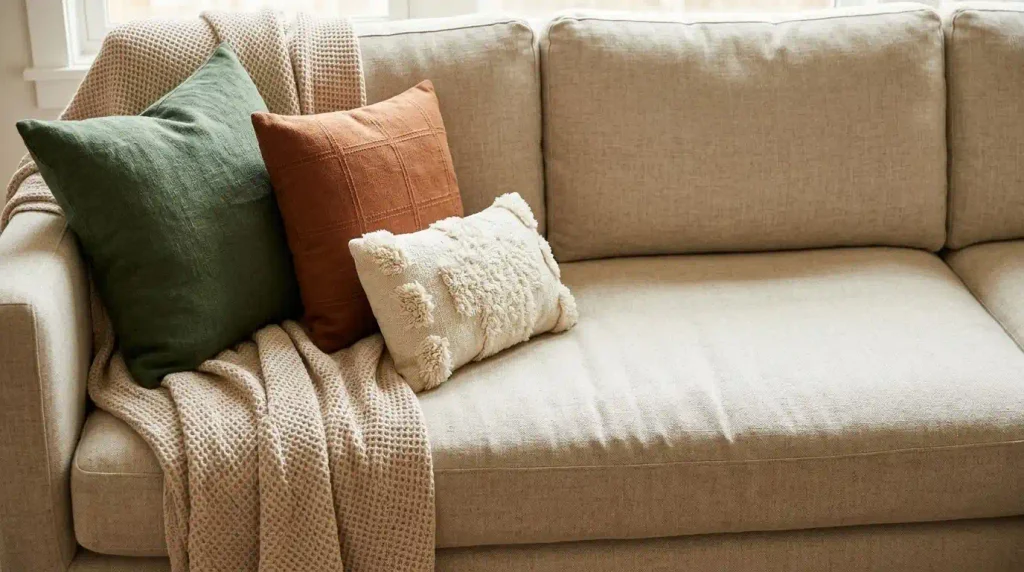
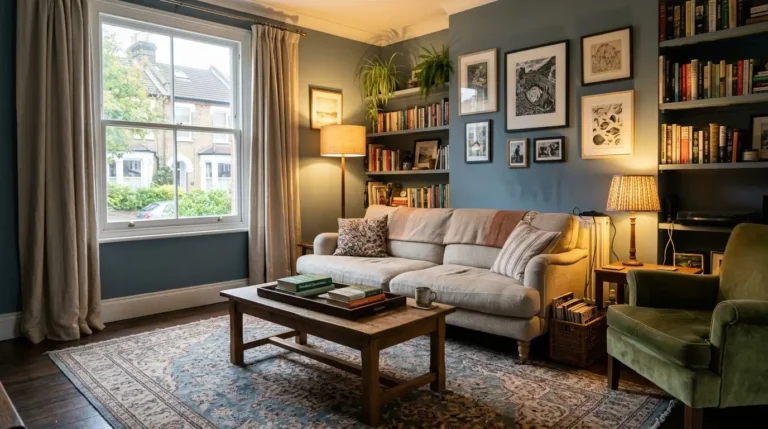
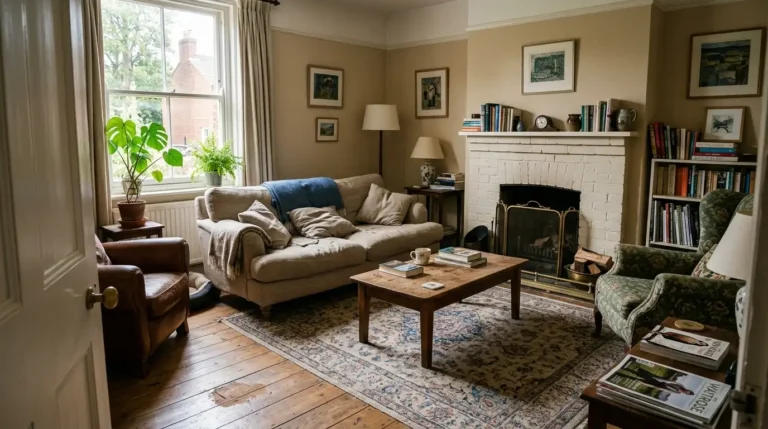
A three-seater sofa usually looks balanced with three or five cushions. Use two larger back cushions of about 50 to 55 cm and then smaller accent cushions in front. Avoid covering the entire seat so there is still room to sit. On a two-seater, two cushions are usually enough. Place the larger cushions against the back and the smaller ones at an angle so they do not fall forward when someone sits down. Check the depth of the seat; deep sofas need longer lumbar cushions so the pillows do not disappear. This arrangement keeps the sofa looking styled without sacrificing the seating space that families actually need. If the sofa has removable covers, choose cushion fabrics that can be washed on a cool cycle so the styling stays practical. Measure the seat width and divide by the number of cushions so each one has room to sit without overlapping too much.
Layer Throws and Textiles for Texture and Warmth
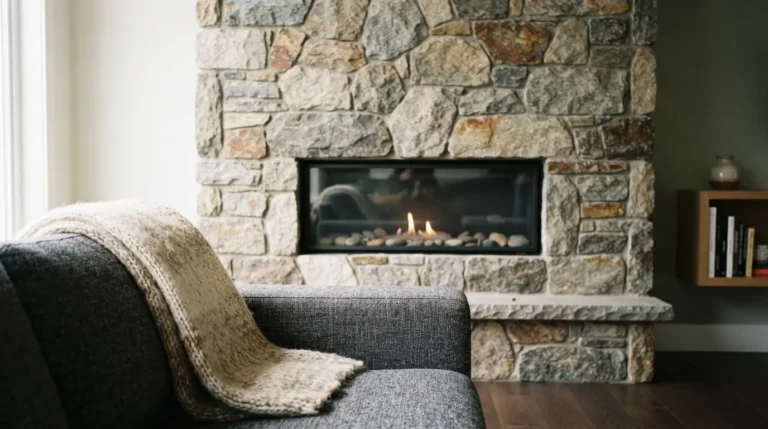
A single throw of about 130 by 170 cm drapes neatly over one arm or the back without looking messy. Choose a fabric that contrasts with the sofa in texture, such as a knitted wool throw on a smooth fabric sofa or a linen throw on leather. In cooler UK homes a heavier throw adds warmth for evening use and can be folded away during the day. Avoid throws that are so large they cover the whole seat. Place the throw so it does not interfere with the cushions or the armrest. This layer adds the softness that makes a sofa feel finished while remaining practical to rearrange when guests arrive. A second lighter throw in a complementary colour can be kept nearby for colder evenings without cluttering the sofa itself. Natural fibres such as wool or linen breathe better than synthetic blankets and look more considered in most British interiors.
Choose Artwork and Wall Treatment Above the Sofa
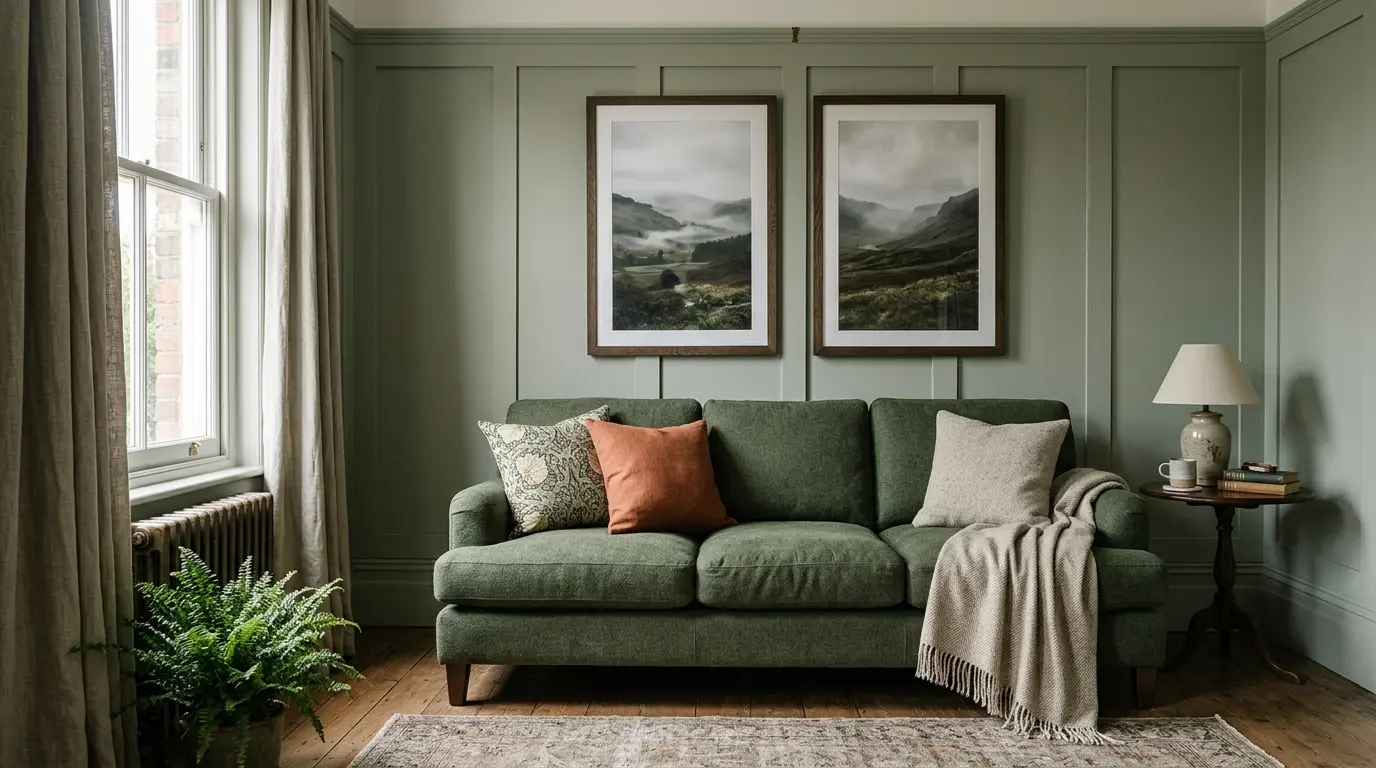
The bottom of any artwork or gallery wall should sit 15 to 25 cm above the top of the sofa back. This gap keeps the pieces visually connected without looking cramped. For a single large picture, centre it above the sofa and make sure it is no wider than two-thirds of the sofa length. A gallery wall of three to five frames works well if the frames share a similar tone or the mats match the cushion colours. Measure the wall height carefully in period homes with picture rails so the arrangement does not clash with the moulding. The right wall treatment draws the eye and makes the sofa feel intentional. Look at how to create a gallery wall for more detailed placement tips that work in British living rooms. In rooms with lower ceilings, keep the artwork lower so the composition does not feel stretched. Always use proper wall fixings rated for the weight of the frames, especially on plasterboard walls common in UK extensions.
Match Colours and Materials to the Rest of the Room
Pull one colour from the existing scheme, such as a cushion that echoes the curtain fabric or a throw that matches the rug. Keep the majority of the sofa styling in neutrals so the sofa does not compete with a feature wall. On leather sofas, soft textiles in linen or wool prevent the seating from looking cold. Check how the colours read in both natural and artificial light; a cushion that looks warm in the shop can look grey under north-facing windows. Test samples against the sofa fabric before you buy a full set. This matching approach keeps the styling coherent without requiring a complete redecoration. If the room already has a strong colour on the walls, choose cushions in a softer version of that colour rather than a contrasting bright shade. Warm metals or natural wood tones in the cushion piping or throw edges can link the sofa to existing furniture such as a side table or coffee table.
Common Styling Mistakes and How to Avoid Them
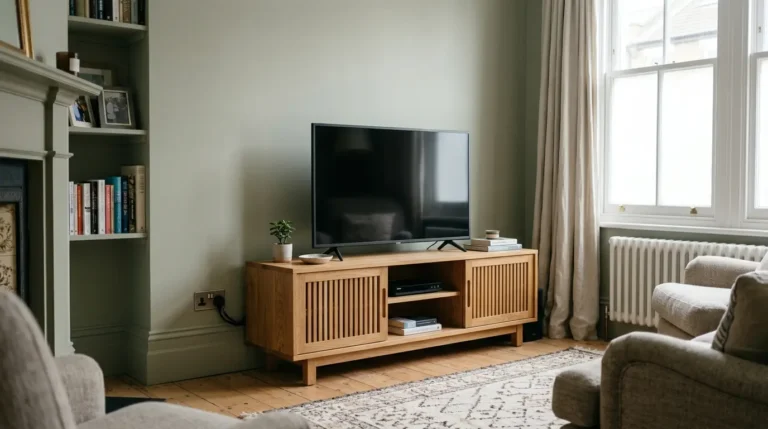
Overloading the sofa with cushions is the most frequent error. Leave enough seat space for people to sit comfortably. Another mistake is hanging artwork too high or too low; the 15 to 25 cm gap above the back is the practical range. Throws that constantly slip off can be fixed by choosing a heavier weight or by tucking one end under a cushion. Avoid matching every cushion exactly; a mix of textures looks more considered. Finally, check that the styling does not block the view of the television or the path past the sofa. These small adjustments keep the sofa looking styled and still usable every day. In small living rooms, limit the number of cushions to three so the sofa does not make the space feel smaller. Always check the clearance in front of the sofa remains at least 40 cm to the coffee table after the cushions and throw are in place.
Conclusion
Styling a sofa like a designer starts with the right cushion scale, a single practical throw and artwork placed at the correct height. Match the colours and textures to the room without covering the seating. Avoid the common mistakes of overcrowding and poor placement. With those steps the sofa becomes the comfortable focal point that holds the living room together. The styling should support how the room is used rather than turning the sofa into a display piece that no one wants to sit on. Regularly checking that the arrangement still leaves clear sitting space keeps the look fresh and functional over time.
FAQs
How many cushions should I put on a three-seater sofa?
Three or five cushions usually look balanced. Use larger ones at the back and leave clear space in the centre of the seat.
How high should artwork hang above a sofa?
Leave 15 to 25 cm between the top of the sofa back and the bottom of the frame or gallery arrangement.
What size throw works best on a sofa?
A throw around 130 by 170 cm drapes over one arm or the back without covering the whole seat.