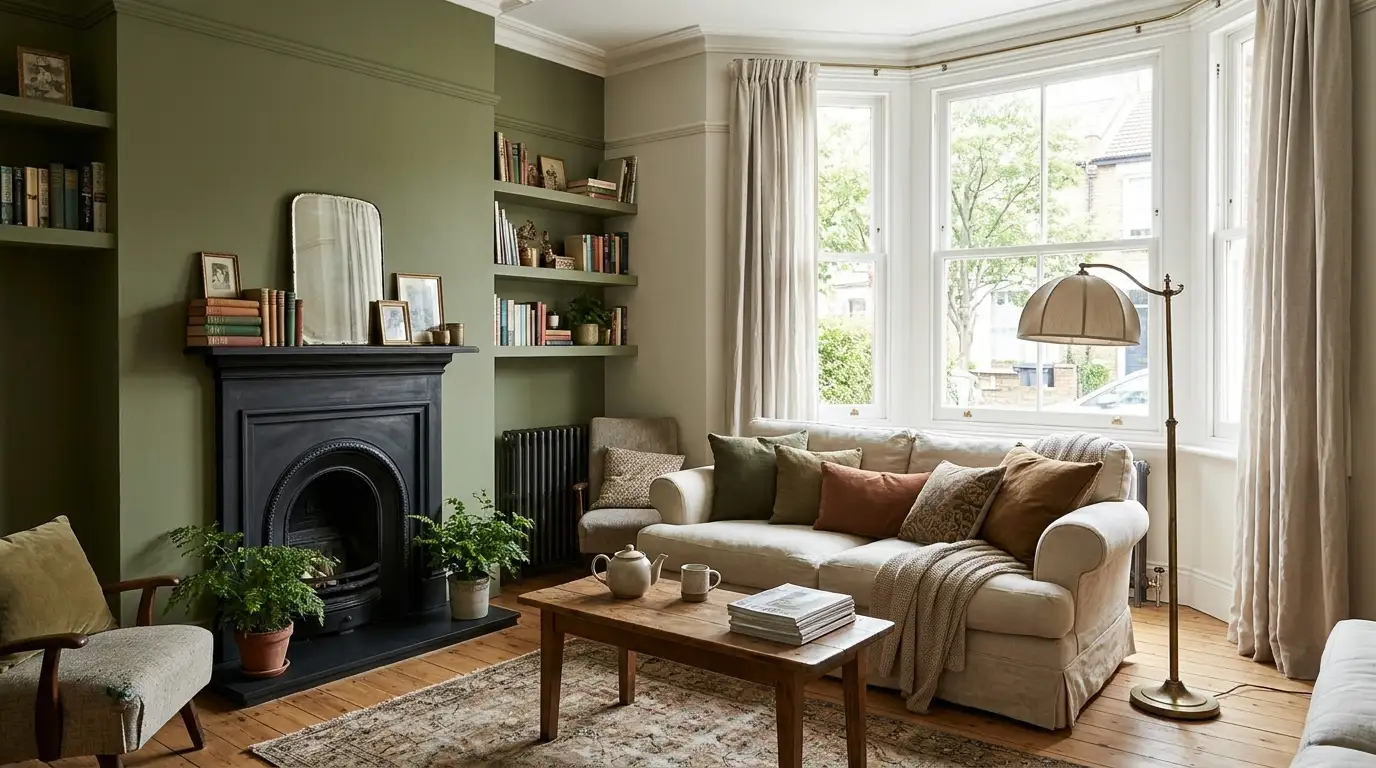
How to Use Green Paint Without Your Home Looking Like a Forest

Green walls can feel fresh and calm, or they can tip into a woodland theme if the shade is too bright or the rest of the room fights it. The difference is usually in the undertone, the amount of green you use, and what you pair it with. Most successful schemes in UK homes use greyed, olive or muddied greens rather than pure leaf colours. They also keep woodwork, flooring and soft furnishings in warm neutrals so the room stays grounded. Follow these steps and you can bring green in without the forest effect.
Choose a Muddied or Greyed Green
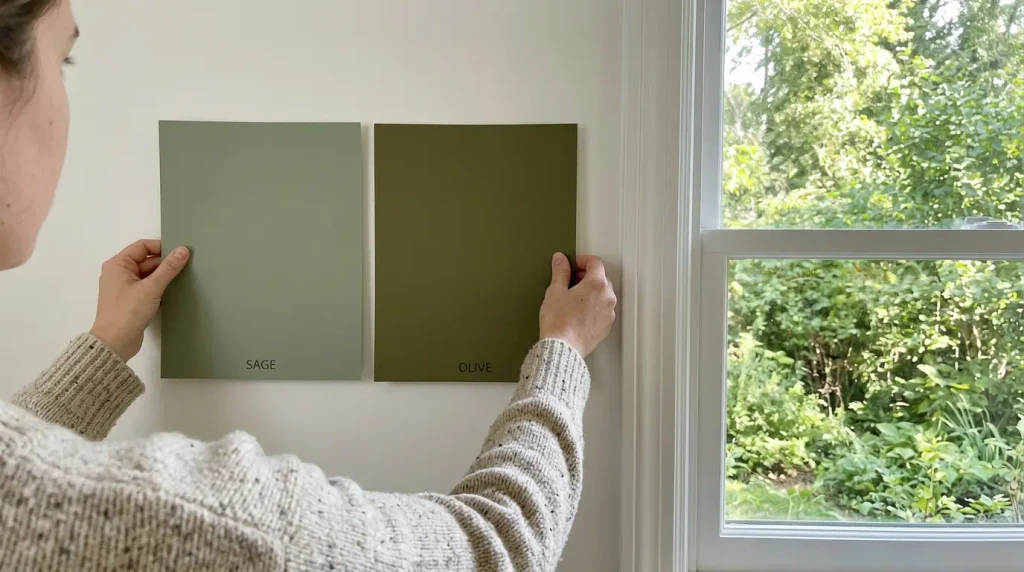
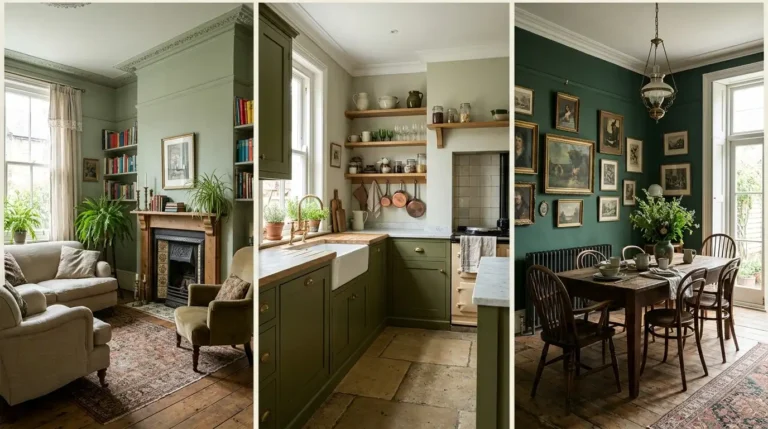
The single biggest mistake is picking a green that matches the grass or the leaves outside the window. Natural light bouncing off real foliage makes a pure green look neon or sickly indoors. Designers recommend going two shades greyer or more olive than the outdoor colour you like. Farrow & Ball’s Calke Green, Lichen and Studio Green are popular because they already contain enough grey or brown to sit quietly. Dulux and Little Greene offer similar mid-tones. Order samples and hold them next to a plant or the view through the window to see the difference.
Check the undertone against your floor. Cool blue-greens clash with warm oak or terracotta. Warmer olive greens work better with wood and brass. If your room has cool grey flooring and cool LED bulbs, add a warm element (oak, brass or a warm textile) or the whole space will feel cold. This is the same principle used in living room colour schemes.
Limit the Area of Strong Green
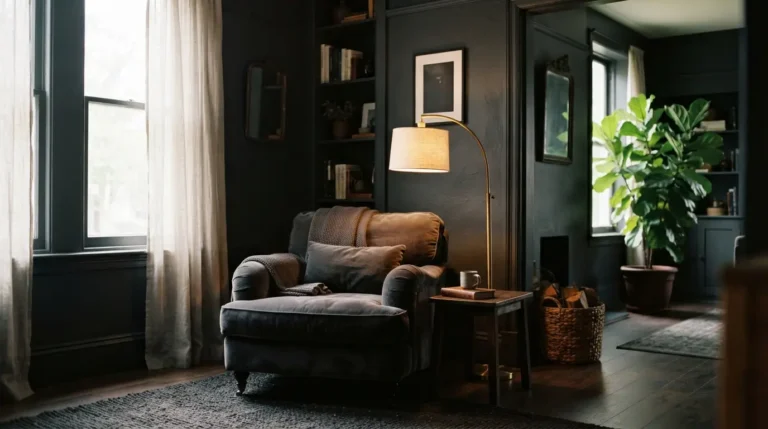
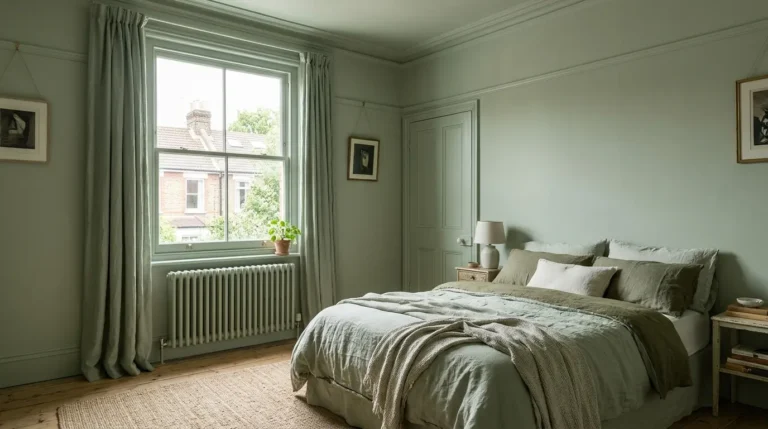
You do not need every wall the same deep green. In a living room, one feature wall or the chimney breast is often enough. In a kitchen, painting the cabinets green and the walls a warm off-white keeps the space light. In a bedroom, the wall behind the bed can take the colour while the other walls stay lighter. For very small rooms such as cloakrooms, wrapping the same colour onto the ceiling and woodwork can actually make the space feel more intentional and less like a green box. See dark paint ideas for similar wrapping techniques.
Measure before you commit. A standard UK living room wall is roughly 3–4 metres wide. Painting only the shorter wall or the alcoves either side of a fireplace keeps the green contained. In open-plan spaces, stop the green at a natural break such as a door frame or a change in ceiling height so the zones stay clear.
Pair With Warm Neutrals and Natural Materials
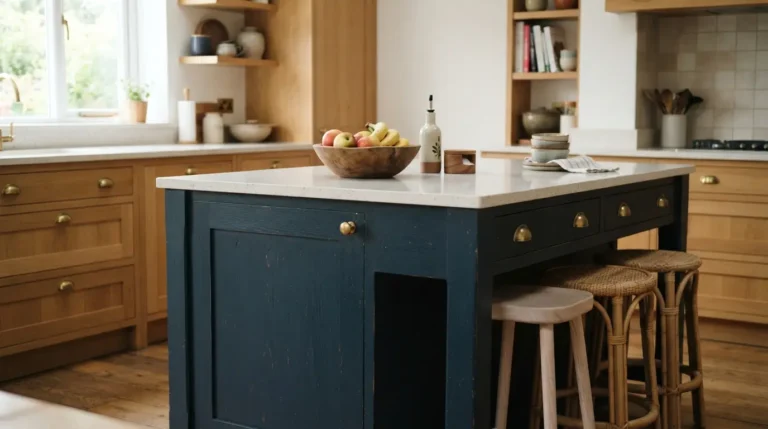
Green looks best next to warm white, soft beige, oat or pale oak. Stark pure white can make some greens look colder; a slightly warm white (many brands call it All White, Wimborne White or equivalent) softens the edge. Brass or unlacquered brass handles and lights pick up the yellow in olive greens. Linen, rattan and wood add texture so the room does not feel flat. Avoid cool chrome and pure grey upholstery unless you deliberately want a sharper look.
Textiles matter. A sage wall with a rust or terracotta cushion, or an olive wall with cream linen, stops the scheme feeling one-note. Plants are fine, but keep them few and well-placed rather than filling every surface. The goal is a room that references nature, not one that tries to recreate it. Many of the best Farrow and Ball greens are shown with exactly these pairings.
Test in Real Light and Finish Correctly
Paint large A3 or bigger cards and move them around the room at morning, midday and evening. North-facing rooms often need a warmer undertone so the green does not go blue. South-facing rooms can take cooler versions. Check the colour next to your flooring, skirting and any fixed stone or tile. Most people need two coats of emulsion; darker greens may need a tinted primer if covering white. Eggshell or satin is the usual wall finish because it is practical and softens the colour slightly.
Woodwork can match the wall or go lighter. Matching everything (walls, skirting, door) in a mid or dark green creates a cocoon effect that works well in small rooms. Leaving the woodwork a warm white gives more definition and is easier to live with in larger spaces. For bathrooms use a moisture-resistant paint even if the colour is the same. Look at bathroom paint ideas for suitable finishes.
Common Mistakes to Avoid
Buying the full tin after only a chip, matching the garden exactly, using a cool green in a cool room with no warm materials, and painting every surface the same bright shade. Another frequent error is ignoring the light reflectance value. Very dark greens absorb light; add lamps with warm bulbs or mirrors if the room feels flat after painting. Also check clearance around furniture: a deep green wall behind a sofa looks better if there is enough space for the sofa not to sit hard against it.
Conclusion
Green paint works when you choose a muddied or olive shade, limit how much of the room it covers, and pair it with warm neutrals and natural materials. Test large samples in your actual light, decide whether woodwork matches or contrasts, and use the right finish for the room. Done this way, green adds calm and depth without turning the house into a forest. It remains one of the most flexible colours for UK homes precisely because it can be tuned to the light and the style of each room.
FAQs
What green paint does not look like a forest?
Greyed sage, olive and muddied mid-greens such as Farrow & Ball Calke Green or Lichen. Avoid bright or pure leaf greens and always test next to real plants and your flooring.
Should I paint the ceiling green too?
In small rooms or when you want a cocoon effect, yes. In larger living areas it is usually better to keep the ceiling a warm white so the green walls stay defined.
How do I stop green looking cold?
Choose a warmer undertone (more yellow or brown), add brass or oak, and use warm white woodwork. Avoid pure cool grey and chrome if the room already has cool light.
Can I use green in a north-facing room?
Yes, but pick a warmer olive or brown-based green and test a large sample. Cool blue-greens often go steely in north light.