How to Paint a Front Door Like a Professional

Painting a front door properly changes the look of the whole house and protects the timber or composite surface from the British weather. A professional finish comes from careful preparation, the right materials for the door type, and painting in the correct order so the surface looks even and lasts for years. Most failures happen because the door was not cleaned and sanded properly or the wrong paint system was used for exterior conditions. This guide covers the practical steps a UK homeowner needs before ordering paint or starting the job, including sizes, clearances, materials and common mistakes.
Check the Door Type and Condition Before You Start
Standard UK front doors measure around 1981 mm high by 762 mm or 838 mm wide, so measure yours first to confirm coverage and any gaps around the frame. A single 750 ml tin of exterior paint usually covers two coats on one face of a standard door, but you will need more for both sides, edges, the frame and any step. Inspect for rot, soft spots or damaged seals before anything else. If the door is composite or uPVC, check the manufacturer guidance because some factory finishes should not be painted over and warranties can be voided. Wooden doors can almost always be refinished if the structure is sound. Look at the hardware too. Removing the letterbox, knocker and handles makes cutting in much cleaner and is the approach most decorators prefer. You can find more general advice on choosing paint systems in our guide to exterior paint options for the home.
Gather the Right Materials and Tools
You need sugar soap for cleaning, medium and fine grit sandpaper (120 grit for bare or rough areas, 180 to 220 for previously painted surfaces), exterior filler, a suitable primer or undercoat, and exterior topcoat formulated for doors. Stick to one manufacturer system so undercoat and topcoat are compatible. Oil based systems still give a harder finish on wood in heavy use areas, but modern water based exterior paints dry faster and yellow less. Good quality synthetic brushes (50 mm angled for detail) and a mini roller for flat panels help. Masking tape, dust sheets and a dust mask are essential. Temperature should stay above 10 °C and below 25 °C with low humidity and no rain forecast for 24 to 48 hours. Spring and early autumn usually give the best conditions in the UK. Coverage figures vary, so check the tin for square metres per litre and calculate both faces plus edges.
Prepare the Surface Properly
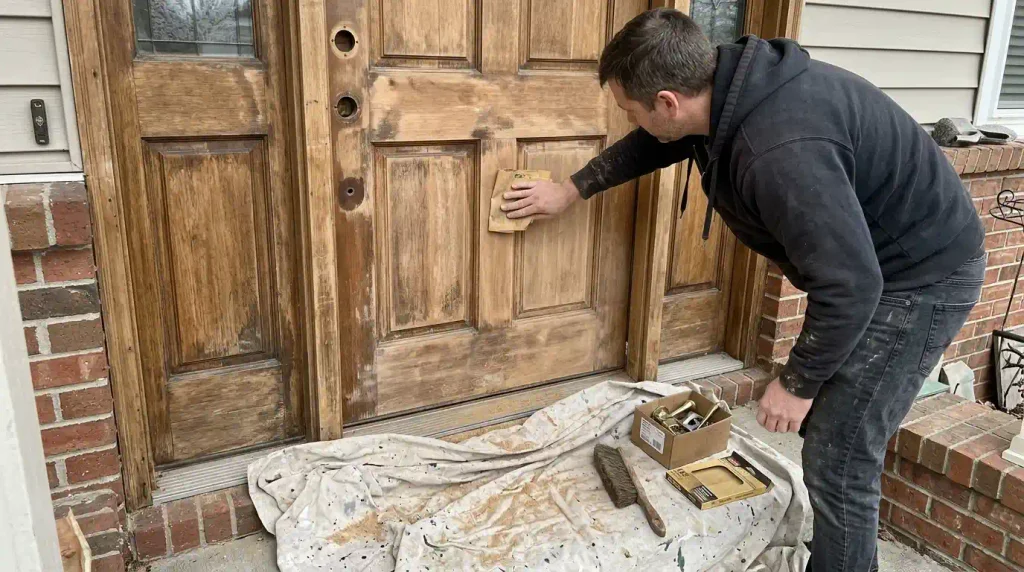
Remove all hardware and clean the door thoroughly with diluted sugar soap, then rinse and let it dry completely. Sand in the direction of the grain to key the surface without removing too much material. Fill any cracks or dents with exterior grade filler and sand smooth once dry. Wipe away all dust with a tack cloth or damp cloth. Prime any bare wood or knots with the recommended primer. Apply two coats of undercoat if the existing colour is very different or the surface is absorbent, sanding lightly between coats. This preparation stage takes longer than the painting itself but is what stops the finish from peeling after one winter. Many people skip the undercoat and regret it when the colour looks patchy or fails to stick. For doors with glass panels, mask the glass carefully or remove beading if possible.
Paint in the Correct Order
Start at the top and work downwards so any runs fall into wet paint you are about to work into. On a panelled door paint the mouldings and panels first, then the centre and side rails, and finish with the stiles, always laying off in the direction of the grain. Use thin coats rather than one thick one to avoid runs and improve adhesion. Allow the manufacturer recommended recoat time, often 4 to 6 hours for water based or 16 to 24 hours for oil based. Two topcoats are standard for durability. Leave the door ajar until touch dry so it does not stick to the frame. Once fully cured, usually after a few days depending on the product, refit the hardware carefully. Check edges and the bottom of the door because these areas wear fastest from weather and foot traffic. A clear exterior varnish or sealer can be added on some systems for extra protection.
Common Mistakes to Avoid
Painting in direct sun or high humidity causes the surface to skin over too quickly and leaves brush marks or orange peel. Using interior paint on an exterior door fails within months because it is not flexible or weather resistant enough. Mixing oil and water based products between coats leads to peeling. Not removing hardware means you will spend more time masking and still get paint on the fittings. Skipping the sanding between coats reduces adhesion. Always test a small area if you are unsure about the existing finish. Do not paint over intumescent seals on fire doors or certification labels. For more on colour choices that work on British houses see our piece on front door colour ideas that boost kerb appeal.
How Much Paint and Time You Actually Need
A standard door has roughly 1.5 square metres per face, so about 3 square metres for both faces plus edges. Most exterior gloss or eggshell covers 12 to 18 square metres per litre, so a 750 ml tin is usually enough for two coats on one door if you are careful. Buy a little extra for the frame and any touch ups. Timeline is typically one day for full preparation and priming, then a second day for topcoats with drying time in between. In cooler UK weather allow longer. Cost for materials is usually under £50 for a good quality system if you already have basic tools.
Conclusion
A professional looking front door paint job is achievable with the right preparation, compatible materials and careful application in suitable weather. Measure your door, check the condition, clean and sand thoroughly, use an exterior system, and apply thin coats in the correct order. The result should last several years and improve the kerb appeal of the house. Once the door is finished you can focus on the surrounding frame and step if they also need attention. Regular cleaning with mild detergent will help the finish last longer.
FAQs
How long does it take to paint a front door properly?
Preparation usually takes half a day and painting another half day if you allow proper drying between coats. Total time is often one to two days depending on the weather and number of coats.
Can I paint a composite or uPVC front door?
Many can be painted with the correct adhesion primer and exterior paint designed for plastics, but check the manufacturer instructions first because some warranties are voided if you paint them.
What is the best time of year to paint a front door in the UK?
Late spring to early autumn gives the most reliable dry mild weather above 10 °C. Avoid midwinter and very hot summer days when paint dries too fast.
Do I need to remove the door from the frame?
No, most people paint the door in place. Removing it makes access to the edges easier but is not necessary if you are careful with the bottom and sides.