12 Kitchen Pendant Light Ideas to Create a Focal Point

Pendant lights over a kitchen island or breakfast bar do two jobs: they light the work surface and they become the first thing people notice when they walk in. The right choice depends on the length of the island, the ceiling height and the style of the cabinets. These twelve ideas cover the shapes, materials and arrangements that work reliably in UK kitchens.
Before choosing a style, fix the height and spacing. The bottom of the shade should sit 750–900 mm above the worktop and multiple pendants should be spaced 600–800 mm apart.
1. Clear Glass Globes for Open Sightlines
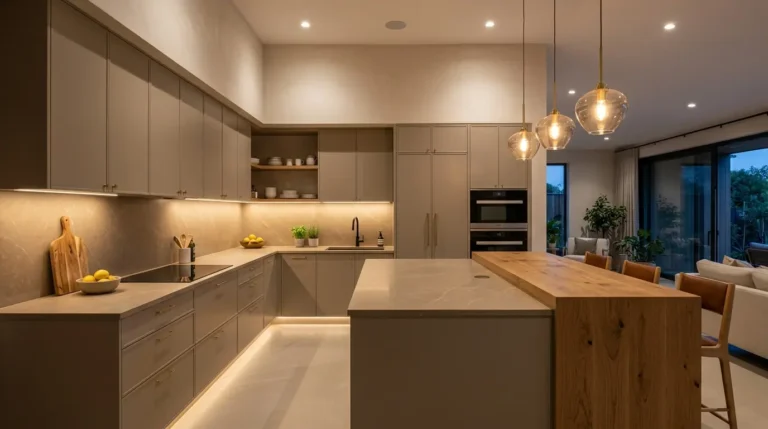
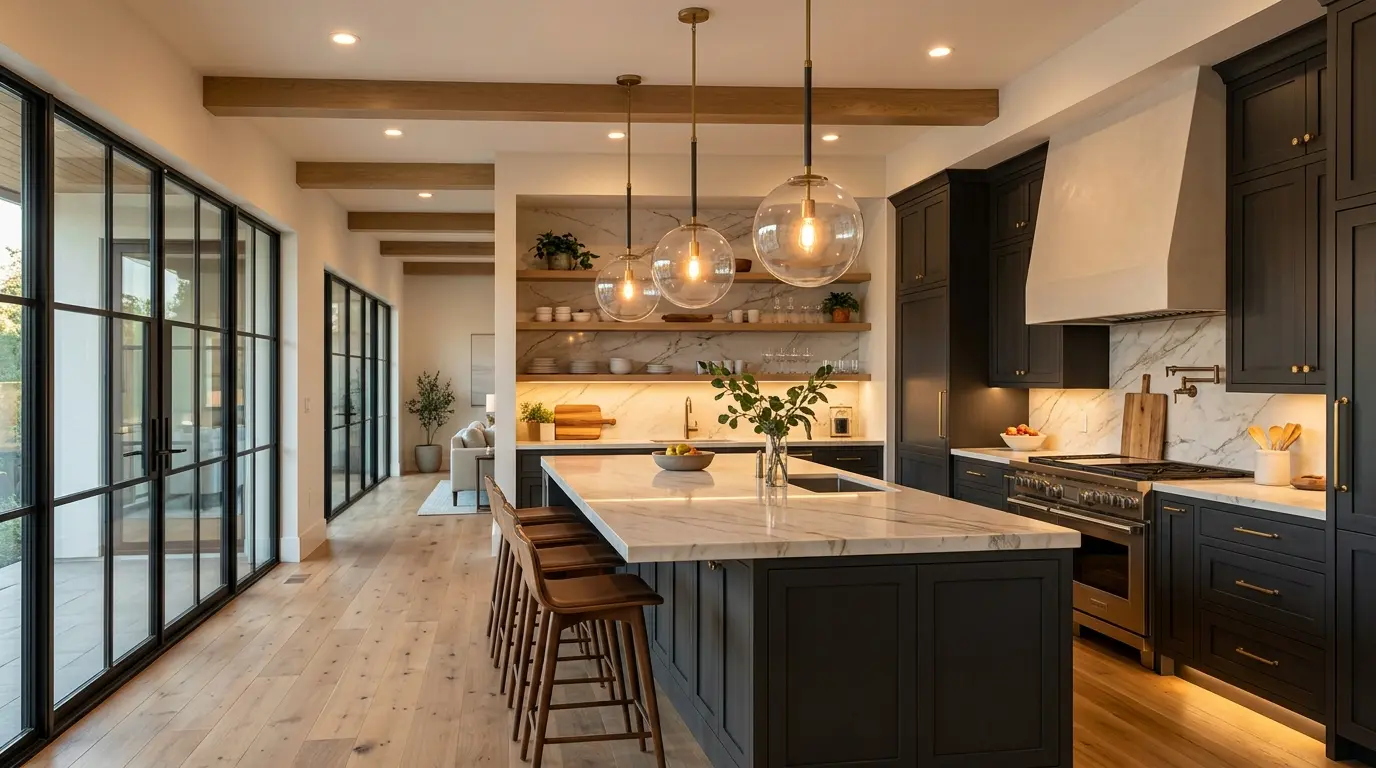
Transparent or lightly frosted glass globes keep the view across the kitchen open while still providing a soft pool of light. They suit modern and transitional kitchens and work well in threes over a medium island. Choose warm bulbs so the glass does not look cold.
2. Matte Black Domes for Contrast
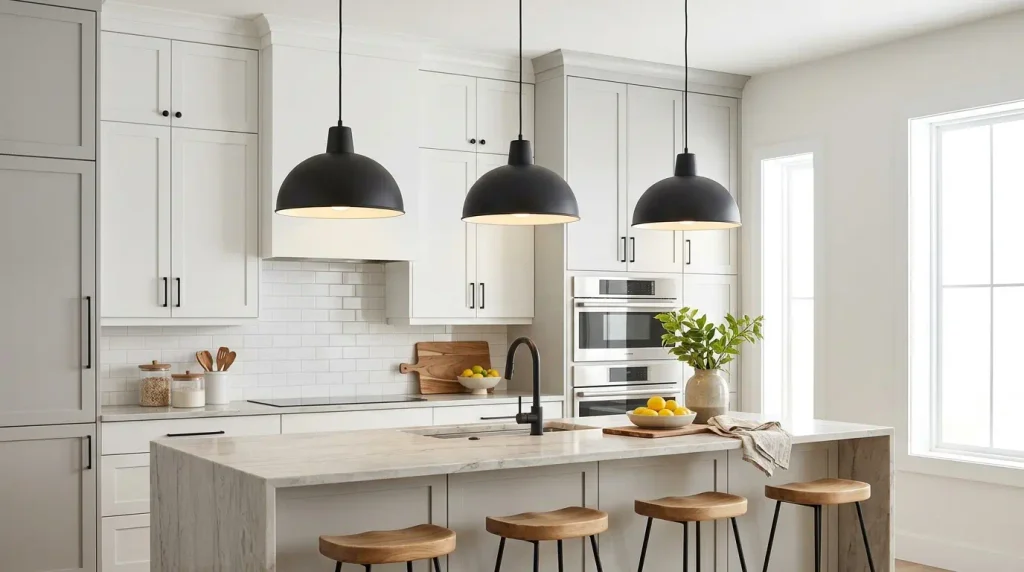
Simple matte black metal shades give strong definition against white or light cabinets. They direct light downward, which is useful for task lighting, and they hide the bulb. A trio of identical domes is one of the most reliable contemporary choices.
3. Brass or Aged Brass Bells
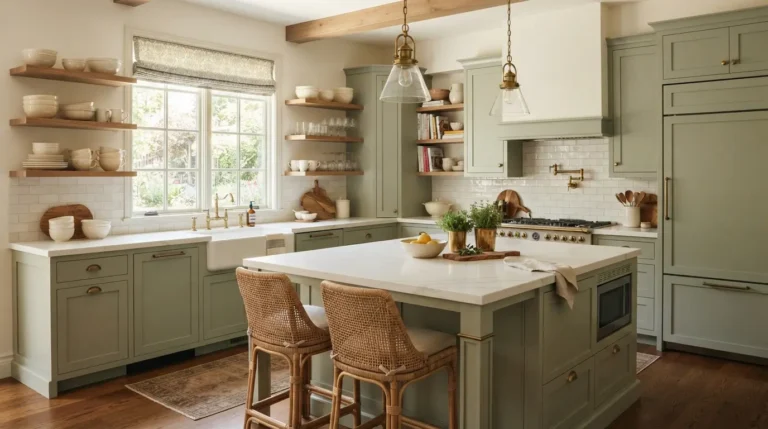
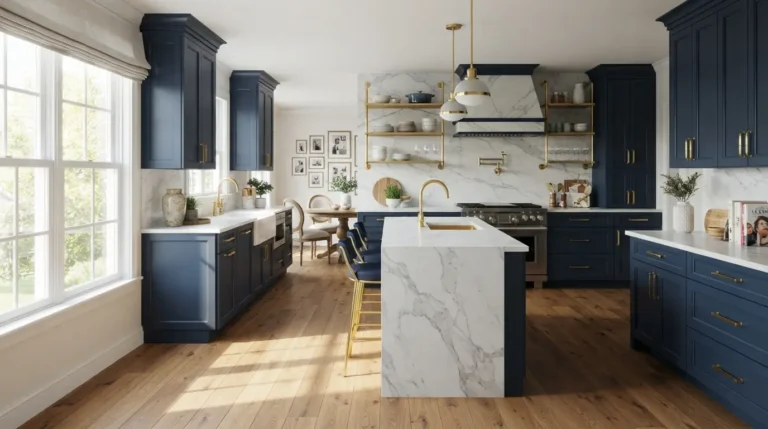
Warm metal finishes pair especially well with wood cabinets or navy and green schemes. Bell-shaped or slightly flared shades feel classic without looking traditional. Unlacquered brass will develop a natural patina; lacquered brass stays brighter.
4. Linear Bar Light for a Long Island

Instead of three separate pendants, a single linear fitting spans the length of the island. It gives even light and a cleaner silhouette. Available in metal, wood or with integrated LED. Particularly effective in modern handleless kitchens.
5. Woven Rattan or Natural Fibre
Rattan, seagrass or paper shades add texture and soften a hard-edged kitchen. They cast patterned light and suit coastal, Scandi or relaxed modern schemes. Choose a size that is substantial enough not to look lost; small woven pendants can disappear.
6. Oversized Statement Lantern
One large lantern or cage pendant can replace multiple smaller lights over a compact island or peninsula. It becomes the clear focal point. Make sure the scale matches the island; a tiny lantern over a large island looks undersized.
7. Cluster of Mixed Shapes
Two or three pendants of different but related shapes (a globe, a drum and a cone in the same finish) create interest without chaos. Keep the finishes and the bulb colour consistent so the group still reads as one idea.
8. Slim Cylinder or Drum Shades

Fabric or metal drums in a neutral tone are understated and work with almost any cabinet style. They diffuse light evenly and are easy to clean. A pair over a smaller island or three over a longer one both work.
9. Glass and Metal Combination
A metal frame with clear or seeded glass panels gives structure while still letting light through. These suit both modern and more traditional kitchens depending on the metal finish. They are practical because the glass is easy to wipe.
10. Coloured Glass for a Soft Accent
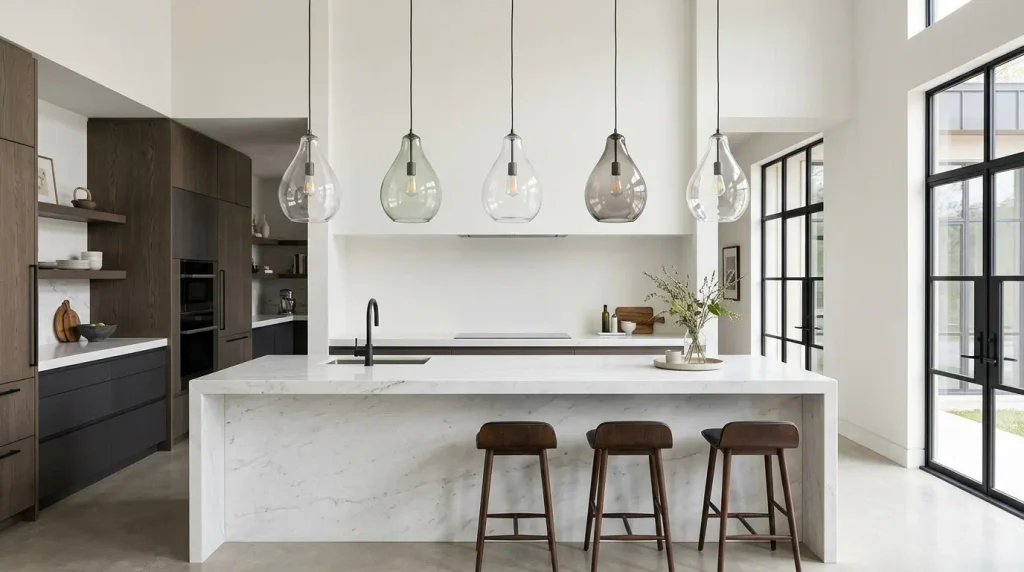
Smoked, amber or pale green glass adds a subtle colour note without painting the cabinets. Use sparingly; one or two coloured pendants among clear ones is usually enough. Check how the colour looks with your bulb temperature.
11. Adjustable Height Pendants
Some fittings allow the drop to be changed after installation. Useful if you are not sure of the final island height or if the ceiling is sloped. Confirm the adjustment range before buying.
12. Pair with Under-Cabinet Lighting
Pendants alone rarely light the whole work surface evenly. Combine them with under-cabinet strips on the perimeter units so the island lights can be more decorative if you wish. The two layers together give both function and focus. See how to layer kitchen lighting for the full approach.
Height and Spacing Guide
| Measurement | Recommended |
| Shade bottom to worktop | 750–900 mm |
| Spacing between pendants | 600–800 mm |
| Shade diameter (typical) | 250–400 mm |
Installation and Practical Notes
Confirm the ceiling fixing before the kitchen is fitted. Most pendants need a joist or a suitable pattress. On a sloped ceiling, choose fittings with an adjustable canopy. Measure the island length and decide the number and spacing of pendants on paper first; it is easier to adjust the plan than to move ceiling roses later. Use warm white bulbs (2700–3000 K) so food looks appetising. If the pendants are the main task light over the island, make sure they provide enough lumens; decorative shades can reduce output. Pair them with under-cabinet lighting on the perimeter so the whole kitchen is usable. For the full lighting sequence, see how to layer kitchen lighting. Clean glass and metal shades regularly; grease from cooking builds up faster than people expect.
When choosing pendants, consider the ceiling height. In a standard 2.4 m UK ceiling the drop is limited; oversized lanterns can feel low. Measure from the ceiling to the desired shade bottom and choose a fitting whose rod or cord can be shortened if needed. On higher ceilings you have more flexibility for larger statement pieces. The light output should be sufficient for the task; a beautiful shade that leaves the worktop dark is not successful. Test a single bulb in the space if possible. The combination of well-chosen pendants and proper task lighting elsewhere is what makes the island both useful and the visual centre of the room.
Kitchen pendants succeed when the height and spacing are right and the style relates to the rest of the room. Clear globes, matte black domes, brass bells, linear bars and natural woven shades cover most needs. Choose one approach, keep the finishes consistent, and pair the pendants with under-cabinet lighting so the work surface stays usable. The island then becomes both a practical surface and the clear focal point of the kitchen.
How high should kitchen pendants hang?
750–900 mm from the bottom of the shade to the worktop. This keeps the light useful and the view across the island clear.
How many pendants do I need?
Two for a small island or peninsula, three for a standard island, or one linear fitting for a long island.
Do pendants need to match the cabinet hardware?
They should relate in finish or colour temperature, but an exact match is not required. A brass pendant with brass handles looks intentional; mixed metals can also work if one finish dominates.
Can I use pendants if I do not have an island?
Yes. A single pendant or pair over a breakfast bar, peninsula or even a section of worktop can still create a focal point.