How to Create a Spa Bathroom on a Budget

To create a spa bathroom on a budget, fix what a spa controls: clutter, light, scent, texture and warmth. Most of it costs far less than a new bathroom suite, and the first few steps fit into a weekend. Plenty of guides open with freestanding baths and rainfall systems, which is no help when you have £150 and one harsh ceiling light. All prices here are approximate, in GBP, and vary by country.
What Makes a Bathroom Feel Like a Spa?
A bathroom feels like a spa when it calms every sense at once: soft light, a clear surface, a gentle scent, plush fabric and a warm towel. Expensive fixtures help less than most people expect. A tired bathroom with warm lighting and no clutter beats a new one with harsh spotlights.
Most bathrooms get temperature right and everything else wrong. The steps below follow a sensible spending order, so you can stop at any point and still have a better room than when you started.
1. Clear the Clutter and Clean Properly
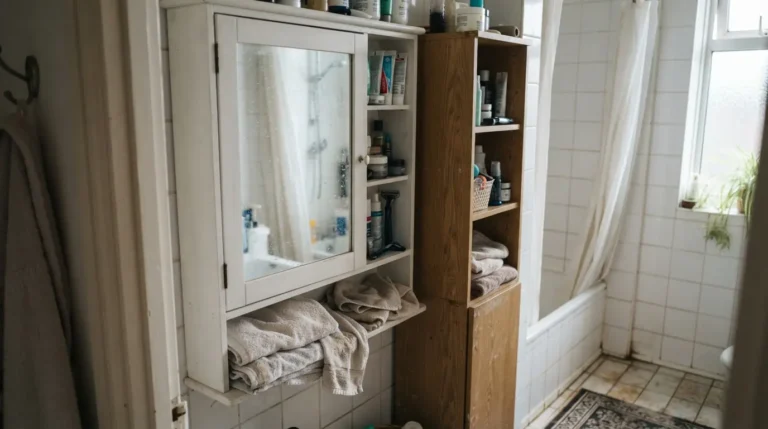
Clear every surface, keep only what you use daily, and store the rest in a cupboard or drawer. Then deep clean the glass, taps, grout lines and mirror. This costs nothing, takes one to two hours, and is one of the biggest visual changes per pound in this guide.
A good rule of thumb is that anything not used most days lives out of sight. Decant daily products into matching pump bottles, roll towels in a basket and leave one small plant or candle on the vanity. Clutter creeps back within weeks, so a two-minute wipe and tidy after the last shower of the day keeps the room holding its look.
2. Soften the Lighting
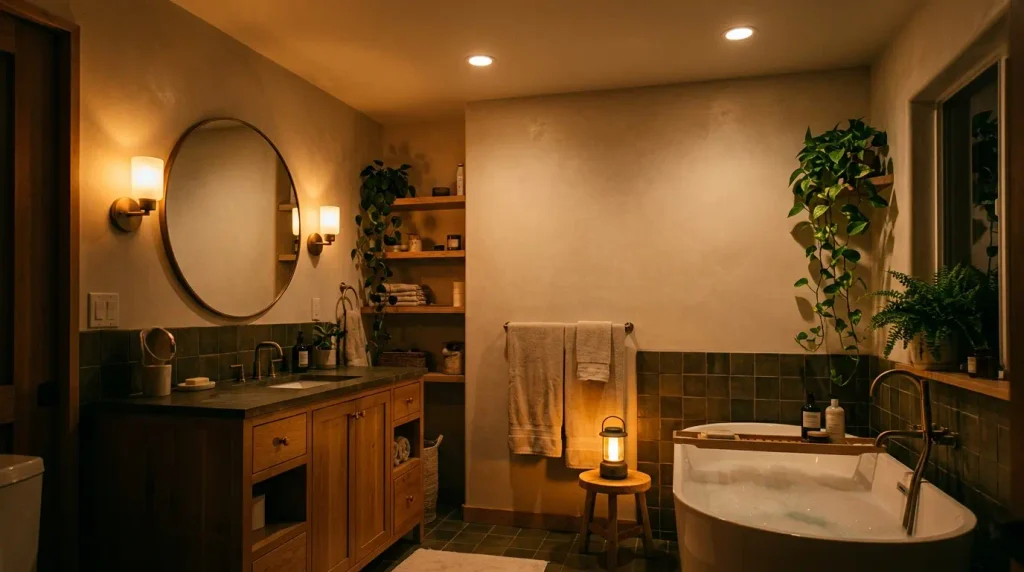
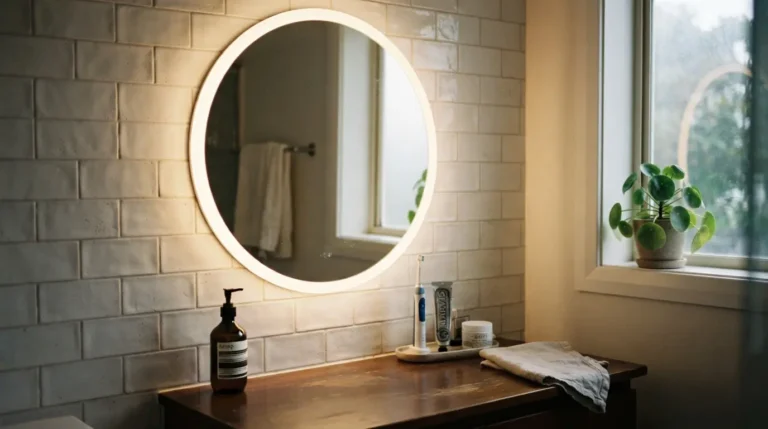
Swap cool, harsh bulbs for warm ones around 2700K to 3000K and add a second, lower light source such as a dimmer, wall light or waterproof lamp. Warm, layered light does more for mood than most decor. Bulbs cost a few pounds, while a dimmer needs a qualified electrician.
Check the fitting’s IP rating before changing anything. Bathroom lights must suit the zone they sit in, and rules differ by country. If you cannot change the wiring, a rechargeable waterproof lamp (around £25) gives a similar glow. This matters most in windowless bathrooms, where a warm LED bulb is the practical stand-in for daylight. A larger mirror also bounces whatever light you have around the room.
3. Choose Calming Colours
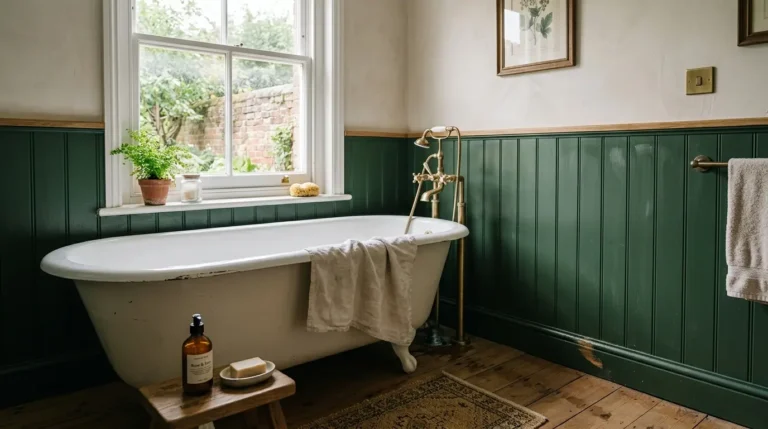
Choose soft, muted shades such as warm white, taupe, sage or sand, and keep to two or three colours across walls, towels and accessories. Paint is one of the cheapest ways to change the whole room. Use moisture-resistant paint, and expect a weekend for preparation, two coats and drying.
A 2.5 litre tin of bathroom paint typically costs £25 to £45, and a small bathroom often needs about one tin for two coats, depending on how much is tiled. Clean and degrease the walls first, because paint peels from steamy, soapy surfaces quickly. Renting? Carry the palette through towels, a bath mat and a vanity tray instead. Dark, moody shades look striking in photos but show water marks and soap film fast.
4. Upgrade Towels and Soft Textiles
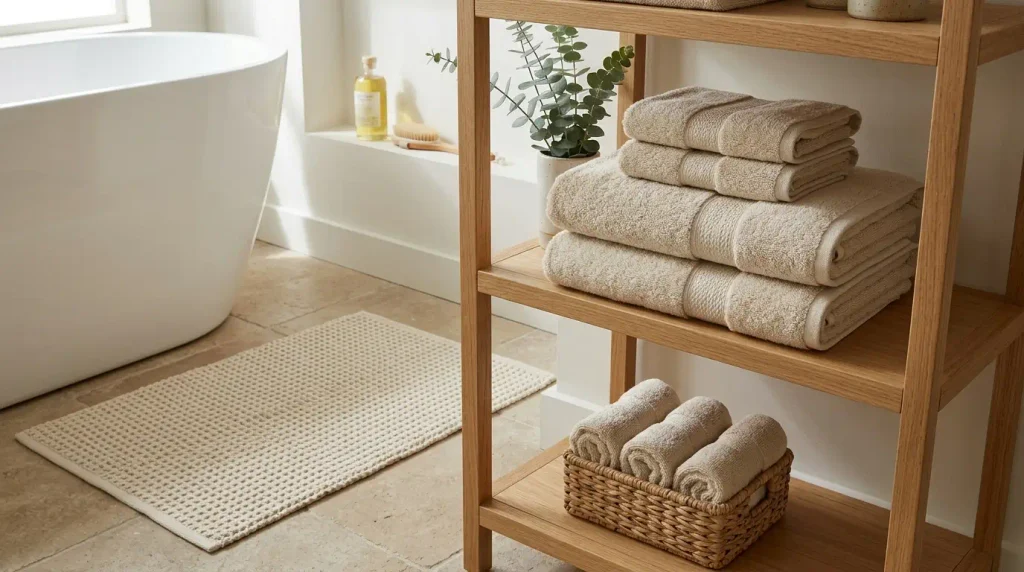
Buy fewer, better towels in one colour, ideally heavy 100% cotton, and add a quick-drying bath mat. Roll or fold them neatly in view. Your skin meets them after every bath, so this £40 to £80 upgrade is felt daily. Stick to white, cream or one muted tone.
Weight is measured in GSM, and many hotel-style towels sit at around 600 GSM or above. The honest trade-off is that heavier towels dry slowly, so they turn musty without a heated rail or good airflow. Skip fabric softener, which coats the fibres and cuts absorbency. Hang the mat to dry after use, because a damp mat on the floor is a common source of mould and smell.
5. Swap the Fixtures You Touch Every Day
Replace the shower head first, then taps, handles and towel hooks if the budget stretches. A rainfall or multi-spray head can start at around £40 and usually screws onto your existing arm in minutes. Matching finishes in brushed brass, black or chrome make a plain bathroom look planned rather than patched together.
Rainfall heads spread water wider, which feels softer, but they need decent pressure. On a low-pressure supply, such as a gravity-fed tank system, they can feel weak, so check before buying. Hard water clogs nozzles over time, and silicone nozzles wipe clean more easily than rigid plastic. A basin tap swap suits a confident DIYer and takes one to two hours, longer if the isolation valves are missing or stiff. If the pipework looks old, pay a plumber.
6. Add Scent, Greenery and Sound
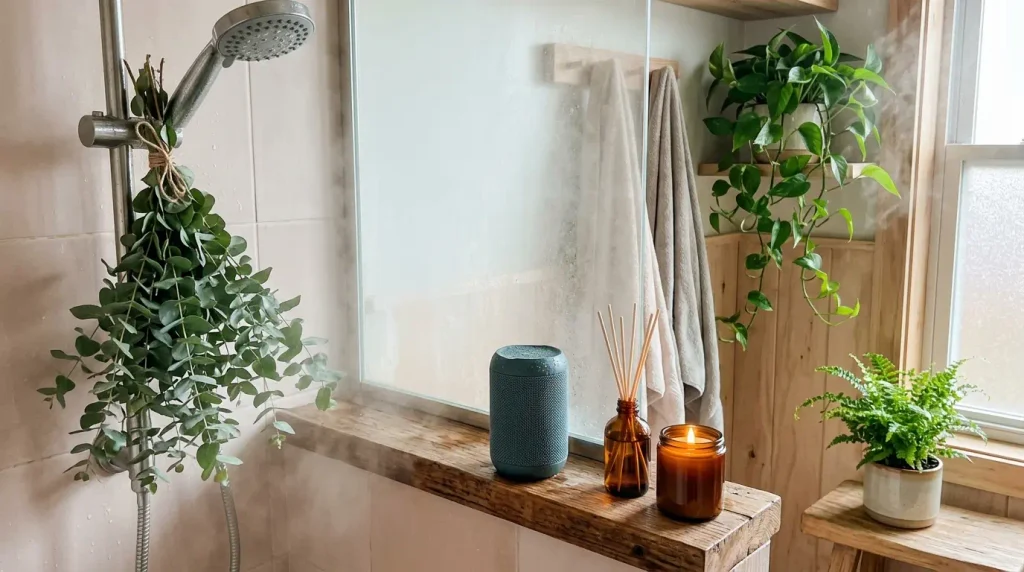
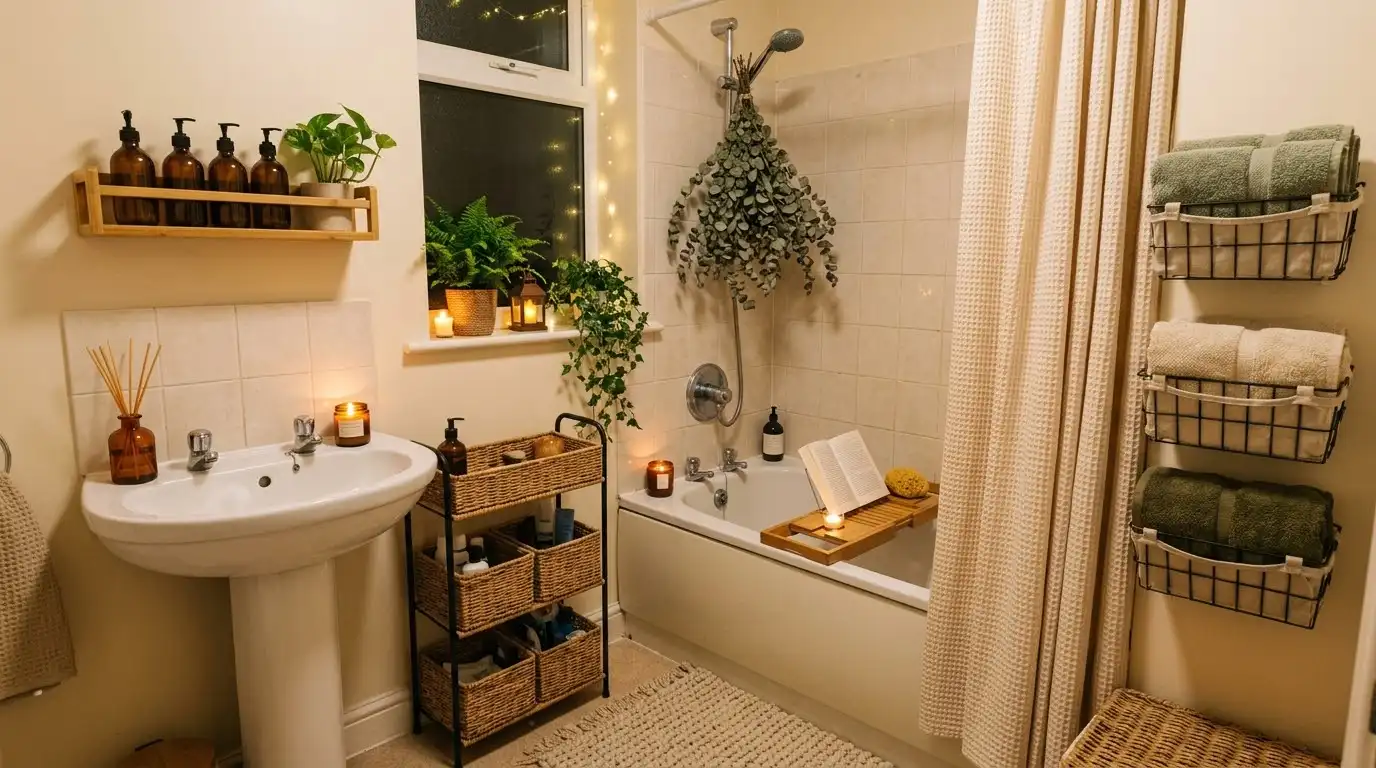
Add one scent family, one or two plants and a waterproof speaker. A eucalyptus bundle hung on the shower arm releases its oils in the steam, while a reed diffuser or soy candle scents the room between showers. Together they cost roughly £40 to £90 and take minutes to set up.
Stay with one scent family, such as lavender and eucalyptus, because mixing several turns a calm room into a perfume counter. Replace eucalyptus every three to four weeks as it dries out. Ferns, pothos and peace lilies cope with humidity, but a windowless bathroom defeats real plants, so a good faux one is the honest answer. Keep candles away from towels and shelves, and if you have pets, check that essential oils are safe before using a diffuser. Choose a speaker with a high waterproof rating and queue your playlist before you get in.
7. Warm Up the Room
A warm towel and a warm floor add comfort quickly once the lighting is sorted. A heated towel rail is the best-value option, from around £90 to £250 for an electric model, while a thick mat takes the chill off tiles for far less. Underfloor heating is lovely but rarely a budget job.
In the UK and many other countries, standard sockets are heavily restricted in bathrooms, so electric rails are usually hardwired by an electrician. Add that fee to your budget, or swap an existing radiator for a towel rail on your central heating. A heated rail also dries towels and cuts condensation, which protects the plush towels from step four.
8. Refresh Sealant and Grout
Cut out old, discoloured sealant and re-seal baths, shower trays and basins with fresh mould-resistant silicone, then clean or re-colour tired grout. It takes a half-day, costs under £30 in materials, and removes the grubby look that no candle can hide. Leave the silicone to cure for the time on the tube before using the shower.
Use a sealant remover or sharp blade, clean the gap with a mould-killing cleaner, dry it fully, then apply one steady bead and smooth it. A wet or dirty joint is the commonest reason new silicone fails. If grout is crumbling rather than stained, rake it out and re-grout. This is also where a DIY spa bathroom pays off most, because the tools are cheap and the skill is mostly patience.
How Much Does a Budget Spa Bathroom Cost?
Most homeowners can get a clear spa feel for £50 to £150, and a stronger result for £150 to £400. The table groups steps by spend, with typical time and skill. Set your spa bathroom budget before you shop, and remember that prices vary by country, shop and quality.
| Budget | What it covers | Time | Skill needed |
| Under £50 | Declutter and deep clean, warm bulbs or a waterproof lamp, rolled towels, one candle or eucalyptus bundle, a small plant | A few hours | None |
| £50 to £150 | Better towels and bath mat, rainfall shower head, waterproof speaker, fresh sealant and grout, vanity tray | One weekend | Basic DIY |
| £150 to £400 | Moisture-resistant paint, new basin tap or hardware, heated towel rail, dimmer or modest LED mirror | One to two weekends, plus an electrician for hardwired items | Confident DIY plus a tradesperson |
You will not need everything in each row. Pick the items that fix what bothers you most.
Mistakes That Make a Spa Bathroom Feel Cheap
The costliest mistakes are painting over damp walls, buying a statement piece before the basics, and ignoring ventilation. Run the extractor fan during and for roughly 15 to 20 minutes after a bath or shower, or the steam undoes your work. Fix the cause of any damp before a single drop of paint goes on.
A fourth trap is accessory overload. Five small trinkets read as clutter, while one wooden tray holding a soap dispenser, a candle and a plant reads as styled. When unsure, remove one item.
Conclusion
Learning how to create a spa bathroom on a budget is mostly about order: clear and clean, soften the light, then add texture, scent and warmth before buying anything structural. Start with the first few steps this weekend and live with the room for a fortnight. You will soon know whether your next £100 belongs on a shower head, paint or a heated rail. A calm bathroom is built from small, sensible decisions, not one expensive centrepiece.
FAQs
How do I make a rented bathroom feel like a spa?
Stick to changes that leave no marks: a rechargeable waterproof lamp, tension-rod or over-door hooks, towels, a bath mat, a vanity tray and a faux plant. Swap the shower head only if your lease allows, and keep the original to refit when you leave.
How do I make a small bathroom feel like a spa?
Go vertical and wall-mounted. A wall-hung vanity or shelf frees floor space, and a larger mirror makes the room feel deeper. Choose fewer, bigger items rather than many small ones.
Do I need a bath?
No. A well-lit shower with a rainfall head and a small seat can feel just as indulgent. If you want a soak, some freestanding baths come in compact lengths of roughly 1,360mm to 1,500mm, but a bath is a large spend, so treat it as a later upgrade.
What should I buy first if I can only afford one upgrade?
Buy the shower head if you shower daily and your pressure is decent. Buy the heated towel rail if the room feels cold and damp, and include any electrician’s fee in the price.
How long does it take?
Steps 1, 2 and 4 to 6 fit into one weekend. Paint and sealant need a second, with drying and curing time, and any hardwired item adds lead time for an electrician.