15 Garden Furniture Ideas to Create the Perfect Outdoor Room

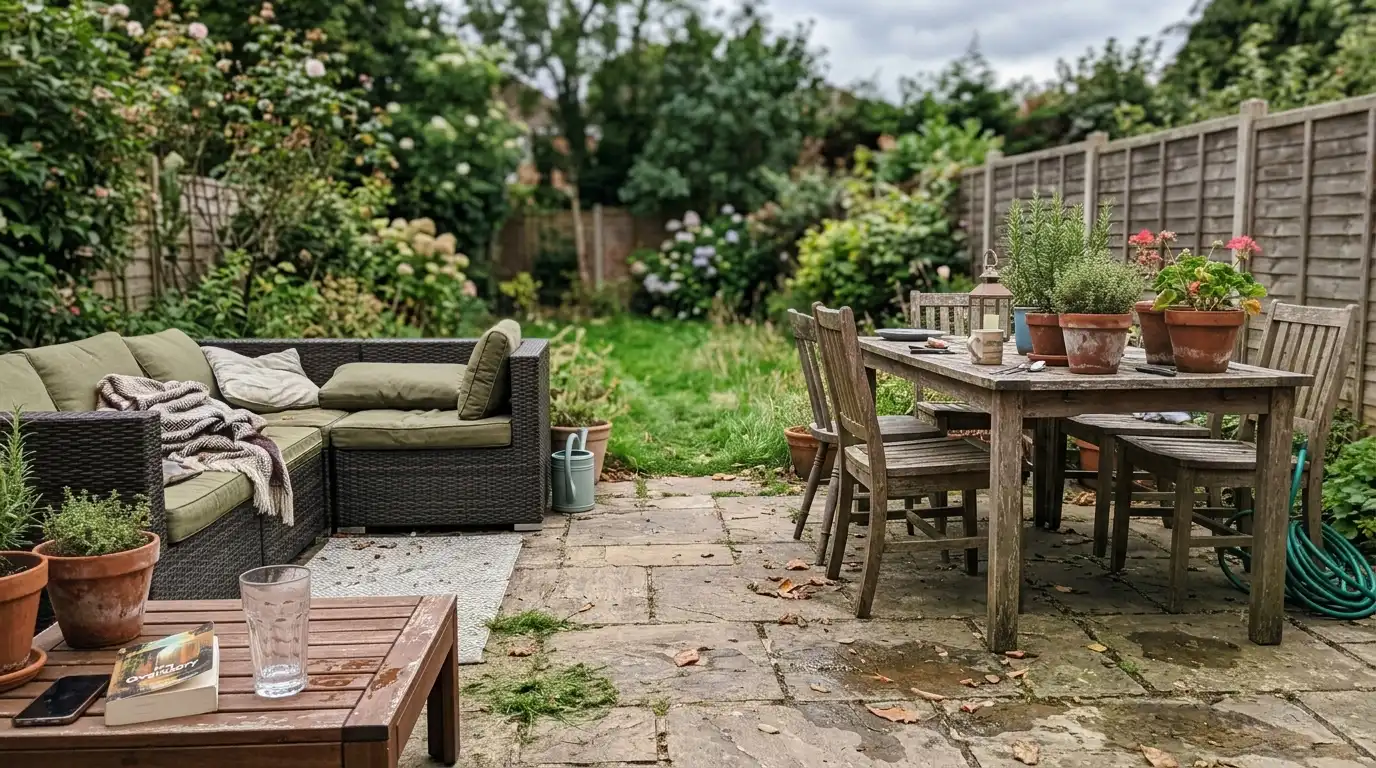
If you want to create the perfect outdoor room, the fastest route is to treat your garden exactly like an indoor space: pick a material first, define clear zones for dining and lounging, then layer in rugs, cushions, and lighting. These 15 garden furniture ideas cover the decisions that actually matter, not just the pretty extras.
Most people start by falling in love with a chair on Instagram and work backwards from there, which is how gardens end up with furniture that clashes, doesn’t fit, or falls apart after one damp winter. After years of specifying garden furniture for clients who wanted something that would actually survive a British summer, the pattern is always the same: the outdoor spaces that get used every single day are the ones planned with the same logic as a living room, not bought piece by piece on impulse.
1. Choose Your Material Before You Choose a Style
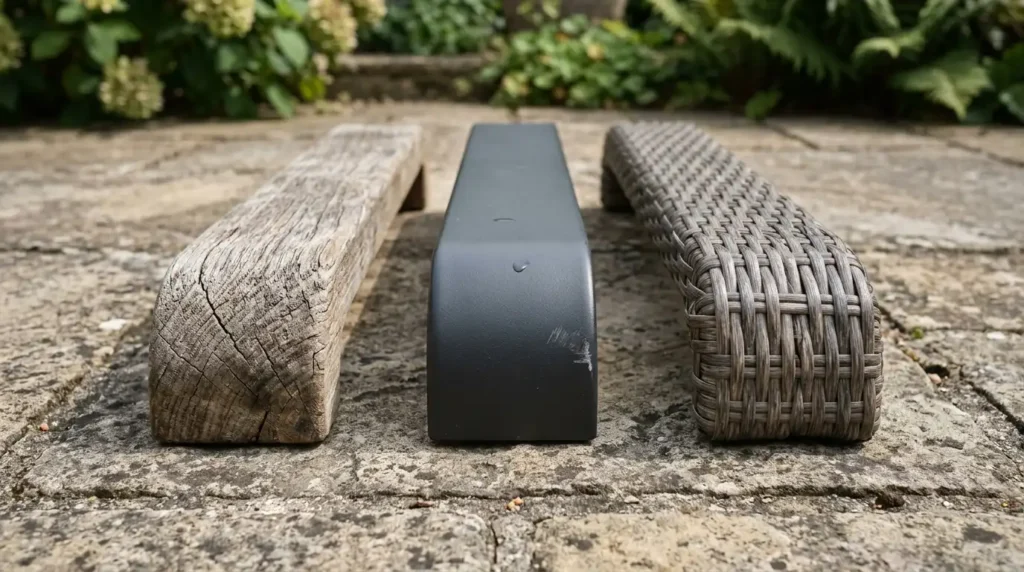
Material is the decision that shapes everything else, so it needs to come first, not last. Rattan brings warmth and texture and suits almost any colour scheme. Powder-coated aluminium suits a cleaner, more modern look and shrugs off rain without complaint. Wood, particularly teak or acacia, gives you that “extra room of the house” feeling more than any other material.
The mistake most homeowners make is picking a style they like in a showroom without checking how the material behaves outside. A gorgeous rattan set that isn’t genuinely all-weather will look tired within a season. Here’s how the three main options actually compare once you get past the marketing photos:
| Material | Typical Cost (per set) | Maintenance Needed | Durability | Best Suited To |
| Synthetic PE rattan on aluminium frame | £400 to £1,500 | Wipe down, occasional cushion airing | Very good, left out year-round | Most gardens, low-fuss owners |
| Powder-coated aluminium | £350 to £1,800 | Minimal, rinse if needed | Excellent, genuinely rust-proof | Modern and minimalist spaces |
| Solid wood (teak, acacia) | £450 to £2,000+ | Annual oiling or accept a grey patina | Good if maintained, average if ignored | Traditional or “indoor room” looks |
Prices vary a fair amount by country and retailer, so treat these as a general guide rather than a fixed quote. The honest trade-off: wood looks the most special on day one but asks the most of you every spring, while aluminium asks almost nothing but never quite gets that same warmth.
2. Split Your Garden into a Dining Zone and a Lounging Zone
If your outdoor room has enough space for both eating and relaxing, don’t let the two blur into one confused area. A dining zone works best close to the kitchen or back door, purely for practical reasons of carrying food and drinks. A lounge zone benefits from sitting a little further away, ideally with some shelter or screening, so it feels like a proper destination rather than an afterthought.
You don’t need a wall or a step to separate the two. A change in paving, a large planter, or simply angling the furniture differently is often enough to signal the shift from one zone to the next.
3. Ground the Whole Space With an Outdoor Rug
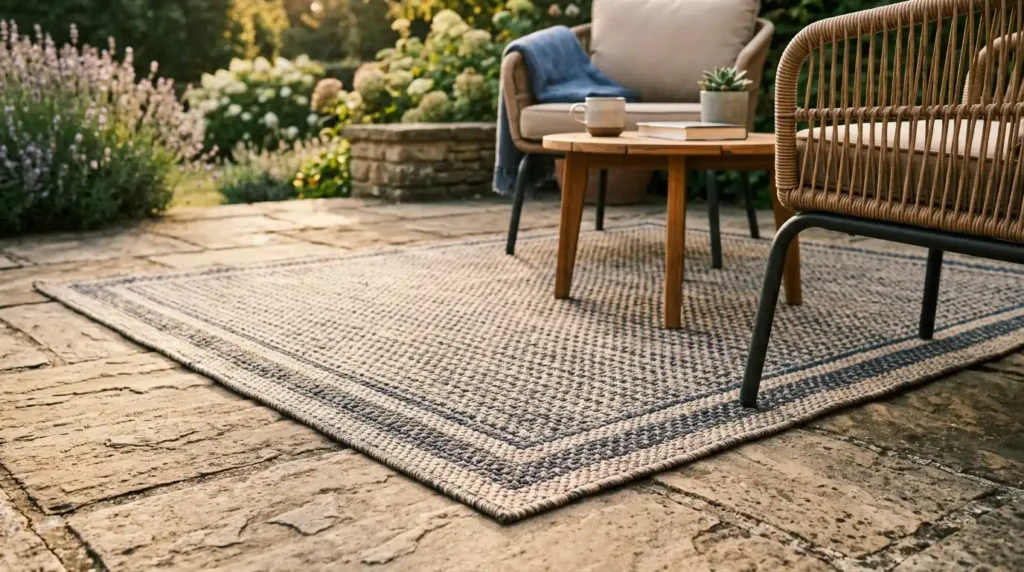
An outdoor rug does more heavy lifting than almost any other single item on this list. It turns a scattered collection of chairs into a considered, intentional space in about ten minutes. Look for polypropylene or polyester rugs, since both dry quickly and resist UV fading far better than natural fibres left outside.
A good rule of thumb for a dining area is sizing the rug so chair legs stay on it even when pulled out to sit down. For a lounge corner, you can go a size smaller, just enough to anchor the sofa and coffee table together. If you can see bare paving through the gaps at the edges, size up.
4. Anchor the Lounge Area With a Modular Sofa Set
A modular garden sofa set earns its higher price tag by solving a real problem: the number of people using your garden changes from one evening to the next. The same set that comfortably seats two for a quiet coffee can be rearranged into a full corner for eight when friends come over.
Corner configurations tuck neatly against a fence or wall, which frees up the middle of the garden rather than blocking it. When shopping, check that every module sits at a consistent leg height, since mismatched heights are a common and easily avoidable mistake that makes even an expensive set look cheap once assembled.
5. Build a Proper Outdoor Dining Set, Not Just a Table and Chairs
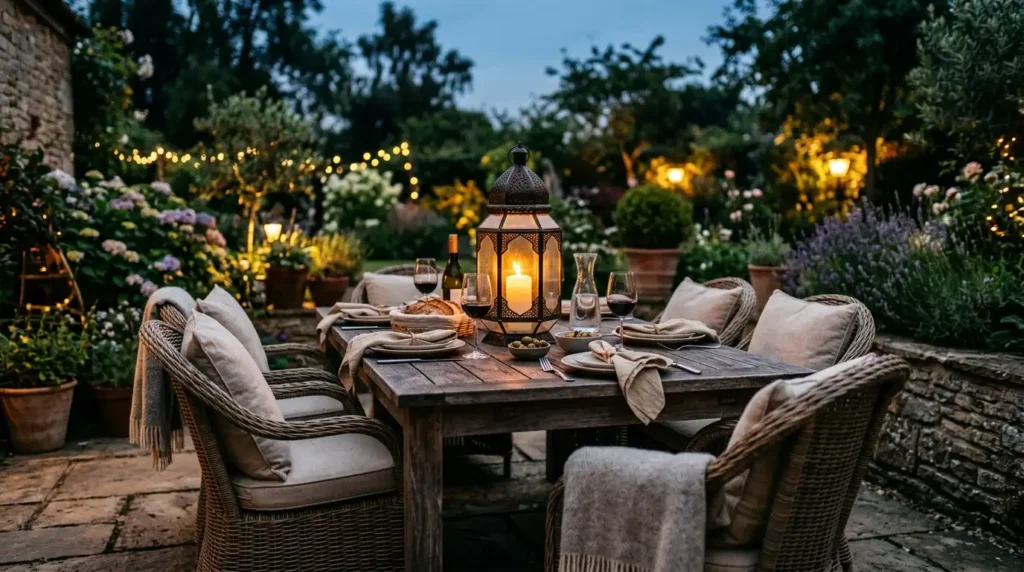
Most people put a table and four chairs outside and stop there, treating it as purely functional rather than a space worth styling. A centrepiece, whether that’s a lantern, a small planter, or a loose bunch of herbs in terracotta pots, turns a functional dining set into somewhere people actually want to linger.
Outdoor dining sets range widely depending on seating capacity and material. A compact four-seater bistro-style dining set typically starts around £150 to £300, while a full eight-seater rattan or aluminium dining set with a rising or extending table can run from £800 up to £2,500 or more for premium brands. Round tables suit smaller, more social groups and take up less visual space, while rectangular tables work better once you’re regularly seating six or more.
6. Add an Egg Chair or Hanging Chair for a Relaxed Corner
Egg chairs and hanging chairs have moved from trend to garden staple over the last few years, and it’s easy to see why. Their rounded, cocooning shape gives you a genuinely comfortable reading or napping spot, and they take up surprisingly little floor space for how much personality they add.
If you’re hanging one from a pergola or a sturdy tree branch, check the weight rating carefully, since a chair rated for one adult won’t hold up to two people piling in for a photo. A stand-mounted version avoids this issue entirely and is the more practical choice if you don’t have a strong existing structure to hang from.
7. Layer Cushions for Colour, Comfort, and Personality
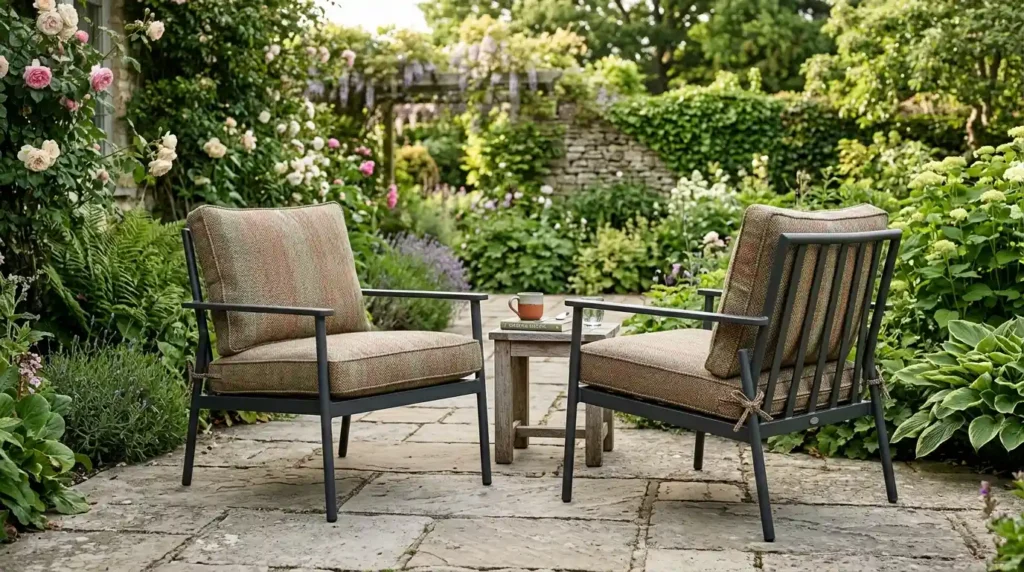
Cushions do double duty: they make hard rattan or metal frames genuinely comfortable, and they carry most of the visual styling work in an outdoor room. Warm, earthy tones like terracotta, olive, and dusty blue have remained a consistent favourite across garden furniture collections, and they pair naturally with most patio and paving colours.
Always choose fabrics described as all-weather or outdoor-rated, since these use quick-dry foam and UV-stabilised, water-resistant covers. Even genuinely weatherproof cushions benefit from being brought inside or stored in a dry box during long stretches of heavy winter rain, since no fabric enjoys sitting in standing water for weeks at a time.
8. Use Planters and Greenery to Divide and Soften the Space
Furniture and planting work best when they respond to each other rather than sitting as two separate decisions. Taller planters placed alongside a sofa set act as a soft, living divider without blocking light the way a fence panel would. Trailing plants in wall-mounted pots soften bare fencing, and for patios with no soil access at all, one large statement planter usually has more visual impact than several small pots scattered around.
This is also one of the cheapest ways to make a newly furnished garden feel finished, since a single well-placed planter costs a fraction of another piece of furniture.
9. Create a Cosy Focal Point With a Fire Pit Table
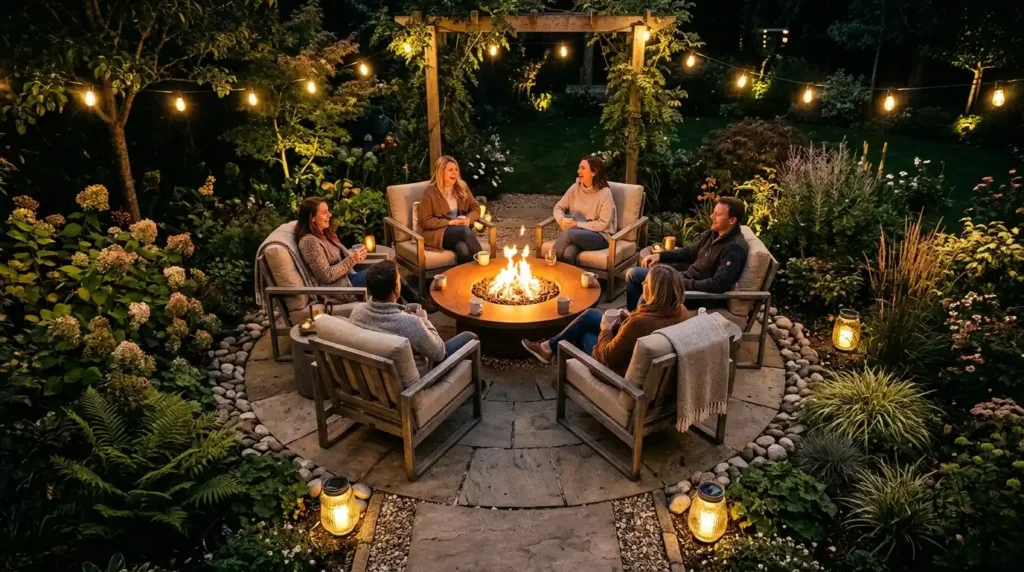
A fire pit table extends your outdoor room well past sunset and well past the height of summer, which is exactly the return on investment most homeowners are actually looking for. Arrange seating at a similar height to the fire pit itself, and keep the layout circular or semi-circular so conversation flows naturally rather than everyone facing forward like a cinema row.
Gas and bioethanol fire pit tables sit at the more convenient end, with instant ignition and no ash to clean up, typically costing £200 to £900 depending on size and material. Wood-burning options cost less upfront but need more ongoing care and a genuinely safe, non-flammable surface underneath.
10. Add a Day Bed for the Ultimate Lounging Statement
A day bed is the single most indulgent item on this list, and also the one that gets the most obvious “wow” reaction from guests. Designed to work sitting up or lying flat, a day bed offers considerably more room than a standard lounger, which makes it genuinely usable by two people rather than a solo sunbathing spot.
Look for a design with a moveable canopy so you can adjust shade as the sun moves through the day. This is one purchase where cheaper versions tend to disappoint quickly, since a flimsy frame flexes uncomfortably under regular use, so it’s worth checking weight capacity and frame material carefully before buying.
11. Fit a Bistro Set for Small Patios and Balconies
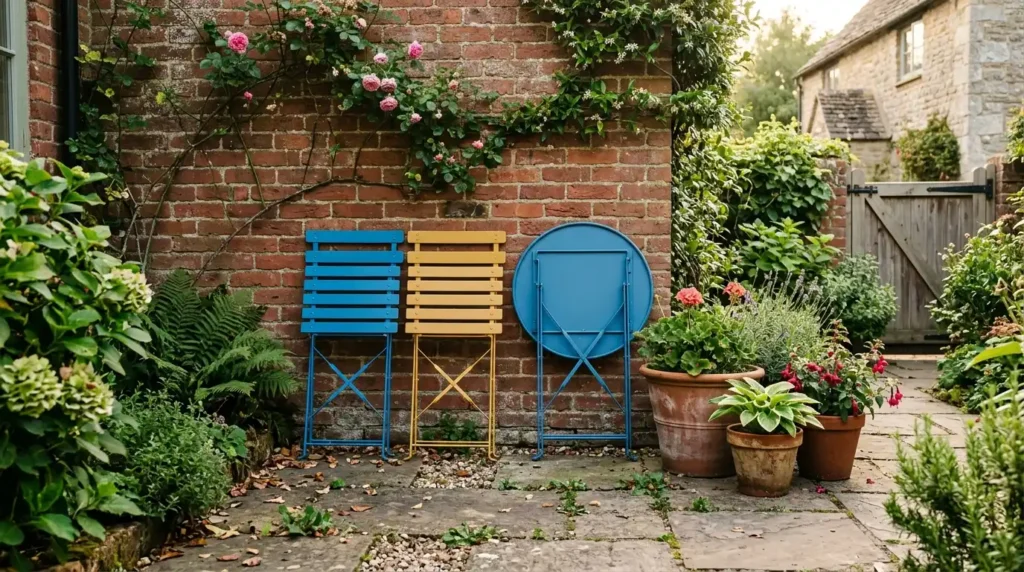
Not every outdoor room has room for a full lounge and dining set, and that’s fine. A bistro set, typically two chairs and a small round table, remains the single best patio furniture idea for tight balconies, narrow courtyards, or a sunny spot outside a kitchen door. Folding versions store away entirely when you need the floor space back for something else.
Bistro sets in powder-coated steel or aluminium generally cost between £80 and £250, making them one of the most accessible entry points on this entire list if budget is the main constraint.
12. Consider Built-In Bench Seating for a Streamlined Look
Built-in bench seating works particularly well in smaller or oddly shaped gardens, where a freestanding sofa set would eat up too much floor area. Running along a fence line or wrapping into a corner, a built-in bench can hide genuine storage underneath for cushions and covers, which is a real practical win over most freestanding furniture.
The trade-off is flexibility. Once it’s built, it’s built, so this idea suits homeowners who are confident about how they’ll use the space rather than those still experimenting with layout.
13. Extend the Evening With Layered Outdoor Lighting
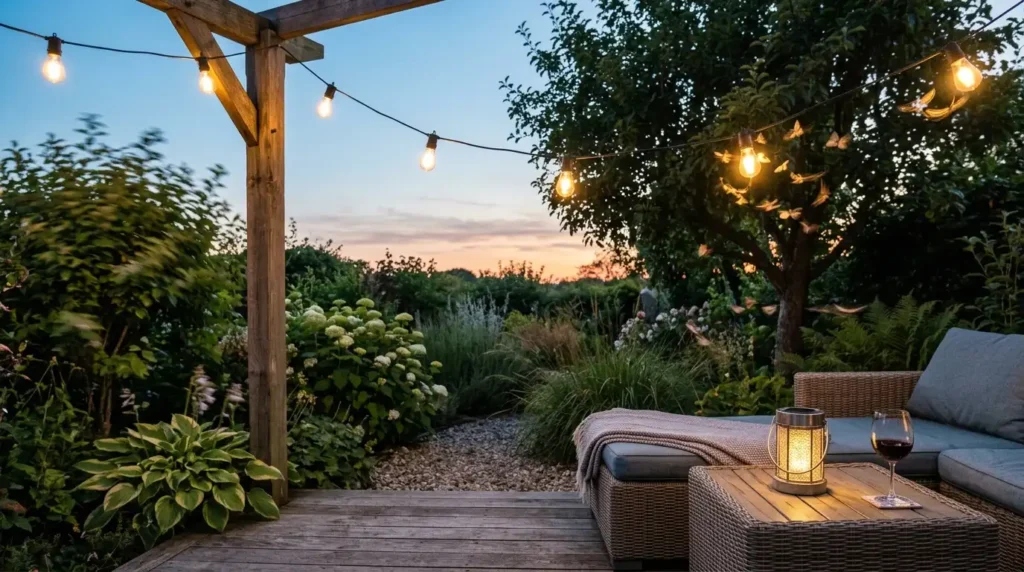
The best-styled outdoor seating in daylight can feel flat and unfinished by early evening. Warm-white festoon lights strung between fence posts or through a pergola solve this instantly and cheaply. Solar lanterns add flexible, cable-free placement wherever you need a little extra glow, and wind-safe LED candles work well on a dining table where an open flame isn’t practical.
Stick to one colour temperature throughout, warm white rather than a mix of warm and cool tones, since consistency is what makes an outdoor room look intentional rather than assembled from whatever was on sale.
14. Use an Outdoor Mirror to Make a Small Garden Feel Bigger
An outdoor mirror is a genuinely underused trick outside of professional design circles. Positioned to reflect planting rather than a fence or wall, a mirror framed to match your furniture’s finish visually doubles the sense of depth in a small garden or balcony. This works particularly well alongside vertical planting, since it doubles the greenery on show without doubling the actual plants.
Choose a mirror rated for outdoor use specifically, since standard bathroom or interior mirrors will fog and degrade quickly once exposed to real weather.
15. Protect Your Investment With Covers and a Seasonal Routine
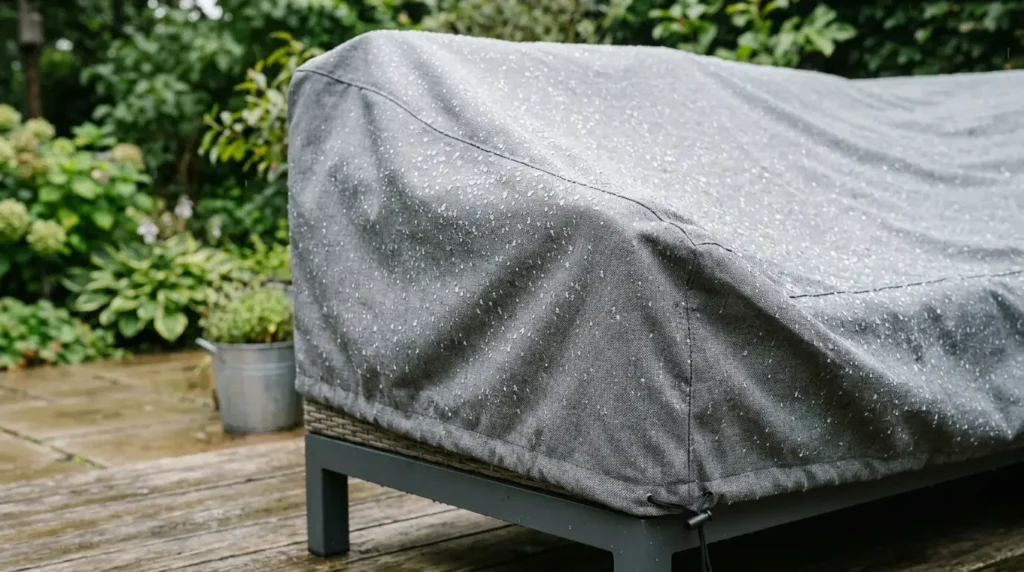
This is less a styling idea and more the one that determines whether everything above still looks good in three years’ time. Breathable furniture covers reduce condensation build-up underneath, which is what actually causes mould, rather than the rain itself. Quick-dry foam cushions can handle the odd summer shower, but anything thicker should come inside once the weather settles into a wet spell lasting more than a few days.
A realistic seasonal routine looks like this: wipe down frames at the start and end of summer, bring cushions in for winter storage, and give wooden pieces their annual oil treatment before the wood starts to visibly grey. Skipping this step is the single biggest reason garden furniture ends up replaced after two or three years instead of lasting a decade.
What Does It Cost to Furnish a Full Outdoor Room?
Budgets vary enormously by country, retailer, and how many of these 15 ideas you take on at once, but a realistic range for outfitting a mid-sized garden looks something like this.
| Budget Level | What’s Typically Included | Approximate Total Cost |
| Starter | Bistro set, a few cushions, solar lights | £150 to £500 |
| Mid-range | Modular sofa set, dining set for four to six, rug, planters, festoon lighting | £1,200 to £3,000 |
| Full outdoor room | Sofa set, dining set, day bed or egg chair, fire pit table, built-in seating, full lighting scheme | £3,500 to £8,000+ |
These figures are approximate and will shift depending on brand, material quality, and local pricing, so use them as a planning guide rather than a fixed budget.
Conclusion
Creating the perfect outdoor room isn’t about buying the most furniture, it’s about choosing the right pieces and arranging them with the same intention you’d bring to any room inside the house. Start with your material, define your zones, then layer in rugs, planting, and lighting once the bones of the space are in place. Whichever of these 15 garden furniture ideas you start with, protecting the investment with proper covers and seasonal care is what actually determines whether your outdoor room still looks this good in five years’ time.
FAQs
What garden furniture material lasts the longest outdoors?
Powder-coated aluminium and synthetic PE rattan on an aluminium frame are the most durable low-maintenance options, both able to stay outside year-round without special treatment.
Is it cheaper to buy a garden set or individual pieces?
Buying as a set is usually the more economical route, since coordinated dining sets and sofa sets are typically priced lower than buying each chair and table separately.
How do I make a small garden or balcony feel bigger with furniture?
Stick to one furniture material and a tight colour palette, position seating against a wall rather than floating in the centre, add an outdoor mirror, and choose foldable or stackable pieces that free up floor space when not in use.
Do I need to bring outdoor cushions inside every night?
No, genuinely all-weather cushions can stay out through normal summer weather, but they should come inside or into a dry storage box during prolonged heavy rain or over winter to protect the fabric and foam.
What’s the best garden furniture idea for entertaining large groups?
A modular sofa set combined with a large rectangular dining set gives you the most flexible seating, since modular pieces can be reconfigured depending on how many guests actually show up.
How much space do I need between a dining table and a fence or wall?
Leave at least 90cm between the table edge and any wall or fence so chairs can be pulled out comfortably without anyone feeling boxed in.