8 Feature Wall Ideas to Create a Stunning Focal Point in Any Room

A feature wall works when it sits on the wall the eye already finds, usually the one behind the sofa or bed. Done poorly it looks stuck on. Done well it gives the room a clear centre without new furniture. These eight options use materials that are available in the UK and suit typical room sizes.
Most cost between £200 and £800 for materials on a standard 3 by 2.5 metre wall. Labour adds more if you are not doing it yourself. The cheapest is paint. The most durable is properly fixed timber or tile.
1. Timber slats for texture
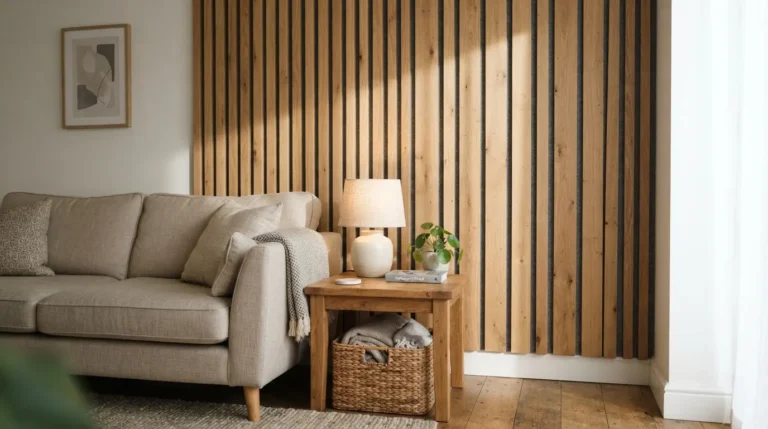
Horizontal or vertical timber slats add depth that paint cannot. Narrow oak or painted MDF slats, spaced 20 to 40 mm apart, catch light and break up a plain wall. They suit living rooms and bedrooms. Fix them to battens so the wall can still breathe. A 3 metre run costs about £150 to £250 in materials if you buy pre-finished strips.
The trade-off is dust. Gaps collect it. In a busy family room the look needs wiping every few months. On a wall behind a bed or sofa the issue is smaller. Keep the colour close to the rest of the room so the texture does the work, not a strong contrast.
2. Bold paint on one wall
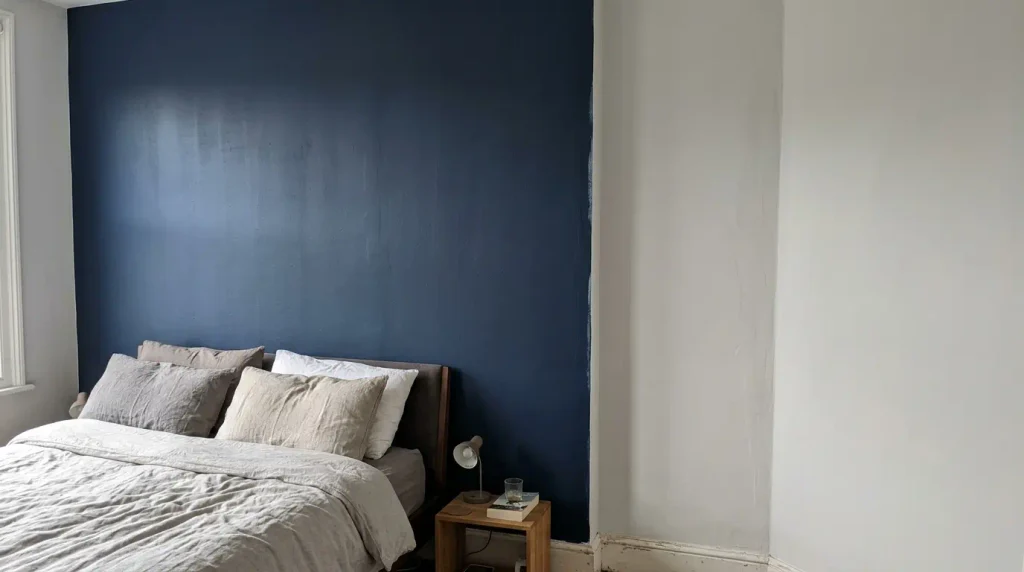
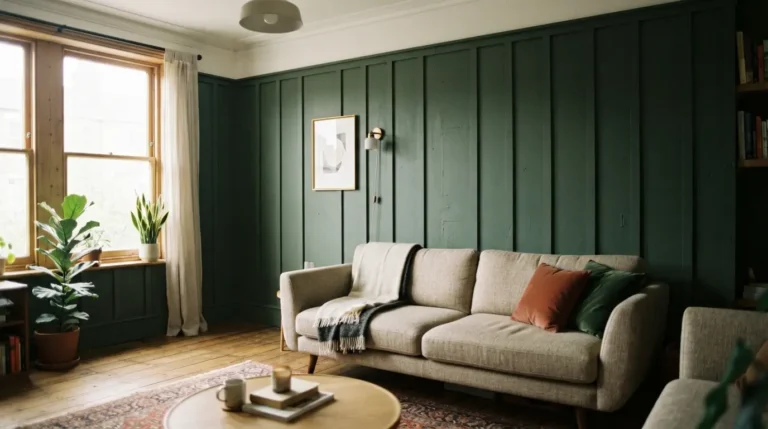
One deep colour on the wall behind the sofa or bed changes the feel of the room for the price of a tin. Navy, bottle green or warm charcoal work in most UK homes because natural light is soft. Two coats of emulsion on a prepared wall takes an afternoon. A 2.5 litre tin covers roughly 30 square metres, so one tin is enough for a feature wall.
Dark colours show marks more. In a hallway or behind a dining table the wall will need touching up sooner. Test the colour in the actual light. A north-facing wall makes cool blues look colder. Warm undertones hold up better.
3. Wallpaper with a clear pattern
A large-scale botanical or geometric paper on one wall gives pattern without covering every surface. Choose a paper with a repeat under 60 cm so joins are manageable on a standard wall. Paste-the-wall types are easier for one person. A roll covers about 5 square metres. For a 3 by 2.5 metre wall you need five to six rolls plus extras for matching.
Patterned paper shows uneven walls. Fill and sand first. In a bathroom or kitchen use a moisture-resistant grade. The cost is higher than paint, typically £30 to £60 a roll for mid-range designs, but the effect is stronger.
4. Panel moulding for structure
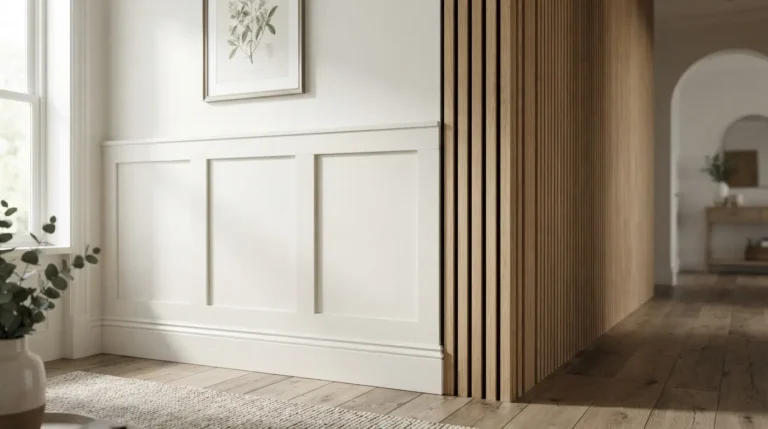
Simple MDF moulding fixed in a grid or wainscot pattern adds architecture without heavy timber. It works in period houses and modern rooms. Cut the strips, glue and pin them, then paint the whole wall. A basic kit for a 3 metre wall costs around £80 to £120. The result looks built-in rather than applied.
The downside is the time. Measuring and cutting to fit around sockets takes longer than the fixing. Once painted it is hard to change without filling the holes. It suits rooms where the wall stays as the feature for years.
5. Tiled feature in wet areas
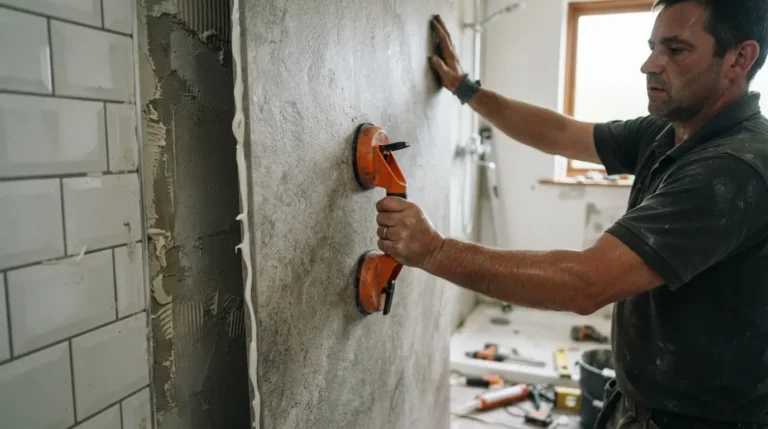
In a kitchen or bathroom a run of tiles on the wall behind the sink or bath creates a practical feature. Large-format porcelain in a plain colour with a narrow grout line keeps the look calm. A 3 by 1 metre area needs about 3.5 square metres of tile. Budget £40 to £80 a square metre for mid-range porcelain plus adhesive and grout.
Tiles are heavy and permanent. Check the wall can take the weight and use the correct adhesive for the substrate. A feature tile wall is hard to reverse, so choose a colour that will still work in five years.
6. Gallery arrangement of frames
A group of frames in similar sizes and frames creates a feature without changing the wall surface. Space them 5 to 8 cm apart and keep the tops or centres aligned. Use a paper template to mark positions before drilling. The cost depends on the frames. A set of eight mid-size frames starts around £100.
The wall itself stays the same, so the feature can change later. In a rental this is the lowest-commitment option. Avoid overcrowding. Leave clear space around the group so it reads as one unit rather than scattered pictures.
7. Acoustic panels for function
Felt or fabric acoustic panels in a simple grid or vertical strips reduce echo while adding texture. They suit open-plan living rooms or home offices. Panels come in 60 by 60 cm sizes. A set of six covers a useful area and costs £150 to £300 depending on the brand. They fix with adhesive or hidden brackets.
They work best where there is hard flooring and little soft furnishing. In a carpeted room the benefit is smaller. Choose a colour close to the wall so the panels read as texture rather than decoration.
8. Two-tone paint with a clean line
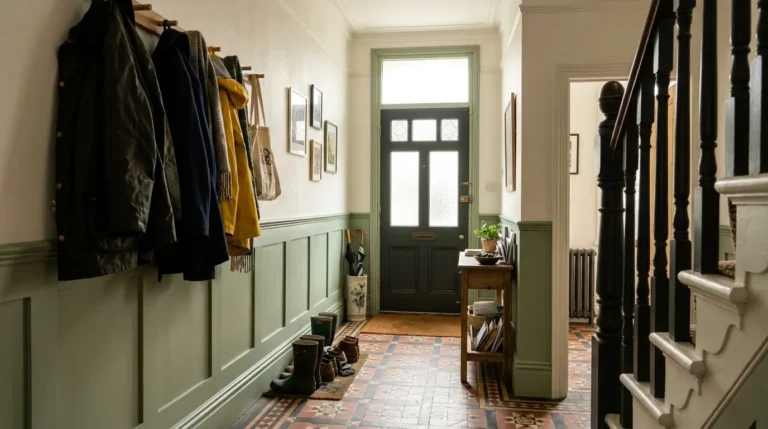
Paint the lower half of the wall in a darker tone and the upper half lighter, with a straight horizontal line at about 90 to 110 cm. It adds interest without a full dark wall and works in smaller rooms. Use a laser level or a long straight edge and masking tape for the line. Two tins of paint are enough for most walls.
The line must be perfectly level or it looks wrong. In a room with sloping ceilings or uneven walls the method is harder. It suits modern rooms where the furniture is low and the line sits above the sofa back.
Conclusion
Pick the wall the eye already goes to and match the treatment to how permanent you want the change. Paint and frames are easy to reverse. Timber, moulding and tiles last longer but cost more to undo. Measure the wall, check the substrate, and test samples in the room light before you commit to the full quantity.
Which wall should be the feature wall?
The one behind the main seating or the bed, or the wall you see first when you enter. Avoid walls with many doors or windows. The feature needs a clear, uninterrupted surface to read properly.
How much does a feature wall cost?
Paint costs under £50. Wallpaper runs £150 to £300. Timber slats or moulding £200 to £500 in materials. Tiles higher once adhesive and labour are included. Most projects stay under £800 for materials on a standard wall.
Can I do a feature wall in a rental?
Yes, with paint, wallpaper that is easy to remove, or frames. Avoid anything fixed with screws or adhesive that damages the surface. Check the tenancy agreement for restrictions on decoration.
Do feature walls make a room feel smaller?
A dark colour on one wall can make that wall recede and the room feel deeper. Busy pattern or heavy texture can close the space in. Keep the other walls light and limit the feature to one clear surface.