How to Add Storage to a Bathroom Without a Major Renovation

You can add storage to a bathroom without a major renovation by working with what’s already there: mounting shallow cabinets and shelves on the walls, swapping a pedestal basin for a vanity unit, and claiming the dead space in corners and toe-kicks. None of this touches your plumbing or your tiling budget.
If you’ve ever stood in a cramped bathroom holding a half-empty shampoo bottle with nowhere to put it down, you already know the real problem. It’s rarely the size of the room. It’s that nobody planned for storage when the bathroom was first fitted, and every product since has just been left wherever it landed.
Start With an Honest Audit, Not a Shopping List
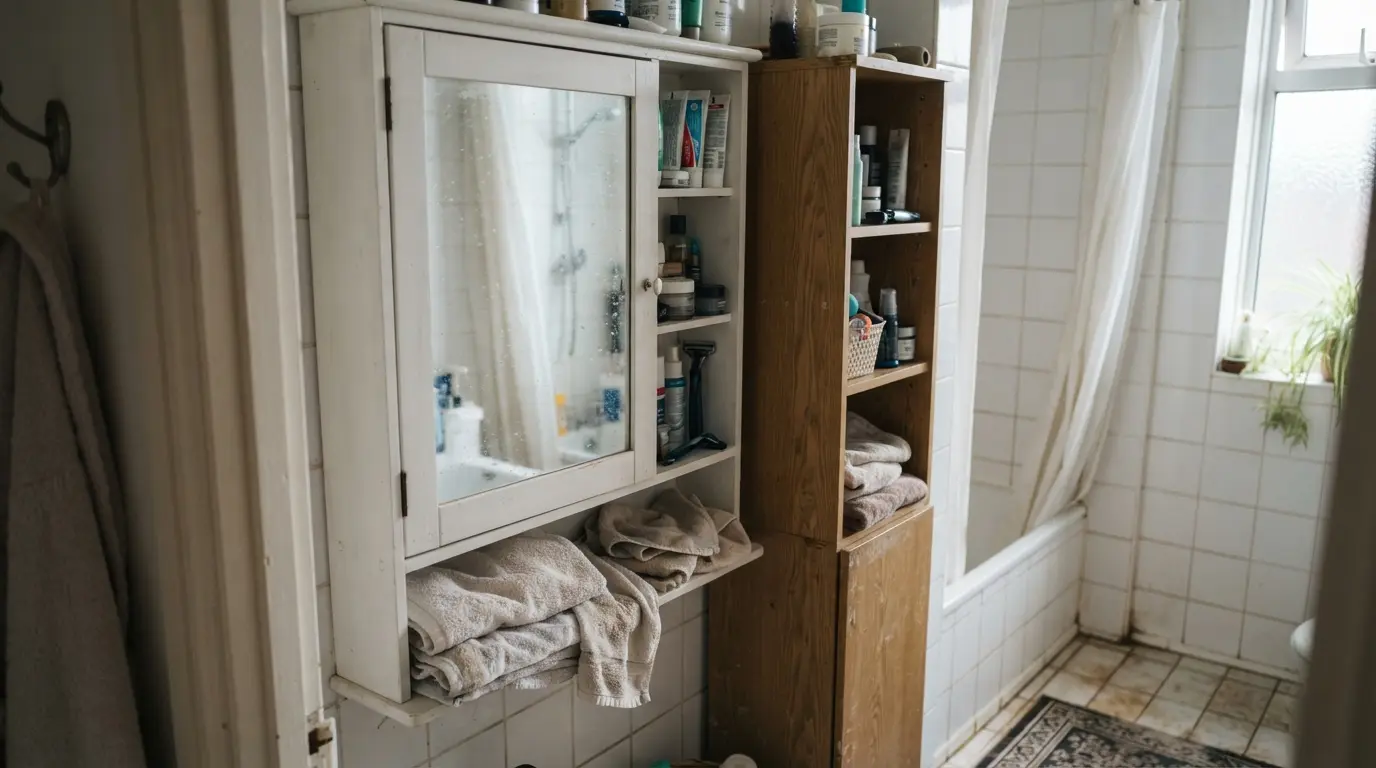
Before you buy a single cabinet, empty every cupboard, shelf and windowsill onto the landing. Most people are storing three to five years of half-used products, expired sunscreen and sample sachets they’ll never use. In fifteen years of fitting bathrooms, this is the step almost everyone skips, and it’s the one that determines whether the storage you add actually solves the problem or just gives clutter a new home. Once you know what you genuinely need to keep, you’ll usually find you need less new furniture than you expected, not more.
Use the Walls Before You Touch the Floor
A shallow wall-mounted cabinet or a mirrored cabinet above the basin adds real storage without narrowing a room that’s already tight on floor space, and it’s the single most effective non-structural upgrade for a small bathroom.
A mirrored cabinet is the best starting point because it replaces a mirror you’d have fitted anyway, so you’re not losing anything, only gaining concealed shelving behind it. Wall-hung cabinets and tallboys work the same way: a tallboy roughly 300–350mm wide slots into the gap beside a toilet or basin unit and gives you far more internal shelf space than its narrow footprint suggests. Open shelving above the toilet or in an alcove is the cheapest option of all, though it only works if you’re disciplined about what sits on it, since open shelves show clutter as readily as they hide it.
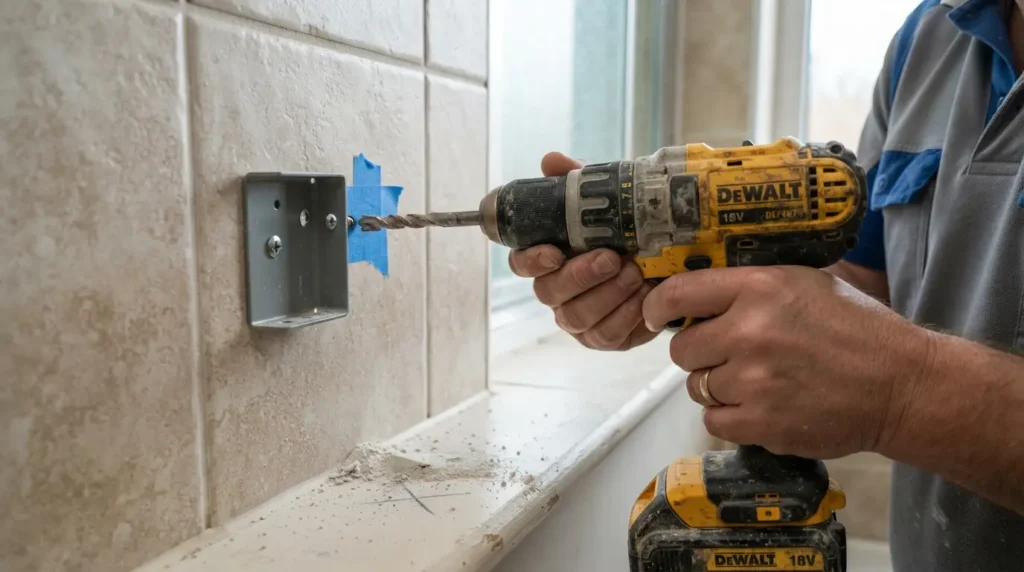
The part competitors skim over is how you actually fix these to the wall. If you’re drilling into tile, mark your hole positions with masking tape first so the drill bit doesn’t skate across the glaze, use a masonry bit at low speed to get through the tile before switching to a standard bit for the wall behind, and always use wall plugs rated for the actual wall type, not just whatever came in the box. A stud wall needs plugs designed for plasterboard, or better, fixings that reach into the timber stud itself; a solid brick or block wall takes standard plugs but you should still test the fixing’s grip with hand weight before hanging anything full of glass bottles on it. A cabinet plus contents can easily weigh 8–15kg, and a fixing that fails after six months usually means a cracked tile and a hole in the wall, not just a dropped shelf.
If your shower wall has room behind the tile, a surface-mounted niche-style unit with a shallow recessed look can mimic a built-in shower niche without opening the wall at all. It’s not identical to a true recessed niche, but it’s the closest you’ll get without lifting tiles.
Swap the Basin, Not the Whole Suite
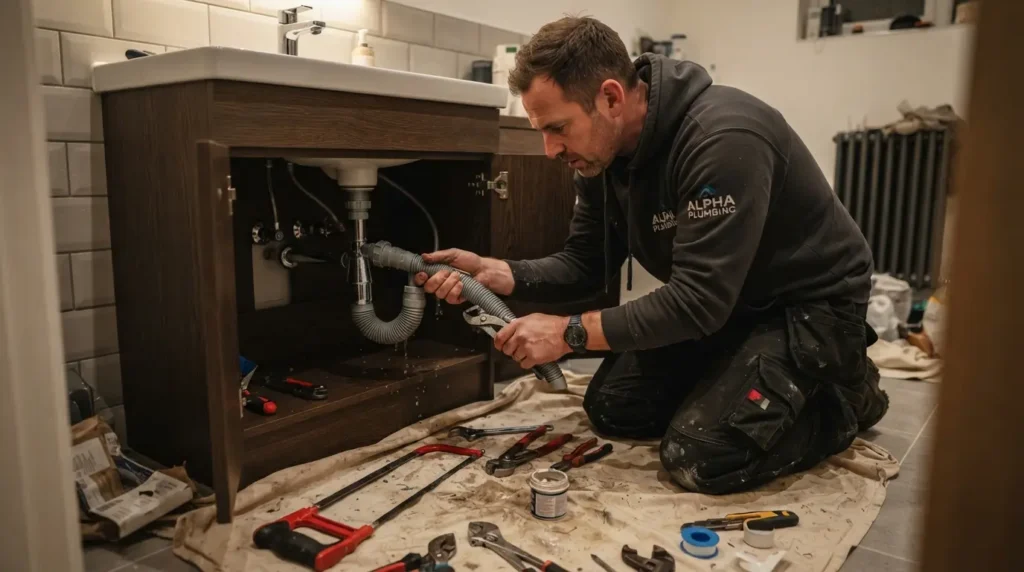
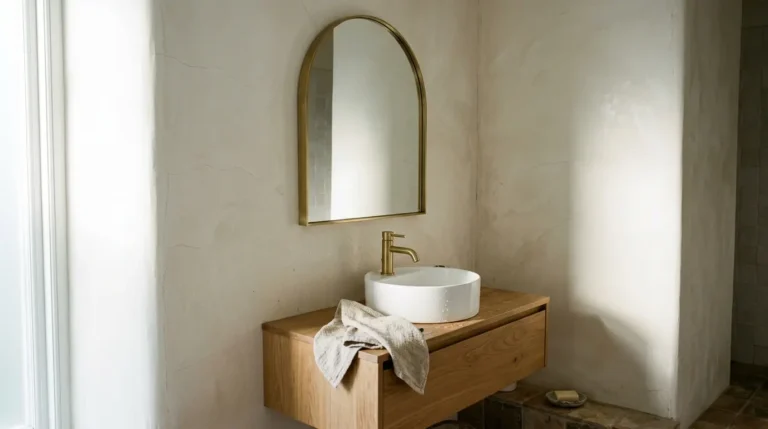
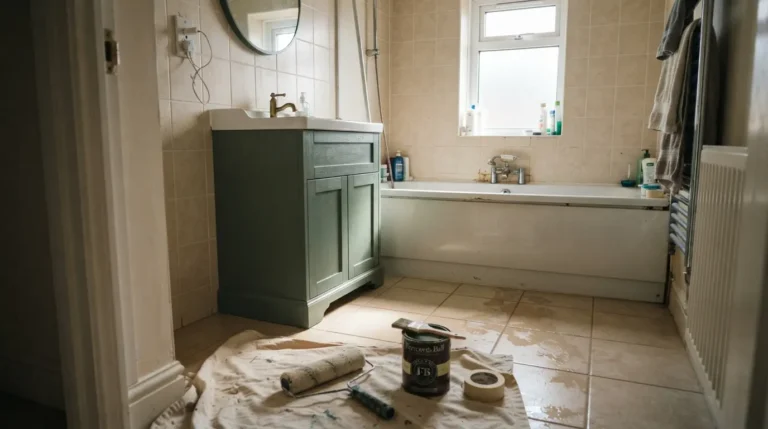
Replacing a pedestal basin with a vanity unit is one of the highest-impact changes you can make, and it’s usually a same-day plumbing job rather than a renovation, because you’re reconnecting to the same waste and supply pipes in roughly the same position. A vanity turns dead space under the basin into concealed drawers or a cupboard, and drawer-based designs are more practical day to day than a door-and-shelf combination because you can see and reach everything without kneeling down and rummaging.
Go as wide as the room allows. A 600mm or 800mm unit holds noticeably more than a compact 400mm one, and if your bathroom has an awkward corner, a corner vanity uses a spot that would otherwise sit empty. This is a job for a plumber, not a full bathroom fitter, and most quote it as a half-day to full-day task depending on whether the existing pipework needs any adjustment.
Claim the Dead Zones
Every bathroom has space that’s technically empty but never gets used: the gap beside the toilet, the floor beneath a wall-hung vanity, the end of the bath, the corner nobody puts anything in. A slim floor-standing unit around 150–200mm wide fits into most of these gaps and holds a surprising amount, including rolled towels and spare toilet rolls. The space underneath a wall-hung cabinet or vanity is easy to overlook entirely; a row of small baskets sitting directly beneath it keeps items within reach without adding a single new fixing to the wall.
Add Furniture That Isn’t Fixed to Anything
Not everything needs a drill. A freestanding cabinet, a narrow rolling cart, or even a repurposed chest of drawers brought in from another room can solve a storage shortfall overnight and gives you the flexibility to move it if the layout changes later. This is the lowest-commitment option on this list and the easiest to reverse if you get it wrong, which makes it a sensible way to live with a solution for a few weeks before you commit to anything permanent.
What This Actually Costs and How Long It Takes
None of the changes above require a contractor to open a wall or move a soil pipe, which is exactly why the budgets and timelines are so much smaller than a renovation.
| Storage upgrade | Typical cost (approx., varies by country) | Typical time |
| Floating shelves or open shelving | £30–£100 | 1–2 hours, DIY |
| Mirrored or wall-hung cabinet | £100–£400 | Half a day, DIY or handyman |
| Tallboy or slim floor-standing unit | £80–£300 | 1–2 hours, DIY |
| Vanity unit replacing a pedestal basin | £250–£800 plus fitting | Half a day to a full day, plumber needed |
| Fitted furniture made to measure | £600–£1,500+ | 1–2 days, tradesperson needed |
These figures are a general guide, not a quote, and they move depending on where you live, the finish you choose and whether you’re paying for installation. A good rule of thumb is that anything you can lift and hang yourself sits at the low end, and anything involving a plumber or made-to-measure joinery pushes toward the top.
Common Mistakes That Undo Good Storage Planning
The most common failure isn’t a bad product, it’s overloading a wall fixing that was never rated for the weight going on it, so always check the fixing spec against the loaded weight of the cabinet, not just the empty weight on the box. The second is choosing MDF or chipboard furniture for a spot too close to the bath or shower; constant humidity swells the edges over a year or two, and the doors stop closing cleanly. Look for solid-edge or moisture-resistant board in anything sitting within splash range. The third is treating open shelving as a style statement and forgetting it needs active upkeep. It looks considered for the first month and cluttered by month three unless you’re genuinely willing to keep it edited.
FAQs
Can I add bathroom storage without hiring a plumber?
Yes, for anything that doesn’t touch the basin’s plumbing. Wall cabinets, shelves, tallboys and freestanding units are all straightforward DIY or handyman jobs. A plumber is only needed if you’re replacing a pedestal with a vanity unit or moving a fixture.
Is it worth building a shower niche into an existing tiled wall?
Only if you’re prepared to open the wall and retile that section, which puts you back into renovation territory. For an existing bathroom, a corner shelf or a shower caddy on a fixed rail gets you most of the benefit without the disruption.
What’s the single best storage addition for a small bathroom?
A mirrored cabinet, consistently. It replaces a mirror you’d need anyway and adds concealed storage in the same footprint, which is hard to beat for a room with no floor space to spare.
How do I know if my wall can take a heavy cabinet?
Find out whether it’s a solid wall or a stud wall before you buy anything. A solid brick or block wall handles most cabinets with standard fixings; a stud wall needs fixings that grip the timber stud itself, not just the plasterboard, especially for anything holding bottles or glass.
Good bathroom storage rarely comes from one big change. It comes from stacking several small ones, the wall cabinet, the wider vanity, the basket under the sink, until the room stops fighting you every morning. Start with the audit, fix the walls properly, and add furniture as you actually need it rather than all at once.