12 Bathroom Renovation Ideas to Transform an Outdated Space

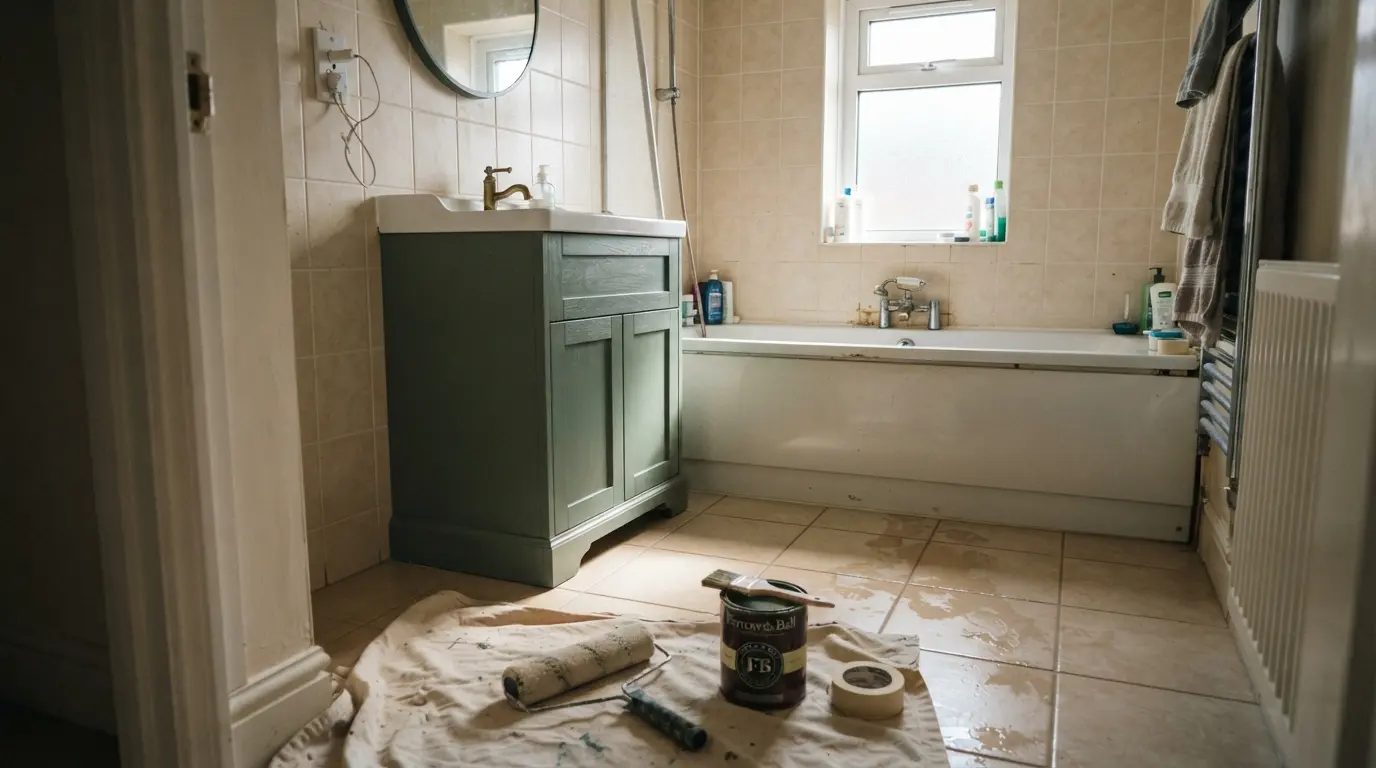
If your bathroom still wears the tile, taps, and colour scheme of a decade it has no business celebrating, you don’t need to gut it to fix it. The best bathroom renovation ideas for an outdated space work with what’s structurally sound (the plumbing, the layout, sometimes even the tub) and change what’s actually reading as tired: colour, hardware, lighting, and surfaces.
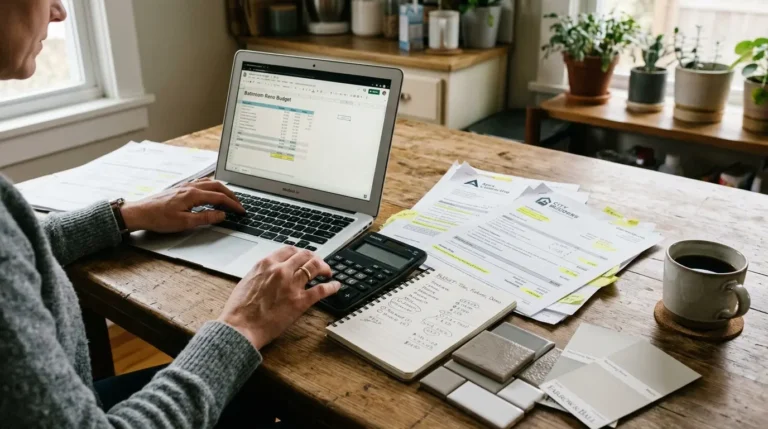
The anxiety most homeowners feel here isn’t really about taste. It’s about money. A full strip-out feels like the only “proper” option, but it’s also the most expensive one, and plenty of dated bathrooms have good bones hiding under bad decisions. The ideas below are ordered roughly from lowest disruption to highest, so you can see exactly how far your budget needs to stretch before you start.
1. Repaint the Vanity Instead of Replacing It
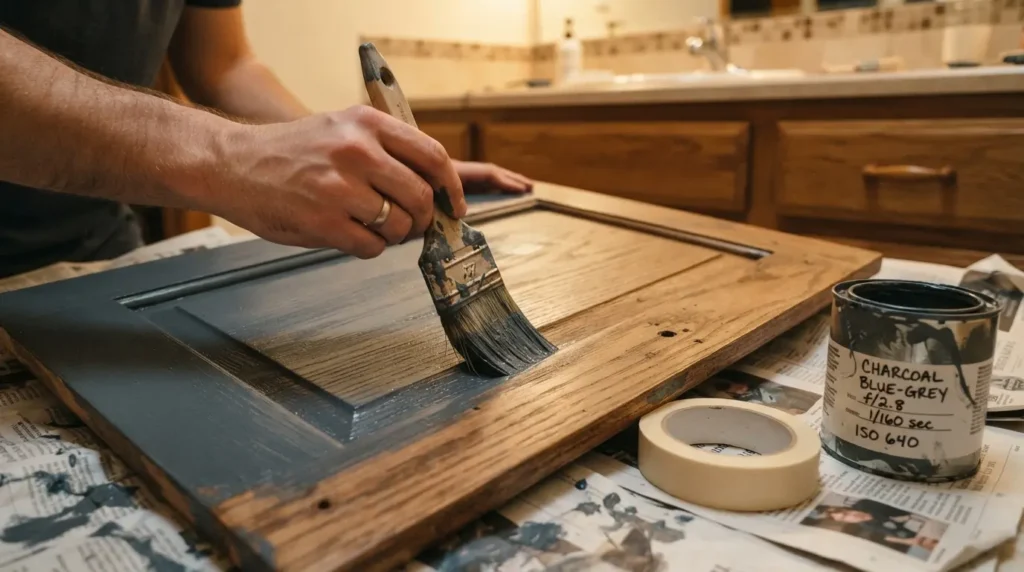
A tired oak or maple vanity is usually the single most dating feature in a 1990s or early-2000s bathroom, and it’s also one of the cheapest to fix. Painting cabinetry a deep, cool-toned colour, rather than ripping it out, keeps the door style honest while completely shifting the room’s age.
This works because most dated vanities are structurally fine, they’ve just gone orange with age and clash with everything around them. A good rule of thumb is to lean cooler rather than warmer if the existing tile or countertop has any pink, beige, or terracotta in it. Blue-green greys, deep sage, and charcoal all tend to ground a 90s tile palette far better than another beige. Expect to pay roughly £80 to £200 for paint, primer, and new hardware if you’re doing it yourself over a weekend, versus £800 upwards for a new vanity unit. The trade-off is durability. Cabinet paint in a humid room needs a proper primer and a hard-wearing finish, or it will chip at the edges within a year or two, so this isn’t a corner worth cutting on product quality even if you’re cutting the labour cost entirely.
2. Choose a Wall Colour That Works With What You’re Keeping
If you’re keeping the tile, the tub, or the countertop, the wall colour has to negotiate with those fixed finishes rather than fight them. This is one of the most overlooked bathroom refresh ideas: the wrong wall colour can backdate a bathroom even when everything else has been updated.
A patchy taupe tub surround paired with a stark white wall reads as mismatched, while the same surround paired with a soft, complementary taupe on the walls suddenly looks intentional. The trick most first-timers miss is testing paint against the tile in the actual bathroom light, not the tin lid in a shop. Bathroom light bulbs and limited natural light shift undertones dramatically, and a colour that looked neutral in the paint aisle can turn distinctly pink or green once it’s on the wall. Budget roughly £30 to £60 per tin of a decent bathroom-rated emulsion, and always ask for a moisture-resistant or “bathroom” formulation, since standard matt emulsion tends to bubble and peel around showers within a year.
3. Swap Dated Tile for a Timeless Pattern or Format
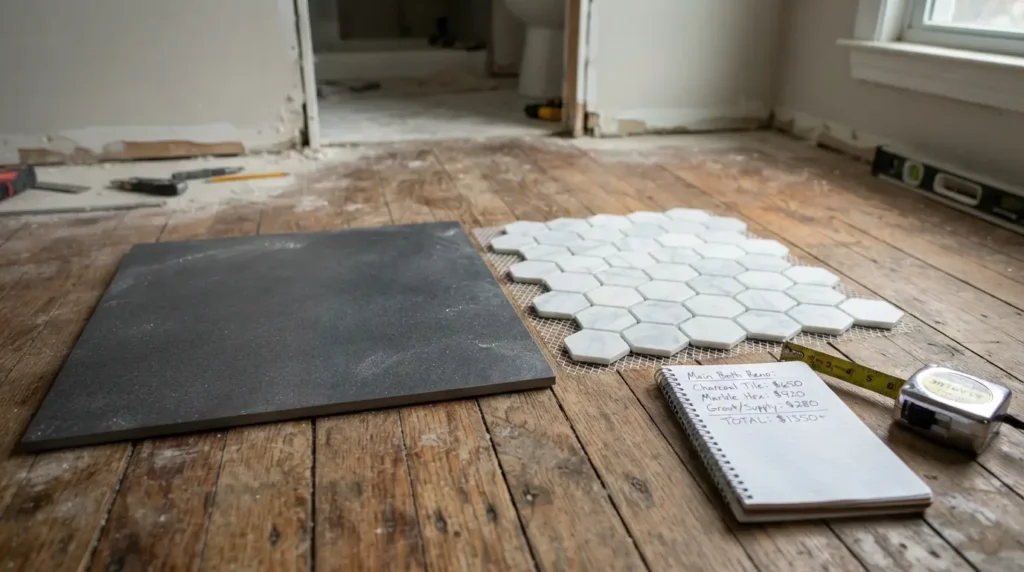
Full re-tiling is one of the bigger jobs on this list, but it’s also the one with the most staying power. Large-format tiles, handmade-look ceramics, and classic shapes like hexagon or herringbone read as current for far longer than the small, high-shine tiles common in older bathrooms.
The honest trade-off here is cost versus longevity. Large-format tiles minimise grout lines and look clean, but they need a flatter substrate to lay properly, which sometimes means extra prep work if the existing floor or wall isn’t level. Classic marble-look hexagon mosaics or matte large-format porcelain both tend to outlast trend-driven tile choices by a decade or more, because their appeal isn’t tied to a specific era. Full tile replacement for a shower and floor in a standard-sized bathroom typically runs from around £1,500 to £4,000 for materials and labour, varying enormously by country, tile choice, and whether any tricky plumbing relocation is involved. A common mistake is choosing a tile purely from a showroom sample under bright lighting rather than viewing a full sample board at home, so ordering a physical sample before committing to a whole room is worth the extra week’s wait.
4. Update Lighting Before You Touch Anything Else
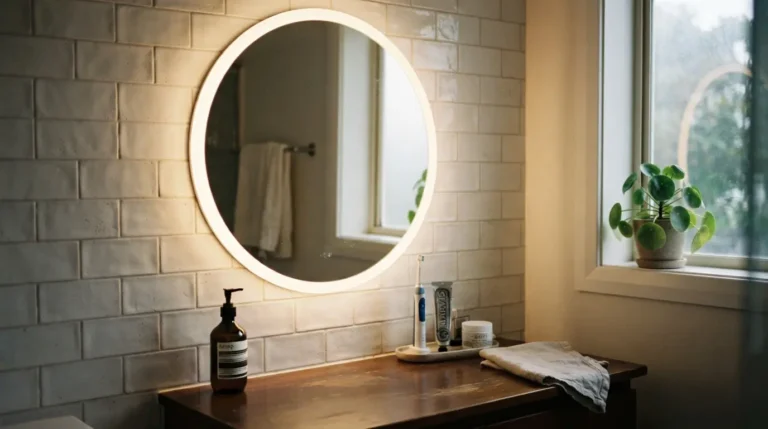
Poor lighting makes even a freshly renovated bathroom look dim and dated, and it’s one of the fastest wins on this list. A single centre ceiling light with a yellow-toned bulb is a hallmark of an unrenovated bathroom, and swapping it for layered lighting changes the entire feel of the room in an afternoon.
Add brighter, whiter LED vanity lights either side of or above the mirror to eliminate shadowing on the face, and consider a dimmable overhead fixture for softer evening use. This is also the point to check ventilation, since a bathroom without a working extractor fan will develop mould and peeling paint regardless of how good it looks on day one. Budget around £60 to £250 for new fixtures depending on style, plus installation if you’re not comfortable with basic electrical work yourself, and always use a qualified electrician for anything near water, as bathroom lighting has strict safety zone rules in most countries.
5. Replace the Hardware and Fixtures
Faucets, cabinet knobs, towel rails, and shower heads carry more visual weight than most people expect. A worn brass tap from the 1990s or an outdated chrome-and-gold mix instantly signals an unrenovated space, even in an otherwise decent bathroom.
Most homeowners find matte black, brushed nickel, or unlacquered brass finishes age better than polished chrome or shiny gold, though the right choice depends entirely on what else is staying in the room. Mixing metals deliberately, one dominant finish with a secondary accent, tends to look considered rather than mismatched, but mixing three or more finishes without a plan usually looks accidental. Expect to pay roughly £60 to £180 for a new basin mixer tap, £80 to £250 for a shower system, and £15 to £40 per handle set for cabinet hardware. This is a genuinely satisfying weekend project because the visual impact per pound spent is higher here than almost anywhere else on this list.
6. Rip Out Old Flooring for Tile, Vinyl, or Stone
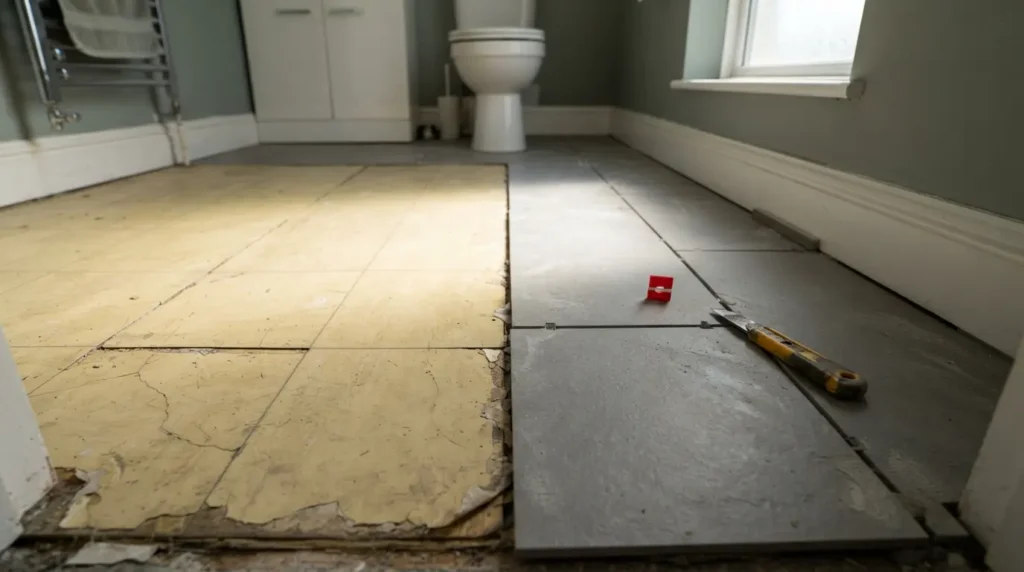
Carpet in a bathroom is one of the clearest markers of an outdated space, and cracked or yellowing vinyl sheet flooring isn’t far behind. Swapping either for tile, stone-look porcelain, or a quality waterproof vinyl plank resets the whole room’s baseline.
Tile and natural stone read as the most premium and are the most water-resistant long term, but they’re also cold underfoot without added heating, and heated flooring is worth strong consideration if you’re already lifting the old floor. A good rule of thumb is to budget for underfloor heating installation while the subfloor is exposed rather than trying to retrofit it later, since retrofitting after the fact usually means redoing finished tile work. Flooring costs vary widely by material and country, but a realistic range for a small to medium bathroom sits between £600 and £2,500 including labour, with heated flooring adding a few hundred pounds more. The honest downside of natural stone is maintenance: it typically needs periodic sealing to resist staining, something glazed porcelain never requires.
7. Add Real Storage With Built-In Shelving or Niches
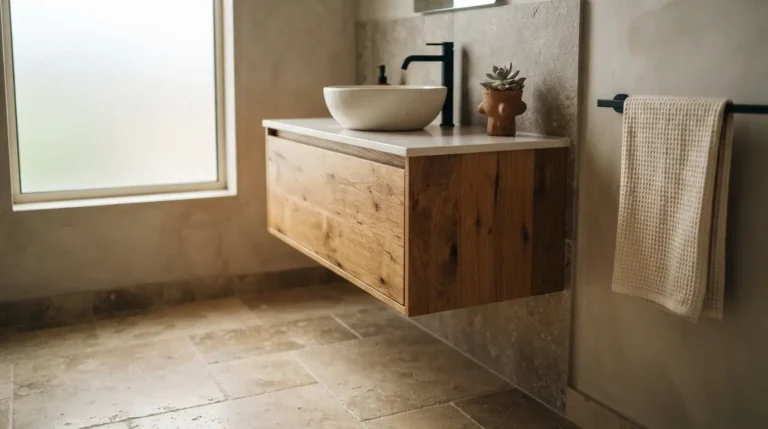
Outdated bathrooms are often short on storage, relying on a single medicine cabinet or a freestanding unit that clutters the floor space. Built-in recessed shelving, a shower niche, or a floating vanity with open shelving underneath all add functional storage without eating into the room’s visual footprint.
A shower niche is one of the best-value additions if you’re already opening up a shower wall for re-tiling, since the incremental cost of framing and tiling a recess is small compared to doing the tiling job at all. Floating vanities also tend to make small bathrooms feel larger because they expose more floor, which matters enormously in a compact space. Built-in shelving or a niche typically adds £150 to £500 to a renovation already underway, while a standalone floating vanity with storage runs from around £300 to £1,200 depending on size and material.
8. Modernise the Shower With Glass and a Better Layout
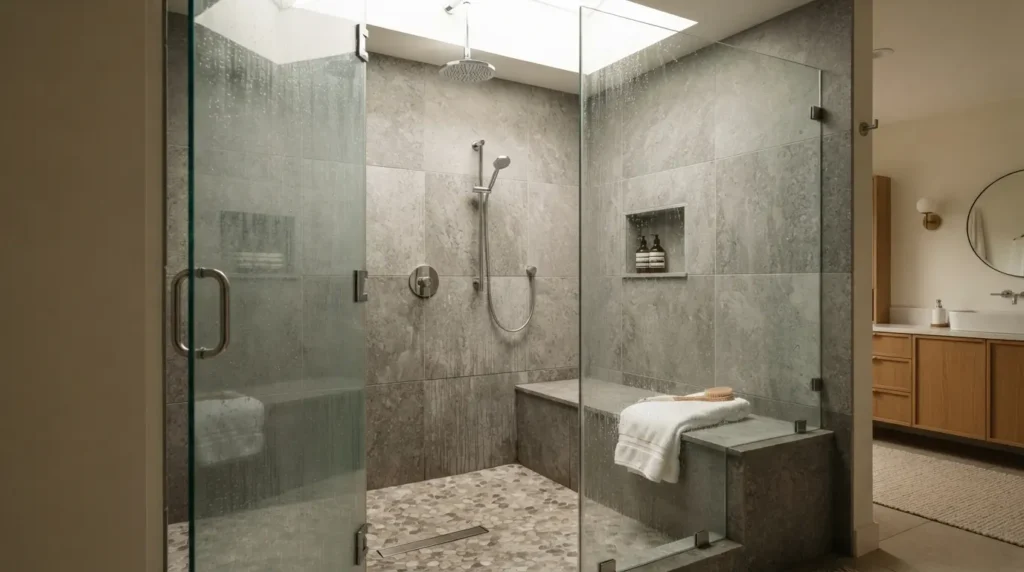
Fibreglass shower surrounds and heavy plastic curtains are one of the clearest tells of an unrenovated bathroom. Swapping to a frameless or semi-frameless glass enclosure, or upgrading tile and adding a built-in bench, makes the whole room feel considerably more current and spa-like.
This is genuinely one of the bigger-ticket items on the list, and it’s worth being honest about the trade-offs. A full glass enclosure looks fantastic in photos, but it also shows water spots and soap scum more visibly than a curtain, meaning more frequent squeegeeing to keep it looking sharp. A walk-in, curbless shower is excellent for accessibility and resale appeal but usually requires floor levelling work that adds cost. Realistic ranges sit between £1,200 and £3,500 for a new glass enclosure and updated shower tiling in a standard bathroom, with wet rooms and curbless designs pushing toward the higher end or beyond.
9. Rethink Whether You Actually Need the Bathtub
Plenty of outdated bathrooms have a bathtub nobody uses, taking up space that could become a larger, more usable shower. Removing an underused tub and expanding the shower footprint is one of the more transformative bathroom transformation moves on this list, though it comes with a genuine resale caveat.
If this is the only bathroom in the home, or if the property is family-oriented, many buyers still expect at least one tub somewhere in the house, so removing the only bathtub can be a mistake from a resale perspective even if it’s a daily-life upgrade for the current owner. In a second or ensuite bathroom, though, converting to a larger walk-in shower is usually a safe call. Removing a tub and expanding a shower typically costs £1,000 to £3,000 depending on plumbing changes required, since moving drain positions adds meaningfully to labour.
10. Bring in Wallpaper or a Feature Wall
A flat, single-colour bathroom can feel unfinished even after everything else has been updated. A patterned, water-resistant wallpaper on one wall, painted wainscoting, or even a hand-painted mural adds personality and makes a space feel finished rather than merely renovated.
The key detail people miss is that not all wallpaper is suitable for bathroom humidity. Vinyl-coated or specifically bathroom-rated wallpaper resists peeling near steam and splashes, while standard paper wallpaper will bubble within months in a room with a shower. A feature wall behind a vanity or on a chimney breast, well away from direct water contact, is generally the safest placement. Budget around £40 to £120 per roll for quality bathroom wallpaper, or £15 to £40 per square metre if hiring a decorator to hang it professionally.
11. Commit to a Bold Colour Instead of Playing It Safe
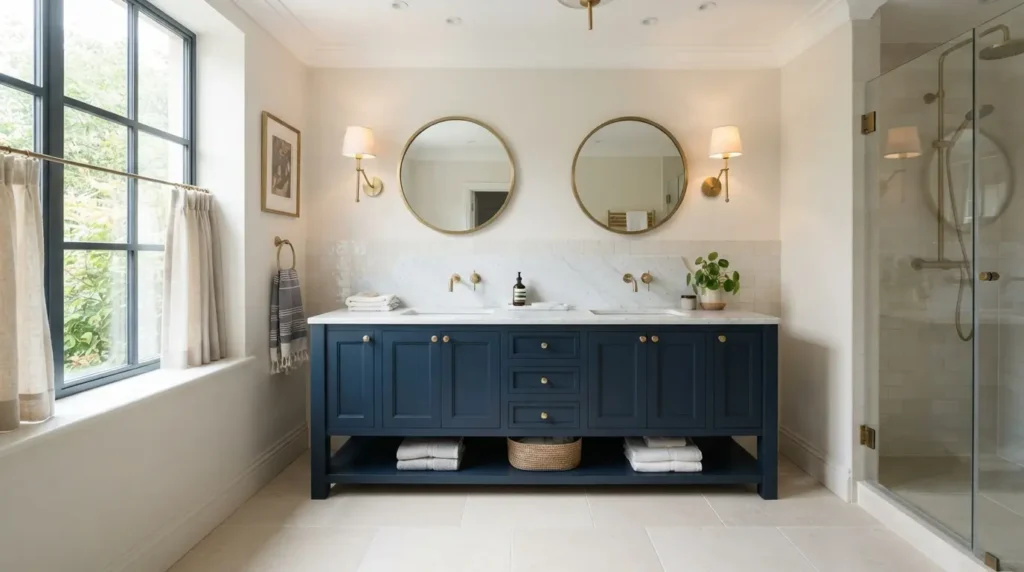
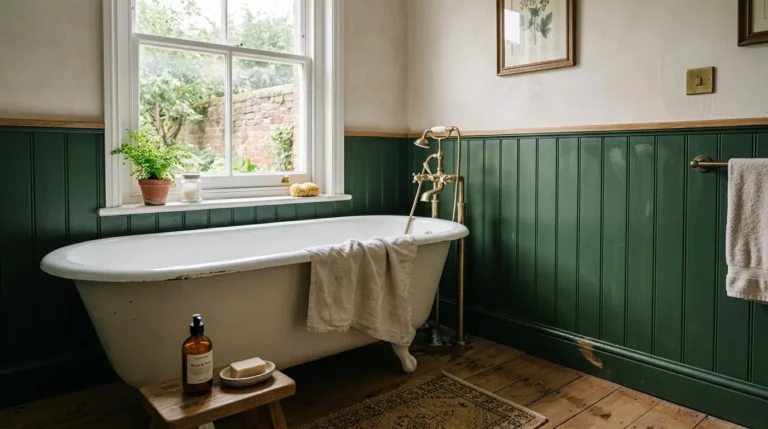
An all-white or beige bathroom can look clean, but it can also look unfinished or like a rental. Committing to a genuinely bold wall or cabinetry colour, a deep green, a chartreuse, a navy, is one of the update bathroom ideas that reads as the most intentional and design-led, provided it’s paired with enough neutral background to keep the room from feeling heavy.
This tends to look great in photos and in person alike when balanced correctly: one bold surface (walls or cabinetry, rarely both at full saturation) against white tile, fixtures, or trim. The risk is going too dark in a small, low-light bathroom without a window, which can make the space feel smaller rather than more characterful. Sampling the colour on a large board and viewing it morning and evening before committing is the safest way to avoid regret, since paint costs are minor compared to the time lost repainting.
12. Upgrade the Countertop and Add a Backsplash
A chipped laminate or dated marbled-effect countertop is easy to overlook when planning a renovation, but it sits at eye level and gets noticed immediately. Swapping to quartz, a budget-friendly laminate in a modern finish, or adding a simple tiled backsplash behind the sink pulls the whole vanity area together.
Quartz and engineered stone are the most forgiving in terms of maintenance, resisting stains and scratches without sealing, while natural stone options like marble look striking but need more care. A backsplash doesn’t need to be elaborate; a few rows of coordinating tile behind the tap is often enough to visually anchor the space. Realistic costs run from £150 to £400 for a laminate countertop replacement, up to £600 to £1,500 for quartz in a standard vanity size, with a simple backsplash adding another £80 to £250 depending on tile choice.
| Renovation Idea | Approx. Cost (GBP) | Typical Timeline |
| Paint vanity and update hardware | £80–£200 | 1–2 days |
| Repaint walls | £30–£60 | 1 day |
| Update lighting fixtures | £60–£250 | 1 day |
| Replace taps and fixtures | £150–£400 | 1–2 days |
| New flooring (tile or vinyl) | £600–£2,500 | 2–5 days |
| Full re-tile (shower and floor) | £1,500–£4,000 | 5–10 days |
| Glass shower enclosure and tiling | £1,200–£3,500 | 5–10 days |
| Remove tub, expand shower | £1,000–£3,000 | 4–8 days |
| Countertop replacement | £150–£1,500 | 1–3 days |
These figures vary considerably by country, region, and the tradesperson’s day rate, so treat them as a starting point for budgeting rather than a fixed quote.
Conclusion
The most effective bathroom renovation ideas rarely require starting from a blank slate. Painting a vanity, updating hardware, and reconsidering the wall colour can transform how a room feels for a few hundred pounds, while re-tiling, upgrading the shower, or rethinking the bathtub deliver a bigger transformation for a bigger budget. The right approach depends on what’s actually dated versus what’s simply unloved, and honest budgeting from the start makes it far easier to choose renovation ideas that fit both the space and the wallet.
FAQs
How much does a bathroom renovation typically cost?
A full bathroom renovation usually ranges from around £3,000 for a modest refresh to £10,000 or more for a full strip-out with new plumbing, fittings, and premium materials, though costs vary significantly by country and location.
Can you renovate a bathroom without replacing everything?
Yes. Keeping structurally sound elements like the tub, vanity carcass, or existing layout and updating paint, hardware, lighting, and tile is a genuine renovation strategy, not a compromise, and it’s how most of the ideas on this list work.
How long does a bathroom renovation take?
A cosmetic refresh (paint, hardware, lighting) can be done in a weekend. A full re-tile and fixture replacement typically takes one to two weeks, and a full gut renovation with plumbing changes can run three to six weeks depending on scope and tradesperson availability.
What’s the cheapest way to update an outdated bathroom?
Repainting the vanity and walls, updating hardware and lighting, and adding a new shower curtain or accessories delivers the biggest visual change for the smallest spend, often under £300 to £500 total.
Do I need planning permission or building approval for a bathroom renovation?
Most cosmetic and like-for-like fixture updates don’t require formal approval, but moving plumbing, changing the layout, or altering ventilation often does depend on local building regulations, so it’s worth checking with local authorities before major structural changes.
Should I hire a professional or DIY a bathroom renovation?
Painting, hardware swaps, and lighting updates are reasonable DIY projects for most confident homeowners. Plumbing changes, electrical work near water, and tiling in wet areas are worth hiring a qualified tradesperson for, both for safety and to protect any warranty on materials.