
How to Plan a Bathroom Renovation Budget

To plan a bathroom renovation budget, define the scope first, price the work in three parts (supply, installation and finishing), then add 10 to 20% contingency on top. Get like-for-like quotes from the same brief and lock every big decision before first fix. Most UK family bathrooms cost roughly £5,000 to £12,000.
A common pattern goes like this: you set a number, then the quote arrives higher because it left out the tiler, waste removal or VAT. Budgets rarely fail because of one big mistake. They fail because the plan was vague when the number was chosen.
How Much Does a Bathroom Renovation Cost?
Most UK family bathrooms cost roughly £5,000 to £12,000. Simple refreshes start around £3,500, and high-end projects run to £12,000 to £15,000 or more. Prices are approximate and vary by country, region and specification. Scope and layout changes drive the total more than any single product.
| Scope | Approx. total (GBP) | What it usually covers |
| Simple refresh | £3,500 to £6,000 | Like-for-like swap, standard tiles, redecoration, no layout change |
| Full renovation, good spec | £6,000 to £12,000 | Strip-out, new suite, tiling, plastering, electrics, lighting, extractor fan |
| High-end or complex | £12,000 to £15,000+ | Layout change, wet room, premium tiles, underfloor heating, bespoke storage |
This bathroom cost guide uses ranges because sources disagree at the edges. One architect’s guide quotes £5,000 plus VAT for a simple upgrade and £10,000 plus VAT for a full renovation. A UK retailer puts mid-range at £6,000 to £8,000, and another guide runs to £15,000. VAT, region and specification explain most of the gap. That same architect’s supply schedule for a medium-spec bathroom is £7,000 to £8,000 before installation, so a bathroom with a separate bath and shower can outrun the bands above. Outside the UK, keep the structure and swap in local quotes.
How Do You Plan a Bathroom Renovation Budget Step by Step?
Plan a bathroom renovation budget in six moves: choose the scope, rank must-haves, split costs into supply, installation and finishing, decide who buys what, get comparable quotes, then add contingency. Each step narrows the number, so skip none of them.
1. Decide Your Scope First
Pick one of three scopes before you look at a single tile: a like-for-like swap, a light remodel or a full overhaul. Scope sets the budget more than any product does. Work out how much bathroom renovation you can afford by scope, not by wish list, because a swap that fits beats an overhaul that stalls halfway.
Keeping the layout is usually cheapest. Moving the toilet costs more because it depends on the soil pipe, and a solid concrete floor makes hidden pipework harder to chase. A good rule of thumb is to keep the toilet close to the existing soil vent pipe. Wet rooms and moved walls usually need a builder, because waterproofing, drainage and structure come into play.
2. Rank Your Must-Haves and Nice-to-Haves
List what the bathroom must fix, then rank every extra. Shower quality, waterproofing, plumbing and ventilation go first. Niches, designer taps and underfloor heating are upgrades you add if quotes allow. One renovator gave up a double basin for storage, which is the kind of trade a written list makes easy. Most homeowners find the wish list shrinks once real prices arrive, so rank it before that happens.
3. Split the Budget Into Supply, Installation and Finishing
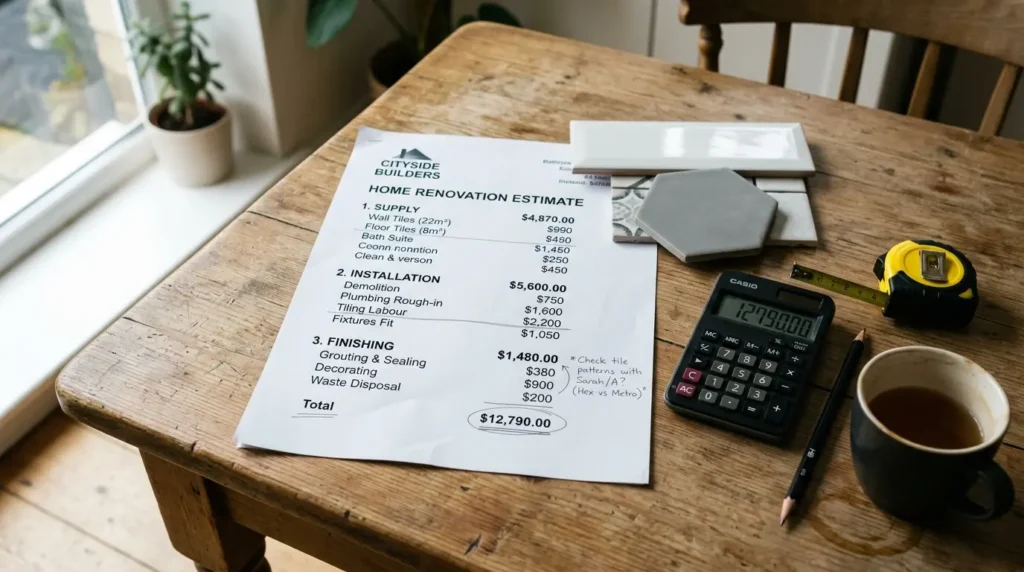
Price supply, installation and finishing as separate lines. Supply covers products, installation covers trades, and finishing covers paint, sealant, trims and waste removal. Separate lines show where the money goes, and they stop a cheap item that takes longer to fit from posing as a bargain. Plan bathroom budget lines this way before you ask for quotes.
One UK architect’s guide, based on recent projects, gives these approximate installation costs for a 6 to 9 square metre family bathroom, mostly before VAT:
| Item | Approx. cost (GBP) | Note |
| Fit bath, basin and WC (labour and pipework) | £1,200 to £1,500 | Excludes the products |
| Walk-in shower: waterproofing, re-boarding, plumbing | £1,200 to £1,500 | Wet rooms cost more |
| Heated towel rail plumbing | About £350 | Per rail |
| Electrics: downlights, sockets, extractor fan | About £500 | Excludes the fittings |
| Electric underfloor heating | About £450 | Materials and labour |
| Tiling labour | £30 to £60 per sq m | Grout and sealant extra; small or patterned tiles cost more |
| Replastering | £500 to £750 | Typical family bathroom |
| Redecorating | £400 to £700 | Per room |
| Joinery | About £300 per day | Cabinets, shelving, boxing in |
Supply is a separate pot, and labour and supply are often close to equal. A budget that counts only products will fall well short. Costs people often forget:
- VAT, which many builders add after quoting
- Waste removal and skip hire
- Grout, adhesive, trims and silicone
- Making good walls, floors or ceilings before new finishes go on
- Electrical certification and, if you relocate fittings, building regulations sign-off
- Delivery, storage and living without the bathroom for a couple of weeks
4. Decide Who Buys What
Decide before quotes whether you or the builder buys the products. Builder-supplied items simplify responsibility, while buying yourself can save money but makes you liable for delays and mismatches. Send a schedule listing each item with its retail price, reference code and delivery time. If your delivery slips, the builder’s extra time lands on your bill.
Check the hidden parts too. A bath may need a waste, trap and overflow, wall-hung fittings need frames and fixings, and a concealed shower valve must be on site before the wall is closed.
5. Get Three Comparable Quotes
Get at least three quotes built from the same brief, and compare them line by line. Give every trade the same layout, measurements, product list, tile coverage, electrical and heating needs, and supply responsibilities. A cheaper quote often leaves out waste removal, or allows only a tiled splashback while another prices full-height tiling.
Ask for VAT to be shown and agree a written contract. Be wary of the lowest number. If quote and budget are far apart, cut scope, not waterproofing.
How Much Contingency Should You Add?
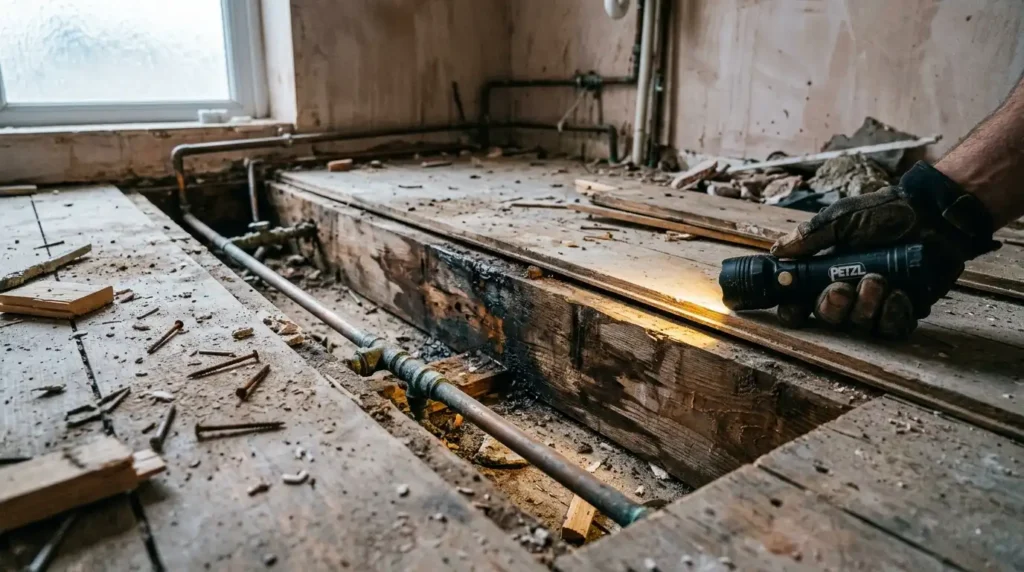
Add 10 to 20% on top of your quoted total. Use the low end for a simple swap in a newer home, and the high end for older properties, layout changes or anything that opens up walls or floors. On an £8,000 quote, that means holding back £800 to £1,600.
Sources vary between 10% and 20%, and older homes with structural or wiring unknowns can justify more. Typical surprises include rotten joists, damp behind walls, outdated plumbing, an electrical consumer unit that needs upgrading and floors that need repair. Hold the fund until the walls are open and the problems are visible. If it disappears into nicer tiles before work starts, it stops being contingency.
Where Can You Save and Where Should You Spend?
Save on layout, tile size and finish choices, and spend on waterproofing, plumbing quality, ventilation and the shower. Keeping fixtures where they are, using standard tiles and fully tiling only wet zones cuts cost without risking the build.
Save here:
- Layout: keep the toilet, basin and bath near existing supply and drainage lines.
- Tile choice: ceramic tiles cost less than stone, and small or patterned tiles add fitting time. Splashbacks or half-height tiling cost less than full height.
- Wall panels: one panel maker says fitting takes about a third of the time of tiling, and panels can go over sound existing tiles. That is a manufacturer claim, so compare quotes including trims and sealant.
- DIY: painting, accessories and flat-pack assembly are sensible jobs to take on.
Spend here:
- Waterproofing and tanking in wet zones, because failures hide behind finished walls.
- Plumbing and electrics by qualified trades, with certificates.
- Ventilation: an extractor fan that meets local rules, since damp ruins good finishes.
- Tapware and shower controls, which you touch every day. One architect suggests putting money here and saving on tiling.
How Long Will It Take and How Should You Pay?
A bathroom typically takes about two to four weeks on site. Planning, ordering and trade availability can add several more weeks. Pay in stages linked to finished work, keep the schedule in a written contract, and avoid large upfront deposits beyond materials. Plan for at least a fortnight without your bathroom.
Simple installs can finish in a couple of weeks, while complex projects run several. Most good builders are booked ahead, so book early. Order materials before work starts and check each delivery for damage, because a missing part can stall the whole job. Allow drying time after plastering before tiling. If you buy the products yourself and delivery runs late, you may pay for wasted trade time.
Conclusion
The best way to plan a bathroom renovation budget is to fix the scope, price supply and installation separately, and hold 10 to 20% back for surprises. Get three quotes built from the same brief, and settle every big decision before first fix. Spend where you cannot see, on waterproofing, plumbing and ventilation, and save on layout and tile choices. Start by measuring the room and checking where your soil pipe runs.
FAQs
How much does a small bathroom renovation cost?
Roughly £3,500 to £8,000 for a compact bathroom or en suite in the UK, depending on specification and whether the layout changes. Size matters less than scope, because even a small room still needs plumbing, waterproofing, electrics and labour. These are approximate figures and vary by country and region.
Why do bathroom renovation budgets go over?
Budgets usually go over because the original plan was vague. Late decisions, layout changes, quotes that assumed different things, and hidden problems such as old pipework or damaged floors all add cost. A clear brief, decisions locked before first fix and a contingency fund cut most of that risk.
Do I need building regulations approval for a bathroom renovation?
In the UK, replacing sanitaryware and taps does not need approval, but relocating a bathroom, adding a new one, altering drainage or doing electrical work near wet areas must comply. Keep the completion certificates, because buyers may ask for them. Rules differ by country, so check locally.
Does moving the toilet or shower increase the cost?
Yes. Moving a toilet depends on the soil pipe and may involve floors, walls and boxing, so it costs more than keeping it in place. Concealed showers are usually more complex than exposed ones, and wet rooms need extra preparation. Keeping fixtures where they are is the biggest single saving.
Should I buy my own bathroom fittings?
You can save money, but you take on the risk. Confirm who orders each item, who checks fit and parts, who handles damaged returns and when everything must be on site. If your delivery is late, you may pay for the builder’s wasted time. Many people give the builder a full schedule instead.
Are wall panels cheaper than tiles?
Often, because panels install faster and can fit over sound existing tiles. One panel maker says fitting takes about a third of the time of tiling, but that is a manufacturer claim. Compare quotes including trims, sealant and edge profiles. Tiling labour typically runs £30 to £60 per square metre in the UK before extras.
Can a bathroom cost calculator replace a quote?
No. A calculator helps you spot expensive decisions early, such as moving the toilet, full-height tiling or a wet room, but it cannot see hidden damage or local labour rates. Use it to shape your brief, then get quotes from trades who have seen the room.
Is it cheaper to do parts of the renovation myself?
It can be, for cosmetic jobs such as painting, fitting accessories and assembling furniture. Plumbing, electrics, waterproofing and drainage should go to qualified professionals for safety, compliance and warranty reasons. Mistakes on technical work often cost more to fix than the labour you saved.