12 Solar Garden Light Ideas for an Eco and Wire-Free Garden

Solar garden lights remove the need for cables and running costs while still giving a UK garden usable light after dark. Modern panels charge on overcast days, though output drops in winter, so placement and lumen choice decide whether the lights stay useful or become decoration only. South-facing spots receive the most consistent sun year-round; north-facing borders need models with a separate panel that can sit in full light. For path safety aim for 50 to 150 lumens per fixture, while border accents can sit at 15 to 40 lumens. Warm white around 2700K keeps plants and stone looking natural rather than clinical. These twelve ideas cover layouts that work in British weather without trenching or an electrician.
1. Solar Stake Lights Along Paths
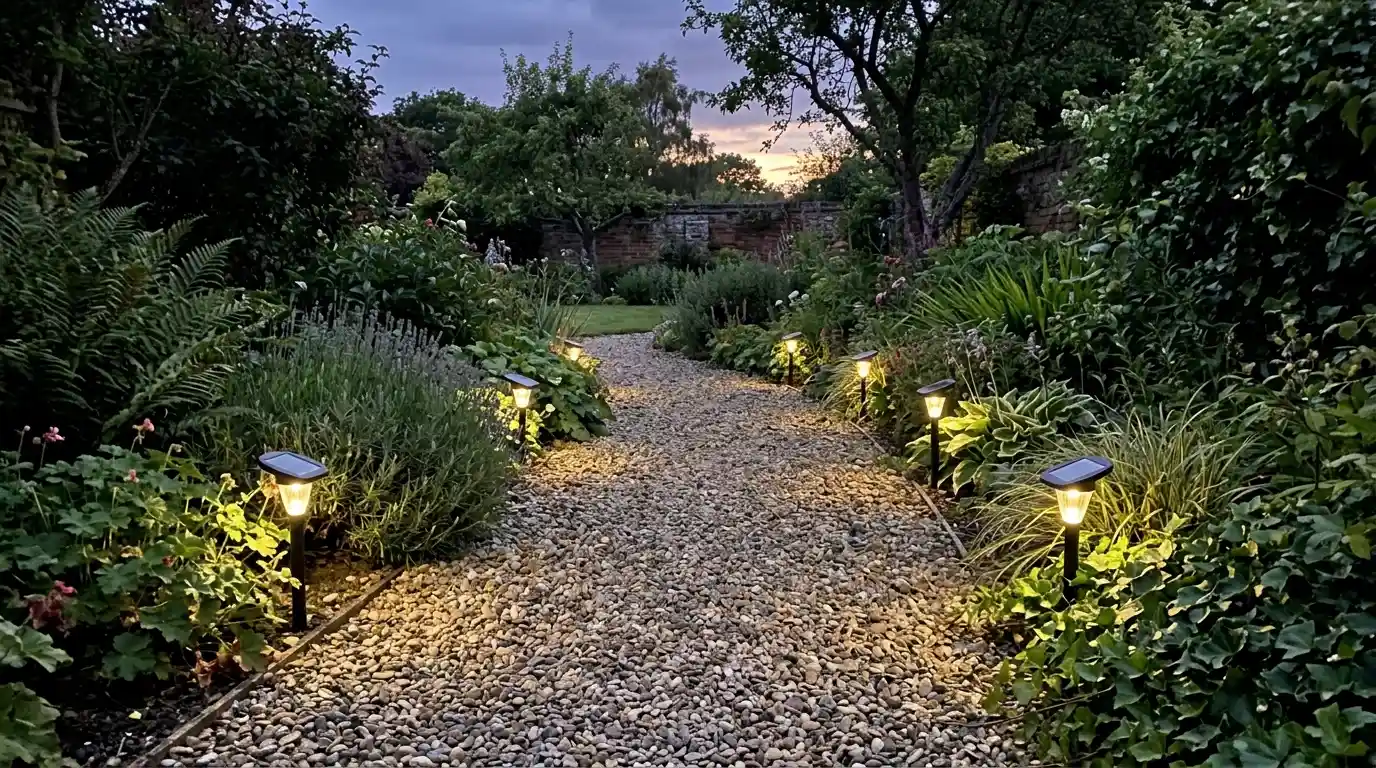
Solar stake lights push into soft ground or lawn edges and light the immediate path surface. Space them 1.8 to 2.5 metres apart on one side so the pools of light overlap without creating a runway. For a 10-metre path that is roughly six to eight fixtures. Look for models with a wider filament-style LED spread rather than a single pin-point beam. In UK winters expect 25 to 35 per cent of summer runtime, so choose higher-lumen versions if the path is used after 4pm in December. Keep the solar panel clear of overhanging foliage. These pair well with the wider schemes in garden lighting ideas when you want both safety and atmosphere.
2. Bollard Lights for Defined Routes
Bollards sit 50 to 100 centimetres high on a fixed post and cast a broader pool than low stakes. They suit gravel or paved paths where a stake would not grip. Aim for 20 to 100 lumens and an IP65 rating for exposed positions. The taller profile catches more wind, so check the base is solid or use a ground spike with a wide flange. On a straight run space them 2.5 to 3 metres apart. They also mark the edge of a patio without flooding the seating area. A set of four bollards defines a route from the house to the shed without wiring.
3. Solar Fence Up-and-Down Lights
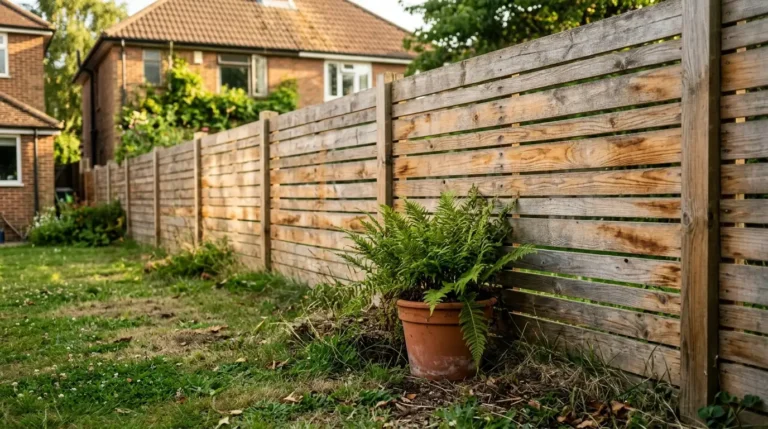
Fence-mounted solar lights wash the vertical surface both up and down, turning a dark boundary into a lit feature. They work on wooden posts or brick piers and often use a small remote panel that can face south even if the fence itself is shaded. 15 to 40 lumens is enough for atmosphere; brighter versions start to spill into neighbouring gardens. IP44 is the minimum under a slight overhang, IP65 for fully exposed boards. These lights make a narrow garden feel wider by drawing the eye to the boundary. Pair them with climbing plants that are already on the fence so the foliage is gently lit from below.
4. Festoon and String Lights with Remote Panels
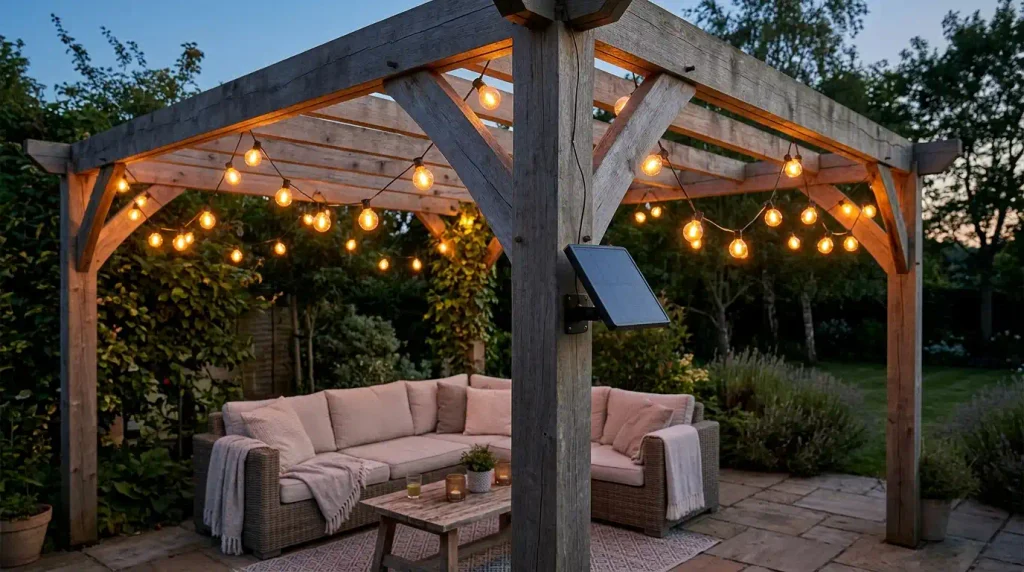
Solar festoon lights draped under a pergola or across a seating area create an outdoor room without a single cable. Look for sets with a separate solar panel on a long lead so the panel can sit in full sun while the bulbs hang in shade. Warm white 2700K bulbs at 15 to 40 lumens each give the soft glow that suits dining. Avoid mixing colour temperatures in the same run. In a UK summer they run for most of the evening; in winter expect shorter sessions unless the panel is south-facing and kept clean. They complement the seating zones described in outdoor kitchen ideas when the goal is evening use.
5. Solar Spotlights for Trees and Features
Spike-mounted solar spotlights aimed at a tree trunk or garden structure create height and drama after dark. A single 100-lumen head with a flexible neck is enough for a medium tree; larger canopies may need two lower-output heads to avoid hot spots. Narrow beams of 15 to 25 degrees suit trunks, wider beams wash walls. Place the panel where it receives six to eight hours of daylight. In winter the shorter charge means the light may only run for three to four hours, so use them as accent rather than the sole path lighting. Keep the beam angled so it does not shine into windows or neighbouring properties.
6. Deck and Step Lights
Small solar lights fixed to the riser of a step or the edge of decking boards mark changes in level without glare. Recessed or surface-mounted versions rated IP65 or higher handle standing water. 30 to 50 lumens is the practical range so the step edge is clear without blinding anyone walking down. On a run of four steps place one light on every other riser. They are especially useful on composite or timber decking where a trip is more likely after dark. Check the fixing method matches the board thickness before ordering.
7. Solar Wall Lights for Entrances
Wall-mounted solar lights beside a garden gate or side door provide the practical light that guests need while still being wire-free. Models with a PIR sensor conserve battery by only running when movement is detected. 100 to 200 lumens is typical for an entrance. South or west-facing walls charge better than north-facing ones. IP44 is acceptable under a porch; IP65 for exposed brick. These lights also deter casual intrusion without the brightness of a full security flood that can annoy neighbours. Position the panel so it is not shaded by the door canopy.
8. Fairy Lights Wrapped Around Trees
Solar fairy lights with a remote panel can be wrapped around a trunk or through low branches for a soft column of light. Sets of 100 LEDs often run for many evenings on one charge if the panel sees full sun. Keep the colour consistent with the rest of the garden; warm white works with most planting. Avoid wrapping so tightly that the cable cuts into the bark as the tree grows. These are decorative rather than functional, so combine them with path stakes if the area is walked after dark. In a small garden one well-lit tree becomes the night-time focal point.
9. Ground Lights for Borders
Low-profile solar ground lights set into gravel or the edge of a border define the planting line without rising above the plants. They need an IP67 rating because water collects at ground level. Output of 5 to 30 lumens is enough for edge definition. Frost heave can push them upward in UK winters, so check the housing is robust and the base is stable. They work best in combination with taller stakes further back so the border has depth rather than a single flat line of light. Clear any leaf litter from the panel surface each month.
10. Solar Lanterns for Tables and Hanging
Portable solar lanterns charge during the day and can be placed on a table or hung from a pergola beam in the evening. Many offer dual charging via USB so a cloudy day does not leave you without light. 20 to 50 lumens gives a useful table glow. Choose warm white and an IP44 or better rating if they will sit outside overnight. These are the easiest way to add light to a seating area that has no fixed structure. They also move with you if the garden furniture is rearranged seasonally.
11. Post Cap Lights on Fences
Solar post cap lights sit on the top of fence posts and cast light both downward and outward. They are simple to fit and require no drilling if the post is the right diameter. 15 to 30 lumens is common. They work well on a run of posts along a path or boundary. Check the solar panel faces the sunniest direction when the cap is seated. In exposed coastal or windy gardens confirm the fitting is secure so it does not lift in strong gusts. A set of six to eight creates a rhythmic line of light that defines the garden edge after dark.
12. Mixed Solar Scheme for Year-Round Use
The most reliable solar garden uses a mix of fixture types rather than one style everywhere. Path stakes or bollards handle navigation, fence uplights or spotlights add height, and festoons cover the seating zone. Keep all colour temperatures the same so the garden does not look patchy. Place every panel in the best available sun and clean them monthly. Accept that December runtime will be shorter and plan the main path with the highest-lumen fixtures. This approach matches the practical planning steps in how to plan and install garden lighting while remaining completely wire-free.
What to Check Before Ordering
Confirm the IP rating matches the location: IP44 under cover, IP65 for open paths, IP67 for anything at ground level. Check lumen output rather than wattage; 50 to 150 lumens for paths, lower for pure accent. Look for a separate panel option if any part of the garden is shaded. Measure the available sun hours in the chosen spot before committing to a large set. In UK winters the reduced charge is the main limitation, so buy a few higher-output models for the routes you use after dark rather than relying on decorative lights alone. Most solar lights are fully DIY; no electrician is required.
Common Mistakes
Placing panels under dense trees or north-facing walls is the most frequent error and leads to lights that never fully charge. Buying only low-lumen decorative lights and expecting them to light a path safely is the second. Mixing warm and cool white in the same view looks unfinished. Ignoring IP ratings on ground-level fittings leads to early failure in wet UK soil. Finally, spacing path lights too far apart leaves dark gaps that defeat the purpose. Test a small set first in the exact location before ordering a full run.
Conclusion
Solar garden lights give a practical, cable-free way to use a UK garden after dark when the panel placement, lumen levels and fixture mix are chosen for the actual conditions. Paths need higher output and closer spacing; borders and features can stay softer. Winter performance is lower but still usable with south-facing panels and realistic expectations. The twelve ideas above cover the layouts that work without trenching or notifiable electrical work, so the garden can be lit the same weekend the lights arrive.
FAQs
Do solar garden lights work in winter in the UK?
Yes, but they produce roughly 25 to 35 per cent of their summer output because of shorter days and lower sun angle. South-facing panels and higher-lumen models keep path lighting usable. Decorative accent lights will run for fewer hours.
How many lumens do I need for a garden path?
Aim for 50 to 150 lumens per fixture for safe navigation. Lower outputs of 15 to 40 lumens suit borders and atmosphere. Space path lights so the light pools overlap.
What IP rating should solar garden lights have?
IP44 is the minimum for sheltered positions. IP65 is better for open paths and fences. Ground-level or deck lights need IP67 because water collects around them.
Can I mix solar lights with wired garden lighting?
Yes. Solar fixtures work alongside a low-voltage or mains scheme provided the colour temperature matches. Use solar for the harder-to-reach areas and wired for the main seating zone if you want guaranteed runtime.