15 Garden Lighting Ideas to Transform Your Outdoor Space at Night

Garden lighting turns a dark outdoor space into a usable extension of the home after sunset. The practical decisions are lumen levels, IP ratings, power source and whether a new circuit is notifiable under Part P. Path markers need 50 to 100 lumens, step lights 30 to 50, patio ambient 100 to 300, and feature spotlights 300 to 600. IP44 suits sheltered positions, IP65 is better for open paths, and IP67 or IP68 is required for anything at ground level or in water. Low-voltage 12V systems avoid deep burial and reduce shock risk; mains circuits need RCD protection and often an electrician. These fifteen ideas cover the layouts that work in UK gardens while meeting the regulations.
1. Path Bollard Lights
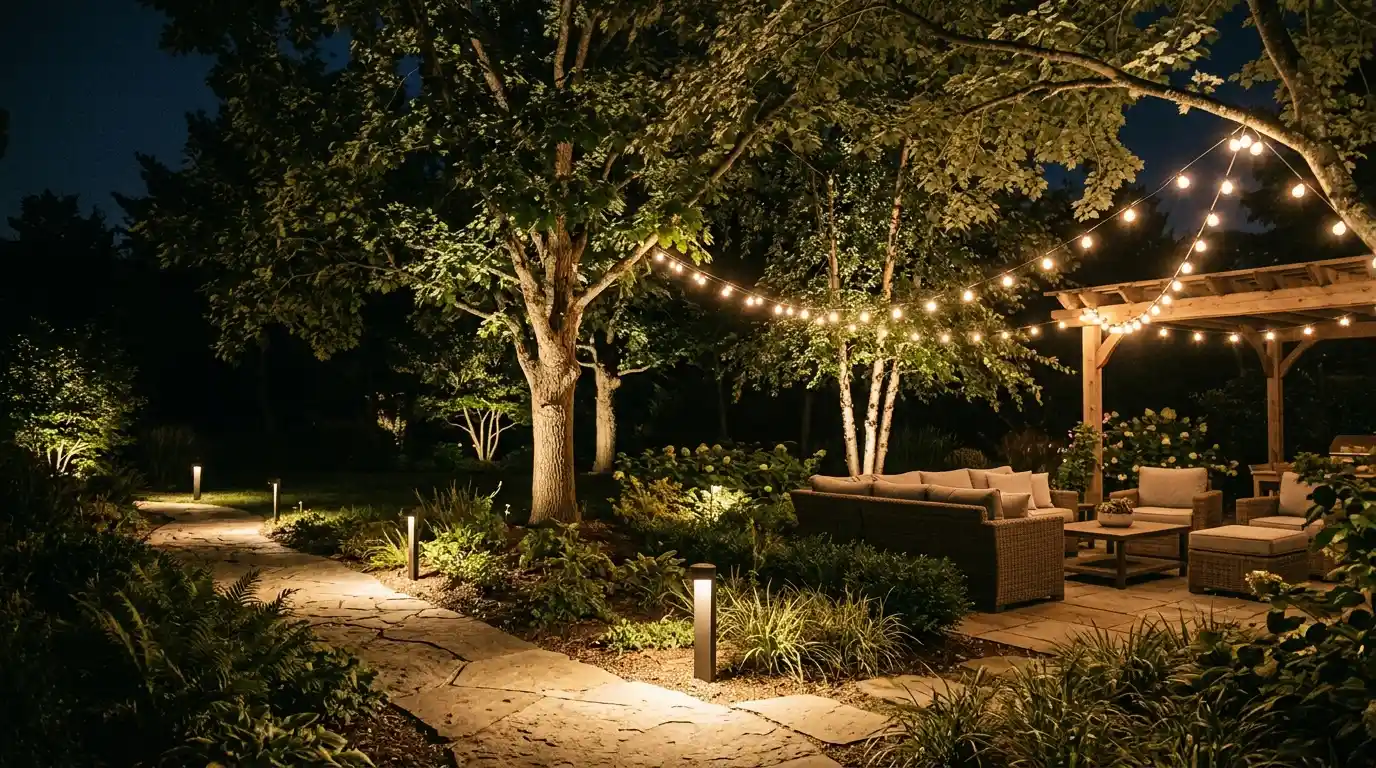
Bollards spaced 2 to 3 metres apart on one side of a path give safe navigation without a runway effect. Alternating sides looks more natural. Use 50 to 100 lumens and IP65 for exposed ground. Low-voltage kits can be plugged into an existing RCD-protected outdoor socket so no new circuit is required. This is the foundation of most schemes and pairs with the planning steps in how to plan and install garden lighting.
2. Low-Voltage Spike Lights for Borders
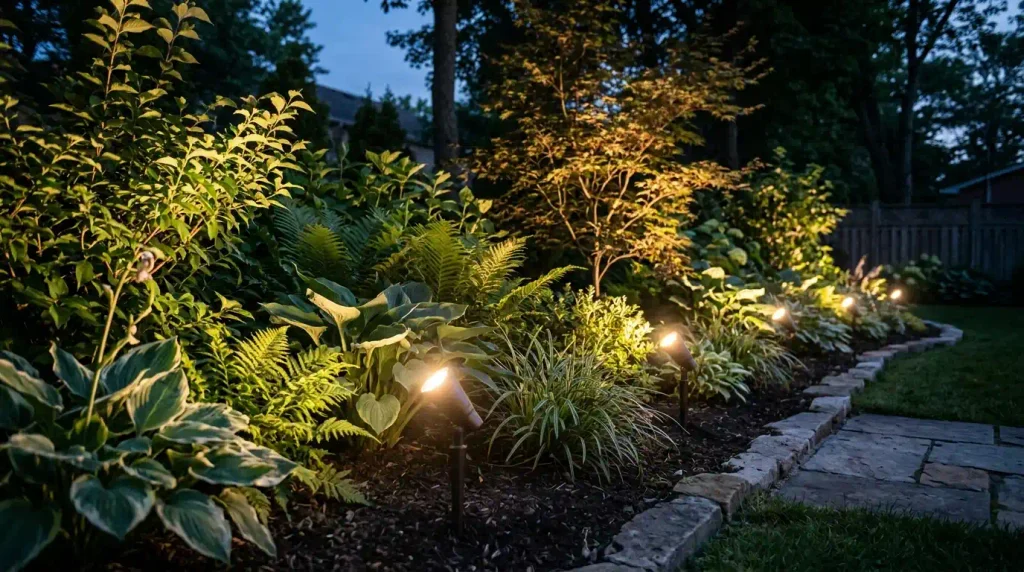
Spike lights pushed into soil along a border highlight planting without permanent fittings. 20 to 50 lumens creates soft definition. The transformer sits indoors or in a weatherproof box and the low-voltage cable can be laid under mulch. This is fully DIY in most cases. Keep the spikes angled downward so light does not shine into windows. They work well with the planting schemes in garden design ideas.
3. Uplights on Trees
Ground-mounted or spike uplights aimed at a trunk or canopy add height and texture after dark. Narrow beams of 15 to 25 degrees suit tall trees; wider beams wash walls. 300 to 600 lumens is typical for a feature tree. Use IP65 or higher. Position so the beam does not create light pollution or disturb neighbours. In winter bare branches still look good if the light catches the trunk. This is one of the highest-impact additions for a relatively small number of fittings.
4. Festoon Lights Under a Pergola
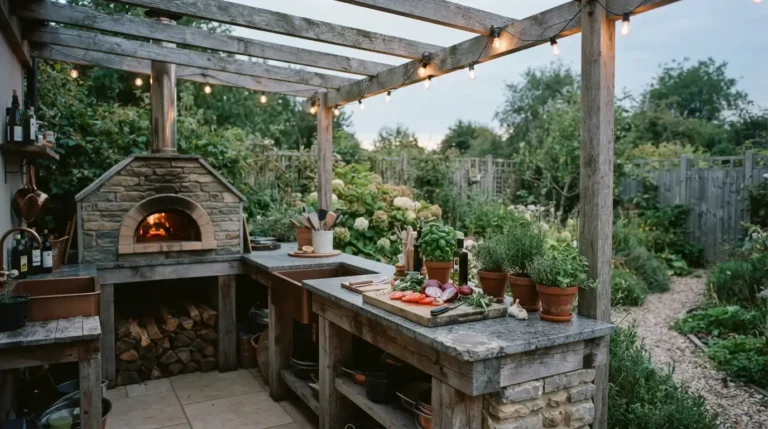
Outdoor-rated festoon lights strung under a pergola or across a seating area create an instant outdoor room. Warm white 2700K bulbs at 15 to 40 lumens each give the right atmosphere for dining. Use IP44 or better and connect via a plug-in transformer or existing circuit. Avoid over-illuminating; the goal is a soft glow rather than daylight. They extend the usable season in the same way as the ideas in fire pit ideas.
5. Step and Deck Recessed Lights
Recessed lights in step risers or deck edges mark level changes clearly. 30 to 50 lumens is enough and the beam should be directed downward. IP67 is required because water pools at ground level. On a run of steps place a light on every other riser. These are especially useful on timber or composite decking where a trip is more likely after dark. Plan the cable route before the boards are fixed so the wiring stays hidden.
6. Wall Lights on the House
Wall-mounted lights under the eaves or on brick piers light the immediate area beside the house. IP44 is acceptable under cover; IP65 for exposed walls. 100 to 300 lumens suits entrances and seating. PIR sensors reduce energy use and light pollution. Any new mains circuit is notifiable under Part P in England and must be installed by a registered electrician or notified to building control. These lights also improve security without the harshness of a full floodlight.
7. Pond and Water Feature Lighting
Submersible lights rated IP68 add movement and reflection to a pond or fountain. 200 to 500 lumens is common. Use a low-voltage system with the transformer well clear of the water. Position lights so they do not dazzle when viewed from the seating area. In a UK garden a single well-placed light on a small pond creates a focal point without needing a large scheme. Check the cable entry is properly sealed.
8. In-Ground Uplights for Paths
Flush in-ground lights set into paving or gravel define a path edge while remaining invisible during the day. IP67 is the minimum. 50 to 100 lumens works for marking rather than flooding. Frost heave can be an issue in UK winters so choose robust housings and a stable base. They suit modern or minimalist gardens where visible fittings would interrupt the lines. Cable must be protected and the circuit RCD protected.
9. Downlights from Trees or Structures
Small downlights mounted in a tree or under a pergola beam cast soft pools onto seating or planting below. This reduces light pollution compared with uplighting. Use warm white and lower lumen outputs so the effect is gentle. IP65 fittings handle rain. They work particularly well over a dining table or outdoor sofa. Plan the mounting so the cable is protected and the fitting can be accessed for maintenance.
10. Security Floodlights with Sensors
Motion-activated floodlights of 700 to 1500 lumens deter intrusion but must be aimed carefully so they do not shine into neighbouring windows. Artificial light can be a statutory nuisance under the Environmental Protection Act if it causes a problem. Use timers or sensors that switch off after a short period. IP65 or higher. These are functional rather than decorative and should be separate from the ambient scheme. A qualified electrician is usually required for the circuit.
11. Low-Level Marker Lights on Driveways
Bollards or recessed markers along a driveway edge improve safety without lighting the entire surface. Space them so the light pools guide a car without glare. IP65 minimum. If the driveway is used regularly after dark, 50 to 100 lumens per fitting is practical. Any new circuit from the consumer unit is notifiable. These also define the boundary between drive and planting.
12. Coloured Accent Lighting for Features
A single coloured light on a sculpture, wall or water feature can add personality, but keep the main scheme in warm white so the garden does not look disjointed. Use sparingly. Most people prefer consistent warm white across the whole space. If colour is used, choose a dimmable or switchable fitting so it can be turned off for everyday use. IP rating still applies.
13. Layered Lighting for a Patio
A patio benefits from three layers: low path or step lights for safety, wall or bollard lights for ambient glow, and a feature light on a nearby tree or structure. Total output should feel comfortable rather than bright. 100 to 300 lumens for the ambient layer is typical. This approach matches the outdoor living ideas in garden ideas to transform your outdoor space.
14. Solar and Mains Mix
Solar lights handle hard-to-reach borders and decorative accents while a low-voltage or mains system covers the main paths and seating. Keep colour temperature matched. Solar performance drops in winter so do not rely on it for the only route home after dark. This hybrid approach is common in UK gardens where full mains wiring is expensive or disruptive.
15. Full Landscape Scheme with Controls
A complete scheme uses multiple circuits or a single low-voltage run with photocell and timer control so lights come on at dusk and go off at a set time. This reduces energy use and light pollution. Part L of the Building Regulations encourages automatic controls for fixed external lights. Budget for an electrician if a new circuit is needed. The result is a garden that feels considered rather than randomly lit.
Regulations and Practical Checks
All outdoor circuits need 30 mA RCD protection. New mains circuits are notifiable under Part P in England. SWA cable buried at least 500 mm is standard for mains runs. Low-voltage systems avoid much of this. IP ratings must match exposure. Aim lights downward where possible to reduce light pollution. Test the scheme after dark and adjust angles before fixing everything permanently. These checks prevent the common problems of glare, early failure and neighbour complaints.
Conclusion
Garden lighting works when lumen levels, IP ratings and power source are matched to the actual use and location. Paths need reliable navigation light, seating areas need soft ambient glow, and features benefit from carefully aimed uplights. Low-voltage kits keep most of the work DIY; new mains circuits need professional installation. The fifteen ideas above cover the combinations that transform a UK garden at night without over-lighting or regulatory issues.
FAQs
Do I need an electrician for garden lighting?
For a new mains circuit from the consumer unit, yes. Low-voltage plug-in kits and solar lights do not require one. Any new circuit is notifiable under Part P.
What IP rating do garden lights need?
IP44 minimum for sheltered positions, IP65 for open paths and fences, IP67 or IP68 for ground-level or submerged fittings.
How bright should garden path lights be?
50 to 100 lumens per fixture is usually enough for safe navigation. Higher outputs are for features or security, not everyday paths.
Can garden lighting cause a nuisance?
Yes. Artificial light that affects neighbours can be treated as a statutory nuisance. Aim lights downward, use sensors or timers, and avoid high-output floods pointed at boundaries.