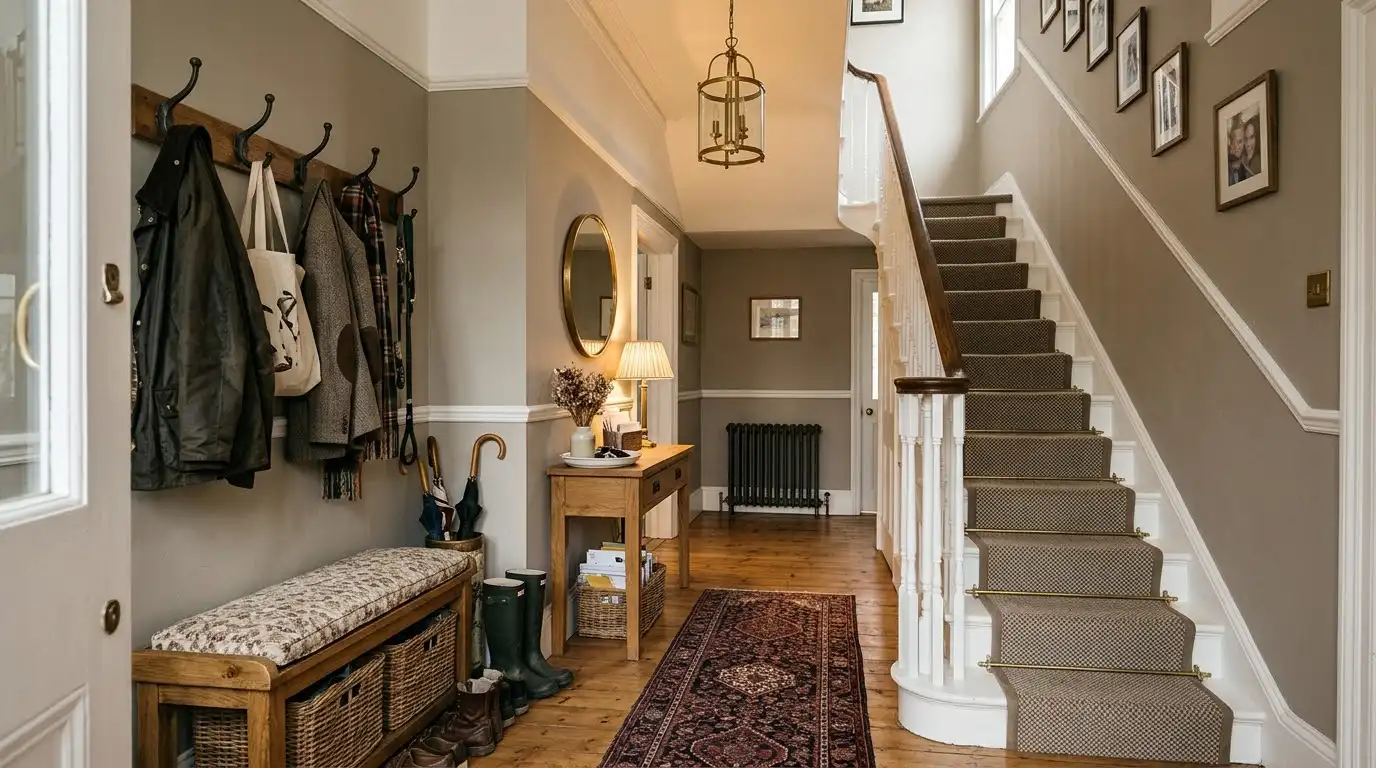
How to Choose the Right Paint Colour for a Hallway

Choosing the right paint colour for a hallway is different from choosing for a living room because the space is often narrower, receives less natural light, and sees more daily traffic. The colour sets the first impression of the house and has to work with the stairs, doors and flooring that are already fixed. A practical approach starts with the light the hallway actually gets, the durability the walls need, and how the colour will look next to the rooms it opens into.
Assess the Light in Your Hallway
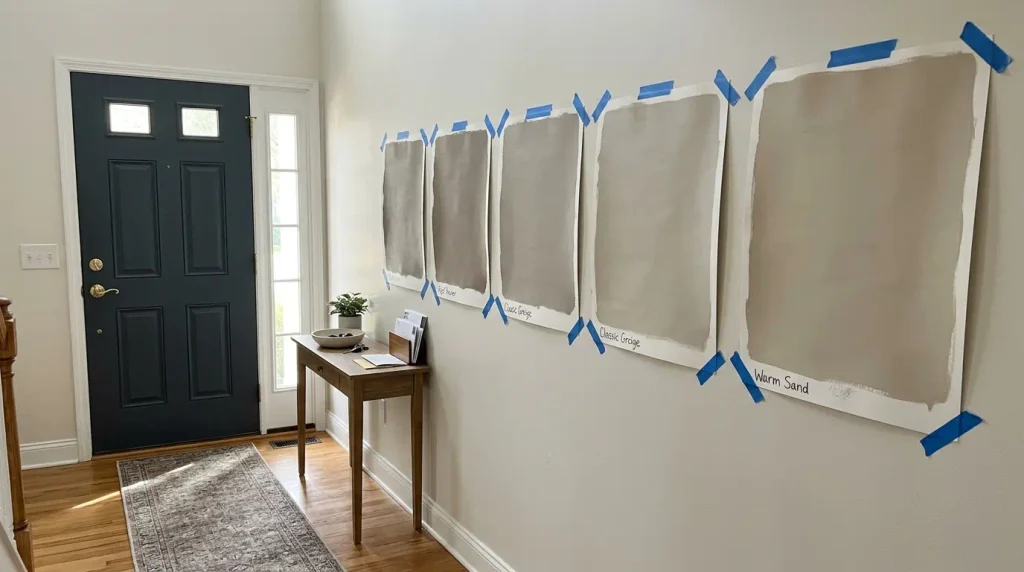
Many UK hallways have little direct daylight. North-facing or internal halls feel cooler and darker. A warmer greige or soft neutral usually works better than a cool grey or pure white, which can look flat. If the hallway has a window or glazed door, note the direction. Test samples at different times because the light changes more dramatically in a confined space. Artificial lighting is often on for much of the day, so check samples under the actual bulbs you use.
Choose a Colour That Handles Traffic
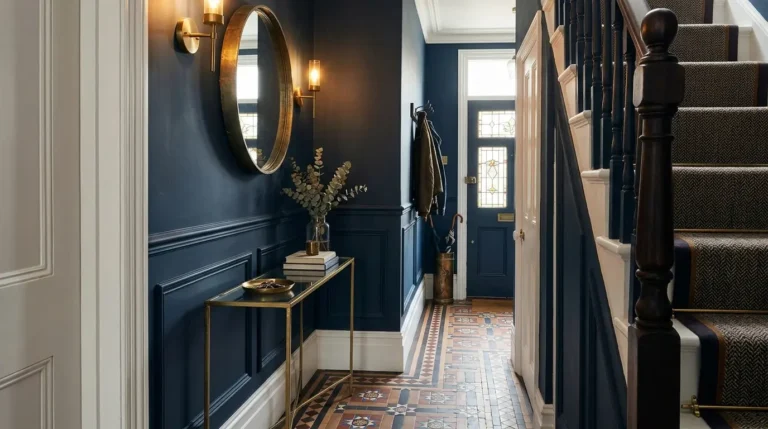
Hallway walls get bumped by bags, coats and furniture. Choose a paint with a good scrub rating. Modern scrubbable matt finishes hide marks better than traditional matt while remaining wipeable. Lighter colours show fewer scuffs than darker ones. If you want drama, use a deeper colour on the lower half of the wall or on a feature section rather than the full height. This keeps the practical benefits of a lighter upper wall while still creating interest.
How the Hallway Colour Relates to Other Rooms
The hallway colour should feel connected to the rooms it opens into without matching them exactly. A warm greige works as a bridge between a living room in a stronger colour and a bedroom in a softer tone. How to create a whole home colour palette that flows covers this in more detail. Avoid a colour that clashes with the flooring or the front door. Sample the hallway colour next to the door and the nearest room so the transition feels intentional.
Practical Options That Work in Most Hallways
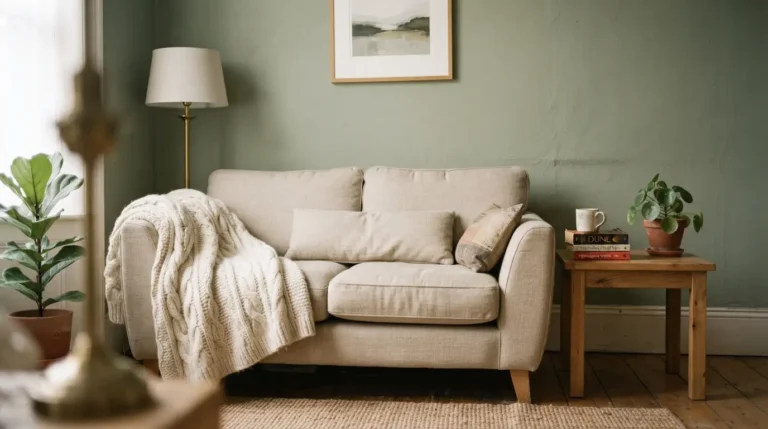
Warm greiges such as a light Elephant’s Breath or Cornforth White are frequent choices because they feel welcoming without looking cold. Soft sage or muted greens can work if the hallway has enough light, but greiges remain the safest for darker spaces. White or off-white is still used, but it shows marks more clearly and can feel stark in low light. Darker colours work for drama in larger halls but need careful lighting and a durable finish. Test two or three options on large boards before deciding.
Finish, Preparation and Ordering
Use a scrubbable matt or eggshell for the walls. Eggshell on woodwork is more practical. Prepare the walls thoroughly; hallways often have more marks and previous repairs. Fill and sand so the finish is smooth. Measure the wall area carefully, including the stairs if they are painted. Order enough paint from one batch and add extra for touch-ups. Most hallways need two coats. Check drying times so you can plan around daily use of the space.
Common Mistakes in Hallway Colour Choice
Choosing a cool grey because it looked sophisticated is a frequent error; in low light it often looks flat and cold. Ignoring traffic leads to a finish that marks easily. Matching the hallway exactly to one room can make the transition feel abrupt when you move into a different colour. Skipping large samples is costly because the confined space and artificial light change the colour more than in a living room. Finally, painting the whole hallway dark without adequate lighting can make the entrance feel closed in rather than welcoming.
Lighting and Accessories That Support the Colour
Warm lighting makes any hallway colour feel more inviting. Position lights so they do not create harsh shadows on the walls. A mirror or lighter artwork can bounce light and make a darker greige feel less heavy. Coat hooks and furniture should be placed so they do not constantly mark the same section of wall. These practical details matter as much as the paint colour itself once the hallway is in daily use.
How to Handle Stairs and High Areas
Stairs add height and often receive even less light. Use the same colour as the hallway walls so the space feels continuous. If the stairs are painted, a durable finish is essential because they see constant use. Measure carefully around the banister and spindles; cutting in takes longer than on flat walls. Some people paint the lower walls a slightly darker greige and the upper walls lighter to create a dado effect without adding moulding. This adds interest and protects the high-traffic lower section. Test the contrast so it looks intentional rather than accidental.
Budget and Timeline Considerations
A standard hallway and stairs can be painted in a day once the walls are prepared. Sample testing takes a week. Professional decorating for a typical hallway costs more than DIY but ensures clean edges around doors and stairs. Factor in the cost of good quality scrubbable paint; cheaper emulsion marks more easily and may need repainting sooner. Order samples first, then full tins once you are sure. This staged approach keeps the budget under control and avoids buying the wrong colour in quantity.
Conclusion
The right paint colour for a hallway balances the limited light, the daily traffic and the first impression you want to create. Warm greiges and soft neutrals with durable finishes work for most UK halls. Test large samples under the actual lighting, check how the colour relates to adjoining rooms, and order enough paint from one batch. Done carefully, the hallway becomes a calm, practical entrance that feels connected to the rest of the house.
Final Checks Before You Start Painting
Before opening the tins, confirm the sample still looks right after a full week. Check that you have enough paint from the same batch. Gather good brushes, rollers and masking tape. Protect the floor and any furniture that stays in the hallway. Plan the order of work so you can still use the stairs if needed. Once these checks are done, the painting itself is straightforward. A well-prepared hallway with a tested colour looks considered from the moment you walk through the front door.
FAQs
What is the best colour for a dark hallway?
A warm greige or soft neutral usually works better than pure white or cool grey. It feels welcoming without looking flat in low light.
Should hallway walls be a different colour from the living room?
They can be, but the colours should feel related. A greige hallway often bridges a stronger living room colour without clashing.
What finish is best for hallway paint?
A scrubbable matt or eggshell finish handles daily traffic better than a standard matt. Lighter colours show fewer marks.