8 Bedside Table Ideas to Complete Your Bedroom

Bedside table ideas only work if the height matches your mattress and the footprint leaves enough room to move around the bed. In most UK bedrooms the ideal surface sits within about 5 cm of the top of the mattress, typically 55 to 70 cm from the floor depending on the bed frame. The ideas below cover practical sizes, storage options, and placements that keep the bedside functional rather than cluttered. Matching the tables to your bed frame keeps the proportions calm and the overall layout balanced.
1. Match the Height to Your Mattress
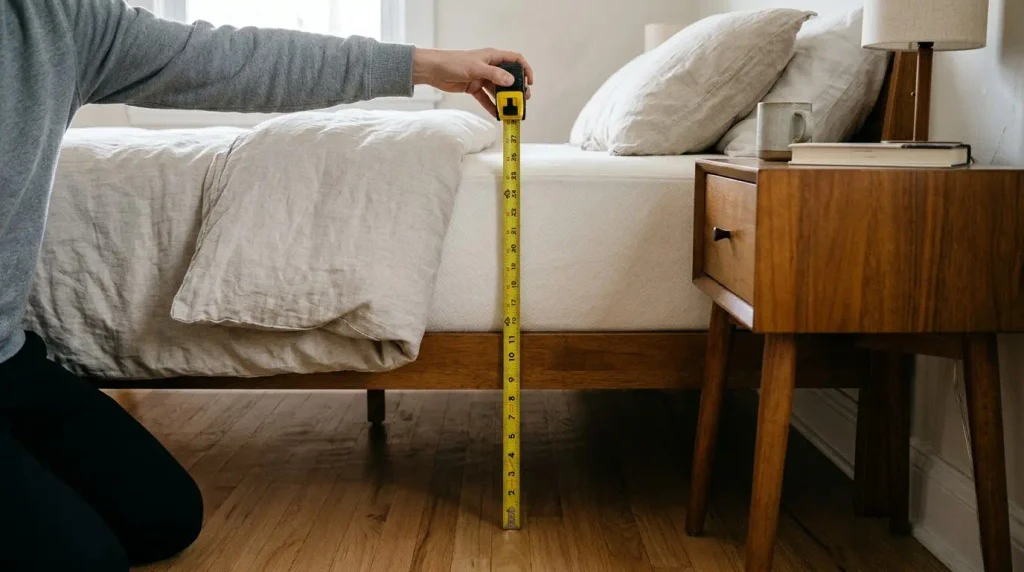
Measure from the floor to the top of your mattress, including any topper. Choose a bedside table within 5 cm of that height. Standard UK beds usually need a table of 55 to 65 cm; low platform beds may suit 45 to 55 cm, while deep divan mattresses can need 70 cm or more. Too low and you fumble for a glass in the dark; too high and the lamp glares across the pillow. This single measurement matters more than the style. Different bed types change the required height, so always measure the actual bed rather than assuming a standard figure. A low platform bed with a thin mattress sits much lower than a traditional divan with a deep spring mattress.
Once you have the measurement, note it before you start browsing. Many people choose a table that looks good in a photo and only discover the height is wrong once it is beside the bed. The correct height also makes the lamp more useful, as the shade sits at a comfortable level for reading in bed without shining directly into your eyes.
2. Narrow Tables for Small Doubles and Box Rooms
Tables under 40 cm wide suit single beds and small doubles where space beside the bed is limited. A 30 to 35 cm width still holds a lamp and a book without forcing the bed hard against the wall. Depth of 30 to 40 cm keeps the piece from sticking too far into the room. Leave a few centimetres either side so drawers or doors can open without catching the bed frame. In a typical UK box room or small double of around 10 square metres, this narrower footprint is often the difference between being able to walk past the bed comfortably and having to turn sideways.
Check the space between the bed and the wall or wardrobe before ordering. A table that is too wide can push the bed out of alignment or leave no room for the door to open fully. Narrow designs still need to be stable, so look for a solid base or wall-fixing option if the piece is particularly slim.
3. Drawers for Hidden Chargers and Everyday Bits
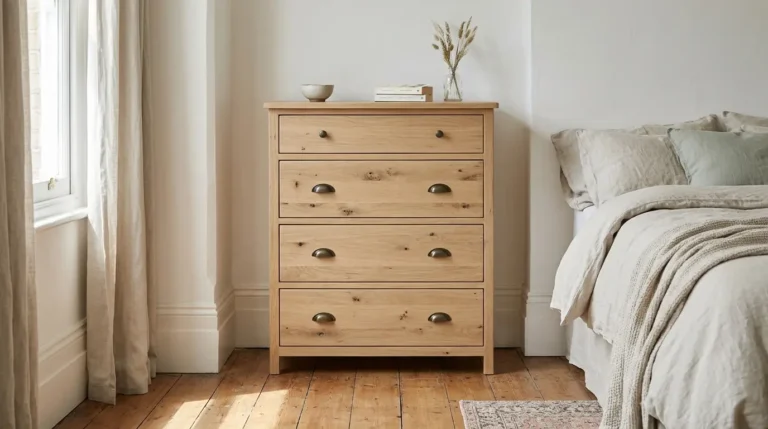
One or two drawers hide phone chargers, glasses, and the small items that otherwise sit on top. Confirm the drawers open past the bed frame; some designs sit too close and the drawer hits the mattress. Soft-close runners are worth having on a piece used every night. A shallow top drawer is usually enough; deeper ones can hold books or a tablet. Internal organisers or simple dividers help keep the contents from sliding around. Check the weight capacity if you plan to store heavier items such as a tablet or hardback books.
Drawers also keep the top surface free for the lamp and a glass of water, which is the main functional requirement. Without closed storage the top quickly becomes cluttered, and the table stops working as a practical bedside surface.
4. Floating or Wall-Mounted for a Lighter Feel
A wall-mounted bedside table leaves the floor clear and makes a small room feel larger. It needs solid fixings into a stud or masonry wall, and the height must still match the mattress. Cable management is easier if you plan a small gap or a cable clip behind. This option works well in modern schemes and where floor space is especially tight. Confirm the wall is strong enough before committing; plasterboard alone will not hold a loaded table securely. A small floating shelf or cabinet also makes cleaning underneath much easier.
5. Open Shelf or Pedestal for Display
An open shelf or simple pedestal keeps the look light and is useful if you prefer books and a plant on show rather than hidden. It offers no closed storage, so the top must stay tidy. These pieces are often lighter and easier to move. Choose a height that still sits near mattress level so reaching for a glass remains comfortable. Open designs work best in rooms where the rest of the furniture is already quite solid, so the bedside does not add more visual weight.
6. Matching Pair or Deliberately Different
Matching tables on both sides create a calm, balanced look, especially with a double or king bed. Different designs at a similar height can feel more relaxed and personal if the room is not strictly symmetrical. In either case keep the heights close so the visual line stays level. For a single bed one well-chosen table is usually enough. If you choose different pieces, still match the height and roughly the depth so one side does not dominate.
7. Wood, Painted or Metal Finishes
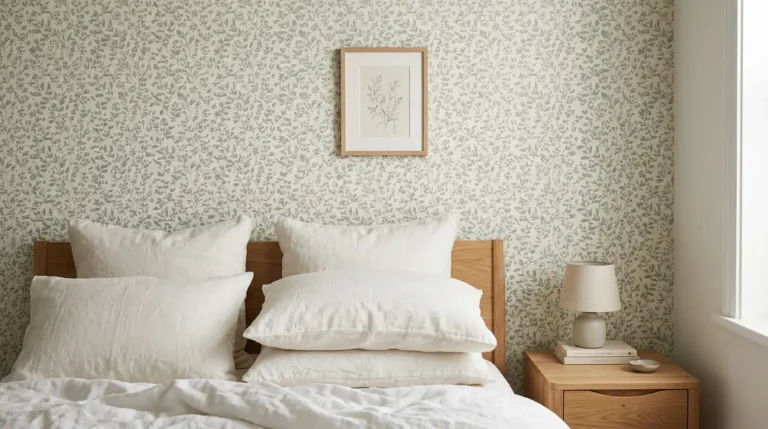
Oak or pine brings warmth that suits many UK bedrooms and can be oiled or painted later. A painted finish in a soft neutral ties the table to the walls or bedding. Metal frames with a wood or stone top give a lighter contemporary look and are easy to wipe. Choose the finish to relate to the bed frame rather than as a standalone statement. Solid wood can be refinished if it marks over time; painted or foil finishes are simpler to wipe clean but harder to repair if they chip.
8. Check Clearance and Socket Access
Leave enough room to walk past the table without turning sideways, especially on the open side of the bed. Confirm there is a socket nearby or plan a discreet extension so the lamp and charger do not trail across the floor. If the table has drawers, test that they open fully once the bed is in place. These practical checks prevent the most common daily frustrations. In many older UK houses the nearest socket is not ideally placed, so a short cable run or a USB-integrated table can solve the problem without visible leads.
Also check that the table does not block a radiator or the swing of a door. A few centimetres of clearance on all sides makes the piece easier to live with and keeps the room feeling open rather than cramped.
Conclusion
The right bedside table completes the bedroom by sitting at the correct height, holding what you need within easy reach, and leaving enough space to move. Measure your mattress first, then choose the width and storage that suit the room. Once those points are settled, the material and style can follow the rest of the furniture without forcing compromises later.
FAQs
What height should a bedside table be in the UK?
Aim for the top of the table to sit within about 5 cm of the top of your mattress. For most UK beds this falls between 55 and 70 cm from the floor. Measure your own bed rather than relying on a standard figure.
How wide should a bedside table be for a double bed?
Around 35 to 45 cm wide works for most double beds. Narrower tables suit smaller rooms; wider ones are fine with a king or super-king if the space allows.
Do I need drawers in a bedside table?
Drawers are useful for hiding chargers and small items. If you prefer everything on show, an open design is fine, but the top surface must stay tidy.