15 Bathroom Mirror Ideas for Every Style and Size

The best bathroom mirror matches your vanity width, suits your room’s style and puts good light on your face. Arched, round and organic shapes soften hard tiling, rectangles keep things clean, and illuminated or cabinet mirrors add function. Here are 15 bathroom mirror ideas, sorted by shape, finish and function.
Most people choose the mirror last, after the tiles and taps are locked in. Then they find it is too small, badly lit or hung too high. Those problems are cheap to avoid if you plan early and irritating to fix later.
Shape-Led Bathroom Mirror Ideas
Shape decides how a mirror feels in the room. Curves soften straight tiles and boxy vanities, while rectangles give structure and the most reflective glass. Pick the shape that contrasts with your room’s dominant lines, then check it against your vanity width before you fall for it.
1. Arched Mirror
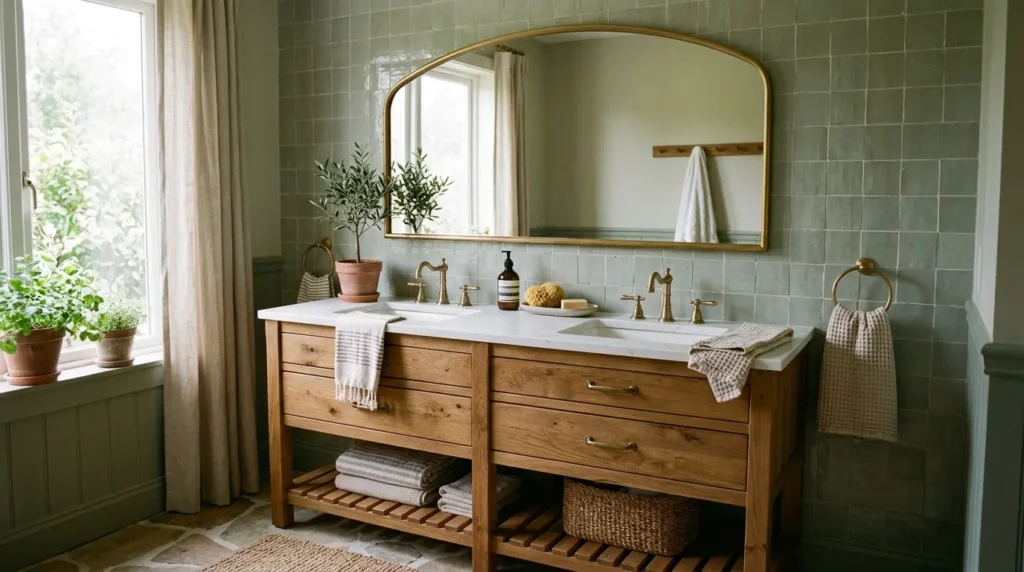
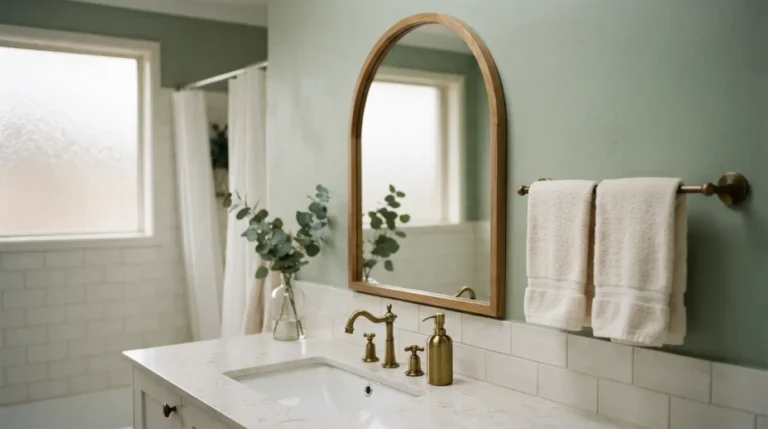
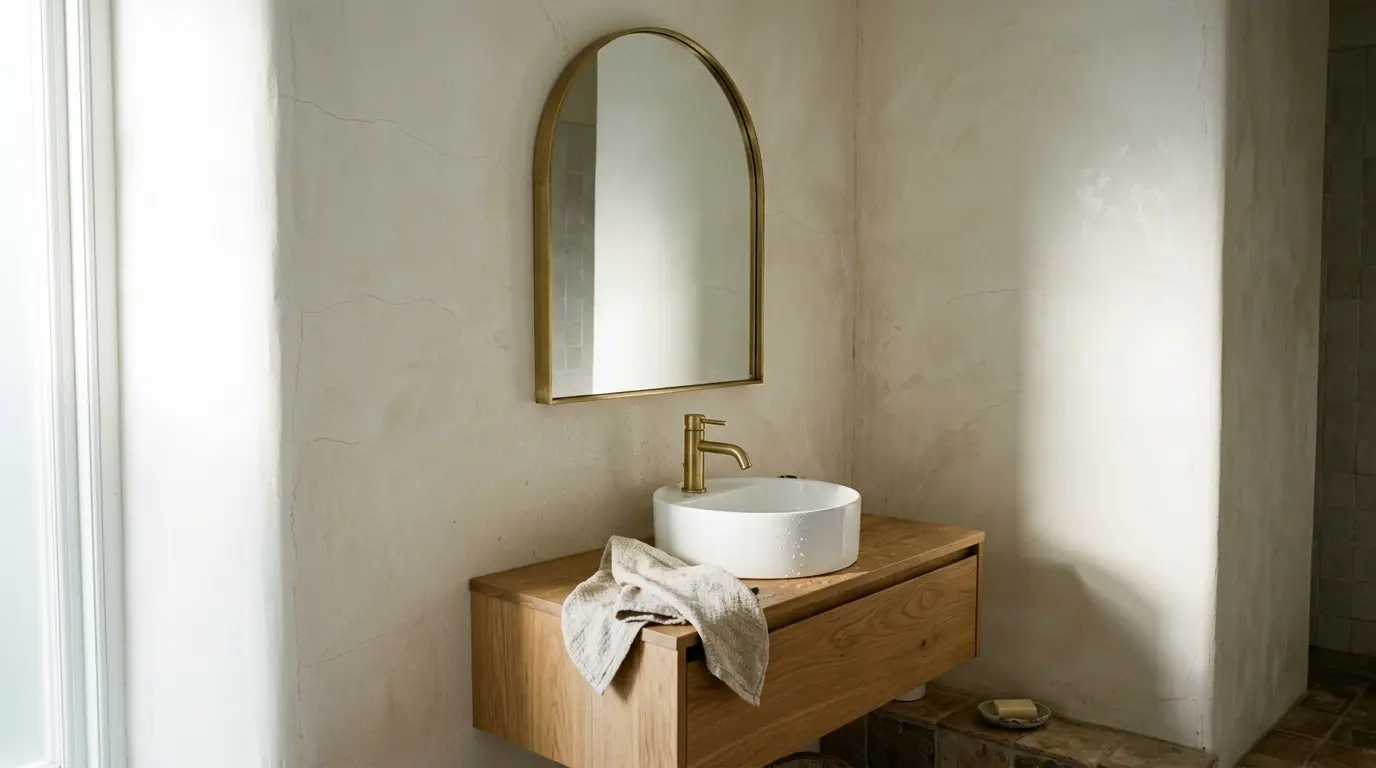
An arched mirror is a rectangle with a curved top. You get the softness of a round mirror with the height of a tall one. It suits modern and traditional rooms, and it echoes an arched shower screen or door. Tall, narrow arches work above slim vanities, while wide, short ones suit double basins. Check that the flat part of the glass is wide enough for your face.
2. Round Mirror
A round mirror breaks up a room full of right angles: square tiles, a box vanity, a straight bath panel. It works especially well in small bathrooms and industrial schemes. Keep the diameter close to your vanity width. A circle gives you less usable glass at the top and bottom than a rectangle of the same width, so test the height against the tallest person in the house.
3. Organic Mirror
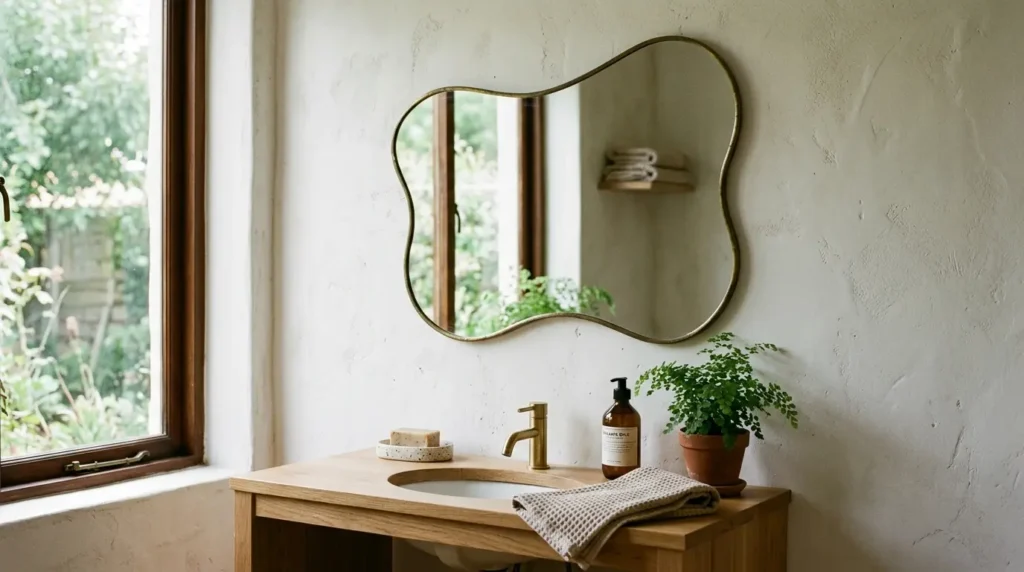
Organic mirrors, sometimes called wavy or blob mirrors, have a free-flowing outline that works like wall art. They suit design-led bathrooms, but everything else in the room needs to stay calm. This tends to look great in photos, yet a very irregular shape can leave awkward gaps at head height. Cut a cardboard template and hold it up before you buy.
4. Oval Mirror
An oval mirror is taller than it is wide, so it draws the eye upward and flatters narrow vanities and cloakrooms. It feels more period than a round mirror, especially in a framed finish such as brass, gold or chrome. Hang it vertically for height, or horizontally over a wider basin if you want a gentler look.
5. Barrel Mirror
A barrel mirror is a rectangle with generously rounded corners. It suits people who like clean lines but not sharp edges. It sits happily in contemporary and classic bathrooms alike. It is a safe choice if you are unsure about a full curve and want something that will not date quickly.
6. Large Frameless Rectangular Mirror
A large frameless rectangle is the strongest choice for minimal and small bathrooms. It gives you the most reflective glass, needs no matching finish and needs no electrics. In a windowless or north-facing room, running it close to the full width of the basin wall bounces light around and makes the space feel bigger. Small, centred mirrors on big walls look lost by comparison.
7. Twin Mirrors Over a Double Vanity
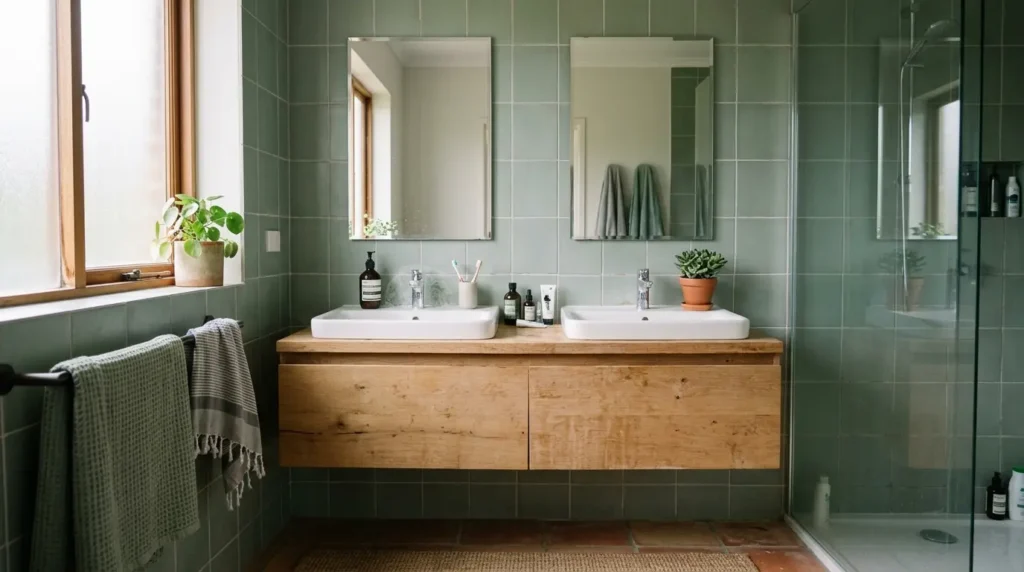
Over a double basin, hang one mirror above each basin or a single wide mirror across the full vanity. Twin mirrors feel tailored and let each person stand centred, while one wide sheet feels calmer and more continuous. If a window sits above one basin, hang that mirror on a different wall rather than blocking the daylight.
Frame and Finish Ideas
For mirror bathroom inspiration that works, start with the metal already in the room: taps, towel rail and accessories. Match the mirror frame to them, or contrast with one deliberate second finish. Mixed metals that look accidental are the real risk, so choose a lead finish and repeat it.
8. Heavy Black Frame
A black frame is graphic and versatile. It cuts through pale tiles and grounds a colourful scheme. For a true industrial look the frame needs visible weight, because a thin black edge reads as contemporary instead. Matt black hides water marks better than gloss, though frames near the basin can show limescale streaks in hard water areas. A quick wipe keeps them sharp.
9. Brushed Brass or Gold
Brushed brass and gold add warmth and a boutique-hotel feel, and they suit both classic and modern rooms. Match them to brass taps and accessories for harmony, or pair them with black fittings for a bolder look. Brushed finishes hide fingerprints and water spots far better than polished ones, which is worth knowing before you buy.
10. Brushed Bronze or Gunmetal
Brushed bronze is darker than brass, so it adds warmth without much shine. It loves earthy tones and textured tiles. Gunmetal is moodier and works well with natural stone or industrial schemes. Both look expensive, but gunmetal can feel heavy in a dim, windowless room unless the lighting is good.
11. Antique or Tinted Glass
Tinted mirror glass in grey, bronze, smoked or an aged antique finish gives a softer, more characterful reflection than clear glass. It suits traditional and moody schemes. The trade-off is that it dims the light and flatters less for grooming. Pair it with good task lighting, or keep a clear mirror elsewhere for shaving and makeup.
Lighting and Function Ideas
Function ideas fix the daily annoyances: shadowy faces, steamed glass and nowhere to put things. Lighting matters most, because overhead lights alone cast shadows across your face. Choose the feature that solves your biggest morning problem first, then choose the shape and finish around it.
12. Backlit Mirror
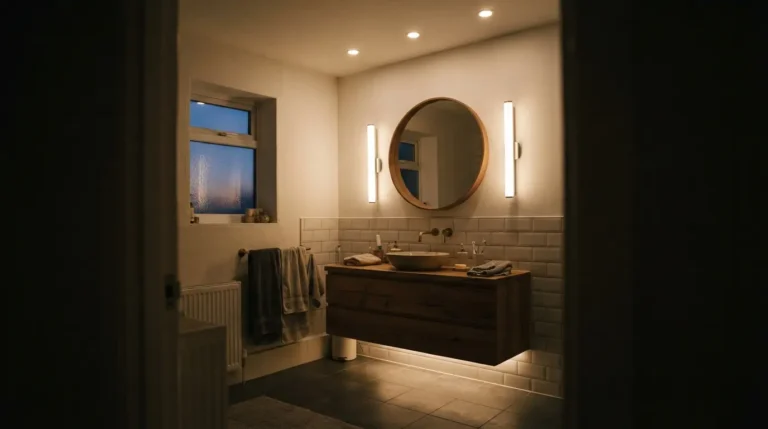
A backlit mirror has LEDs behind the glass, creating a soft halo around the edge. It is ideal for a spa feel and for evening baths. It gives ambient glow rather than focused task light, so it will not fully replace good lighting for shaving or makeup. Add a demister pad if the room gets steamy.
13. Front-Lit Mirror With Adjustable Colour Temperature
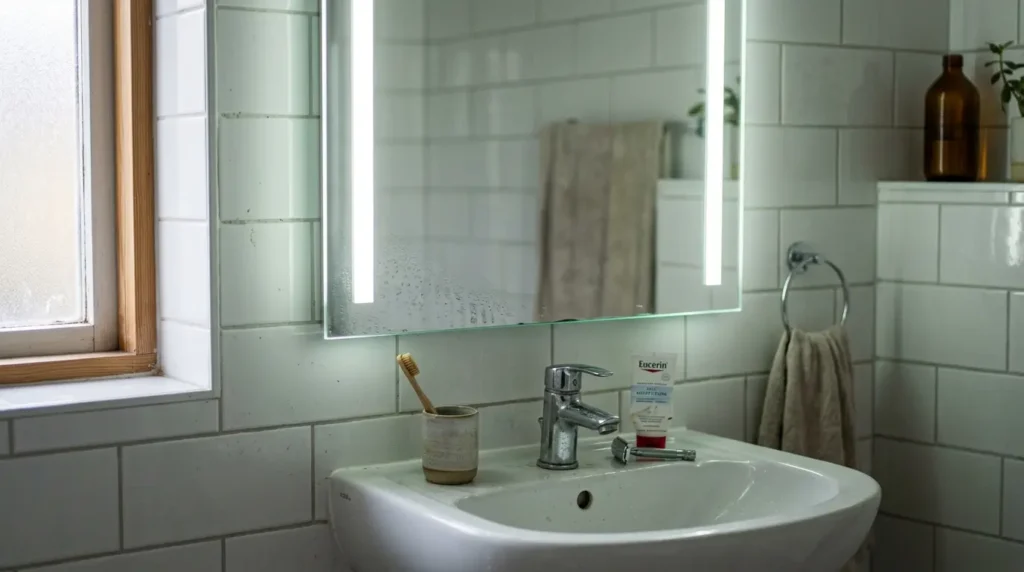
Front-lit mirrors put LEDs on the face of the glass, giving even light across your features. That makes them the best bathroom mirror type for shaving, skincare and makeup. Adjustable colour temperature lets you go warm in the evening and cooler in the morning. Retailers quote different ranges, from about 3000K to 4000K up to 6500K, so choose a dimmable model and test it in the room.
14. Mirrored Cabinet
A mirrored cabinet gives you a mirror and hidden storage in one wall space, which makes it one of the most practical choices when shelf space is tight. Check the internal depth and shelf spacing before you buy. Make sure the doors open fully without hitting taps or wall lights.
15. Mirror Placed to Catch the Window
A mirror opposite a window can visually double the daylight. A large mirror leaning on the floor makes a bold statement in a bigger room and needs no drilling. In a shower room, a mirror opposite the shower can make the space feel deeper. Check what it reflects from the doorway first, because nobody wants a clear view of the toilet.
How to Size and Position Your Bathroom Mirror
Mirror width should sit between about 70% of the vanity width and the full width, never wider. The bottom edge should sit roughly 100 to 150mm above the basin. The centre of the glass should meet the eyes of the tallest regular user, typically around 170 to 175cm from the floor for most adults.
Most mirror ideas bathroom guides skip the numbers, so here they are:
| Situation | Suggested mirror width | Notes |
| Single vanity, 600mm wide | About 420mm to 600mm | 70% is a comfortable minimum, full width is the ceiling |
| Single vanity, 800mm wide | About 560mm to 800mm | Rectangles and arches suit this width well |
| Double vanity, 1200mm wide | Two mirrors of about 500mm to 550mm, or one of 1000mm to 1200mm | Centre each mirror over its basin |
| Small bathroom | Close to the full width of the basin wall | Go larger than feels natural |
If you use wall lights beside the mirror instead of an illuminated one, set them at face height, roughly 170cm, one on each side. Lights fitted only above the glass throw shadows down your face.
Mirrors are heavy. Glass and framed mirrors need proper wall plugs or a stud, and drilling tile needs a tile bit with masking tape to stop it skidding. For large sheets, pay a fitter.
What a Bathroom Mirror Costs and How Long It Takes to Fit
Expect roughly £40 to £200 for a plain frameless mirror and £200 to £600 for an illuminated one, with custom or oversized glass costing more. These figures are approximate and vary by country. Plain mirrors are a same-day DIY job, while illuminated mirrors need a qualified electrician.
| Mirror type | Approx. cost (GBP) | Fitting | Upkeep |
| Plain frameless | £40 to £200 | DIY, under an hour | Glass cleaner; watch the edges for spotting |
| Framed (metal or wood) | £60 to £300 | DIY, about an hour | Wipe the frame dry; seal wood |
| Custom or oversized glass | £150 to £500+ | Fitter; often 1 to 3 weeks lead time | As plain glass |
| Illuminated LED with demister | £200 to £600 | Electrician; typically half a day | Wipe clean; the LED unit may not be repairable |
| Mirrored cabinet | £150 to £500 | DIY or fitter; needs solid fixings | Wipe shelves; check hinges |
An electrician typically adds roughly £100 to £300, depending on whether a supply already sits behind the mirror. The right choice is rarely the priciest. A well-sized plain mirror with decent wall lights usually beats a small, expensive LED mirror lost on a big wall.
Bathroom Mirror Design Mistakes and Upkeep
The most common mistakes are buying too small, hanging too high, relying on ceiling light alone and mixing metal finishes. Upkeep is simple. Keep moisture out from behind the glass, wipe frames dry and ventilate the room, because damp is what damages mirrors over time.
- Too small or too large: an oversized mirror on a medium wall feels crowded, and a small one in the middle of a big wall looks lost.
- Hung for one person: a mirror set for one height frustrates anyone taller or shorter who shares the room.
- Ceiling light only: overhead lighting throws shadows across your face, so add task light at the mirror.
- Too many finishes: three or more metals read as accidental rather than designed.
- Wrong electrics: any illuminated mirror needs a suitable IP rating for its zone and a qualified electrician.
Spray glass cleaner onto the cloth, not the mirror, so liquid does not run into the edge. Black spotting that creeps in from the edge usually means moisture has reached the reflective backing. It cannot be reversed, so choose moisture-resistant backing on new mirrors. Run the extractor fan during and after showers.
Conclusion
The right bathroom mirror ideas start with three checks: width, height and lighting. Choose a shape that contrasts with your room’s straight lines, a finish that repeats your taps, and a feature that fixes your biggest morning problem. Get those right and even a plain mirror looks considered. Measure your vanity, decide on the light, then buy the shape you love.
FAQs
What size mirror should go above a bathroom vanity?
Aim for a mirror between about 70% of the vanity width and the full width, but never wider than the basin unit. In a small bathroom, go larger than feels natural, because a bigger mirror reflects more light. Over a double vanity, use one mirror per basin or one wide mirror.
What is the best bathroom mirror shape for a small bathroom?
Round, oval and arched mirrors all work in small rooms, since curves soften tight, boxy layouts. A large frameless rectangle works too, because it maximises reflection and blends into the wall. Whatever the shape, width matters more than outline, so run it close to the full width of the basin wall.
How high should I hang a bathroom mirror?
Set the bottom edge about 100 to 150mm above the basin so it clears splashes and still looks connected. Then check that the centre of the glass meets the eyes of the tallest regular user, often around 170 to 175cm from the floor. In a shared bathroom, test with everyone before you drill.
Is a backlit or front-lit mirror better?
Front-lit is better for grooming because the light falls directly on your face. Backlit is better for atmosphere, giving a soft halo. If you shave or wear makeup daily, choose front-lit or a combined model. If you want a spa look and already have good task lighting, backlit is enough.
Do I need an electrician to fit an illuminated bathroom mirror?
In most cases, yes. Illuminated mirrors need an electrical connection, and bathrooms have strict rules about which fittings can go where. A qualified electrician should fit the mirror or check the installation, including the IP rating for its position. Budget roughly £100 to £300 extra, depending on whether a supply is already behind it.
Should the mirror finish match the taps?
Matching gives a calm, cohesive look, while contrast can look deliberate if you limit it to two finishes. Brass with black is a popular pairing. The risk is mixing three or more metals, which looks accidental. In a transitional bathroom, finish consistency matters more than the mirror shape.
How do I stop a bathroom mirror steaming up?
Fit a demister pad, a heated element on the back of the glass that keeps it above the dew point. Many illuminated mirrors include one, and it is an optional extra on many plain mirrors. Good extraction and a warmer room help, but a demister is the most reliable fix.
Why are black spots appearing at the edge of my bathroom mirror?
This usually means moisture has crept behind the glass and attacked the reflective backing. It cannot be reversed. Reduce the risk with better ventilation, dry edges and moisture-resistant backing on new mirrors. If the spotting keeps spreading, replacing the glass is usually cheaper than trying to hide it.
Can I hang a heavy mirror on bathroom tiles?
Yes, but drill with a proper tile bit, use masking tape to stop the bit skidding, and fix into solid wall or a stud with correctly rated plugs. Never rely on tile adhesive alone for heavy glass. For large or oversized mirrors, a fitter is worth the fee, because a fall is dangerous.