8 Grey Paint Ideas for Every Room in Your Home

Grey paint ideas for every room work best when you adjust the lightness and undertone to the light and use of each space rather than using one shade throughout. A mid-tone greige that feels calm in a living room can look heavy in a small hallway, while a lighter version keeps a bedroom soft. These eight ideas cover living rooms, bedrooms, kitchens, hallways, bathrooms and more, with the practical checks that decide whether each one will still look right after a full season of use.
1. Mid-Tone Greige for Living Rooms
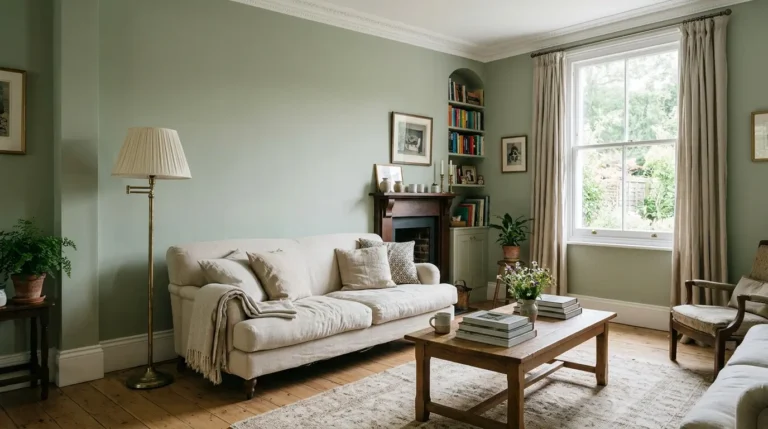
A mid-tone warm greige on living room walls creates a calm base that works with sofas, rugs and artwork. It hides marks better than white and still reflects enough light in most UK rooms. Test against your flooring; oak pairs well, cool grey carpet can make a pink undertone look mauve. Keep the ceiling lighter. This is one of the most reliable choices for the main living space because it feels modern without being stark.
2. Soft Greige for Bedrooms
Lighter warm greiges work well in bedrooms because they feel soft and restful. A colour close to Cornforth White or a light French Grey keeps the room calm without looking cold. How to choose the best paint colour for a bedroom covers similar decisions for sleep spaces. Test the sample at night under your bedside lamps, because that is when you notice the colour most.
3. Durable Greige for Hallways and Stairs
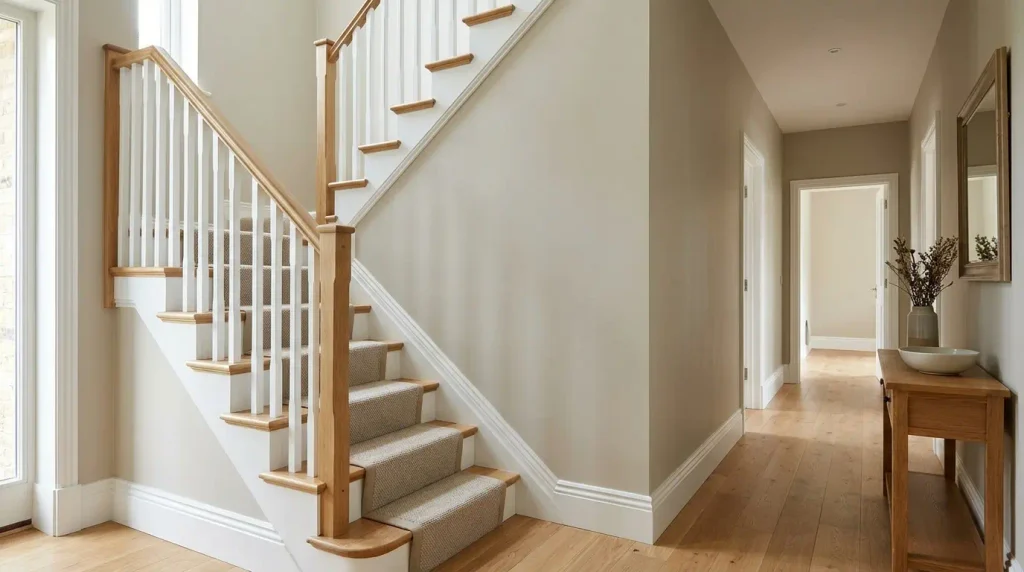
Hallways see more traffic, so choose a greige with a scrubbable matt finish. A slightly lighter tone helps the space feel open, especially if there is limited natural light. Darker greiges can work for drama but show scuffs more clearly. Measure the height of the walls carefully if you plan to paint only to dado height. A good quality finish and careful cutting in around the skirting make the colour look intentional rather than temporary.
4. Warm Greige for Kitchens
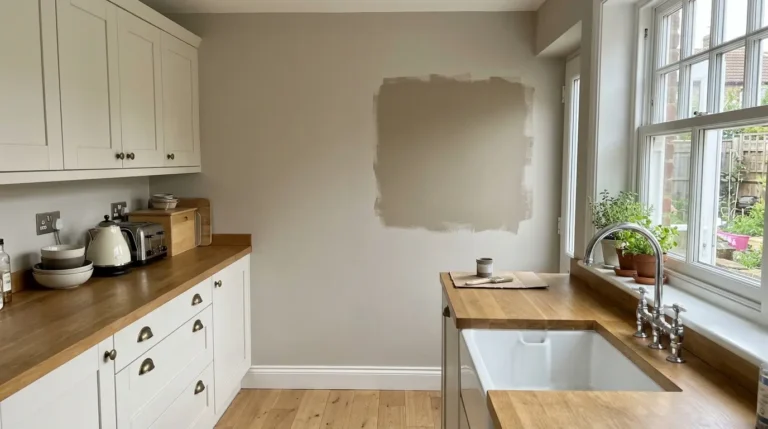
Kitchens benefit from a greige that sits cleanly next to worktops and appliances. A warm tone softens white or grey cabinets without competing. Avoid very cool greys next to warm wood or brass taps. Check the sample against the worktop under both daylight and the under-cabinet lights. A scrubbable finish is useful on the walls near the hob and sink. This keeps the kitchen feeling calm and practical rather than clinical.
5. Moisture-Resistant Grey for Bathrooms
Bathrooms need a paint that handles steam. Use a moisture-resistant or bathroom-specific emulsion in a light warm greige. Darker greys can look dramatic but may show condensation marks more clearly. Test the sample in the actual bathroom light, which is often cooler than the rest of the house. Pair with white sanitaryware and warm metal fittings so the grey does not feel cold. Good ventilation remains essential regardless of the paint colour.
6. Feature Wall Grey in Dining Rooms
A deeper greige or soft charcoal on one dining room wall creates a gentle focal point behind the table or sideboard. The other walls stay lighter so the room still feels open. This works well for evening meals when the darker wall recedes and the lighting takes over. Measure and mask carefully so the edge is clean. A matt finish absorbs light and makes the feature feel softer than a sheen finish would.
7. Light Grey for Home Offices
A light warm greige in a home office reduces glare on screens while still feeling calm. Avoid very cool greys that can look flat under desk lighting. Position the desk so you are not looking directly at a bright window with a pale wall behind it. Test the sample under the exact task lighting you use. A slightly warmer greige keeps the space feeling comfortable for long working days without becoming distracting.
8. Consistent Greige Across Open-Plan Areas
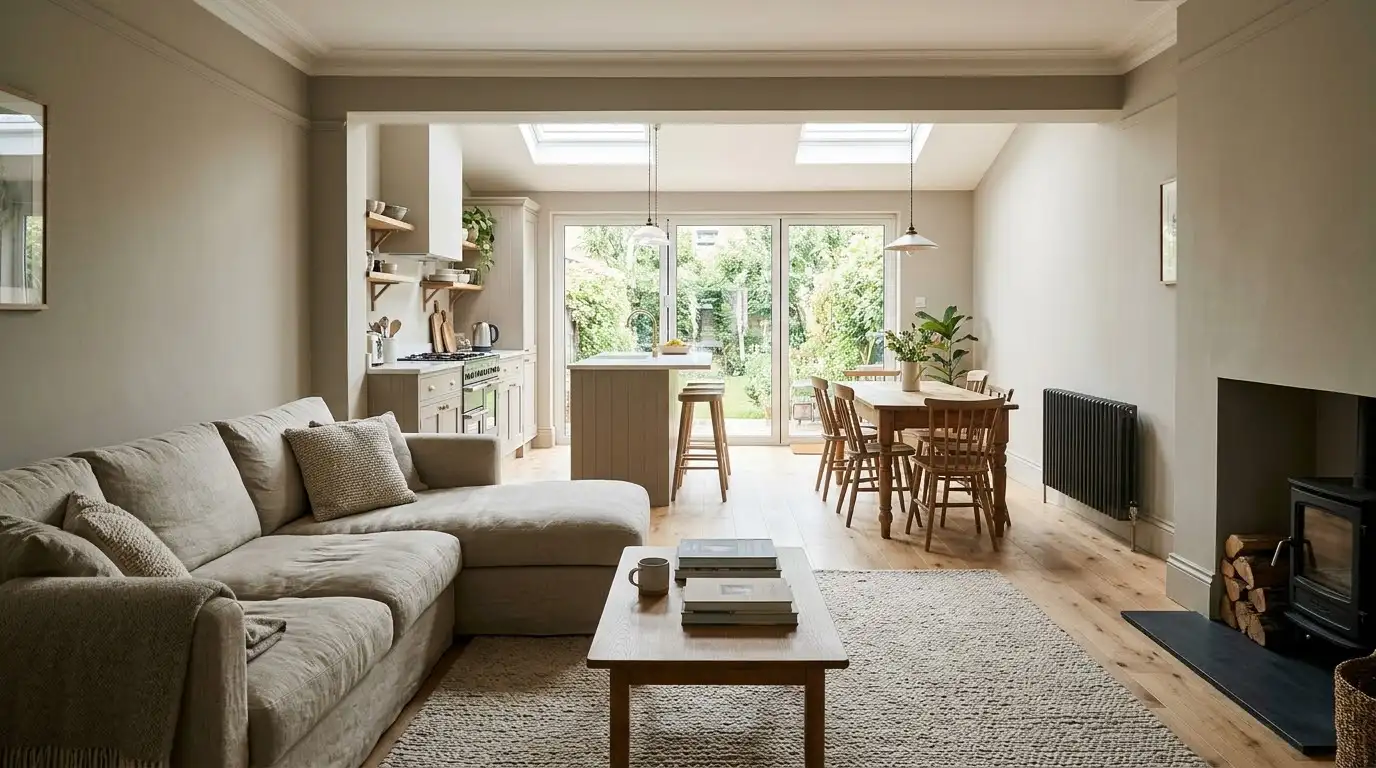
Using the same warm greige across an open-plan living, dining and kitchen space creates flow and makes the whole area feel larger. Adjust the finish if needed: more durable in the kitchen zone, standard matt elsewhere. Test samples in each zone because light levels often differ. This approach is simpler than coordinating several colours and still allows stronger accents in furniture or artwork. It is one of the most practical grey ideas for modern UK homes.
Shared Practical Checks for Every Room
Test large samples for a week in the actual room. Check undertones against floors and fixed surfaces. Order enough paint from one batch. Choose the right finish for traffic and moisture. Measure coverage and add extra. These checks apply to every idea above and stop the colour from shifting once the room is in daily use. Keep the colour name and batch number for future touch-ups.
How to Handle Stairs and High Areas
Stairs add height and often receive even less light. Use the same colour as the hallway walls so the space feels continuous. If the stairs are painted, a durable finish is essential because they see constant use. Measure carefully around the banister and spindles; cutting in takes longer than on flat walls. Some people paint the lower walls a slightly darker greige and the upper walls lighter to create a dado effect without adding moulding. This adds interest and protects the high-traffic lower section. Test the contrast so it looks intentional rather than accidental.
Budget and Timeline Considerations
A standard hallway and stairs can be painted in a day once the walls are prepared. Sample testing takes a week. Professional decorating for a typical hallway costs more than DIY but ensures clean edges around doors and stairs. Factor in the cost of good quality scrubbable paint; cheaper emulsion marks more easily and may need repainting sooner. Order samples first, then full tins once you are sure. This staged approach keeps the budget under control and avoids buying the wrong colour in quantity.
Grey paint ideas work across every room when you match the lightness and undertone to the light and the way the space is used. Living rooms and bedrooms take softer greiges, hallways and kitchens need more durable finishes, and open-plan areas benefit from consistency. Test properly, account for fixed finishes, and the grey becomes a reliable, calm foundation rather than a colour that feels wrong once the paint is dry.
FAQs
Can I use the same grey in the kitchen and living room?
Yes, especially in open-plan spaces. Choose a warm greige that works next to both the flooring and the worktop, and use a more durable finish in the kitchen zone.
What finish is best for grey walls in a hallway?
A scrubbable matt or eggshell finish handles traffic better than a standard matt. Lighter greiges show fewer marks than darker ones.
Do bathrooms need special grey paint?
Yes. Use a moisture-resistant emulsion designed for bathrooms so the paint handles steam without peeling or marking.