10 Tongue and Groove Bathroom Ideas for a Classic Look

The best tongue and groove bathroom ideas use vertical boards for height, half-height panelling for a traditional look, and painted or stained finishes sealed against moisture. Keep panelling out of direct shower spray, choose moisture-resistant MDF or well-sealed timber, and pair it with brass or chrome fittings for a classic bathroom.
Most people fall for the photos, then find the catch: bare or badly sealed boards swell in steam, old walls are rarely straight, and a mismatched top rail spoils the whole look. Here are 10 ways to get the classic look without those problems.
Tongue and Groove Bathroom Ideas for Height and Layout
Layout decides how tongue and groove reads in a room. Vertical boards add height, horizontal boards add width, and half-height panelling gives a traditional finish that suits most sizes. Choose the direction that fixes your room’s weakest proportion, then set the panelling height before you buy any boards.
1. Half-Height Panelling in Soft White
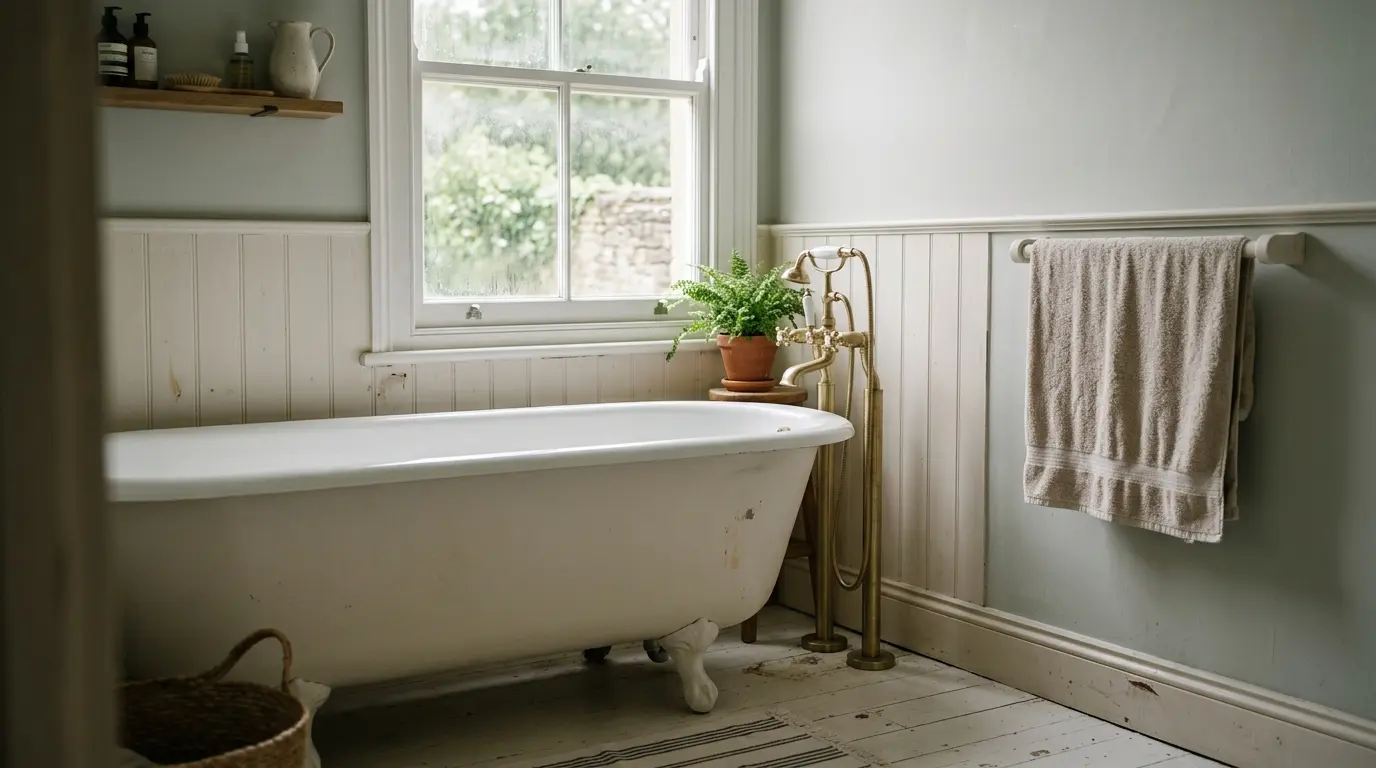
Half-height tongue and groove is the classic bathroom panelling look: boards on the lower wall, a capping rail on top and painted plaster above. It suits nearly every room size and hides uneven lower walls and pipework. A good rule of thumb is to finish the rail between a third and a half of the way up the wall. Check the rail is deep enough to sit flush over the board thickness.
2. Full-Height Vertical Boards
Full-height vertical boards stretch the eye upward, so they suit small, low or narrow bathrooms. Take them to the ceiling for a cocooning effect. One styling source also suggests cladding the ceiling to draw the eye around the room. On cold solid walls, fixing boards to battens with insulation between and a vapour barrier on the warm side can noticeably warm the room. Full height is also the riskiest choice for moisture, so prime every face and edge.
3. Horizontal Boards for a Shiplap Bathroom
Horizontal boards lengthen a room and give a coastal, beach-hut feel. A shiplap bathroom uses boards with an overlapping joint, while true tongue and groove interlocks for a tighter, beaded look, so check the profile before buying. White horizontal boards on walls and ceiling suit small bathrooms and lofts. The joints collect dust and splashes, so wipe them down regularly.
4. Panelling Around the Sink With a Tiled Splashback
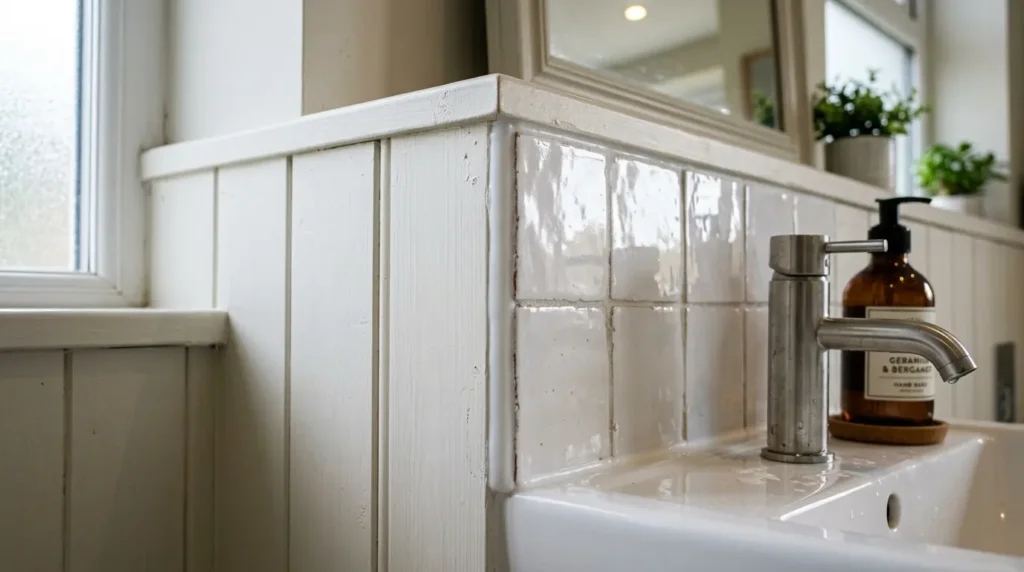
Panelling around the basin adds character where the wall gets splashed most, so protect it. Tile a splashback directly behind the taps and finish the top of the tiles neatly against the boards. This hybrid gives a hotel-style look and keeps the wettest patch of painted timber dry. Seal the joint between tile and board with flexible sealant, not decorator’s caulk, so it survives movement.
5. Tongue and Groove Bath Panel
A painted tongue and groove bath panel is the cheapest way to make a plain bath look bespoke. Use moisture-resistant MDF and paint it to match or contrast with the walls. One UK retailer’s guide lists tongue and groove among traditional bath panel styles for a nostalgic, unclinical look. Fit it so it can be removed, because you will need access to the bath’s plumbing.
Colour and Finish Ideas for a Classic Look
Colour and finish decide whether tongue and groove looks classic or dated. Heritage colours such as green, charcoal, burgundy and light blue suit panelling, and brushed brass or chrome fittings complete the look. Painted finishes need moisture-resistant paint, while natural timber needs a marine-grade sealant.
6. Deep Green Panelling
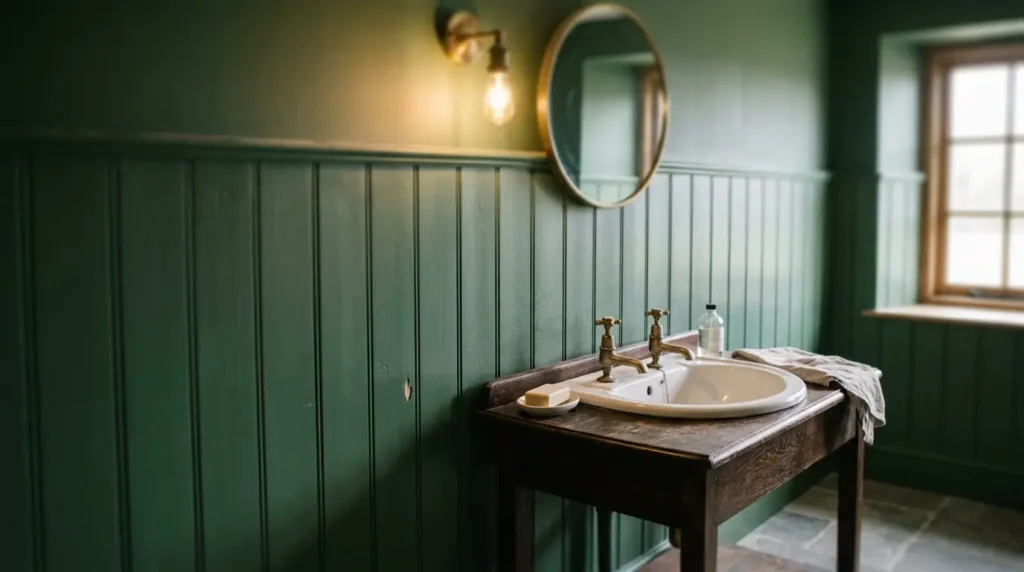
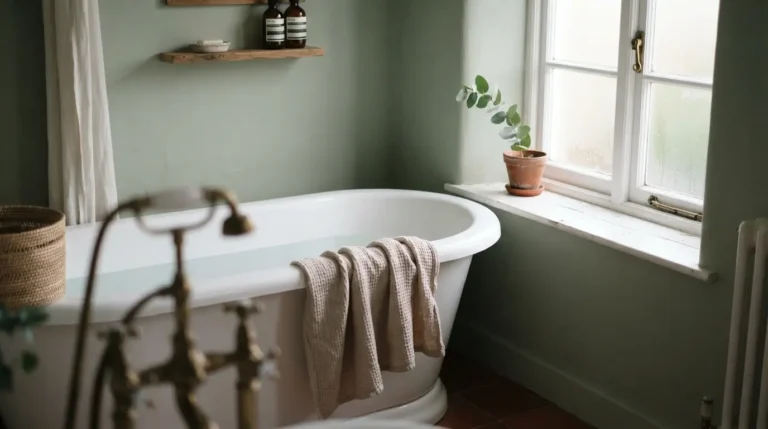
Green is a favourite for classic bathroom panelling because it suits traditional and country schemes. Hunting green is listed by one UK bathroom brand as a heritage colour that works well with panelling and brass. In Houzz’s tongue and groove bathroom gallery, green is the second most common wall colour after white. Choose an eggshell or satin finish and test a sample in your own light.
7. Dark and Moody Charcoal, Burgundy or Aubergine
Dark panelling can make a small bathroom cosy rather than cramped, if the lighting is right. Charcoal, burgundy and aubergine all suit tongue and groove, and aged brass looks rich against them. One designer suggests a lighter shade above the panelling to draw the eye up. The trade-off is upkeep: dark paint shows limescale streaks and scuffs, and it needs warm, dimmable lighting.
8. Powder Blue or Duck Egg in a Cloakroom
Pale blues suit cloakrooms and small bathrooms because they feel light but still traditional. One UK bathroom brand pairs powder blue with tongue and groove detailing on a cloakroom vanity, and lists duck egg blue among vintage vanity colours. That vanity was listed at about £440, so painting a board wall in a matching shade is the budget route to the same effect.
9. Natural Stained Timber With Marine Sealant
Stained or oiled tongue and groove gives a rustic, spa-like bathroom. A designer quoted in one feature recommends staining and sealing with a marine sealant, plus a suitable adhesive for damp conditions. Other designers note that sealed wood is water-resistant, not fully waterproof, so keep it out of the shower enclosure. Expect to re-seal every few years, and leave small expansion gaps because real timber moves with humidity.
10. Tongue and Groove Mixed With Picture-Frame Panelling or Wallpaper
Mixing profiles gives a layered, classic look. Run tongue and groove below the dado and picture-frame or square panelling above, or hang wallpaper above the boards. One designer advises keeping square panelling to one or two walls or below the dado, because four walls of it can feel closed in. If the paper is bold, keep the boards plain white.
Choosing Boards: Timber, MDF or Moisture-Resistant Panels
Use moisture-resistant MDF for most bathrooms and well-sealed softwood where you want a natural look. MDF moves less than softwood in humid rooms, but only moisture-resistant grades suit bathrooms. Keep both out of the shower enclosure, and use tiles or waterproof panels there instead.
| Material | Best for | Moisture verdict | Main catch | Approx. cost per sq m (GBP) |
| Softwood (spruce or pine) | Painted or stained schemes | Water-resistant once primed, painted and sealed | Moves with humidity; edges must be sealed | £15 to £40 |
| Moisture-resistant MDF | Painted schemes, bath panels, cloakrooms | Good if the grade is moisture-resistant and edges are primed | Swells if cut edges are left bare | £15 to £45 |
| Hardwood (such as oak) | Stained, natural finishes | Water-resistant when sealed properly | Expensive and heavy to fit | £60 and above |
Costs are approximate and vary by country. Whichever you pick, prime every face and edge and let the boards sit in the room for a day or two before fixing, so they settle to the room’s humidity.
What Tongue and Groove Panelling Costs and How Long It Takes
A DIY half-height scheme in a small bathroom typically costs roughly £150 to £450 in materials and takes one to two days plus painting. Full-height panelling costs more and takes two to three days. Prices are approximate and vary by country, and a tradesperson’s day rate adds to the total.
| Job | Approx. materials (GBP) | Fitting time | What is included |
| Half-height, small bathroom | £150 to £450 | 1 to 2 days, plus paint | Boards, capping rail, skirting, adhesive, primer, paint |
| Full-height, one feature wall | £150 to £400 | 1 to 2 days | Boards, trims, primer, paint |
| Full-height, whole small bathroom | £350 to £900 | 2 to 3 days | As above, plus more boards and paint |
| Tongue and groove bath panel | £40 to £150 | Half a day | MDF boards, frame, paint |
| Professional fitter | Roughly £150 to £250 per day (UK) | As above | Labour only |
Painting adds time, because primer and each coat need to dry before the next. Panelling is usually cheaper per square metre than tiles, especially designer tiles, and it can be repainted later to change the look.
Moisture, Durability and Common Mistakes
Moisture is the main threat to a tongue and groove bathroom. Keep boards out of direct shower spray, prime and paint every face and edge, and run an extractor fan. Painted panelling is water-resistant, not waterproof, so treat paint and sealant as maintenance items, checking them yearly and repainting every few years.
- Believing “watertight” claims: some sources describe primed, painted and sealed panelling as watertight, but other designers say it should not go inside a shower enclosure. Take the cautious view.
- Bare cut edges: MDF and softwood swell fastest at cut ends, so prime them before fixing.
- Rail and trim mismatch: a thin dado rail will not sit flush over thick boards. Test trims against an offcut before buying.
- Weak ventilation: an underpowered extractor fan leaves boards fighting condensation daily.
- Covering damp: panelling hides uneven walls and pipework well, but fix any damp first.
- Sockets and switches: isolate the power before removing faceplates, and use an electrician if you are unsure.
For everyday care, wipe with a damp cloth and check sealant lines at the base, around sanitaryware and where tile meets board.
Conclusion
The best tongue and groove bathroom ideas share three habits: seal everything, keep boards out of the shower, and choose a height and colour that suit the room. Half-height white is the safest classic, vertical boards fix low ceilings, and deep green or charcoal add drama. Prime every edge, match your rail to the board thickness, and check sealant yearly. Do that and your panelling will look classic for years.
FAQs
Can you use tongue and groove in a bathroom?
Yes. Tongue and groove works in bathrooms when it is sealed and kept away from direct water. Use moisture-resistant MDF or well-sealed timber, prime every face and edge, and ventilate well. Half-height panelling and walls away from the shower are the safest places to use it.
What is the difference between tongue and groove and shiplap in a bathroom?
Tongue and groove boards interlock through a projecting tongue and a matching groove, often with a bead or V-groove. Shiplap boards overlap through a rebated joint, leaving a shadow gap. Tongue and groove reads as tighter and more traditional, while shiplap reads as more relaxed and coastal.
How high should half-height panelling go?
A good rule of thumb is between a third and a half of the wall height, often around 900mm to 1200mm from the floor in a standard-height room. Line the capping rail up with a window sill or another horizontal line in the room, so it looks planned.
Should I use MDF or solid wood?
Use moisture-resistant MDF for most bathrooms, because it moves less than softwood in changing humidity. Choose solid timber for stained or natural finishes, and seal it thoroughly. Standard MDF is not suitable, so check the grade and prime every cut edge.
Can tongue and groove go inside a shower?
Not directly. Designers quoted in one feature say sealed wood panelling is water-resistant, not fully waterproof, so it should not go inside a shower enclosure. Use tiles or waterproof shower panels there, and keep painted tongue and groove on walls away from direct spray.
Is tongue and groove cheaper than tiles?
Usually, per square metre, especially against designer tiles, and it is generally easier to install. It can also be repainted to change the look. Add primer, paint, sealant and trims to your comparison, and remember it does not replace tiles inside the shower.
What paint should I use on bathroom panelling?
Prime all faces and edges, then use a moisture-resistant or bathroom paint in an eggshell or satin finish, typically in two coats. Wipeable finishes cope with condensation better than very flat paint. Seal the joints where panelling meets sanitaryware and floor with flexible sealant.
Does panelling add insulation?
It can. One panelling specialist suggests fixing boards to battens, insulating between them and adding a vapour barrier on the warm side, which can noticeably warm a room in an older solid-walled house. Fixing boards straight to the wall adds little. Get damp advice before covering old walls.