Types of Armchairs Explained: From Club to Wingback

Understanding the main types of armchairs helps you choose a chair that fits both your living room and how you sit. British homes range from compact flats to larger period houses, so the scale, arm height, and seat depth matter as much as the style name. Club chairs, wingbacks, and barrel designs each solve different problems of comfort and space. This guide explains the common forms, typical dimensions, and what to check before you buy so the chair works in real daily use rather than just looking good in a photograph. Getting the type right avoids the common mistake of buying a chair that looks perfect online but feels cramped or towers over the rest of the furniture once it arrives.
Club Armchairs
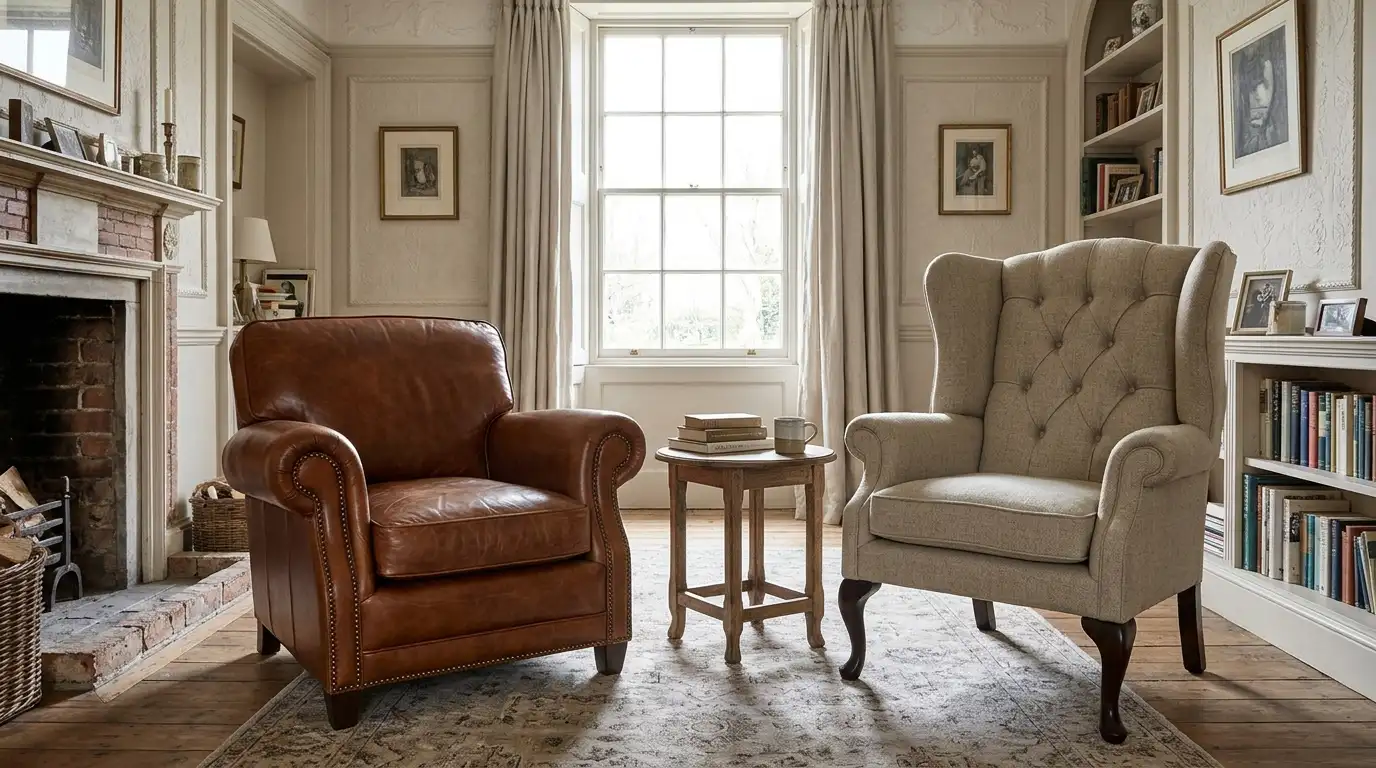
Club chairs have a low back, wide seat, and often rolled arms. They originated in gentlemen’s clubs and remain popular in British living rooms because they feel substantial without looking formal. Typical seat height is 430 to 460 mm, seat depth 500 to 550 mm, and overall width 800 to 900 mm. The low back suits rooms where you do not want to block views across an open-plan space. Leather or performance fabric versions hold up well to daily use. Check the frame is hardwood and that the cushion is high-density foam or feather-wrapped. In older houses the weight of a solid club chair can mark softwood floors, so consider protective pads. Placement ideas appear in how to place an armchair in a living room for best effect. Many people pair a club chair with a matching ottoman; leave at least 400 mm in front so the ottoman can be used without blocking the path to the door.
Wingback Armchairs
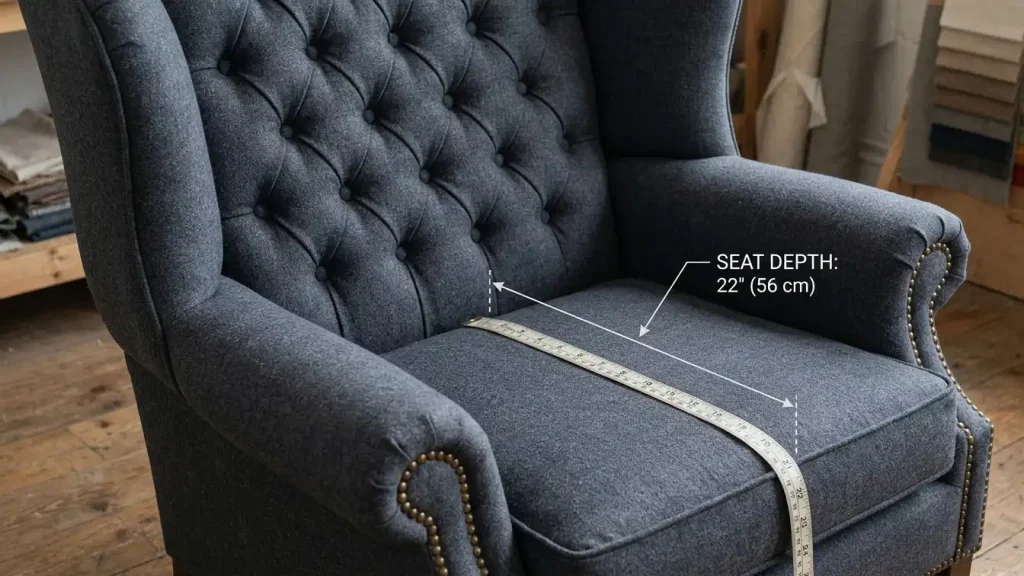
Wingbacks feature high sides that curve forward, originally to protect against draughts in large rooms. In modern UK homes they still give a sense of enclosure and work well beside a fireplace or in a reading corner. Overall height often reaches 1000 to 1100 mm, so measure headroom under sloping ceilings or low beams common in cottages and loft conversions. Seat depth is usually 480 to 520 mm. The wings add width, so allow at least 100 mm clearance either side. Traditional versions use button tufting; contemporary ones may be plain. Upholstery choices range from velvet to hard-wearing linen. In north-facing rooms a lighter fabric helps prevent the chair looking heavy. See styling tips at how to style an armchair with cushions and throws. Check that the wings do not prevent you from turning your head comfortably when the chair is placed at an angle to the television.
Barrel and Tub Armchairs
Barrel or tub chairs have a continuous curved back and arms that form a single shell. They are compact, usually 750 to 850 mm wide, and suit smaller British living rooms. Seat height is around 450 mm. The enclosed shape feels cosy and works in pairs either side of a sofa. Check that the arms are not so high that they stop you resting a book or cup. Many are fully upholstered, so choose a fabric with a high rub count of at least 20,000 for longevity. In flats with limited storage the curved form is easier to manoeuvre through doorways than a square club chair. Related accent ideas are in 12 accent chair ideas to add character to a living room. Measure the diagonal of the doorway as well as the width, because the continuous curve can catch on frames.
Mid-Century and Lounge Chairs
These have lower profiles, often with wooden or metal legs and more open arms. Classic examples sit at 700 to 800 mm high overall. They suit modern British interiors and pair well with low sofas. Seat depth can be deeper, around 550 mm, which suits taller users. Verify the base is stable and that the upholstery can be cleaned. In small rooms measure the footprint carefully because the visual lightness can still occupy floor space. Exposed legs make them easier to vacuum under, a practical point in homes with pets. Broader chair guidance is available in how to choose the perfect armchair for your living room. Confirm the leg height clears any underfloor heating pipes or radiator valves if the chair will sit close to the wall.
Recliner and Swivel Armchairs
Recliners offer adjustable positions and are popular for television watching. Electric models need a nearby power socket and a cable route that does not create a trip hazard. Typical closed width is 850 to 950 mm; they need extra clearance when extended, often 300 to 400 mm behind. Swivel bases help in open-plan rooms so you can turn from conversation to screen. Check the mechanism is quiet and that the fabric is durable. Weight capacity is usually 120 to 150 kg; confirm this if multiple people will use it. Manual recliners avoid the need for power but require more strength to operate. For comfort-focused ideas see related content on the site about leather recliners. Always test the recline if possible, because the footrest height varies and can feel awkward for shorter users.
What to Check Before You Order
Measure the doorway and any turns on the delivery route; many British terraces have narrow halls of 800 mm or less. Confirm seat height suits the people who will use it most. Test the firmness of the cushion in person if possible. Ask about the frame material, warranty, and whether the cover is removable. In rented homes check the floor can take the weight of heavier club or wingback chairs and that the landlord allows the piece. Matching scale to your sofa prevents the chair looking out of place. Also note the distance to the nearest power point if you plan to add a floor lamp beside the chair. In conservation areas or listed properties some heavier traditional styles may need careful placement to avoid marking original floors.
Conclusion
Club, wingback, barrel, mid-century, and recliner armchairs each offer distinct advantages in comfort and scale. Matching the type to your room size, seating habits, and existing furniture creates a living room that feels intentional rather than crowded. Take measurements of both the space and the users, then select a construction that will last. With the right choice the armchair becomes a practical and welcoming part of the room. Start with how you actually sit and the clearances available, and the style name becomes a useful guide rather than a restriction.
FAQs
What is the difference between a club chair and a wingback?
A club chair has a lower back and open or rolled arms, while a wingback has high sides that curve forward. Club chairs feel more relaxed and take less visual height; wingbacks offer more enclosure and work well for reading corners.
How wide is a standard armchair?
Most armchairs range from 750 to 950 mm wide. Compact barrel styles sit at the lower end; club and recliner styles are wider. Always check the exact dimensions and allow clearance on both sides.
Do wingback chairs work in small rooms?
They can if the overall height fits and you leave enough space around the wings. In very small rooms a lower-profile barrel or mid-century chair usually feels less dominant.
What seat height is comfortable for most people?
A seat height of 430 to 470 mm suits most adults. Taller users may prefer the higher end. Test if possible, because cushion compression changes the final sitting height.
Are recliner armchairs suitable for everyday living rooms?
Yes, if you have the floor space for the recline and a nearby socket for electric models. Choose a fabric that resists wear and confirm the mechanism has a good warranty.
How do I know if an armchair will fit through my doorway?
Measure the narrowest point on the delivery route, including any turns. Compare this with the chair’s widest and tallest dimensions. Many retailers will advise if the piece needs to be partially disassembled.
Which armchair type is easiest to clean?
Leather and performance fabrics with removable covers are the simplest to maintain. Fully upholstered barrel chairs can trap dust in the curve, so choose a fabric that can be wiped or vacuumed easily.