How to Lay Turf to Create a New Lawn

Laying turf creates an instant lawn in a UK garden when the ground is prepared thoroughly and the timing is right. The best windows are September to November and March to April, when soil temperatures sit above 8 °C and rainfall assists establishment. Turf must be laid within a day or two of delivery, so finish all soil work beforehand. Poor preparation shows through within weeks as dips, weeds, or failed rooting.
Clear the site of existing grass and perennial weeds such as couch and bindweed. Dig or rotovate to 15-20 cm, remove stones larger than a thumbnail, and incorporate well-rotted organic matter if the soil is poor. Leave the ground to settle for several days or longer, then firm by treading in different directions and rake to a fine level tilth. Apply a pre-turfing fertiliser and rake it in. The finished surface should be firm enough that footprints barely show.
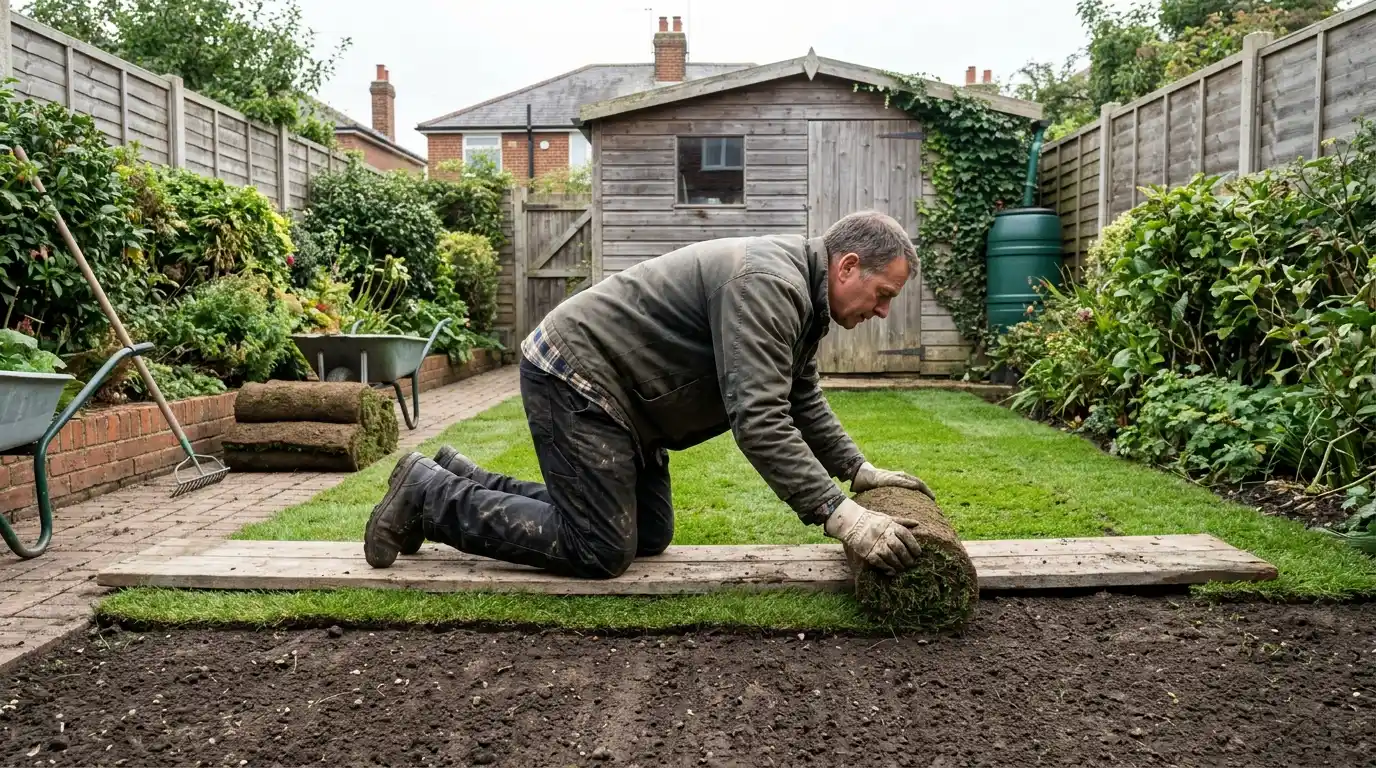
Start laying along a straight edge such as a path, working across the site so you face bare soil. Stagger the joins like bricks, butt the edges tightly, and stand on boards to avoid footprints. Water thoroughly immediately after laying. For related planting ideas around the new lawn, see our 15 garden border ideas for structured UK planting schemes.
Timing and Soil Preparation
Autumn gives the longest establishment period before summer drought. Spring works well if watering is reliable. Avoid mid-summer laying unless you can water daily. Dig to at least 15 cm and add topsoil if the existing ground is compacted or stony. Level carefully; turf follows every undulation underneath.
Weed control is critical. Any perennial roots left behind will push through the new turf. Use a non-selective herbicide several weeks ahead if the site is heavily infested, then cultivate after the weeds have died back.
Laying Technique and Aftercare
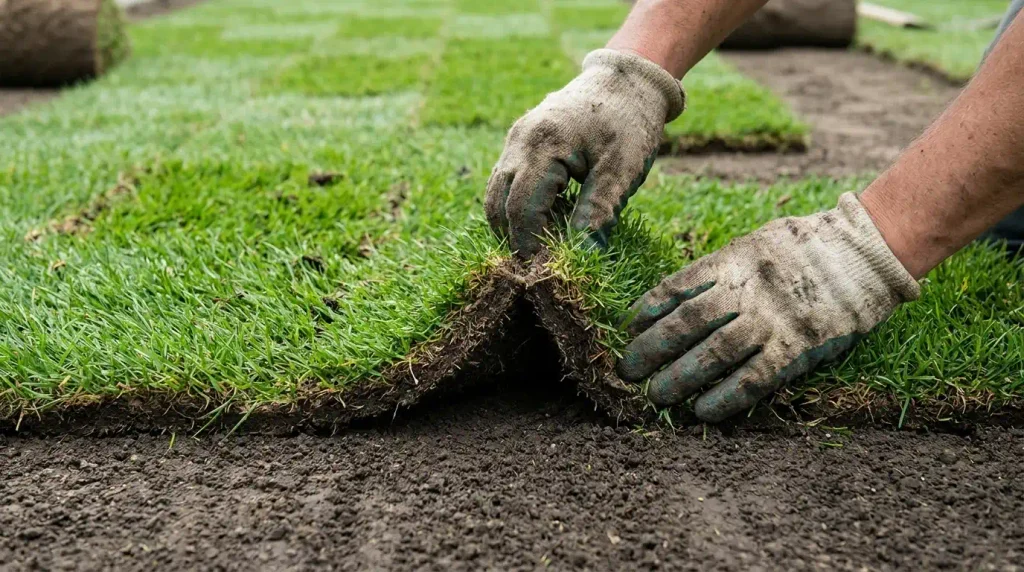
Unroll the first row against the straight edge and press gently. Cut the end of the next row with a sharp knife so the stagger is even. Keep joins tight and avoid stretching the turf. Once laid, water until the soil beneath is damp to the depth of the root zone. Water daily for the first two weeks in dry weather, then reduce as roots take.
The first mow can take place when the grass reaches about 5 cm. Set the mower high and remove only the tips. Avoid heavy use for 6-8 weeks. Check for gaps and top-dress any joins that open. These steps produce a lawn that roots firmly and looks established by the following season.
Common Mistakes
Laying on unprepared or uneven ground is the most common failure. Waiting too long after delivery lets the turf dry or heat up in the stack. Over-watering creates a soggy surface that encourages disease. Cutting the first mow too low scalps the new grass. Measure the area accurately for ordering and allow a little extra for cuts.
Conclusion
Laying turf successfully depends on autumn or spring timing, thorough soil preparation to 15-20 cm, tight staggered joins, and consistent early watering. Firm and level the ground first, lay within a day of delivery, and mow high for the first cuts. The result is a usable lawn in 6-8 weeks that forms a solid base for the rest of the garden.
FAQs
When is the best time to lay turf in the UK?
September to November is ideal, followed by March to April. Soil is warm enough for rooting and rainfall helps.
How soon can I walk on new turf?
Light foot traffic after two weeks is usually fine, but avoid heavy use for 6-8 weeks while roots establish.