7 Roman Blind Ideas for Every Room and Every Style

Roman blinds work in almost any room because the soft folds sit neatly against the window and the fabric choice sets the tone. The right combination of material, lining and fitting turns a plain opening into a considered detail. These seven ideas cover living rooms, bedrooms, kitchens and more, with practical notes on sizes, clearances and what to check before ordering. Compare them with roller blind ideas if you want a cleaner look. Always measure three times and confirm stack height with the supplier.
1. Soft Linen in a Living Room
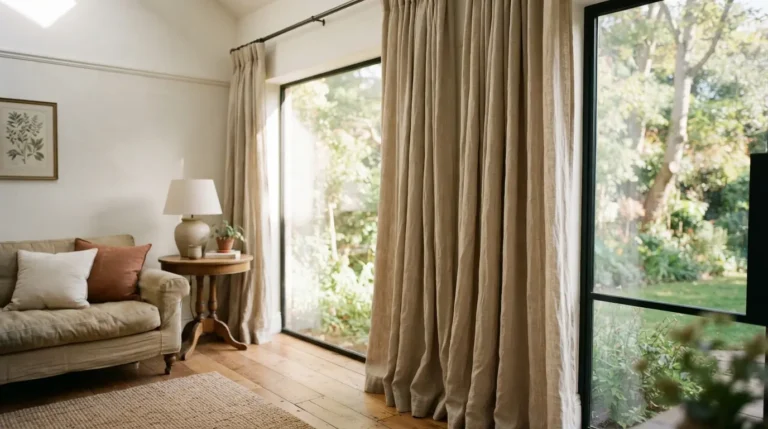
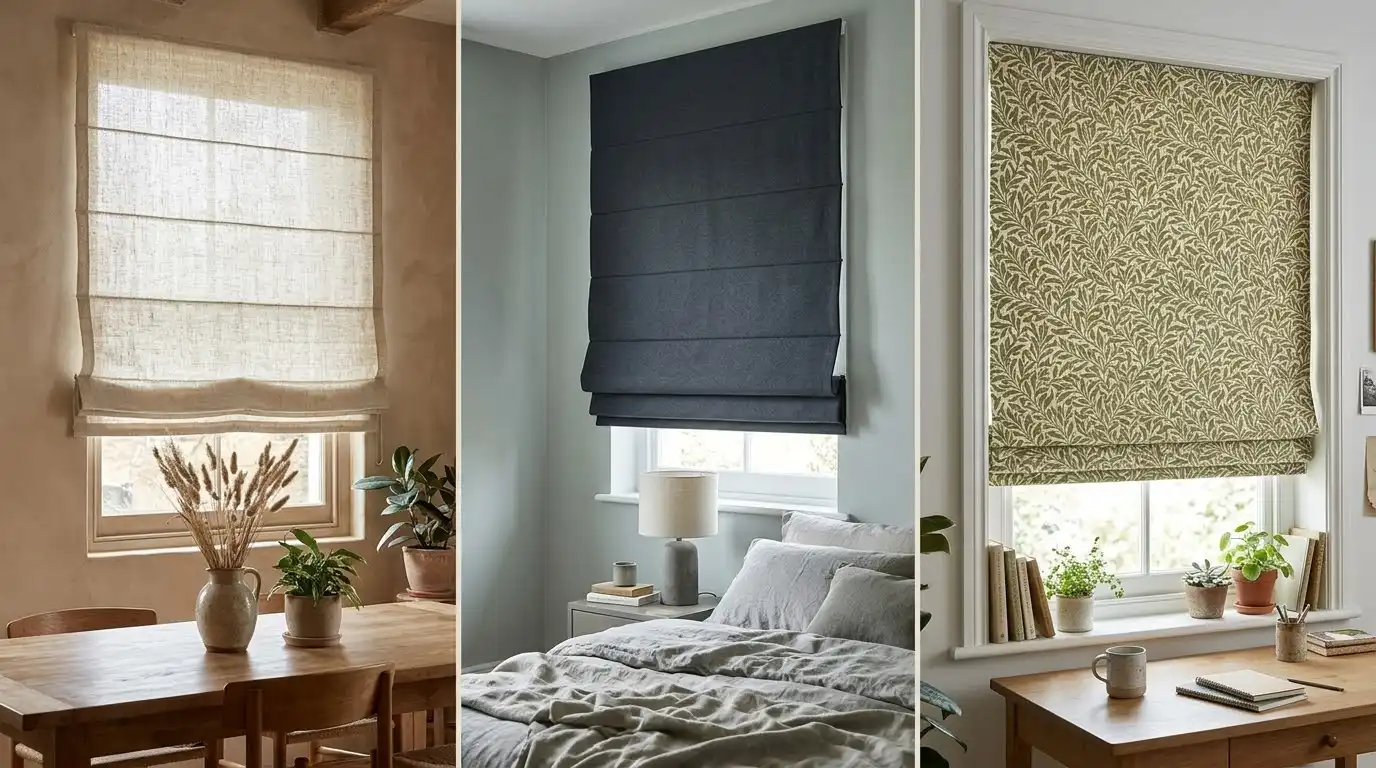
Natural linen Roman blinds filter light without darkening the room and the relaxed folds suit most UK living spaces. Choose a mid-weight linen so the folds hold their shape rather than collapsing into soft heaps. Face fit with at least 50 mm side overlap and allow 200–250 mm stack height so the raised blind clears the view completely. Pair with curtains on a separate track for evenings when you want more insulation. Measure the recess depth first; linen stacks higher once lined and a shallow reveal will force you onto face fit. Check the fabric sample against your sofa colour in daylight before ordering, because linen can shift warmer or cooler depending on the light. Confirm the headrail is rated for the weight of the lined linen. This combination keeps the room bright during the day while the folds add texture without competing with the furniture.
2. Blackout Lining for Bedrooms
A blackout-lined Roman blind blocks light for better sleep while the outer fabric keeps the look soft and inviting. The extra lining increases stack height by 20–40 mm, so confirm the supplier’s exact figure for your measured drop before you order. Recess fit needs at least 60 mm clear depth; anything less and the stack will hit the glass or the handle. Position the blind so the raised stack does not cover the top of the glass and reduce morning light when you want it. Order samples of both the face fabric and the blackout lining so you can see the colour and hand feel together. Child-safe chain tensioners should be positioned clear of the folds. This option works well in rooms that face early sun or street lighting. Always ask whether the blackout is a bonded lining or a separate layer, as it affects how the folds sit.
3. Easy-Clean Fabric in Kitchens
Choose a polyester-cotton or treated fabric that wipes clean and resists steam and cooking marks. Avoid pure linen near cookers or sinks because it absorbs odours and stains more easily. Face fit is safer if the sill is used for storage; add 50 mm side overlap so light does not leak around the edges. Keep the drop short of the worktop so the blind does not catch on taps, utensils or the sink edge when lowered. Measure around any extractor hood or tiles that reduce usable depth. Confirm the fabric is suitable for the humidity and that the lining will not delaminate in a steamy environment. A shorter drop also makes the stack less bulky when raised. This keeps the kitchen practical while still giving soft folds that soften hard surfaces.
4. Patterned Roman Blind in a Bay
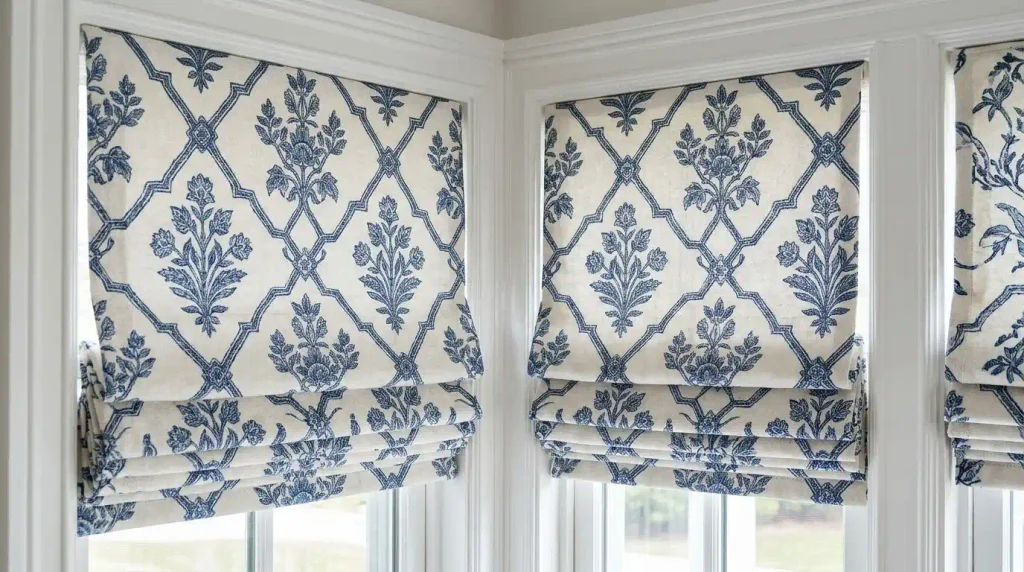
A repeating pattern adds interest across the three faces of a bay and can tie the window treatment to the room’s textiles. Order each section separately and allow for pattern matching at the junctions so the design continues without awkward breaks. Measure each width at the narrowest point and the drop at the shortest. Stack height must clear the glass when raised so light still enters the room. Use face fit on the outer edges if the reveals are shallow or if handles project. Request a layout drawing from the supplier showing pattern alignment across all panels before production starts. Patterned fabrics usually need extra material for the repeat, so confirm the total quantity. This approach turns a bay into a feature rather than three separate windows.
5. Neutral Cotton with Thermal Lining
A plain cotton face with thermal lining improves insulation without full blackout and the folds stay crisp. The colour works with any scheme and the lining adds a useful air gap against draughts. Recess or face fit both work; face fit reduces draughts around the edges more effectively. Allow the extra stack height for the lining, typically 20–30 mm more than unlined. This option suits north-facing rooms where heat retention matters more than total darkness. Check the thermal claim with the supplier and ask for any independent test data if available. The neutral face means the blind does not dominate the room when raised or lowered. Pair it with existing curtains if you already have them.
6. Layered Look with Curtains
Fit the Roman blind face-fixed so the stack sits clear of the glass, then hang curtains further out on a pole or track. The blind handles daytime light and privacy; the curtains add insulation and softness at night. Leave enough wall space for the curtain stack when open so the fabric does not crush against the blind. Measure the combined depth so the curtains clear the blind mechanism and the chain. This combination is popular in UK living rooms and bedrooms because it gives flexibility without committing to one treatment. Confirm the curtain pole or track brackets will not clash with the blind brackets. The overall look feels finished and practical for changing light through the day.
7. Slim Cassette for Modern Rooms
A cassette headrail hides the mechanism and gives a cleaner top edge that suits contemporary rooms with minimal trim. The stack still projects, so confirm the cassette depth and the stack height for your fabric and drop. Face fit is usually required because the cassette needs solid fixing outside the reveal. Check the maximum width the cassette system supports; some have intermediate supports on wider windows. Order a sample to see how the fabric sits inside the cassette when raised and whether the folds remain even. This style reduces visual clutter at the top of the window and works well with clean lines elsewhere in the room. Verify child-safety features are included as standard.
Conclusion
These seven Roman blind ideas cover most rooms and styles in a UK home. Match the fabric and lining to the light and privacy needs, measure carefully for recess or face fit, and always check stack height and clearances before ordering. The right specification keeps the folds even and the window usable every day without light leaks or catching mechanisms.
FAQs
Which Roman blind fabric works best in a kitchen?
A wipeable polyester-cotton or treated fabric resists steam and marks better than pure linen. Keep the drop clear of the worktop and confirm suitability for humidity before ordering.
Do patterned Roman blinds need extra fabric?
Yes. Allow for the pattern repeat so the design lines up across panels or bay sections. Ask the supplier for the repeat measurement and a layout confirmation.
Can Roman blinds be used in a bay window?
Yes. Measure each face separately and order individual blinds. Allow for pattern matching and confirm stack height clears the glass on every section.