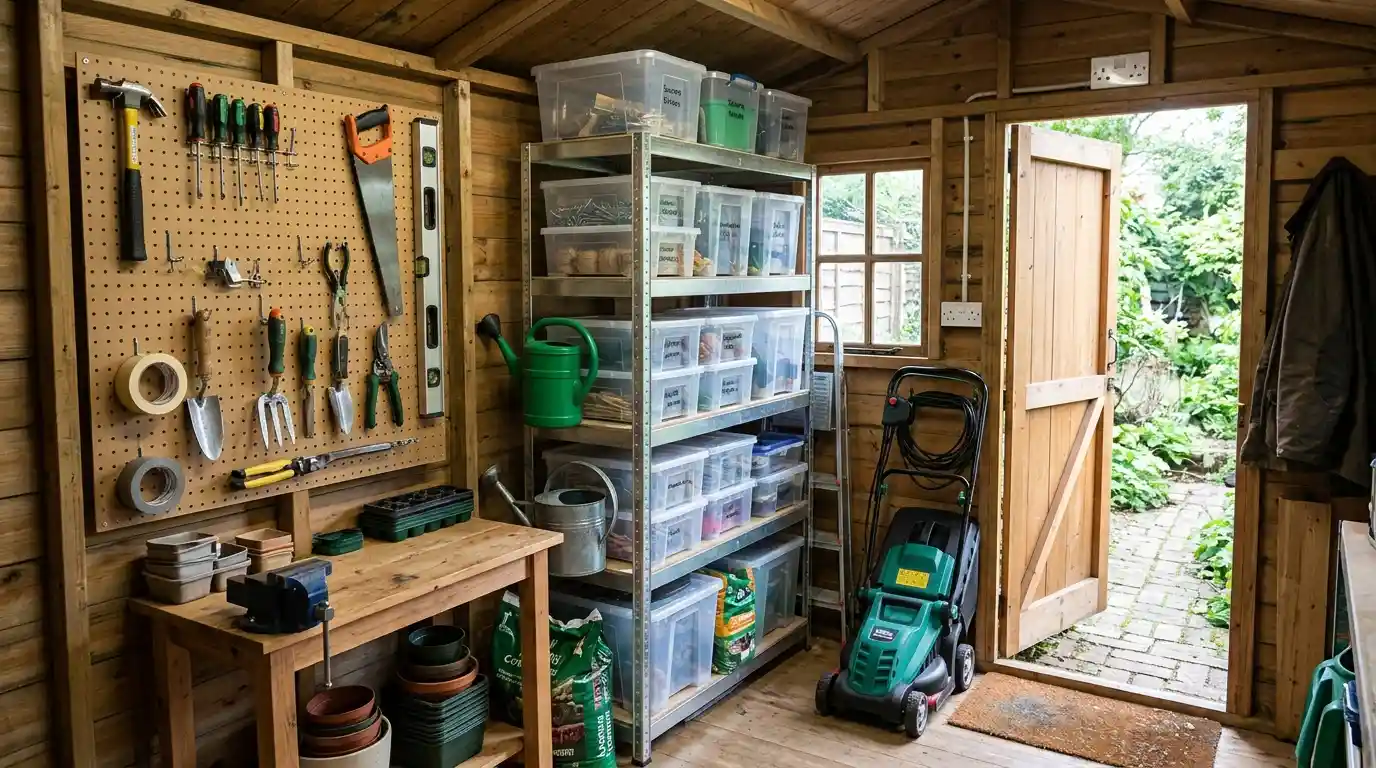
How to Organise a Garden Shed Efficiently

An efficient garden shed starts with a clear-out, then uses walls, ceiling and shelving so the floor stays open for larger items such as a mower or wheelbarrow. In typical UK sheds of 8 by 6 feet or similar, vertical storage makes the biggest difference. Plan the layout before putting items back, keep a clear path from the door, and group similar tools together so you can find what you need without moving other things.
The steps below cover sorting, storage systems and ongoing habits that stop the shed filling with unused items again. Most of the work is one-off; after that the organisation holds with occasional checks. Measure the internal dimensions first because door width and roof height affect what you can store easily.
Empty and sort everything first
Take every item out and sort into keep, repair, recycle or discard. Be honest about tools you have not used in a year or items that are broken beyond simple fixing. Clean the empty shed with a broom and vacuum so dust and cobwebs are gone. Check for damp patches on walls or floor and for any signs of pests. This step reveals how much usable space you actually have and prevents putting back clutter that will just get in the way. Once the shed is empty you can measure walls accurately and plan where heavy items will sit without blocking the door.
Separate seasonal items such as Christmas lights or summer cushions from everyday gardening tools. Bag up compost that is more than two years old and use it as a soil improver rather than storing it. This reduces bulk before you start adding storage.
Use walls for tools and small items
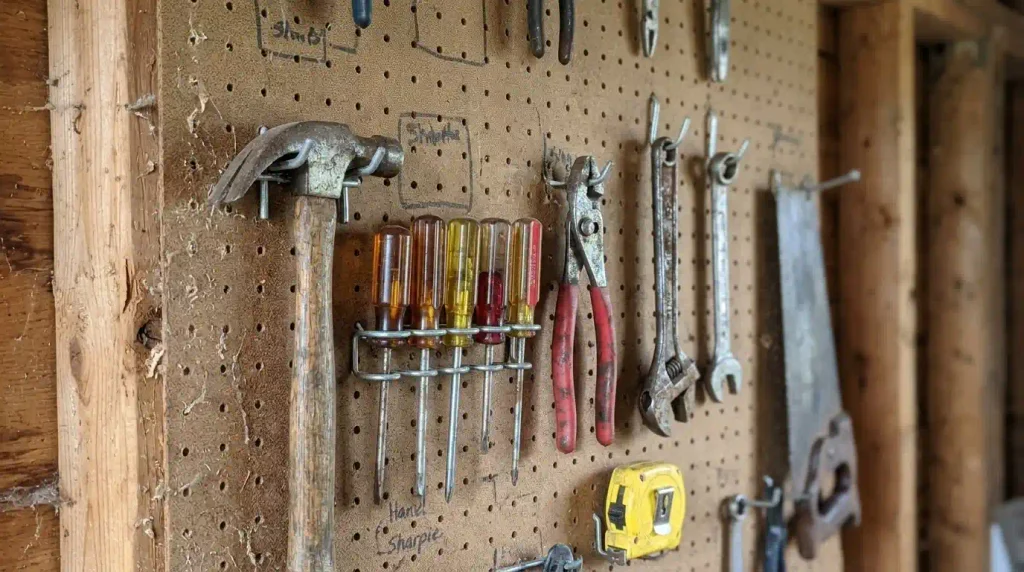
Fix a pegboard or French cleat system on one wall for hand tools. Hang spades, forks and rakes on strong hooks so handles stay upright and heads off the floor. Magnetic strips work well for secateurs, trowels and other smaller metal tools. Group similar items: all cutting tools together, all digging tools together, all measuring and marking tools in one section. This frees floor space and makes items easy to find even in low light. Secure heavy racks and pegboards to the shed frame rather than just the cladding so they can take the weight without pulling free.
Leave a gap of about 10 cm between the wall and the back of hanging tools so they do not scrape the wood. For long-handled tools a simple horizontal rail with S-hooks works if a full pegboard is not practical. Check that hooks are rated for the weight of the tool.
Add shelving for pots, feeds and boxes
Install adjustable metal or timber shelves along one or two walls. Put heavier items such as paint tins, fertiliser bags or power tool cases on lower shelves and lighter seed packets, gloves or plant labels higher up. Use clear plastic totes with lids for small items so you can see the contents without opening every box and so damp is kept out. Label each box clearly with contents and season if relevant. Corner shelves make use of awkward spaces that would otherwise be wasted. Leave enough headroom under shelves so you can stand comfortably and reach the back of the shelf without crouching.
Space shelves 30 to 40 cm apart vertically for most gardening supplies. Deeper shelves of 40 cm suit larger pots or boxes. Fix shelves to the frame with proper brackets rather than relying on friction fits that can slip under load.
Store bulky items off the floor or on wheels
Hang ladders, folded chairs or cushions from ceiling hooks fixed to joists if the structure is strong enough to take the load. Put the lawnmower and wheelbarrow on the floor but against a wall so a path remains clear from the door to the back of the shed. Rolling carts or low platforms on castors make heavy bags of compost or soil easier to move when you need them. Measure the door opening before buying any large storage unit so it fits through without forcing.
A 6 by 4 foot shed has limited floor space so prioritise wall storage and only keep the most used bulky item on the floor. In larger sheds you can create zones: one for power equipment, one for hand tools, one for materials.
Create a potting or work area if space allows
In an 8 by 6 or larger shed a small bench along one wall gives a place to pot up plants or sharpen tools. Fit drawers or open shelves underneath for hand tools and small supplies. Add a small light if you work in the evening or on dull days. Keep the bench clear when not in use so it does not become another dumping spot. Position it near a window if the shed has one for natural light and better visibility for fine work.
A standard workbench needs about 1.2 metres of wall length and space to stand in front. If space is tight a fold-down bench can work, but fixed is more stable for regular use. Include a small vice or tool holder if you do repairs.
Maintain the system
Put items back in their place after use so the organisation does not unravel. Once or twice a year do a quick sort and discard anything broken or unused. Check for damp in winter and improve ventilation if condensation appears on the inside of the roof or walls. A tidy shed makes gardening tasks faster and reduces the chance of tools rusting or being lost behind other items.
Sweep the floor after heavy use and wipe shelves occasionally. Keep a small bin or bag for packaging and offcuts so they do not accumulate. If the shed has electrics, ensure sockets stay clear and cords are stored neatly when not in use.
Conclusion
Organising a garden shed efficiently means using every wall and some ceiling space, keeping the floor clear for movement, and grouping items so you can find them quickly. Start with a full clear-out, install the right hooks and shelves, then stick to the habit of returning things to their place. The result is a practical space that supports your gardening rather than slowing it down. Most UK gardeners find an 8 by 6 foot shed becomes usable once the walls do the storage work.
FAQs
What is the best size shed for most UK gardens?
An 8 by 6 foot shed is the most popular because it holds a mower, tools and some shelving while still leaving room to move. Smaller 6 by 4 sheds suit only basic tools. Larger sizes add workshop space and are worth considering if you have the garden area.
How do I stop damp in a garden shed?
Ensure the base is raised and well ventilated. Use a breathable floor covering if needed. Avoid storing damp items such as wet tools or unsealed compost. In winter check for condensation and add vents or a small dehumidifier if the problem persists. Good air flow prevents mould on stored items.
Can I organise a small shed effectively?
Yes. Focus on wall hooks and vertical storage. Keep only essential tools and use stackable clear boxes. A clear path from the door is still essential even in a compact space. Prioritise the items you use most often and store seasonal gear higher up or on the ceiling.