7 Roll Top Bath Ideas for a Classic and Timeless Bathroom

A roll top bath brings a traditional rolled rim and usually sits freestanding on feet, which means it needs more floor space and a careful weight check than a built-in straight bath. UK sizes commonly run from 1500mm compact models to 1700–1800mm standard lengths, with widths around 700–750mm. Acrylic versions weigh far less than cast iron and are the practical choice for most upper-floor bathrooms. The seven ideas below cover the shapes, feet finishes and placement details that keep the classic look usable day to day. Pair any of them with the floor and clearance checks in how to choose the right bath for your bathroom.
1. Classic White Acrylic with Chrome Claw Feet
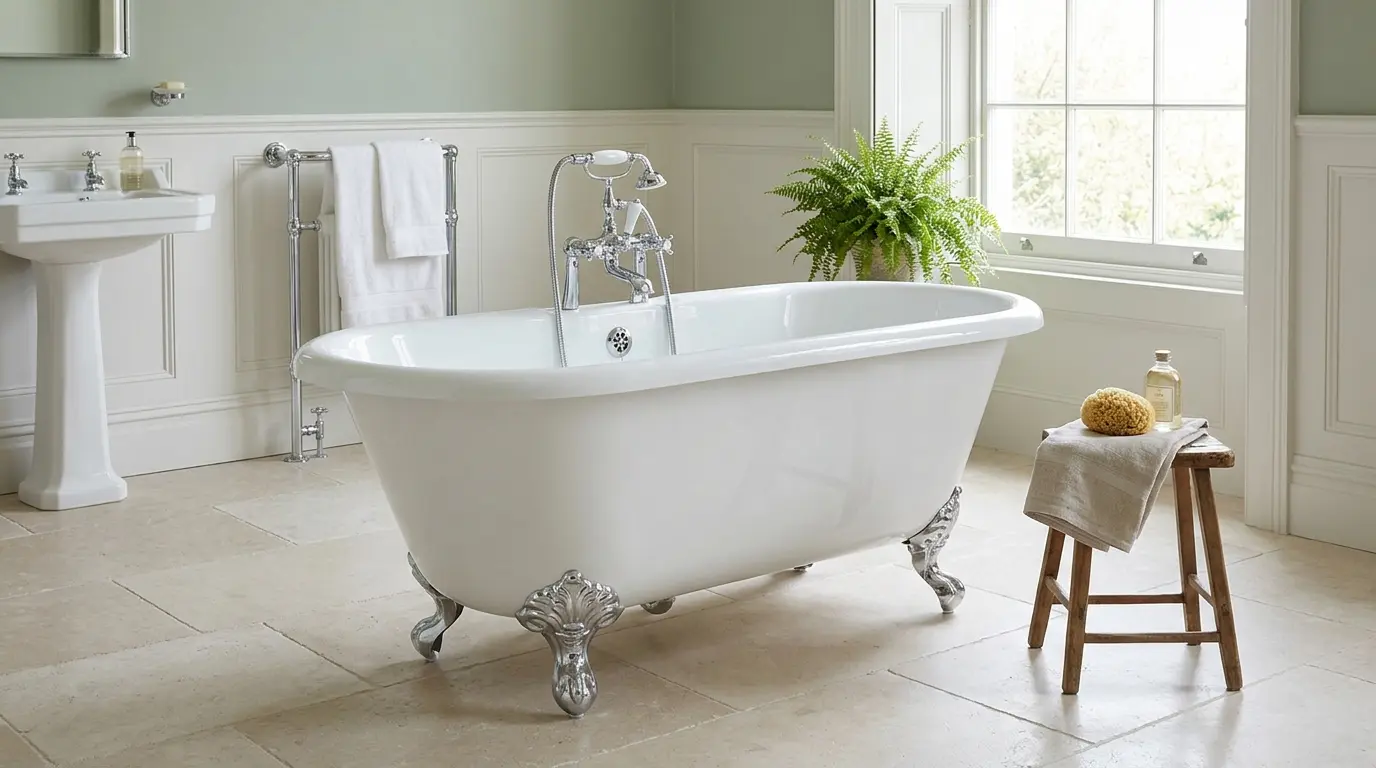
A white acrylic roll top on chrome or white claw feet is the most straightforward traditional look. Typical length is 1700mm by 720–750mm wide and around 650–790mm high depending on the feet. Acrylic keeps the empty weight to 30–45kg so most timber floors cope once the bath is full. The rolled rim looks finished from every angle, which is why the bath needs 100–150mm clearance all round for cleaning. Order floor-standing or wall-mounted taps because most roll tops have no deck holes. Adjustable feet help on slightly uneven floors. The white finish pairs with almost any tile. For the overall classic scheme, see bathroom colour scheme ideas.
2. Slipper Shape for Leaning Back
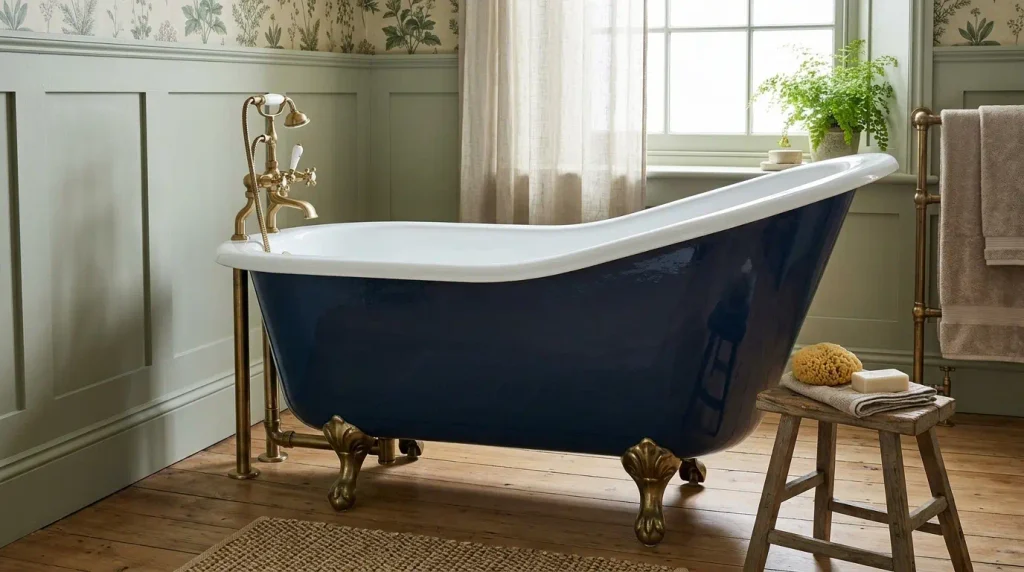
A slipper bath raises one end so you can recline properly. Lengths of 1550–1710mm are common, with the high end often 100–150mm taller than the low end. This shape works well against a feature wall or panel so the raised back has visual support. Clearance requirements stay the same as any freestanding bath. Acrylic slipper models remain the lighter option. The raised end can make entry slightly higher, so check the rim height if mobility is a concern. Place the taps at the lower end so they do not interfere with leaning. Related spa styling appears in 12 spa bathroom ideas to create your own home retreat.
3. Double-Ended Boat Style for Shared Use
A boat or double-ended roll top has raised ends at both sides and usually a central tap position. Lengths of 1700–1750mm give both people a comfortable sit. The symmetry looks balanced in the room and works well when the bath is the centrepiece. Weight and clearance rules are identical to single-ended models. Confirm the water capacity, often 160–180 litres, against your hot-water system. Acrylic keeps installation simpler. The continuous rolled rim means no awkward joins. This style suits master bathrooms where two people use the bath regularly. Layout context is in how to plan the perfect bathroom layout.
4. Compact 1500mm Roll Top for Smaller Rooms
A 1500mm roll top still delivers the classic rim in a tighter bathroom or ensuite. Width stays around 700–750mm. The shorter length reduces the floor footprint so you can still leave 700mm walkway on the entry side. Acrylic versions are light enough for most floors. The internal sitting length is shorter, so taller users may prefer a deeper model or a longer bath if space allows. Feet can be chrome, black or white to match the brassware. Measure the access route carefully because even the compact size can be awkward on stairs. Tile ideas that keep a small room feeling open are in 12 bathroom floor tile ideas that are practical and stylish.
5. Coloured or Painted Exterior for Character
Some roll top ranges offer grey, black or coloured exteriors with a white interior. The contrast makes the bath the clear focal point without changing the bathing experience. Acrylic painted finishes are easier to maintain than traditional cast iron enamel. Lengths and weights follow the same ranges as white models. Choose feet in a matching or contrasting metal so the whole piece looks intentional. The coloured bath works best when the surrounding walls and tiles stay quieter. Confirm the finish is suitable for bathroom humidity. Colour pairing guidance sits in bathroom paint colour ideas.
6. Black or Dark Feet for Modern Contrast
Matt black or dark bronze claw feet update a white roll top without losing the traditional shape. The feet are usually aluminium or metal and adjustable. This combination works in both classic and more contemporary bathrooms. The bath body remains acrylic for weight reasons in most UK homes. Clearances and tap choices stay unchanged. The dark feet draw the eye down and make the bath look grounded. Pair with simple wall tiles so the contrast stays clean. Installation is the same as any freestanding acrylic bath. More on modern bathroom looks is in 12 modern bathroom ideas for a clean and spa-like feel.
7. Placement Against a Feature Wall or Panel
Setting the roll top against a panelled or painted feature wall gives the raised end of a slipper or the whole bath a backdrop. Leave the usual 100–150mm gap for cleaning rather than pushing it hard against the wall. The panel can be painted tongue-and-groove or a simple timber board. This arrangement uses the wall space efficiently and looks deliberate. Plumbing can sometimes run behind the panel. Confirm the floor load and the access route as with any freestanding bath. The overall room still needs the 700mm walkway. Feature wall ideas that work in bathrooms appear in the wall panelling section of the site, and the main bathroom guide is at bathroom ideas.
What to Check Before Ordering a Roll Top Bath
Confirm the length and width against your floor plan, including the 100–150mm cleaning clearance and 700mm entry walkway. Check the empty and full weight against the floor, especially on upper storeys. Measure every doorway and stair turn for delivery. Order the correct tap type at the same time. Verify the waste position. Acrylic is the practical material for most homes; heavier cast iron needs a structural check. These points stop the classic look from becoming a practical problem once the bath is in the room.
Conclusion
Roll top baths deliver a timeless look when the size, material and clearances are planned properly. The seven ideas above move from the simple white acrylic classic through slipper, boat and coloured options, each with the practical details that matter before you order. Measure the space and the floor, and the bath will still feel right years later.
FAQs
What is the difference between a roll top and a slipper bath?
A roll top describes the curved rim. A slipper bath is a roll top with one raised end for leaning back. A boat or double-ended version has raised ends at both sides.
Are roll top baths heavy?
Acrylic models are light, typically 30–45kg empty. Cast iron versions are much heavier and usually need a floor check on upper storeys.
Can I put a roll top bath in a small bathroom?
Yes, if you choose a 1500mm model and keep the clearances. A short roll top can work where a full 1700mm freestanding bath would not.