12 Shaker Kitchen Ideas for a Timeless Classic Look

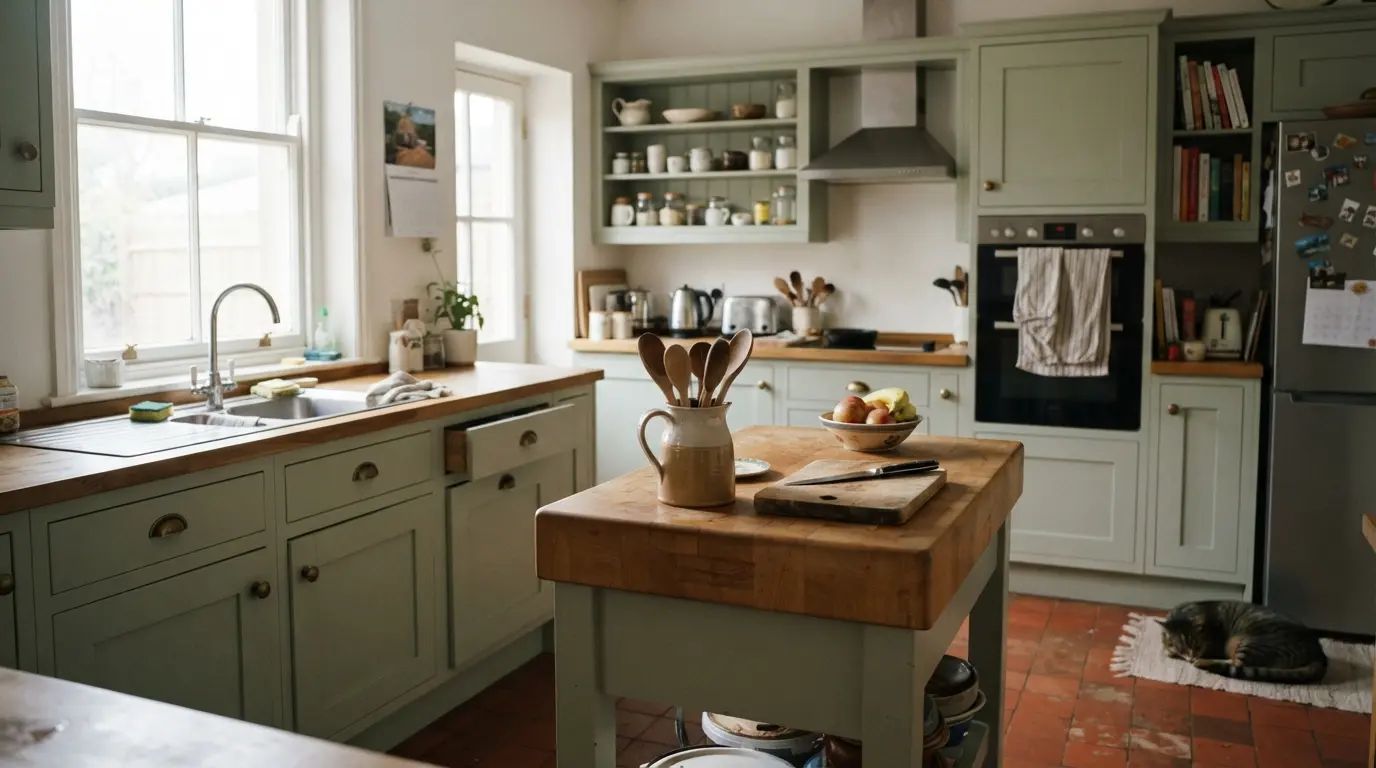
A shaker kitchen means a recessed-panel cabinet door with clean, unfussy lines, a style that has stayed in fashion since the 1900s because it adapts to almost any home. It works as easily in a converted barn as it does in a new-build townhouse, which is exactly why it is still one of the most searched kitchen styles going.
The problem most homeowners hit is not whether to choose shaker. It is that “shaker kitchen” can mean twelve completely different rooms, from a heavily corniced country kitchen to a slim-framed matte grey scheme that barely looks traditional at all. Get the details wrong and you end up with something that looks like every other shaker kitchen on Pinterest instead of one that fits your house.
What actually defines a shaker kitchen
A shaker cabinet door is a five-piece construction: four flat frame pieces (the stiles and rails) around a recessed centre panel. No raised panel, no ornate moulding on the door itself, no glass unless you choose to add it. That simplicity is the whole point, and it is also why the style tolerates paint, natural wood, colour and hardware changes so well without ever stopping looking like a shaker kitchen.
Genuine shaker style traces back to the Shaker religious communities of 18th and 19th century America, who built furniture around durability, practicality and understated craftsmanship rather than decoration. Kitchen designers took the door profile and ran with it, which is why what most people now call a shaker kitchen is really a shaker-inspired cabinet front on a modern carcass.
1. Go true traditional with cornices and pilasters
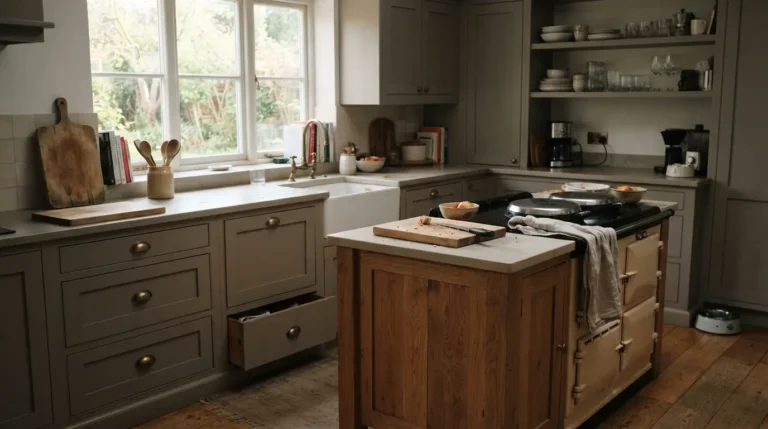
If you want a shaker kitchen that reads as properly period rather than a contemporary nod to the style, lean into the embellishment. Cornices along the top of wall units, pilasters at the ends of runs, and a bullnose edge on the worktop all add the detail that separates a true traditional shaker kitchen from a slim, modern version.
Pair it with a farmhouse sink and traditional taps so the fixtures do not clash with the cabinetry. This look works best in period properties with the ceiling height and proportions to carry the extra detail. In a low-ceilinged new build, heavy cornicing can visually shrink the room rather than elevate it.
2. Push it contemporary with linear detailing
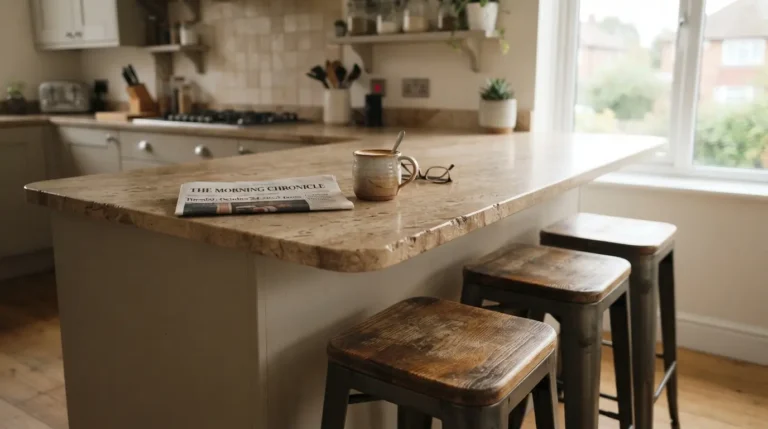
Shaker is a frame, not a fixed colour or hardware set, which is why it takes to a modern treatment better than most classic styles. Tiled flooring, stylish pendant lighting, bar stool seating and a chunky overhanging island worktop on minimal stone legs all pull a shaker kitchen toward contemporary without losing the recessed panel that makes it shaker in the first place.
Two-tone cabinetry and stainless steel appliances reinforce the linear, uncluttered feel. This is the version to choose if you love the proportion and craftsmanship of shaker but find the country aesthetic too heavy for an open-plan or newly built space.
3. Find the classic middle ground
Most homeowners end up somewhere between true traditional and full contemporary, and that middle point is arguably the most versatile shaker look going. Pare back the fussier detailing, drop the heavy cornice, and pair a simple shaker frame with contemporary appliances and modern renditions of heritage lighting finished in aged brass or bronze.
This classic approach is the safest long-term choice if you are not sure how your taste will evolve. It reads as timeless rather than trend-led, and it is far easier to nudge toward either traditional or modern later with lighting, hardware and accessories than a kitchen built at either extreme.
4. Break up runs with open shelving
Full runs of shaker cabinetry can start to feel heavy, especially in a smaller galley kitchen. Swapping one or two upper units for open shelving lightens the visual weight and gives you a spot to dress with either neatly stacked dinnerware for a classic look, or a looser mix of plants, ceramics and family photos for something more homely.
The trade-off is dust and daily tidiness. Open shelving looks its best styled and its worst forgotten, so only take this route if you are genuinely willing to keep a shelf edited rather than treating it as extra storage for everything you do not have a cupboard for.
5. Add a shaker mantel or canopy over the hob
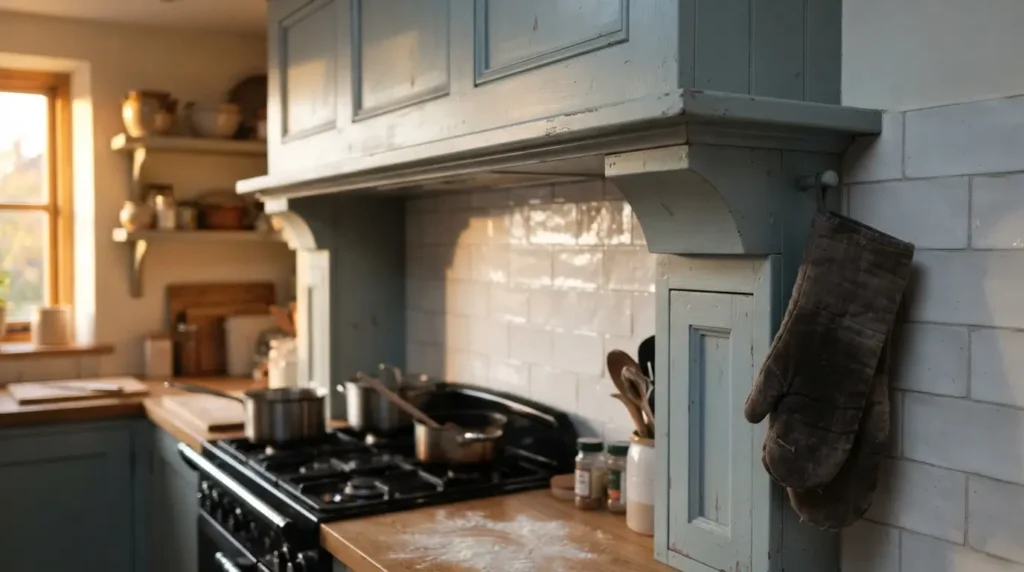
A shaker canopy or mantel built out around the extractor hood is one of the most recognisable details of a classic shaker kitchen. It hides the mechanics of the extraction while adding a genuinely architectural moment to the room, particularly effective when built out with the same panelling as the rest of the cabinetry.
This is a carpentry-heavy detail rather than a standard cabinet order, so expect it to add to both the quote and the build programme. A straightforward integrated extractor typically fits in a day; a bespoke mantel surround usually needs a carpenter on site for one to two additional days, plus drying time if it is being painted in situ.
6. Bring in a butcher’s block for texture
Originally a working surface for quartering and deboning meat, the butcher’s block has become more of an ornamental feature in most modern shaker kitchens, though it still earns its keep as a genuinely tough chopping surface. A chunky block in oak or another dense timber adds country charm and a different texture against the flat cabinet fronts.
The honest trade-off is maintenance. Unlike a sealed worktop, a butcher’s block used for actual food prep needs regular oiling, and untreated end grain will mark and stain if you cut directly on it and leave spills. Most homeowners find it works best as a display or occasional-use surface rather than the everyday chopping station.
7. Take cabinetry to full height
In rooms with the ceiling height to support it, running shaker cabinetry all the way to the ceiling adds both drama and genuinely useful storage for the things you use rarely: the good dinnerware, seasonal serving dishes, large stock pots. It also removes the dust-trap gap above standard-height wall units that nobody enjoys cleaning.
Full-height runs need to be ordered as a matched batch, since paint and stain finishes vary slightly between production runs and a tall run shows any mismatch more than a standard-height one. Budget for a step stool as a genuine daily tool rather than an afterthought, because the top shelves of a full-height shaker wall are usually out of reach without one.
8. Make the island the contrast piece
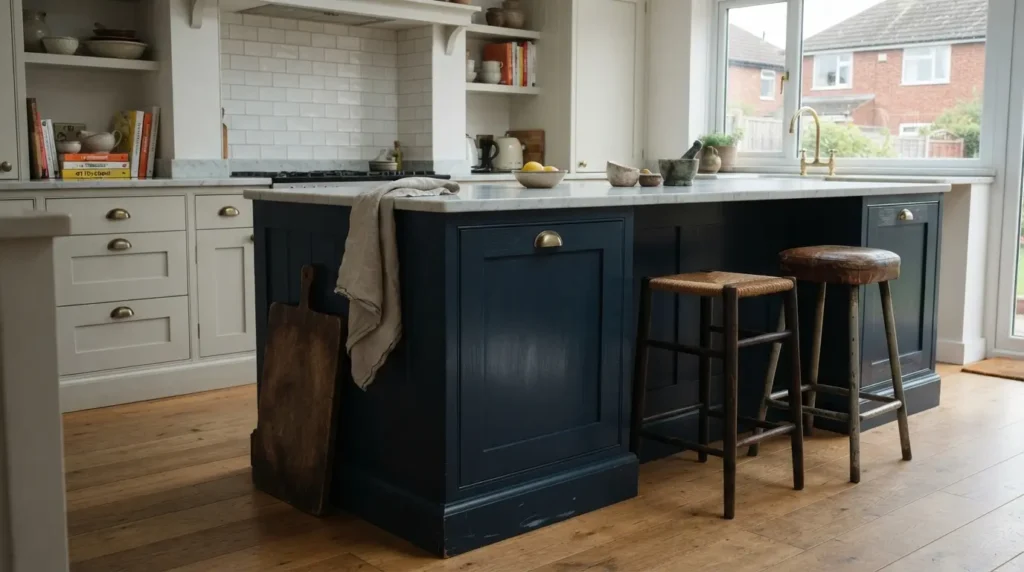
A contrasting kitchen island is one of the most popular ways to add personality to an otherwise classic shaker kitchen. Painting the island in a different shade from the perimeter creates visual separation and gives the room a focal point without touching the overall style.
How much contrast to use depends on the effect you want. Pairing pale perimeter cabinetry with a complementary darker island tone reads as considered and classic. Painting the island in an entirely different colour family, rather than a tonal variation, pushes the kitchen toward a bolder, more contemporary statement. Either works with shaker doors, because the recessed panel provides enough structure to carry strong colour without looking busy.
9. Add reflective materials to lift the palette
Shaker kitchens are usually finished in matte or low-sheen paint or natural timber, both of which absorb rather than bounce light. Introducing glass or mirror, most often as a splashback, adds a different material into the mix and helps circulate light around the room.
A plain, clear or lightly smoked mirror splashback gives a shaker kitchen a more contemporary edge. An aged bronze mirror with visible patina pulls the same idea toward a more rustic, vintage-leaning scheme. Either way, keep the glazier’s measurements precise around the hob, since mirror splashbacks show any misalignment far more obviously than tile.
10. Integrate a dining table into the layout
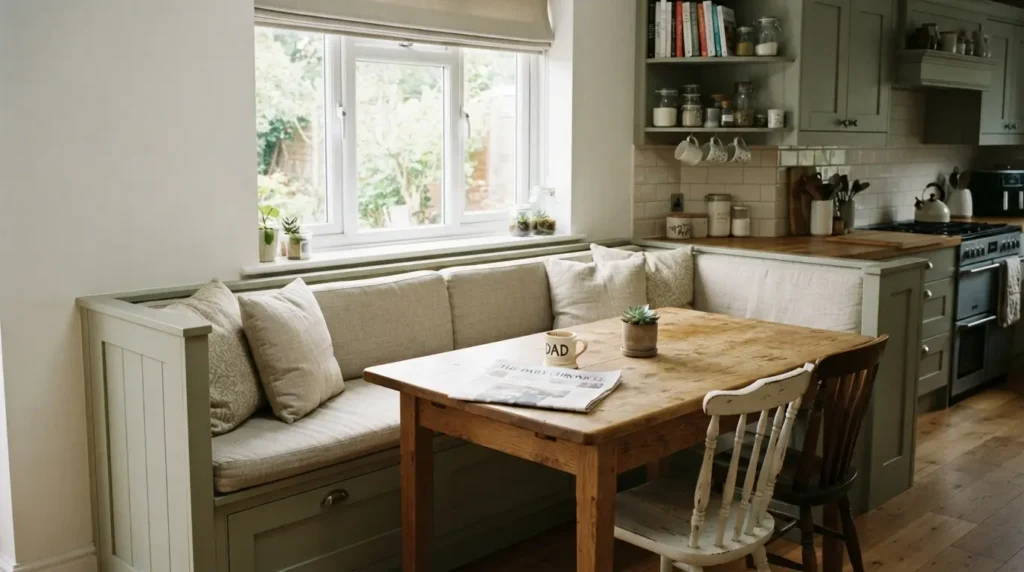
A table built into the kitchen layout, rather than sitting as a separate piece of furniture, saves floor space and keeps a family kitchen genuinely multi-purpose. Banquette seating against a wall with a table pulled up to it is the most common version, and it tends to see far more daily use than a formal dining table positioned in its own separate room.
This works particularly well with shaker cabinetry because the panelled cabinet ends can be extended into matching bench ends or a panelled table base, so the whole area reads as one built piece rather than furniture plus cabinetry bolted together.
11. Mix worktop materials by zone
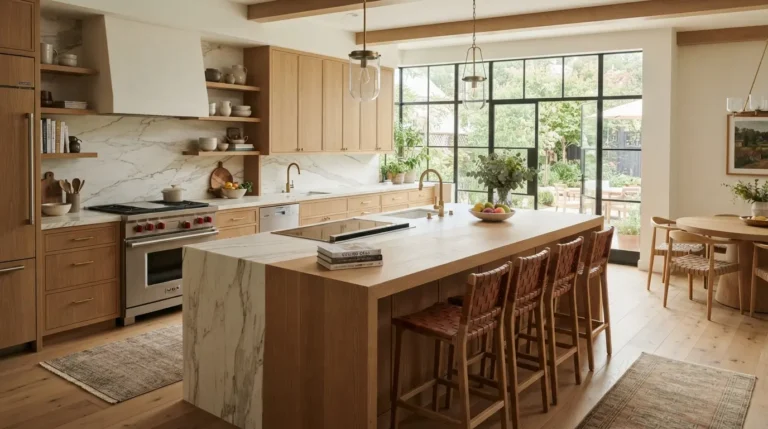
Rather than running one worktop material across the entire kitchen, mixing two or three by function creates practical zones and adds visual interest. A durable quartz or ceramic surface in the main prep area handles knife work and heat well, while a breakfast bar or casual dining zone can carry a warmer, more tactile material like timber, marble or granite.
| Zone | Suggested material | Why it works there |
| Main prep area | Quartz or ceramic | Scratch and heat resistant, low maintenance |
| Baking zone | Marble | Naturally cool surface, good for pastry work |
| Breakfast bar or casual dining | Timber or granite | Warmer, more tactile for everyday use |
| Butler’s pantry or scullery | Stainless steel or laminate | Hard-wearing and inexpensive for a back-of-house space |
Mixing materials does add cost complexity, since you are managing multiple suppliers, template visits and installation dates rather than one continuous slab. Budget a little extra lead time for coordination, typically an additional one to two weeks compared with a single-material worktop.
12. Choose handles that set the tone
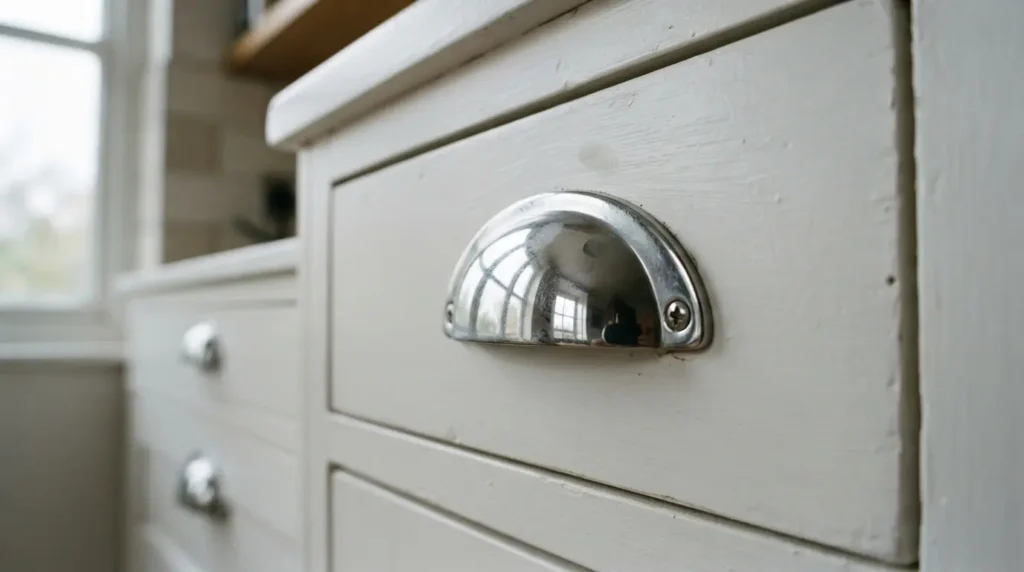
Hardware does more to shift a shaker kitchen’s personality than almost any other single decision. Cup handles in polished chrome give an authentic period look, while aged brass, bronze or copper cup handles push the same shape toward vintage warmth. Ornate ceramic or glass knobs read as more decorative and suit a softer, more traditional scheme, and a mismatched set sourced from antique or reclamation stores can add real character to an otherwise simple kitchen.
For a more modern shaker kitchen, choose a plainer knob or bar pull with a simple, linear shape rather than anything ornate. As a rough guide, the less decoration on the door itself, the plainer the handle should be, since an ornate handle on a slim, modern shaker frame tends to look like it wandered in from a different kitchen.
What a shaker kitchen actually costs
Shaker doors themselves are not inherently expensive. The price swings come from material, construction quality and how much of the extra detailing above you add.
| Tier | Typical supply-only range | What you get |
| Entry MDF, painted, flat-pack | Around £3,000 to £6,000 | Standard shaker profile, foil or painted MDF, basic hinges |
| Mid-range rigid MDF or hardwood frame | Around £8,000 to £18,000 | Better carcass construction, soft-close as standard, wider colour range |
| Solid timber or bespoke hand-painted | £20,000 upwards | Solid wood or painted hardwood frames, bespoke sizing, mantels and full-height runs |
Figures are approximate, exclude worktops and appliances, and vary considerably by country and supplier. Installation typically adds 20 to 40 percent on top of the cabinet cost, and bespoke joinery details like a mantel or integrated dining bench push that higher again.
On timing, a standard shaker kitchen from measure to installation usually runs six to ten weeks for a rigid or made-to-order range, and fitting itself typically takes five to eight working days for an average kitchen. Hand-painted bespoke joinery, particularly anything built and finished on site, can add several weeks, since paint needs proper drying and curing time between coats rather than being rushed.
The maintenance reality of a shaker kitchen
The recessed panel is both the charm and the maintenance point of a shaker door. Dust and grease settle in the groove around the panel edge, especially near the hob, and it needs a slightly more deliberate wipe than a flat slab front. A soft brush or an old toothbrush for the corners once a month keeps it from building up.
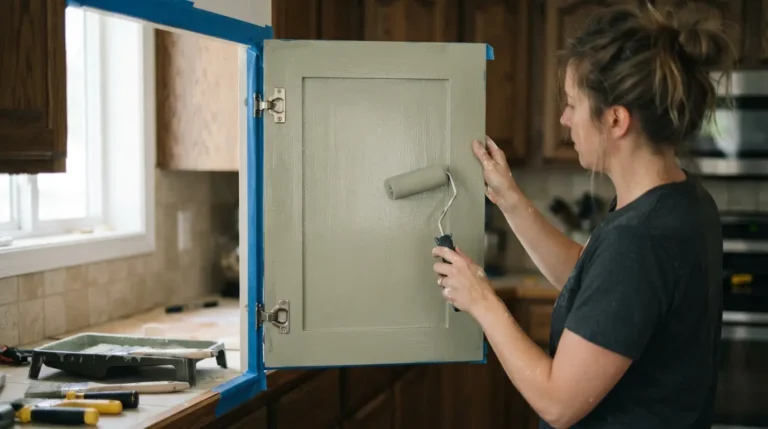
Painted shaker doors, particularly in darker or more saturated colours, show knocks and chips more visibly than a laminate or foil finish, because the paint sits as a coating rather than being integral to the material. Most manufacturers supply a small pot of touch-up paint for exactly this reason, and it is worth keeping. Natural timber shaker doors need occasional oiling or re-waxing depending on the finish, generally once every one to two years in a kitchen that sees regular cooking.
Corners are the other honest weak point. On an inset or beaded shaker profile, the mitred corners of the frame can open up slightly over years of humidity changes in the kitchen. It is a cosmetic issue rather than a structural one, and a good fitter can usually re-seal it, but it is worth knowing before you commit to the most detailed profile available.
Common mistakes worth avoiding
Choosing a heavily corniced, true traditional shaker scheme in a room with a low ceiling is the most common misstep. The detailing that looks grand in a period house with 2.7 metre ceilings can make a standard 2.3 metre new-build ceiling feel lower still. If your ceiling height is modest, lean toward the slimmer, more contemporary end of the shaker spectrum instead.
Matching hardware to the wrong era of shaker is the second. Ornate glass knobs on a slim, linear shaker frame, or a minimalist bar pull on a heavily corniced traditional kitchen, both read as slightly off even if neither element is wrong on its own. Choose the handle style at the same time as the door profile, not as an afterthought once the cabinets are ordered.
Finally, painting the whole kitchen one flat, stark white without any warmth or texture is a common regret. A white shaker kitchen photographs beautifully, but done without a warm undertone, a contrasting worktop or wood accents, it can feel cold and slightly clinical in person, particularly in rooms with limited natural light.
Conclusion
The best shaker kitchen ideas are not really about choosing between traditional and modern. They are about picking the level of detail, from a plain painted frame to a fully corniced mantel and bespoke joinery, that suits your ceiling height, your budget and how the room actually gets used day to day. Get the door profile, the hardware and the worktop working together as one decision rather than three separate ones, and a shaker kitchen will still look exactly right in fifteen years, not just on the day it is fitted.
FAQs
What makes a kitchen a shaker kitchen?
A five-piece cabinet door with a flat recessed centre panel and plain frame, with no raised panelling or applied decoration on the door face itself. Everything else, colour, hardware, worktop, layout, can vary while the kitchen still reads as shaker.
Are shaker kitchens still in style?
Yes. The style has been popular since the early 20th century precisely because it adapts to both traditional and contemporary interiors. It remains one of the most consistently searched kitchen terms and shows no sign of dating the way more decorative or heavily trend-led fronts can.
Is shaker style more expensive than a flat slab kitchen?
Not inherently. A basic painted MDF shaker door is often similar in price to a basic slab door. Costs rise with solid timber, bespoke sizing, hand-painting and extra joinery like mantels or full-height runs, all of which are optional additions rather than requirements of the style itself.
Can a shaker kitchen look modern rather than country-style?
Yes, and this is one of the most requested variations. A slim frame, muted or monochrome palette, integrated appliances, linear lighting and minimal hardware push a shaker kitchen toward contemporary without changing the underlying door profile.
What worktop suits a shaker kitchen best?
There is no single correct answer, since shaker cabinetry works with almost any worktop material. Quartz and granite suit a more contemporary shaker scheme; marble and timber lean traditional or country. Many kitchens now mix materials by zone rather than choosing just one.
How do I stop a white shaker kitchen looking cold?
Choose a white with a warm undertone rather than a stark, blue-based white, and layer in natural materials such as a timber island, woven lighting, or a stone worktop with visible veining. A single warm material is usually enough to stop an all-white scheme feeling clinical.
Do shaker cabinets need special maintenance?
Not special, but slightly more deliberate than a flat slab door. The recessed panel groove collects dust and grease and needs a regular wipe, and painted finishes benefit from keeping the manufacturer’s touch-up paint on hand for inevitable chips and knocks.