15 Lawn Care Tips for a Lush and Green Garden All Year

A lush green lawn in a UK garden comes from a handful of consistent habits rather than expensive treatments. Mow at the correct height, feed at the right times, and address thatch and compaction before they become problems. Most lawns benefit from a spring feed, summer maintenance cuts, and an autumn programme of scarifying, aerating, and overseeding. These steps suit the British climate of cool wet winters and variable summers.
Check soil moisture and compaction in early spring. Footprints that linger show the need for aeration. Thatch over 1 cm should be scarified in September. Keep mower blades sharp and never remove more than one third of the blade in one cut. These basic checks prevent the thin, mossy lawns common in many gardens.
Combine lawn care with overall garden planning. Our article on garden design styles the 5 most popular explained shows how a well-kept lawn fits different layouts.
1. Set the Correct Mowing Height
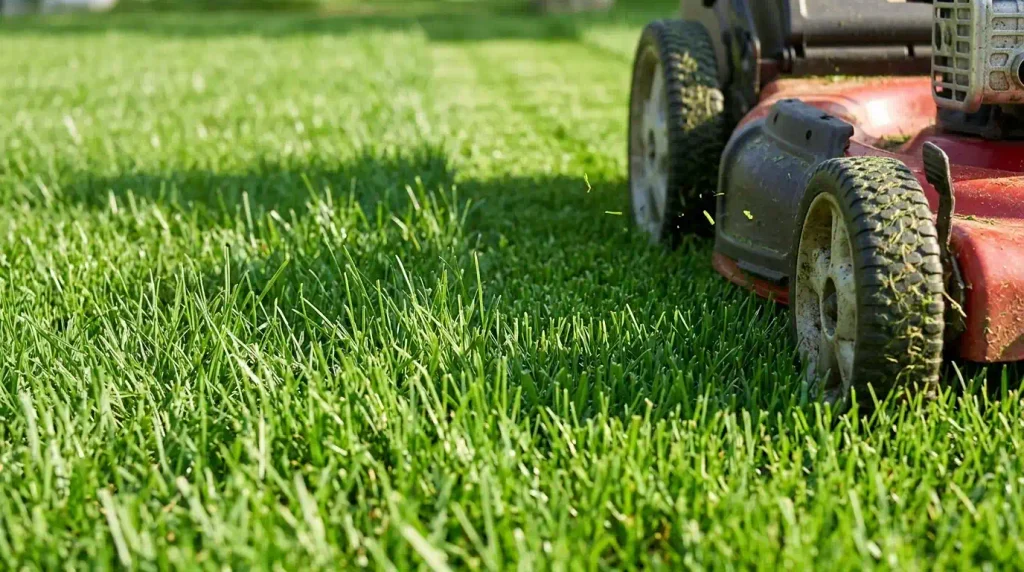
Aim for 25-38 mm on most UK lawns. Measure with a ruler. Start higher in spring and raise the deck in hot dry weather.
2. Mow Frequently but Lightly
Weekly cuts during the growing season produce denser grass than occasional heavy mowing. Collect or mulch short clippings.
3. Feed in Spring
Apply a balanced fertiliser once growth is active. Avoid over-feeding which creates soft disease-prone growth.
4. Use an Autumn Feed
Switch to a low-nitrogen high-potassium feed in September or October to strengthen roots before winter.
5. Scarify in Autumn
Remove thatch and moss in September to mid-October. Treat moss first so it lifts cleanly.
6. Aerate Compacted Areas
Hollow-tine aerate after scarifying on heavy soils. This lets air and water reach the roots.
7. Overseed Thin Patches
Sow suitable seed at 25-35 g per square metre after scarifying while the surface is open.
8. Top-Dress After Aeration
Brush a thin sandy loam mix into the holes and across the surface to improve drainage and level.
9. Keep Blades Sharp
Sharpen or replace blades every 8-10 hours of use. Dull blades tear grass and leave brown tips.
10. Avoid Cutting Wet or Frozen Grass
Wait for firm dry ground. Mowing waterlogged lawns creates ruts and spreads disease.
11. Water Deeply if Needed
Established lawns rarely need water except in prolonged drought. Water infrequently but thoroughly to encourage deep roots.
12. Control Moss Early
Apply ferrous sulphate in late summer before scarifying. Dead moss is easier to remove and less likely to return.
13. Edge Regularly
Keep edges crisp with a half-moon tool. Neat edges make the whole lawn look better.
14. Check for Weeds
Spot-treat broadleaf weeds rather than blanket spraying. Dense grass from correct mowing crowds them out.
15. Rest the Lawn in Winter
Avoid heavy use and feeding from November to February. The grass is dormant and damage recovers slowly.
Conclusion
These 15 tips keep a UK lawn lush by focusing on correct height, seasonal feeding, autumn scarifying and aeration, and simple habits such as sharp blades and proper timing. Follow the sequence and the grass thickens without constant work.
FAQs
How often should I scarify my lawn?
Once a year in autumn is enough for most UK lawns.
What is the best mowing height?
25-38 mm for the majority of British lawns, measured carefully.