10 Console Table Ideas for a Stylish Living Room

A console table solves the awkward gap behind a sofa or the bare stretch of wall in a UK living room. It gives you a surface for a lamp and a place to hide the remote without swallowing the floor. Choose the right depth and height first, then pick a style that matches the sofa and the paint. Measure the walkway before you order. Most UK rooms need at least 76 cm of clear space in front of the table so people can pass without turning sideways.
1. Narrow Console Behind the Sofa
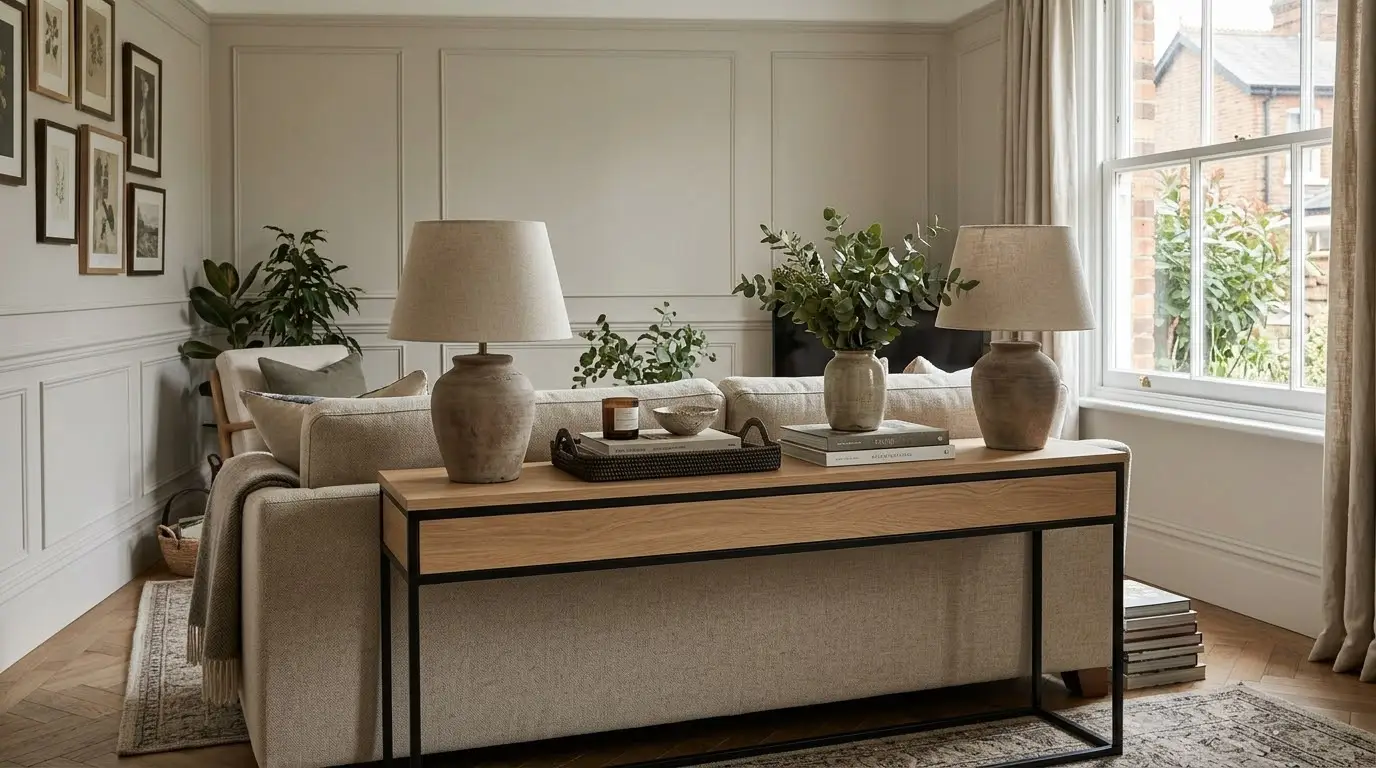
Place a slim console 30 cm deep behind the sofa so it sits level with or just below the back. Leave a 5 to 15 cm gap between the sofa and the table so the cushions do not rub. In a typical 200 cm sofa, a table 120 to 140 cm wide keeps the proportions balanced. Oak or engineered wood tops handle everyday use better than glass in family rooms. Style it with a pair of matching lamps and a tray for keys so the surface stays clear. Check the height of your sofa back before you buy. A table that towers over the back looks top-heavy and blocks the view across the room. For more seating layout advice, see how to arrange furniture in a living room.
2. Console with Lower Shelf for Storage
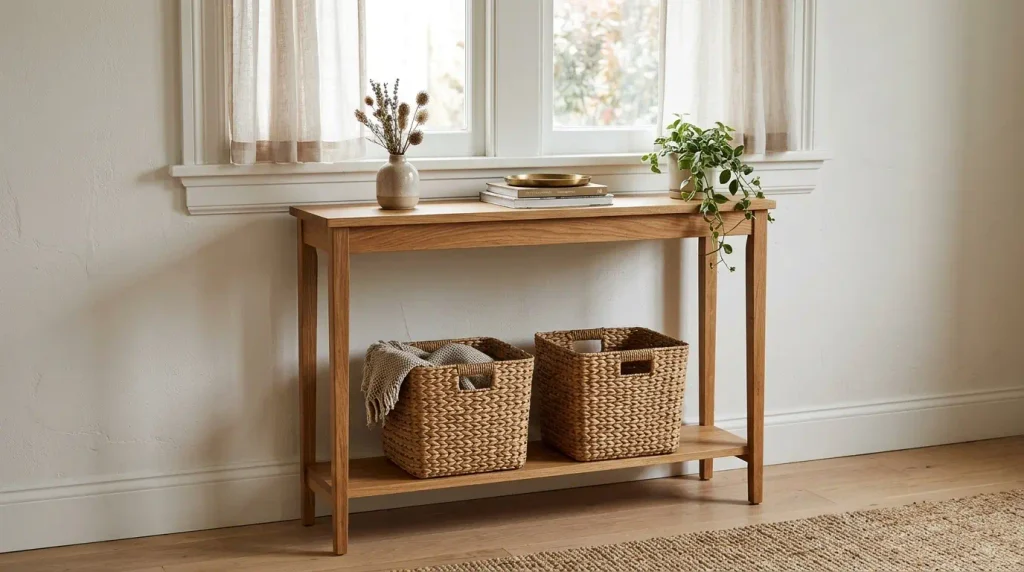
A lower shelf turns the console into useful storage for baskets or books without adding bulk. Look for models around 75 to 80 cm high and 30 to 35 cm deep. The shelf should sit at least 15 cm above the floor so you can vacuum underneath. Solid pine or oak holds more weight than particleboard if you plan to stack magazines. In small rooms this piece replaces a separate side table and keeps the floor clear. Pair it with a large mirror above so the room feels wider. The mirror reflects light and doubles the sense of space when the console sits opposite a window.
3. Metal Frame Console for a Modern Look
Black metal frames with a wood or glass top suit contemporary UK living rooms and keep the piece visually light. Depths of 30 cm work well in narrow spaces. The open frame lets light pass through so the wall behind stays visible. Check the load capacity. Many metal frames support 40 to 50 kg on the top, which is enough for lamps and a few books. Avoid placing it against a radiator if the finish is powder-coated, as heat can mark the surface over time. Use it as a display surface for a single large plant rather than lots of small objects.
4. Console Table Under a Window
A console under a window gives you a surface for plants that need light and keeps the sill clear. Measure the height of the window sill first. Most consoles sit at 75 to 85 cm, so they fit under standard UK sash windows without blocking the lower pane. Choose a depth of 30 cm or less so the curtains still close. Light oak or white finishes reflect light back into the room. Add a lower shelf for baskets of throws. This placement works especially well in period terraces where the window is the main light source.
5. Long Console as a Room Divider
In open-plan living rooms a long console 150 to 160 cm wide can mark the boundary between seating and the dining area. Keep the depth to 35 cm so traffic can pass on both sides. A height of 75 cm keeps sightlines open across the room. Materials with a light finish stop the piece from feeling heavy. Style the top with a few objects of different heights rather than a continuous row. Check that the console does not block sockets or the route to the kitchen. This idea works better in rooms wider than 4 metres.
6. Console with Drawers for Everyday Clutter
Drawers hide remotes, charging cables and post so the top stays clear for display. Look for models with soft-close runners and a depth of 35 cm. The drawers should be deep enough for A4 paper if you use the piece for bills. Solid wood or high-grade engineered wood lasts longer than cheap particleboard in high-use areas. Place it against the longest wall so the drawers open fully without hitting furniture. A pair of table lamps on either end balances the look. Measure the wall space and leave 10 cm either side for visual breathing room.
7. Slim Hallway-Style Console in the Living Room
A narrow console designed for hallways works in living rooms where every centimetre counts. Depths of 25 to 30 cm leave a clear walkway of 80 cm or more in most UK rooms. Height around 80 cm matches standard sofa backs. Choose a finish that matches existing flooring or skirting. Use the top for a single lamp and a small vase so it does not look sparse. In Victorian terraces this piece fits neatly in the alcove beside the chimney breast. Test the footprint with masking tape before you order so you can check door swing and radiator clearance.
8. Console with Mirrored or Glass Top
A glass or mirrored top reflects light and makes the piece feel smaller than its actual size. Keep the depth to 30 cm and the height to 75 cm so it does not dominate. The frame should be metal or slim wood so the reflection stays clean. Avoid this option if young children use the room, as the edges can chip. Style it with objects that have interesting shapes rather than flat items that disappear against the glass. Clean the top regularly because fingerprints show more on reflective surfaces. This works well opposite a window or a light-coloured wall.
9. Console Table with Mixed Materials
Mixing wood tops with metal legs or rattan shelves adds texture without extra bulk. A typical size is 110 to 130 cm wide and 32 cm deep. The combination keeps the piece from looking heavy in small rooms. Check that the joints are sturdy before you buy. Soft-close drawers are useful if the console sits near a seating area. Pair it with a large artwork above so the mixed materials feel intentional. In UK homes with mixed period and modern features this style bridges the two looks. Leave 76 cm clearance in front so the mixed legs do not create trip hazards.
10. Console as a TV Stand Alternative
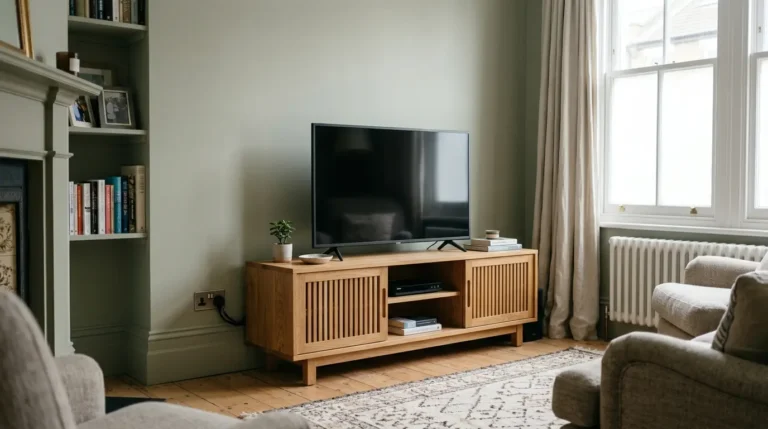
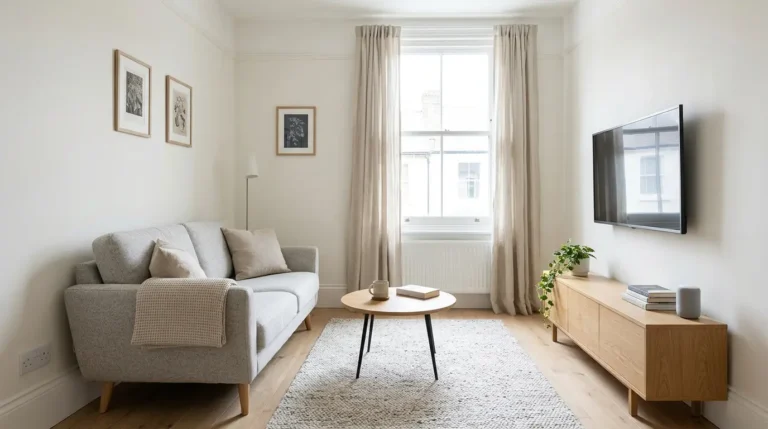
A long, low console can hold a television if the screen is not too large. Measure the TV base and leave 10 cm either side. Height of 70 to 75 cm works for most viewing. Depth of 35 cm gives room for cables behind. Choose a model with cable cut-outs or a back panel that is easy to remove. Solid wood or engineered wood with a matte finish hides dust better than high-gloss. Mount the TV on the wall above if the console is shallow. This idea frees floor space compared with a full media unit and keeps the wall visually lighter.
Conclusion
A well-chosen console table adds surface area and storage without crowding a UK living room. Measure the walkway, sofa height and wall length before you order. Depth under 35 cm and height around 75 to 80 cm suit most spaces. Match the material to how hard the piece will be used and leave clear space in front so the room still functions. These ten ideas cover the main placements and styles that work in real British homes.
What size console table fits behind a sofa?
Aim for a width of 50 to 80 per cent of the sofa length and a depth of 30 to 35 cm. The height should sit level with or just below the sofa back so the piece looks intentional rather than oversized.
How much clearance do I need in front of a console table?
Leave at least 76 cm of clear walking space in front of the table. In busier rooms 90 cm is better so people can pass without turning sideways or moving chairs.
What materials last longest in a UK living room?
Solid oak or high-grade engineered wood handles central heating and daily use better than softwoods or thin particleboard. Metal frames with powder coating resist knocks if the room sees heavy traffic.
Can a console table go under a window?
Yes, if the height matches the sill and the depth leaves room for curtains to close. Measure the sill height first. Most consoles at 75 to 85 cm sit neatly under standard UK windows.