How to Choose the Right Paint Colour for a Kitchen

Choosing the right paint colour for a kitchen means balancing practicality with the look you want. UK kitchens face grease, steam, strong daylight or limited natural light, and constant use, so the colour and finish must work hard. A good choice also needs to suit the cabinets, worktops, flooring and the amount of natural light the room receives. This guide walks through the decisions that matter: assessing the space, understanding undertones, selecting a finish, testing properly, and calculating quantities before you order. Most UK kitchens have ceiling heights of 2.4 metres and windows that may face any direction, so these factors shape the final decision.
Assess the Natural Light and Orientation
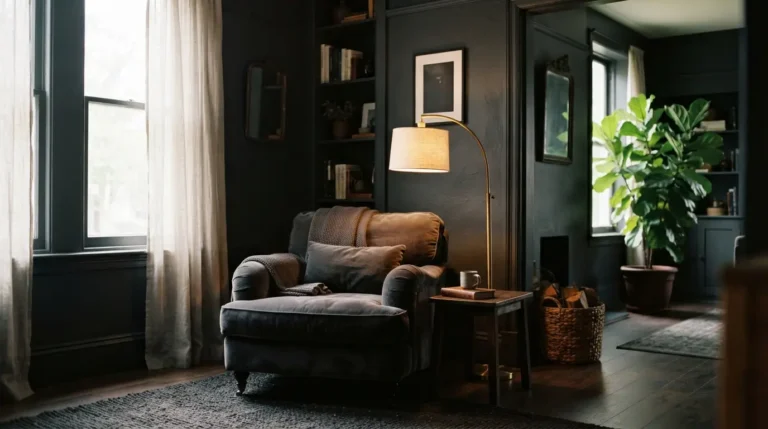
Stand in the kitchen at different times of day and note where the light falls. North-facing rooms receive cooler light and can make blues and greys feel colder, while south-facing rooms warm up colours. Measure the window sizes and note any overshadowing from neighbouring buildings. In a typical UK kitchen with a 2.4-metre ceiling, a dark colour on all walls can feel enclosing if the windows are small. Record the existing cabinet colour and worktop tone so you can choose a wall colour that either contrasts or sits quietly beside them. For broader colour-scheme thinking, see how to choose the right colour scheme for a kitchen. Note the direction of the main window and whether it is obstructed by trees or other buildings.
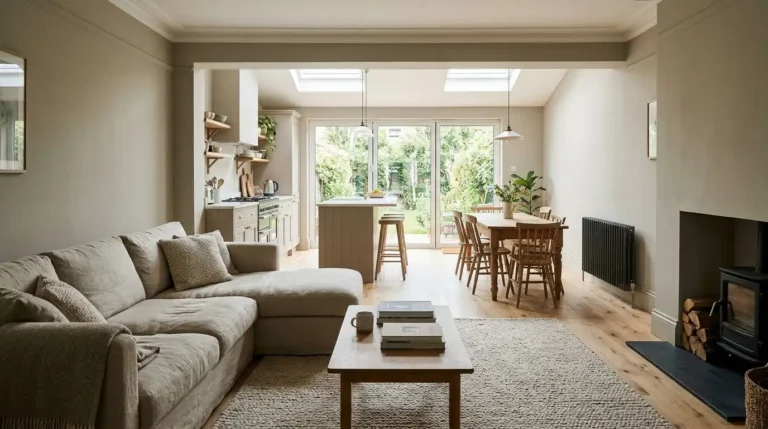
If the kitchen is open to a dining or living area, the light level in the adjacent space also matters. A colour that looks bright in the kitchen may feel dull where the light is lower. Take photos at different times so you can compare later when looking at samples.
Decide the Role of the Walls
Walls can act as a calm background or as a statement. If you have bold cabinets, choose a quieter wall colour. If the cabinets are plain, the walls can carry more colour. Consider whether you want colour-drenching (walls, ceiling and woodwork the same) or a traditional split with lighter upper walls. In galley kitchens under 2 metres wide, lighter walls help the space feel less narrow. Note any fixed items such as splashbacks or tiles that the paint must work with. Measure the clear space between wall units and worktops so the colour does not make the workspace feel tighter.
In kitchens with a chimney breast or boiler cupboard, decide whether that feature should match the walls or become a subtle contrast. Keeping it the same colour usually feels more spacious.
Understand Undertones Before You Pick a Shade
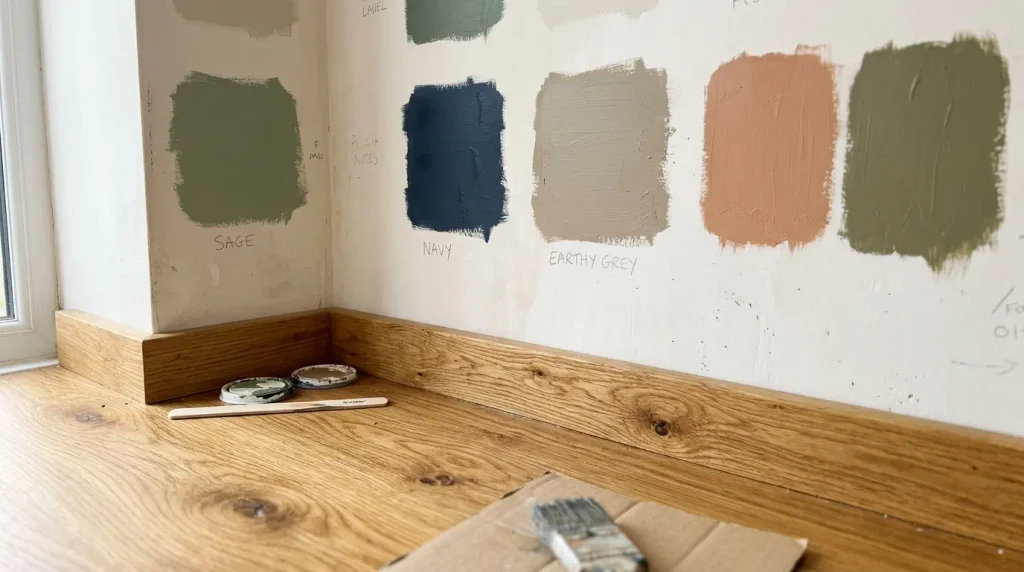
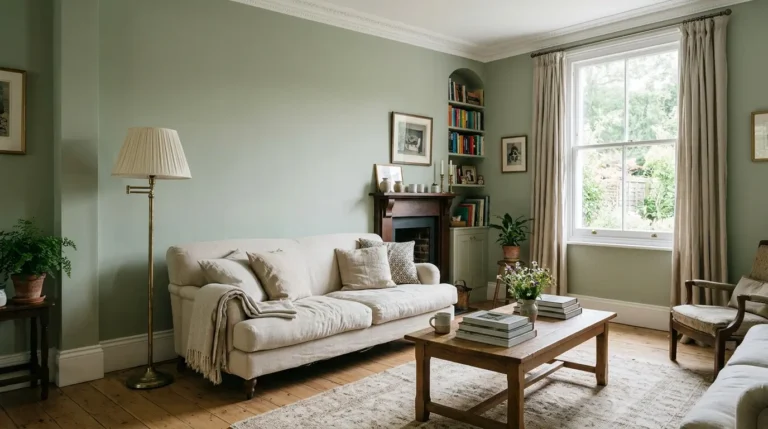
Every colour has an undertone that becomes obvious next to other materials. A grey with a blue undertone can clash with warm oak worktops, while a grey with a beige undertone sits more comfortably. Hold sample cards next to your cabinets, flooring and worktop under both daylight and the kitchen lights you use in the evening. Avoid choosing from a small chip alone. Related advice on undertones is covered in what are paint undertones and why do they matter. View the samples against the actual worktop edge and any existing tile.
If your cabinets have a wood grain, the undertone of the wall colour should complement rather than fight the timber. Cool greys next to warm oak often look mismatched. Take the sample outside or under a window if possible for the truest comparison.
Choose a Durable Finish
Kitchens need a washable finish. Eggshell or satin on walls resists grease and wipe clean. Matt can look soft but marks more easily near the cooker and sink. For woodwork and doors use satin or gloss. If you plan to paint cabinets themselves, check that the paint is specifically suitable for furniture or kitchen cabinets and follow the manufacturer’s preparation steps. Standard wall paint is not ideal for high-wear cabinet doors. Confirm the sheen level on the tin, as names can vary between brands.
Near the hob, even a good eggshell benefits from a separate splashback. Plan the painted area to stop short of the heat zone or use a heat-resistant product if painting right up to it.
Test Large Samples in the Actual Space
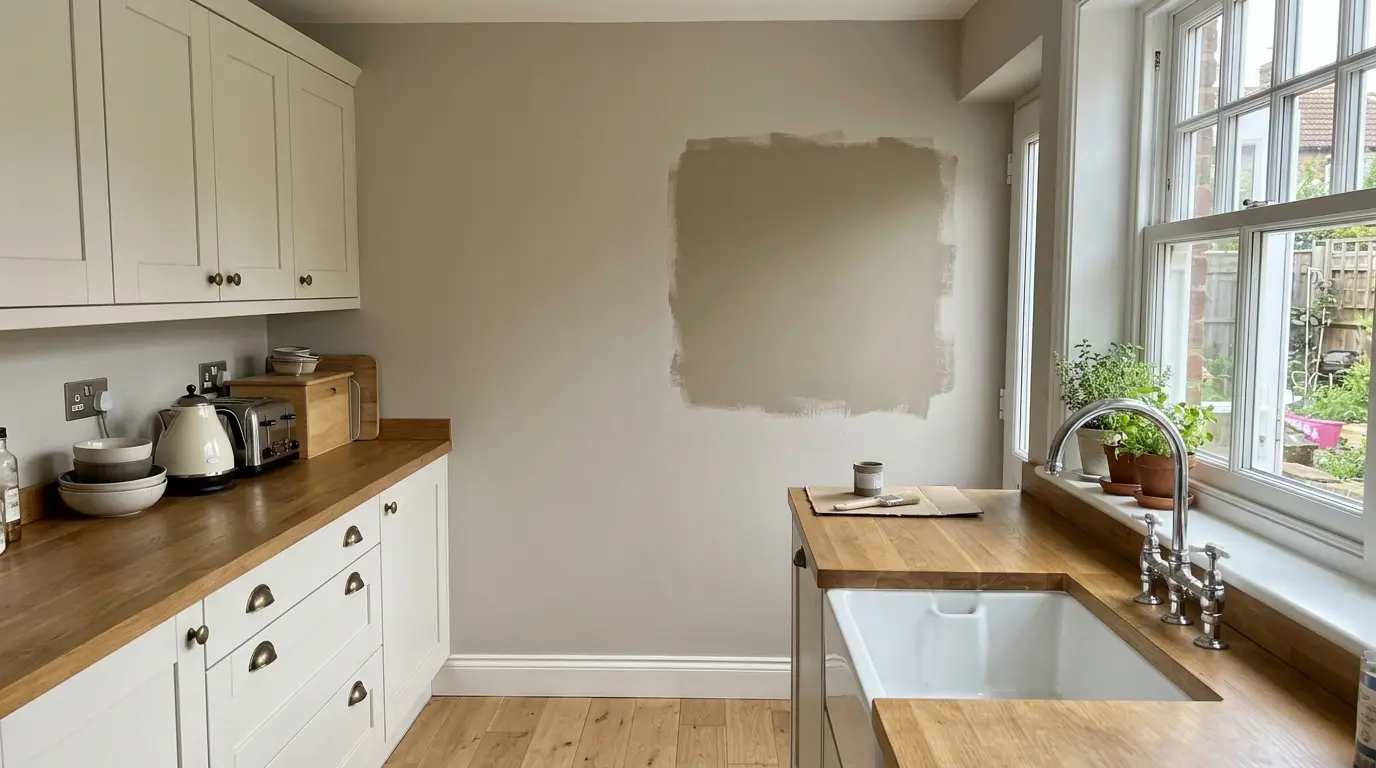
Buy sample pots and paint at least a 1-metre-square section on each wall you are considering. Leave the samples up for several days and view them in morning, afternoon and evening light. Paint the samples next to the worktop and cabinets so you can judge the relationship accurately. Do not rely on a single small swatch. This step prevents the common mistake of a colour looking perfect in the tin and wrong on the wall. Include a sample on any chimney breast or return wall.
Ask someone else to look at the samples with you. A second opinion often spots undertone clashes that are easy to miss when you have been staring at the wall for days.
Calculate Quantities and Check Coverage
Measure the wall area carefully: length × height for each wall, subtract windows and doors, then add 10–20 per cent for cutting in and a second coat. Deep colours and certain brands need extra coats. Check the coverage figure on the tin; most good paints cover 10–12 square metres per litre. Order all the paint at once from the same batch so the colour matches. For splashback areas near the hob, confirm the paint is suitable or plan a separate durable surface. Include the sides of any wall units if they are to be painted.
Round up to the next full tin. Running out halfway through a wall is more expensive and time-consuming than having a little left over. Store any spare in a cool, dry place for future touch-ups.
Consider Practical Kitchen Details
Think about the areas that get the most wear: behind the sink, next to the cooker, and around the bin. These zones benefit from a slightly higher sheen or a washable formula. If the kitchen opens into a dining or living area, the wall colour should flow reasonably with the adjacent room. Check clearance around wall-mounted cupboards so the colour does not make the space feel tighter. Always confirm the paint is low-VOC if the kitchen is used heavily. Note any existing damp or condensation issues and address them before painting.
In homes with pets or young children, a scrubbable finish is worth the small extra cost. It saves time on cleaning and keeps the walls looking better for longer.
Conclusion
The right kitchen paint colour comes from matching the light, the existing materials, a durable finish, and thorough testing. Measure accurately, sample large areas, and order enough paint from one batch. With those steps complete, the colour will work in daily use and look considered rather than accidental. Take the time to check undertones and finishes before ordering so the result lasts.
FAQs
What is the most practical paint colour for a kitchen?
Warm greige, soft white or a muted sage. These hide marks reasonably well, work with most cabinets and still feel light.
Should kitchen walls match the cabinets?
Not necessarily. Contrasting walls can make cabinets stand out. Matching or closely related undertones usually look more calm.
Can I use the same paint on kitchen cabinets?
Only if it is a furniture or cabinet paint. Ordinary wall paint chips and marks easily on doors that are opened constantly.
How do I stop a small kitchen looking darker?
Choose a lighter wall colour, keep the ceiling white, and ensure good lighting. Darker colours work better on one wall only in compact spaces.
Do I need special paint near the hob?
Standard washable eggshell is fine for most areas, but a proper splashback or heat-resistant surface is better immediately behind a hob.
How long should I leave samples up?
At least two or three days so you see the colour in different lights and next to your actual cabinets and worktops.