12 Gravel Garden Ideas for a Low Maintenance and Stylish Space

A gravel garden cuts mowing and weeding while still looking designed. In UK weather it drains well and suits plants that cope with dry spells once they are established. The look comes from the gravel colour, the edge, and the planting, not from the gravel alone. create a gravel garden from scratch if you want the full build steps first.
The twelve ideas below cover layouts and plantings that work in a typical British garden, from a small front courtyard to a larger back plot. Each one notes the gravel size, the depth, and the mistake that usually ruins it. low maintenance garden ideas if you want other low-effort options alongside gravel.
1. Mediterranean planting in pale gravel
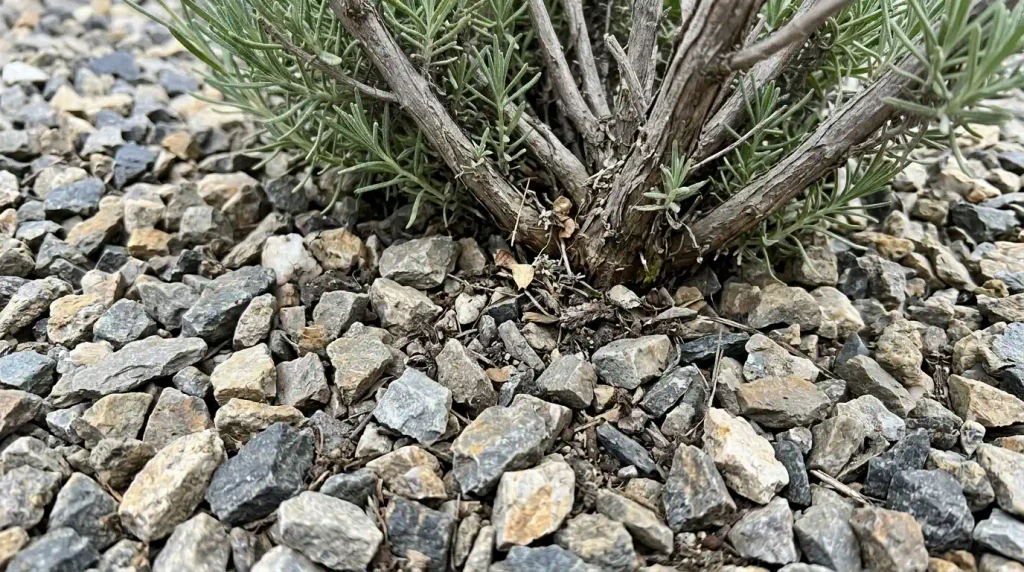
Lavender, santolina, phlomis and eryngium thrive in free-draining gravel. Plant them on slight mounds so the crowns sit above the surface and do not rot in a wet winter. Use 10-20 mm angular gravel at about 50 mm depth. drought tolerant plants if you want more plant options for dry conditions.
Edge the bed with steel or stone so the gravel stays in place. Pale gravel brightens a shady front garden. Avoid pea shingle on a slope. It rolls.
2. Dark slate chippings with green foliage
Dark slate chippings give contrast against grasses and evergreen shrubs. They suit a modern or contemporary garden and hide marks better than pale gravel. Use 20 mm angular slate at 50 mm depth over a membrane. modern garden ideas if the rest of the garden is already contemporary.
Slate can raise the soil pH slightly over time. Check before you plant acid-loving species. Top up every two or three years as it settles.
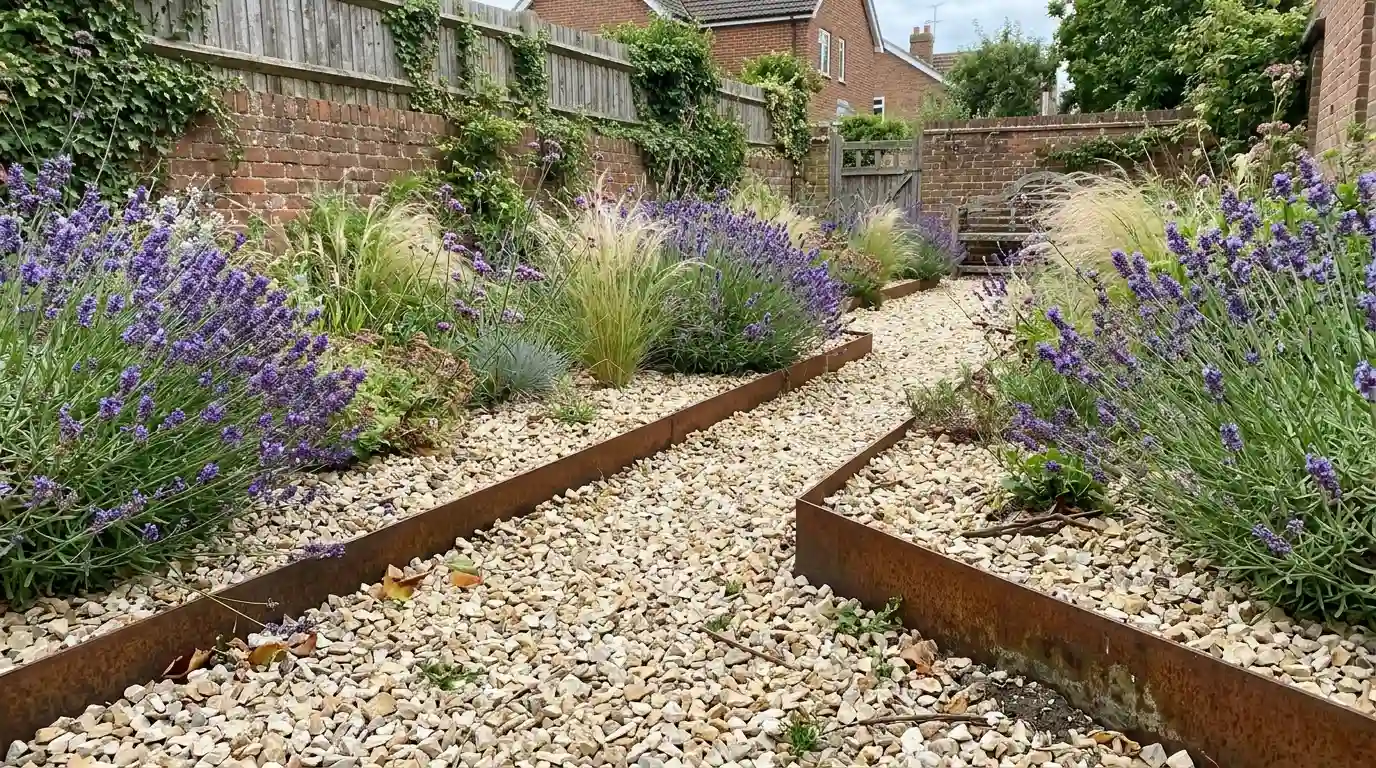
3. Gravel paths between planted beds
A gravel path of 800 to 1000 mm wide lets you walk between beds without compacting the soil. Use a compacted sub-base of MOT Type 1 under the path if it takes regular foot traffic. Decorative gravel alone sinks. garden path ideas if you want other path materials.
Edge both sides so the gravel does not migrate into the beds. A steel edge is thin and clean. Timber works if it is treated.
4. A gravel courtyard with seating
A small front or side courtyard can be almost entirely gravel with a few planted pockets and a table and chairs. Use a firm sub-base under the seating area so the furniture does not sink. Keep the planting to drought-tolerant species so you are not watering constantly. small garden ideas if the courtyard is tight.
Leave a clear path of at least 900 mm to the door. Gravel under a table is fine if the base is firm.
5. Gravel with ornamental grasses
Stipa, miscanthus and carex give movement and look good against gravel all year. Plant them in groups of three or five so the effect is deliberate. Space them so they do not crowd in the second year. ornamental grasses for gardens for specific varieties that suit gravel.
Cut the grasses back in late winter before new growth starts. Leave the seed heads through autumn for structure.
6. A gravel garden with stepping stones
Large stepping stones set into the gravel give a firm walking surface and break up a big area of gravel. Set them level with the finished gravel so they do not trip. Use a concrete or mortar bed under each stone if the ground is soft. garden stepping stone ideas if you want other stone layouts.
Space the stones so a normal stride lands on each one. Too close and the path looks fussy. Too far and people step on the gravel.
7. Gravel around a central tree or specimen plant
A single multi-stem tree or a large shrub set in a circle of gravel becomes a focal point. Keep the gravel away from the trunk so the bark does not stay wet. A 100 mm clear ring around the base is enough. small garden trees if you need a compact specimen.
Do not pile gravel against the trunk. It holds moisture and can rot the bark.
8. Mixed gravel colours for zones
Use a pale gravel in the planting beds and a darker gravel on the paths so the zones read clearly. Keep the sizes similar so the join looks intentional. A steel edge between the two colours keeps them separate. garden design ideas if you want the whole garden to feel planned.
Do not mix more than two colours. Three colours look busy and are hard to top up later.
9. Gravel with drought-tolerant ground cover
Thymus, sedum and erigeron spread between the gravel and reduce the bare look. Plant them in pockets of soil rather than directly into deep gravel so they establish. Once rooted they need little water. ground cover plants for more low-growing options.
Keep a clear path through the ground cover or it will cover the walking area within two seasons.
10. A gravel garden with a water feature
A small rill or a bowl fountain set into gravel adds sound and a focal point. The water feature needs its own base and a power supply. Keep the gravel out of the pump. A raised edge or a mesh cover helps. garden water feature ideas if you want other water options.
Position the feature where you can see it from the house. A fountain at the far end of the garden is less useful.
11. Gravel for a front garden parking area
Gravel can form a permeable parking surface if it sits on a proper sub-base and a cellular grid. Decorative gravel alone will rut under a car. Check local planning rules for front garden parking. front garden ideas if the front garden needs more than parking.
Use angular gravel of 10-20 mm. Rounded pea shingle moves under tyres. Edge the area so the gravel does not spill onto the pavement.
12. A low gravel bed against a boundary
A strip of gravel against a fence or a wall suppresses weeds and gives a clean edge to a lawn or a border. Keep it 300 to 400 mm wide so it is useful but not dominant. Use a membrane under it if the soil is weedy. garden edging ideas if you want other edge treatments.
Slope the gravel slightly away from the wall so water does not sit against the foundations.
Which gravel garden to pick
For most UK gardens, pale or mid-tone angular gravel at 50 mm depth with drought-tolerant planting is the practical start. Add a firm sub-base wherever people or cars will walk. Edge every area so the gravel stays put. Order samples and check the colour in your own light. how to create a gravel garden for the full preparation steps.
Budget for the membrane, the edge, and the sub-base as well as the gravel. A cheap bag of gravel on bare soil weeds through within a season.
FAQs
How deep should gravel be in a garden?
About 50 mm of 10-20 mm angular gravel over prepared soil or a membrane. Paths that take traffic need a compacted sub-base under the decorative layer.
Do I need a membrane under gravel?
A woven geotextile membrane helps suppress weeds. Overlap and pin it. Some gardeners plant directly into prepared soil for better rooting. Either works if the preparation is sound.
What size gravel is best for a garden?
10-20 mm angular gravel stays in place better than rounded pea shingle. Use a slightly larger grade on paths. Avoid very fine gravel that tracks into the house.
How do I stop gravel spreading?
Edge every area with steel, timber or stone. A firm edge keeps the gravel in the bed and stops it migrating into the lawn or the path.
Can I plant directly into gravel?
Yes, if the soil beneath is prepared and free-draining. Plant on slight mounds so the crowns sit above the gravel surface and do not rot in winter.
How often do I need to top up gravel?
Every two or three years as it settles and mixes with soil. Top up to the original 50 mm depth. Keep a bag of the same colour for repairs.
Is gravel suitable for a front garden?
Yes. It drains well and looks neat. For parking, use a cellular grid and a proper sub-base. Check local rules before you remove a lawn for a driveway.