How to Choose the Right Kitchen Worktop for Your Home

Choosing a kitchen worktop starts with how you cook, how much maintenance you will do and the budget left after units and appliances. The wrong surface shows every hot pan, water mark or scratch within months. This guide walks through the decisions that matter in a UK kitchen: material performance, size and edge details, and the checks to make before you order. kitchen layout must be final before the worktop is templated.
Start With How You Use the Kitchen
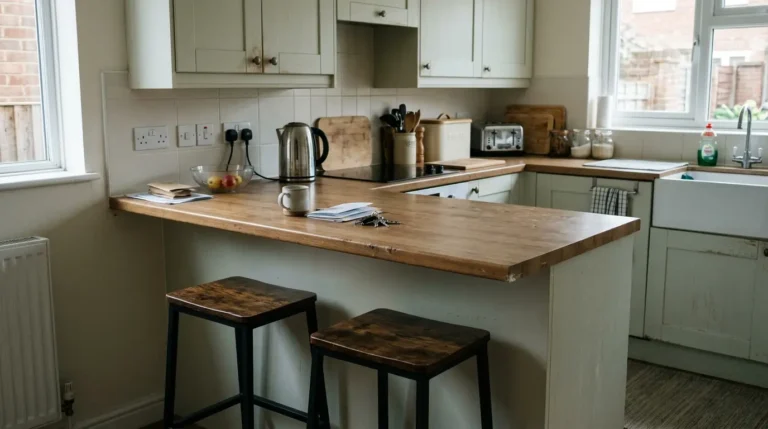
If you regularly leave hot pans on the surface or cook with a lot of oil, prioritise heat resistance. Granite and sintered stone handle brief high heat better than quartz or laminate. If you want almost no maintenance, quartz or solid surface is simpler than wood. If budget is the main limit, laminate is the realistic starting point. Write down the three things you do most at the worktop (prep, serve, clean) and match the material to those habits rather than to a showroom photo.
Family kitchens with children benefit from surfaces that hide marks or can be repaired. Open-plan rooms visible from the living area often suit a consistent quartz or stone that looks finished from every angle.
Compare Materials on the Details That Matter
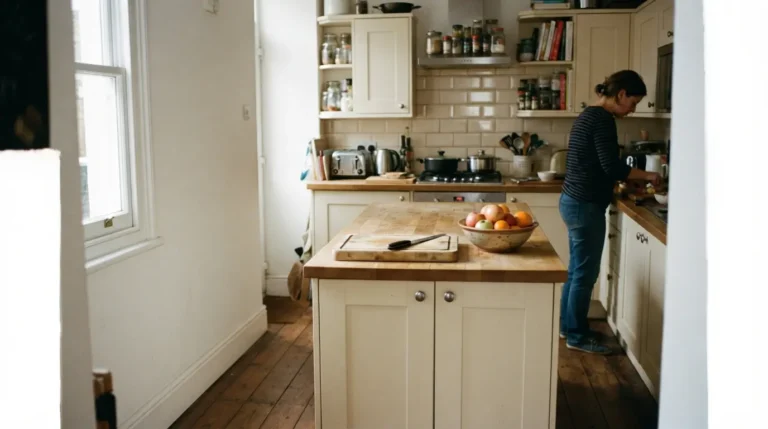
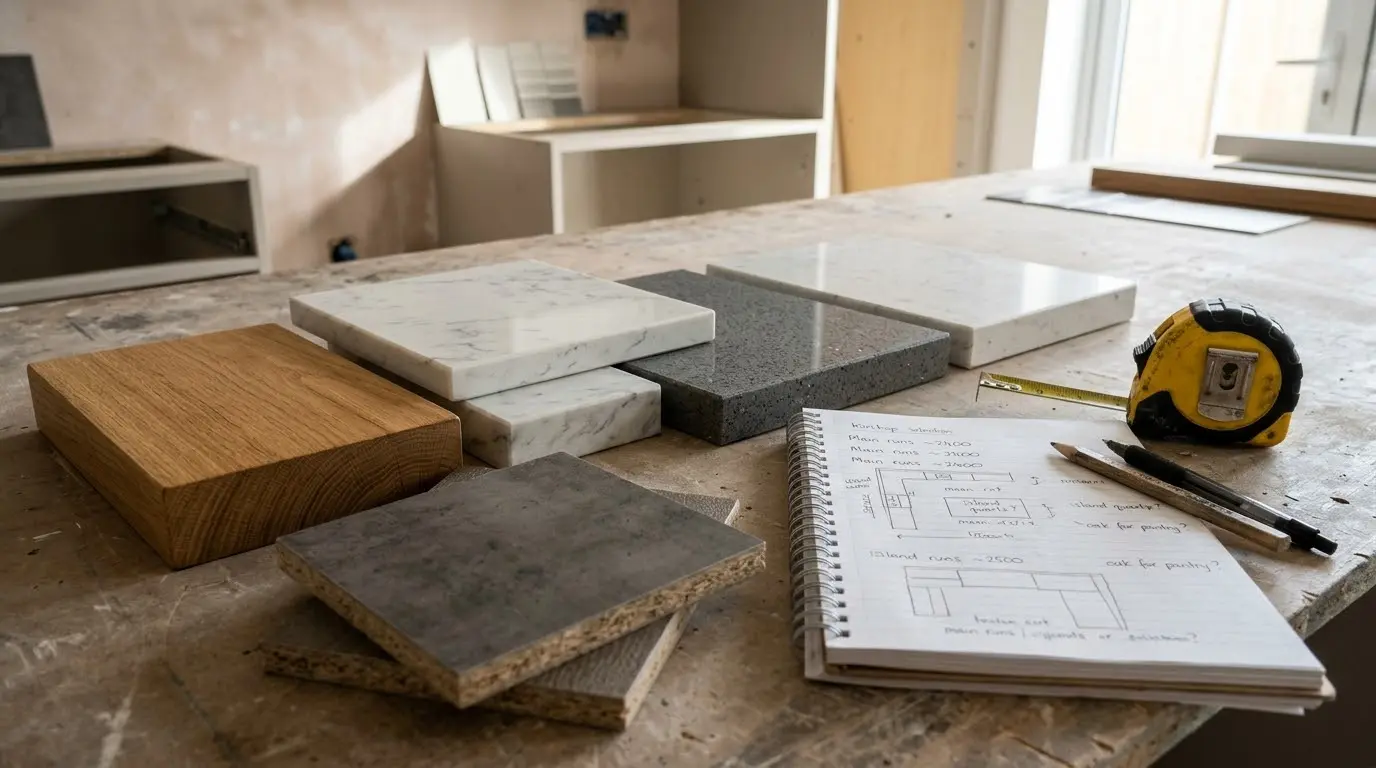
Laminate is cheapest but marks permanently with heat and cannot be repaired. Solid wood is warm and sandable but needs oiling and careful sealing at the sink. Quartz is non-porous, consistent and low-maintenance; use a trivet. Granite is unique and heat-tolerant but usually needs sealing. Solid surface allows seamless joins and integrated sinks. Current fitted prices in the UK range from around £180 per square metre for laminate up to £500-plus for quartz and higher for premium stone. A typical kitchen of 6 to 9 linear metres will reflect those differences clearly in the quote.
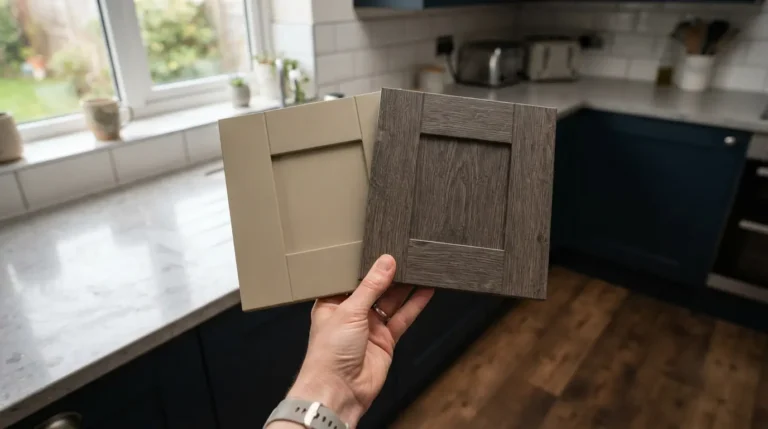
Ask for samples of the exact thickness and edge you are considering. View them in your own light at different times of day. The colour shift between shop lighting and north-facing kitchen light is often larger than people expect.
Check Sizes, Thickness and Edges
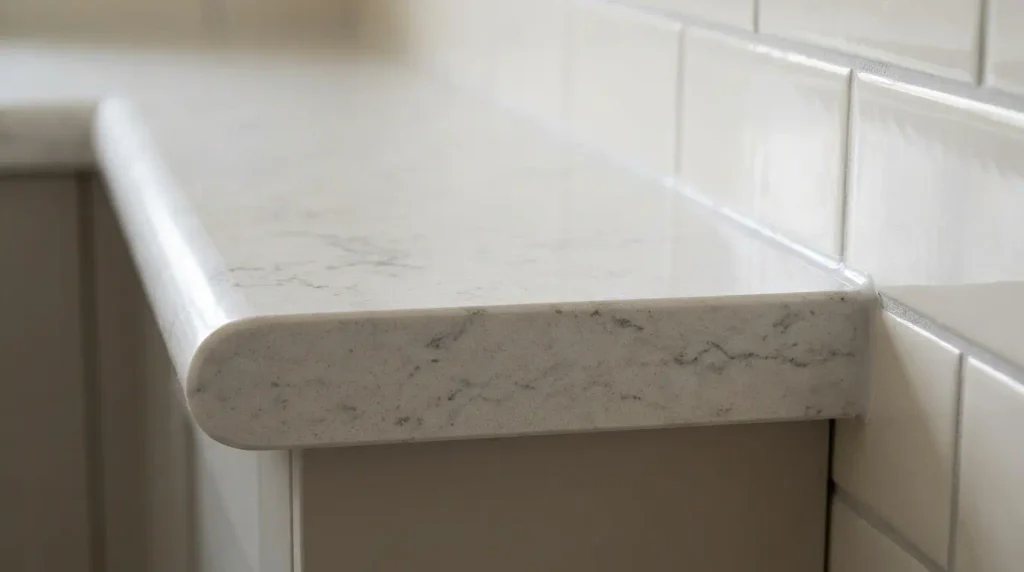
Standard worktop depth is 620 mm or 640 mm to match base units. Thickness is commonly 20 mm, 30 mm or 40 mm. Thicker profiles look more substantial but add weight and cost. Edge profiles (square, bullnose, bevelled) change the look and the price. Upstands of 100 mm protect the wall and hide the junction. Leave expansion gaps for wood and confirm the fabricator’s recommendation for stone. Sink and hob cut-outs must be accurate; a 5 mm error creates a visible gap or forces a return visit.
Measure the runs after the units are installed and level. Templating for stone and quartz is almost always done on site once the carcasses are fixed.
What to Check Before You Order
Confirm the quote includes templating, fabrication, cut-outs, upstands, edge polishing and fitting. Ask about lead time; quartz and granite often need 1 to 3 weeks after template. Check that the units can support the weight of stone. Verify the sink and hob models so the cut-outs match. For wood, ask about the oiling schedule and the sealant at the sink. For laminate, check the quality of the edge and the joint system. Get everything in writing before the deposit.
Also confirm how the installer will protect the surface during the rest of the fit. A finished worktop left uncovered while electricians and decorators work is a common source of damage.
Common Mistakes to Avoid
Ordering from a small sample without seeing a full slab. Choosing a high-gloss surface in a busy family kitchen. Forgetting the heat clearance behind the hob. Skipping the expansion gap on wood. Assuming every quartz is identical in heat tolerance. These mistakes are expensive to correct once the worktop is fitted. Take the time to match the material to the actual use of the room and the rest of the kitchen design.
If you are renovating on a budget, laminate or a well-chosen solid wood can still look intentional when the edge, colour and surrounding units are considered together.
Conclusion
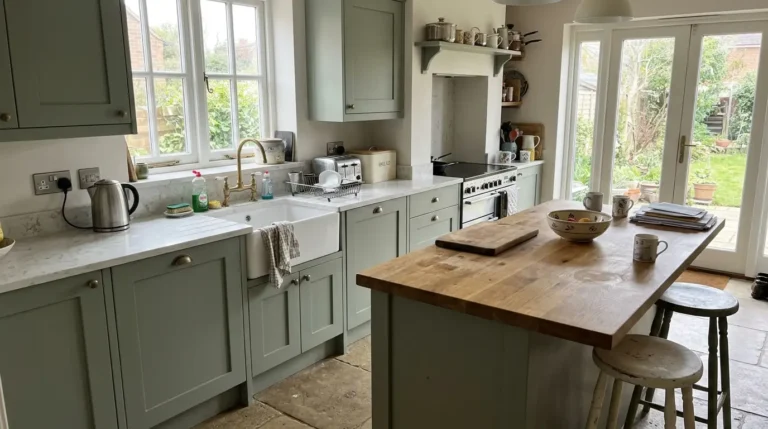
How to choose the right kitchen worktop comes down to honest assessment of your cooking habits, maintenance willingness and budget. Quartz suits most people who want durability without sealing. Wood suits those who like character and will oil it. Laminate suits tight budgets. Measure after the units are in, get an itemised quote and the surface will work for the life of the kitchen.
What is the standard kitchen worktop depth?
Most UK base units are designed for a 620 mm or 640 mm deep worktop. Confirm with your unit supplier before ordering.
Should I choose quartz or laminate?
Quartz costs more but needs almost no maintenance and lasts longer. Laminate is far cheaper but marks with heat and cannot be repaired. Choose according to budget and how long you plan to stay.
When is the worktop templated?
For stone and quartz, templating happens after the units are installed and level. Laminate can sometimes be cut from drawings but site measurement is safer.