8 Small Living Room Ideas That Make the Most of Every Inch

Small living rooms in UK homes reward careful measurement and multi-use furniture. A room of 12 to 15 square metres can still feel open if the walkway stays clear and the furniture scales correctly. Most layouts need 60 to 80 cm of clear path and 40 to 50 cm between the sofa and the coffee table. These eight ideas focus on layouts, storage and scale that work in real terraces and flats. Measure the walls, door swings and radiator positions before you rearrange or order anything.
1. L-Shaped Layout with a Compact Corner Sofa
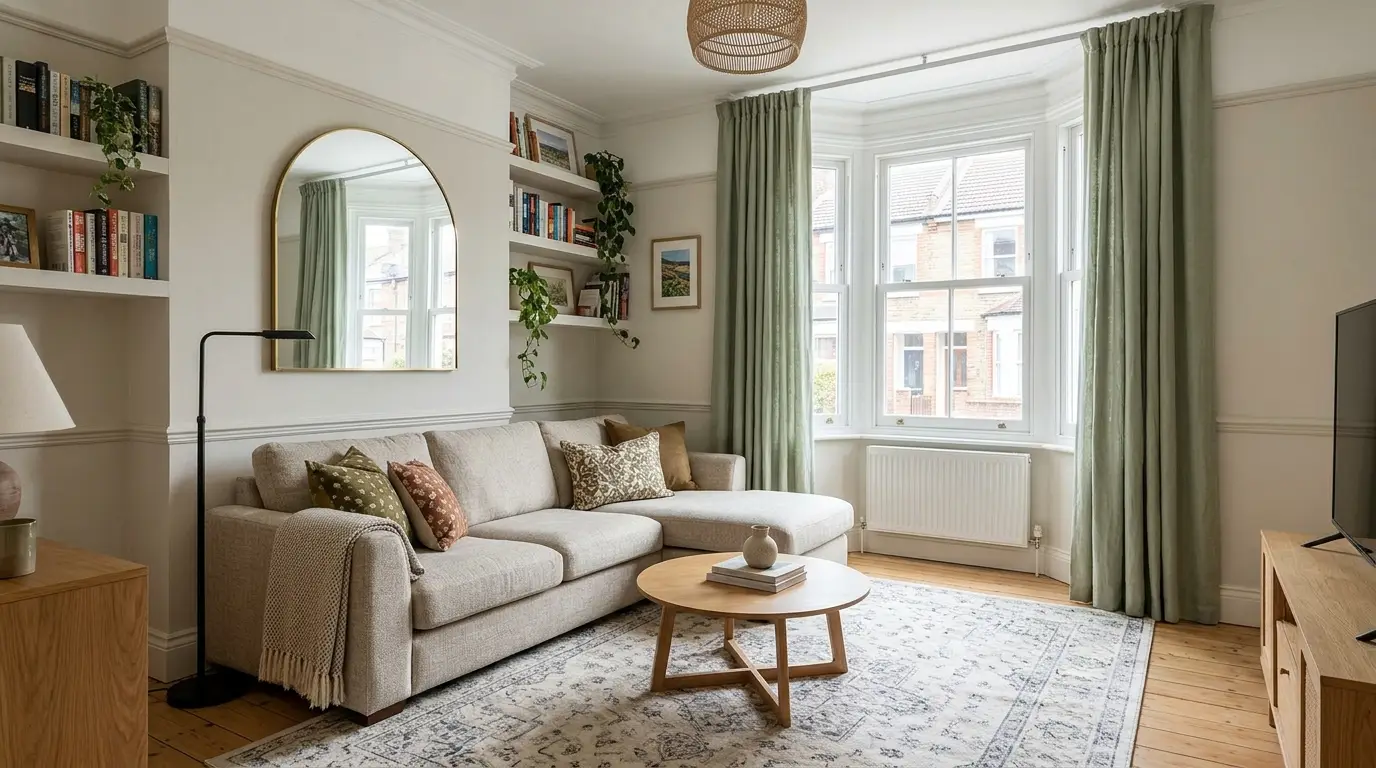
An L-shaped sofa or a standard sofa plus a matching armchair uses the corner and leaves the centre open for a table and a walkway. In rooms around 3.5 by 4 metres this layout often fits better than a straight sofa against every wall. Choose a corner sofa with a depth of 85 to 90 cm so the chaise does not block the path. The main seating faces the window or the television. Leave 60 cm clear along the main route. A round coffee table of 80 cm diameter improves flow around the seating. This arrangement defines a conversation area without filling the floor. In UK terraces the L-shape often works with the chimney breast as a natural anchor. Check that the door still opens fully once the furniture is in place. For more layout options see how to arrange furniture in a living room.
2. Floating Seating Away from the Walls
Pull the sofa and chairs 10 to 15 cm off the walls so the room feels less rigid. The small gap lets light and air pass and makes the floor look continuous. In narrow rooms this change improves the sense of space without losing seating. The main path still needs 60 to 80 cm of clearance. Use the gap behind the sofa for a slim console if the depth allows. Furniture with visible legs works best because the floor remains visible. Test the positions with masking tape before you move heavy pieces. This layout suits both period homes and modern flats. Avoid pushing every piece into the corners so the centre becomes a dead space that no one uses. The floating arrangement also makes it easier to clean behind the furniture.
3. One Large Rug to Define the Seating Zone
A single large rug that sits under the front legs of the sofa and the coffee table pulls the seating together and makes the floor look bigger. Multiple small rugs break the space into pieces. In a small living room a rug of 200 by 150 cm often works well and leaves a border of floor around the edges. Choose a light or mid-tone colour so the floor does not disappear. The rug also hides minor floor imperfections common in older UK homes. Measure the sofa and table first so the front legs land on the rug. This is one of the simplest ways to make a small room feel more intentional. Avoid rugs that are too small to reach the furniture. The continuous floor around the rug keeps the walls visible and the room open.
4. Wall-Mounted Storage and a Slim Media Solution
Wall-mounted shelves or a slim floating console free the floor that a full media unit would take. The television can mount on the wall above a narrow console of 30 cm deep. Cable management keeps the look clean. In small rooms this approach opens enough space for an extra chair or a clearer walkway. Check the wall for suitable fixings. The console can hold a soundbar and a few books. Height of the television should match seated viewing. This idea works especially well in flats where floor space is limited. Pair the wall storage with closed cupboards elsewhere so everyday clutter has a home. The floor remains open for the main seating and the path through the room.
5. Multi-Use Ottoman and Nesting Tables
An ottoman with storage and a set of nesting tables replace several pieces of furniture. The ottoman acts as a coffee table and hides throws or games. Nesting tables slide under each other when not in use so the floor stays clear. Choose an ottoman no larger than 80 by 60 cm and nesting tables that fit under a side table. Height around 40 to 45 cm matches sofa seats. Soft-close mechanisms keep the pieces practical. In small UK living rooms this combination handles occasional extra surfaces without permanent bulk. Measure the clear space after the sofa is placed so the ottoman fits with 40 cm clearance. Light colours keep the pieces from dominating. This approach works when cupboard space elsewhere in the home is limited.
6. High Curtains and a Mirror to Lift the Room
Hang curtains close to the ceiling and finish them just above the floor so the walls look taller. A large mirror opposite the window doubles the light and the view. The mirror should be at least 80 cm wide and positioned to reflect daylight rather than clutter. In small UK living rooms these two changes often make more difference than new furniture. Sheer or light fabrics keep the window area open. The high pole draws the eye upward. Place the mirror so the bottom sits around 80 to 90 cm from the floor. Clean the glass regularly so the reflection stays bright. This combination works in both sash-window terraces and modern flats. Avoid heavy dark curtains that close the room even when they are open.
7. Built-In or Fitted Storage in Alcoves
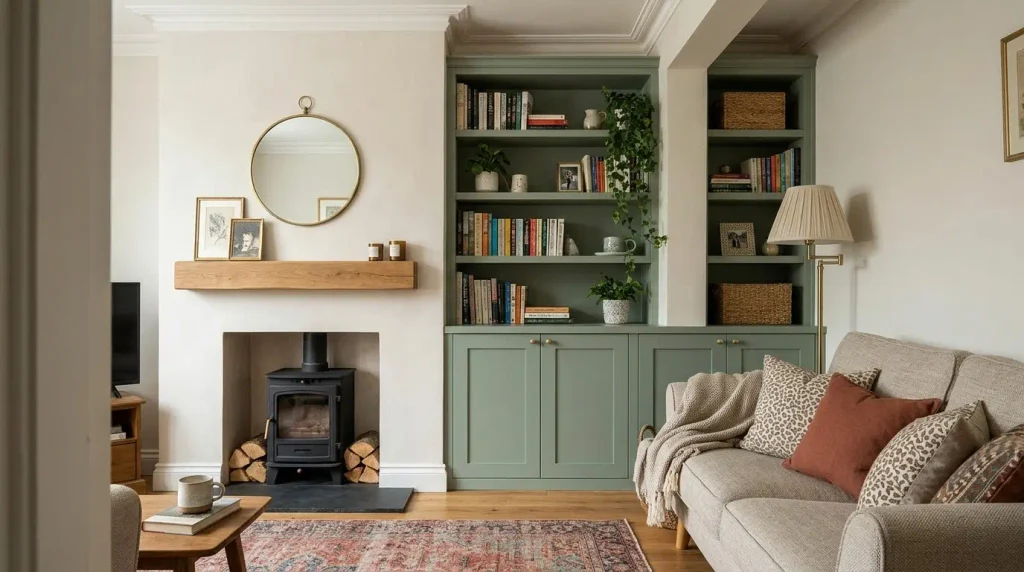
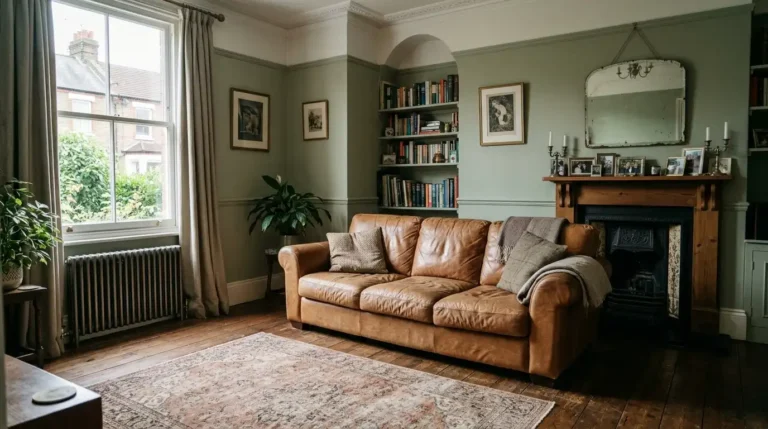
Chimney breast alcoves in UK terraces are often 80 to 110 cm wide. Fitted shelves or a slim sideboard in the alcove give storage without projecting into the room. Depth of 30 to 35 cm keeps the walkway clear. The top of the sideboard or the shelves can display a few objects. Closed doors hide everyday items. This solution looks intentional and uses space that would otherwise stay empty. Measure the alcove carefully because walls in period homes are rarely perfectly square. Leave room for skirting and any sockets. The fitted look also makes the room feel larger because the storage does not read as extra furniture. Pair it with a mirror or artwork that fills the height of the alcove.
8. Light Colour Scheme and Consistent Flooring
Light walls and a continuous floor finish make a small room feel larger because there are fewer visual breaks. Paint the ceiling the same colour as the walls to remove the hard line. A large rug in a light tone still defines the seating without chopping the floor. Consistent flooring through the doorway into the hall or kitchen extends the sense of space. In UK homes this approach works with both painted floorboards and laminate. Test paint colours in the actual light because north-facing rooms change the tone. Keep furniture light or mid-tone so it does not fight the walls. The combination of light surfaces, high curtains and a mirror creates the biggest visual lift for the least permanent change. Avoid dark accent walls in very small rooms unless the light is excellent.
Conclusion
Small living room ideas that work in UK homes start with clearances, scaled furniture and multi-use pieces. An L-shaped layout, floating seating, one large rug, wall-mounted storage, an ottoman with nesting tables, high curtains with a mirror, fitted alcove storage and a light colour scheme all free floor space while keeping the room usable. Measure the walkway, sofa depth and alcoves before you order. These eight approaches suit typical terraces and flats and make every inch count without sacrificing comfort.
What is a good sofa depth for a small living room?
Look for 85 to 90 cm deep. Deeper sofas of 95 cm or more often leave too little room for a table and a walkway in rooms under 4 metres wide.
How much space should I leave for the main walkway?
Aim for 60 to 80 cm of clear space. 40 to 50 cm between the sofa and the coffee table is usually enough for comfort in a small room.
Can fitted storage in an alcove work in a small living room?
Yes. Most UK terrace alcoves are 80 to 110 cm wide. A slim sideboard or shelves 30 to 35 cm deep fit without blocking the walkway. Measure the actual alcove first.
Does a large rug make a small living room feel bigger?
Yes if it sits under the front legs of the sofa and the table and leaves a border of floor around the edges. One large rug is better than several small ones.