How to Fit a Roller Blind in a Window Step by Step

Fitting a roller blind is straightforward once the recess depth, any handles and the exact measuring method are clear. Most UK windows take either a recess fit (inside the opening) or an exact fit (outside, overlapping the frame). The steps below cover both, with the clearances and common mistakes that cause the blind to catch or leave light gaps.
Use a metal tape measure and take three readings for width and drop. For a recess fit give the maker the smallest measurements and let them deduct for the mechanism. Our Windows & Doors section has related measuring guides.
Check Recess Depth and Obstructions First
A standard roller needs roughly 50 mm depth for a top fix or 70 mm for a face fix inside the recess. Measure the shallowest point. Window handles, tiles or air vents that stick out will catch the fabric, so either choose a narrower fabric width or use spacer brackets to bring the blind forward.
If the recess is too shallow, fit the blind outside the opening instead. This also reduces light gaps at the sides.
Measure Correctly for Recess or Exact Fit
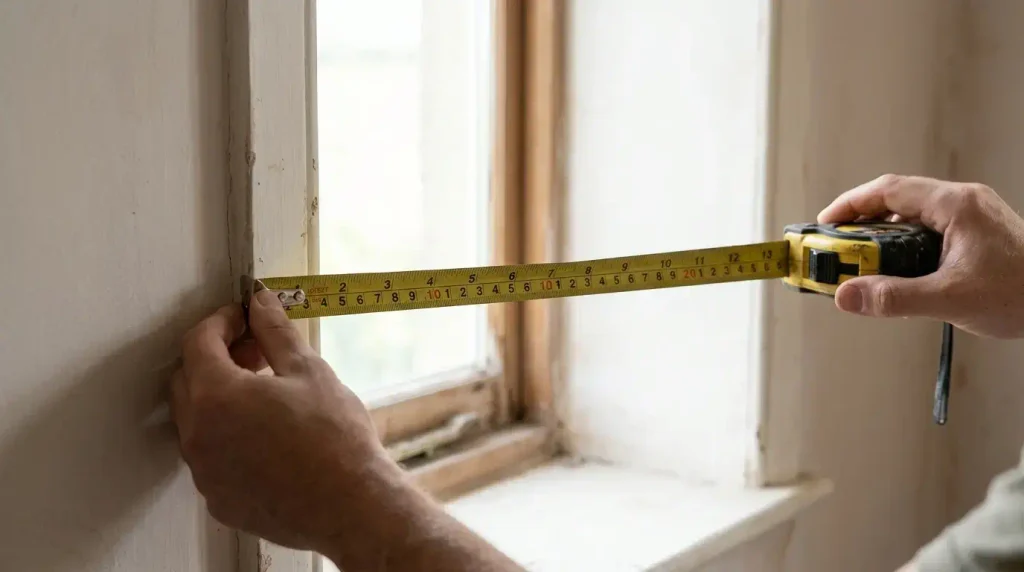
For recess fit: measure width at top, middle and bottom, take the smallest. Measure drop left, centre and right, take the smallest. Do not deduct yourself; the maker will. For exact fit (outside): measure the area you want covered and add at least 5 to 10 cm overlap on each side and enough at the top so the rolled fabric clears the opening.
Note which side you want the chain. The overall width of the finished blind including brackets is wider than the fabric by about 3 to 4 cm, which the maker accounts for on recess orders.
Mark and Fix the Brackets
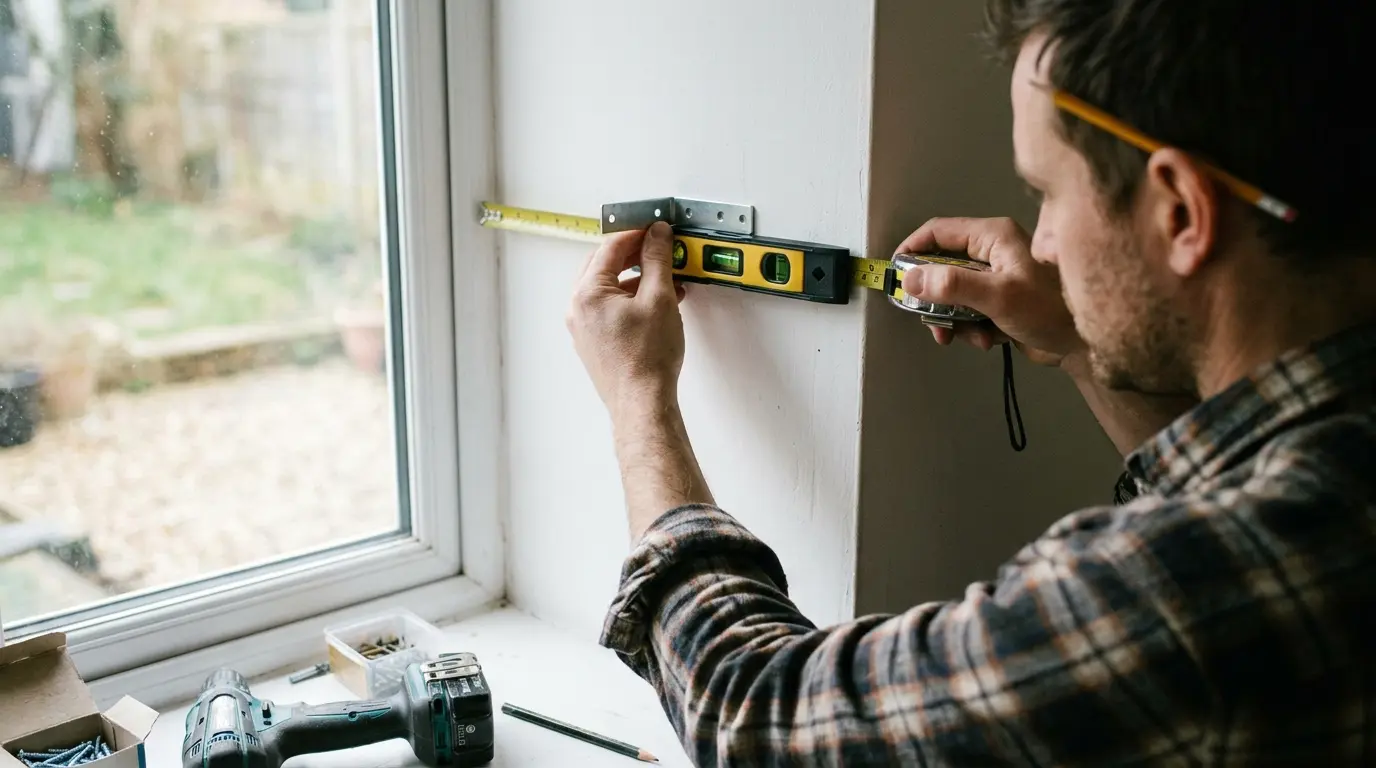
Hold the blind in position and mark the bracket holes. Use a spirit level so both brackets sit at the same height; uneven brackets cause the fabric to roll off-centre. Drill into solid masonry or use appropriate plugs for plasterboard.
For top fix inside the recess the brackets screw into the top of the opening. For face fix they go on the wall or frame above the window. Leave enough space above for the fully rolled fabric.
Hang the Blind and Test the Operation
Clip or slide the tube into the brackets. Pull the blind down fully and check it runs square and does not catch on handles. If the tension is too tight or too loose, many mechanisms allow a simple adjustment by unrolling a little fabric by hand and refitting.
Operate the chain or motor a few times to confirm smooth travel. On wider blinds (over 150 cm) have a second person help keep the fabric even when first fitting.
Common Fitting Mistakes to Avoid
Measuring only once and missing a narrower point in the recess. Using a cloth tape that stretches. Forgetting to check for handles. Fitting brackets out of level so the blind drifts. Ordering a recess size and then deducting again yourself, which leaves the blind too narrow.
On exact fits, too little overlap leaves light gaps; 5 to 10 cm each side is the practical minimum for most rooms.
Before ordering, decide whether the blind will be used mainly for privacy, glare control or both. A standard fabric filters light; a blackout fabric blocks more but still needs good side overlap or a recess that is reasonably square to reduce light leaks. Motorised versions need a power point nearby or a battery pack that can be reached for charging.
In older UK properties the window reveals are often out of square. Taking the three measurements and using the smallest prevents the blind from jamming. If the difference between the top and bottom width is more than a few millimetres, an exact (outside) fit is usually more reliable.
When marking the brackets, also check the chain will hang clear of any radiator or furniture. On a face-fix installation leave enough clearance so the rolled fabric does not hit the top of the window frame when fully raised. For very wide windows consider a dual-roller or day-and-night system if one tube would sag.
After fitting, lower the blind fully and check the bottom bar sits level. If it does not, the fabric may have been rolled unevenly; unroll it by hand, smooth it, and re-roll squarely. Child-safety devices on the chain should be fitted as supplied so the loop cannot form a hazard.
If the blind is going into a bay or a series of windows, treat each section separately so the fabric does not catch at the angles. Confirm the recess depth at every point because bays often vary.
For blackout roller blinds the side light gap on a recess fit is normal because the fabric must be narrower than the brackets. An exact fit with good overlap reduces this. In bedrooms the combination of a roller and a pair of curtains gives the best light control without relying on one treatment alone.
Tools needed are simple: metal tape, spirit level, drill, suitable screws and plugs, and a pencil. Work from a stable step if the window is high. If the wall is very soft plaster, consider longer screws or a different fixing method so the brackets do not pull out under the weight of the rolled fabric.
Once fitted, the blind should raise and lower without sticking. If the chain is stiff, check that it is not twisted and that the mechanism is correctly seated in the bracket. Most modern rollers have a simple clutch that can be reset by following the maker’s instructions.
In kitchens and bathrooms choose a fabric that can be wiped clean and confirm the blind is suitable for humid rooms. Avoid placing the blind where it will be constantly splashed. For living rooms a light-filtering fabric often works better than full blackout so the room stays bright during the day.
Always double-check the order confirmation against your measurements before the blind is made, because custom sizes cannot usually be returned.
Conclusion
Measure three times, confirm the recess depth and any obstructions, then fix the brackets level. Once those points are right the blind fits and operates without drama.
How deep does a recess need to be for a roller blind?
Around 50 mm for top fix and 70 mm for face fix, measured at the shallowest point.
Should I deduct from the measurements?
No for recess fit. Give the exact smallest measurements and let the maker deduct.
What if the window has a handle?
Measure around it or use spacer brackets so the fabric clears the handle when lowered.