8 Gallery Wall Ideas to Transform a Blank Wall

A blank wall is an opportunity rather than a problem once you choose a layout that matches the size of the space and the style of the room. These eight ideas range from simple grids to more collected arrangements and include practical notes on frame sizes, spacing and clearances so you know what to check before ordering. Whether the wall is in a hallway, bedroom or living room, the same planning steps apply. Look at our feature wall ideas for further inspiration on how the gallery can become the main focus.
1. Classic Three by Three Grid
Nine identical frames in a square grid give an ordered look that works on almost any blank wall. Use 5 cm gaps and centre the whole group at 145 cm from the floor. A3 frames with white mats suit most rooms. Measure the total footprint first so the grid does not crowd the edges of the wall. Order one sample to confirm the mat colour against your paint.
2. Single Large Anchor with Surrounding Pieces
Hang one larger statement frame in the centre and surround it with six to eight smaller frames of mixed orientations. Keep gaps at 6 to 7 cm. This salon style feels collected and works well when you already own a few favourite prints. Check that the anchor sits at eye level and that the surrounding pieces do not extend too far toward the ceiling or floor.
3. Horizontal Line of Matching Frames
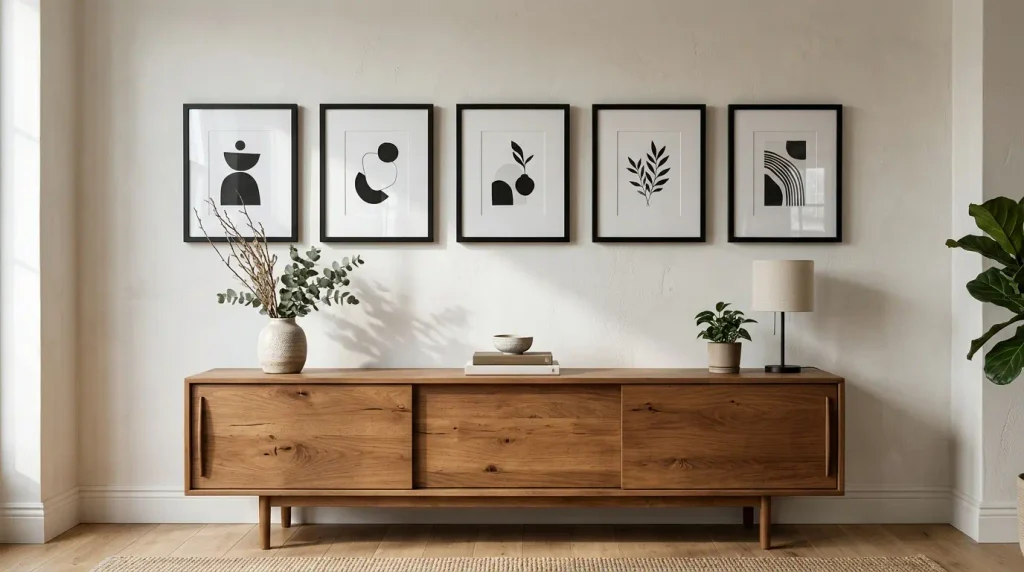
A single row of five or six frames creates a clean architectural line that suits long blank walls above furniture. Keep every frame the same height and leave 15 cm above any sideboard or console. The linear layout is forgiving if the wall is not perfectly flat because small differences in height are less noticeable in a row.
4. Vertical Column for Narrow Walls
Use three or four frames stacked vertically in a narrow space such as beside a door or between windows. This adds height without needing a wide wall. Centre the column and keep gaps consistent. Measure the clear width carefully so the frames do not feel cramped against the adjacent architecture.
5. Mixed Frame Finishes with Shared Mats
Combine black, oak and slim metal frames but keep every mat the same colour and width. The shared mat unifies the group while the different mouldings add interest. Limit the finishes to three at most. Test a sample of each finish against the wall before ordering the full set.
6. All White Mats on a Dark Wall
White mats and light frames pop against a deep or charcoal wall and make the prints easier to read. Keep the number of frames moderate so the contrast does not overwhelm the room. This approach works particularly well in bedrooms or dining rooms where the wall colour is already bold.
7. Personal Photo Collection in Uniform Frames
Fill the wall with your own photographs in identical frames and mats so the personal content feels curated rather than scattered. Mix orientations but keep the outer frame size consistent. This is one of the most straightforward ways to transform a blank wall without buying new art.
8. Small Asymmetric Cluster
Use five or six frames of different sizes arranged in a loose but balanced cluster. Start with the largest piece slightly off centre and build around it. The asymmetric look feels modern and works on walls that are not large enough for a full grid. Live with paper templates overnight so you can adjust the balance before hanging.
What to Check Before Ordering
Measure the usable wall width and height, subtract any skirting or obstacles, and calculate the total footprint of your chosen idea including gaps. Confirm frame outer sizes with the supplier and order one sample of the largest size. Check the wall type so you know which fixings to use. These steps prevent the common problem of frames arriving that do not fit the space you planned.
Conclusion
Any of these eight gallery wall ideas can transform a blank wall once the layout is measured, mocked up with templates and hung with consistent spacing. Start with the wall dimensions and the furniture or architecture around it, then choose the idea that fits those limits. The finished arrangement will look deliberate because the planning happened before the first hole was drilled.
FAQs
What is the easiest gallery wall layout?
A matching grid or a single horizontal row is the simplest to plan and hang because the spacing and heights stay consistent.
How many frames do I need for a blank wall?
Three to nine frames cover most blank walls. Smaller walls look better with fewer pieces and more breathing room.
Can I mix frame sizes on a blank wall?
Yes, provided you keep the gaps the same and include one larger piece as an anchor so the group has a clear centre.