
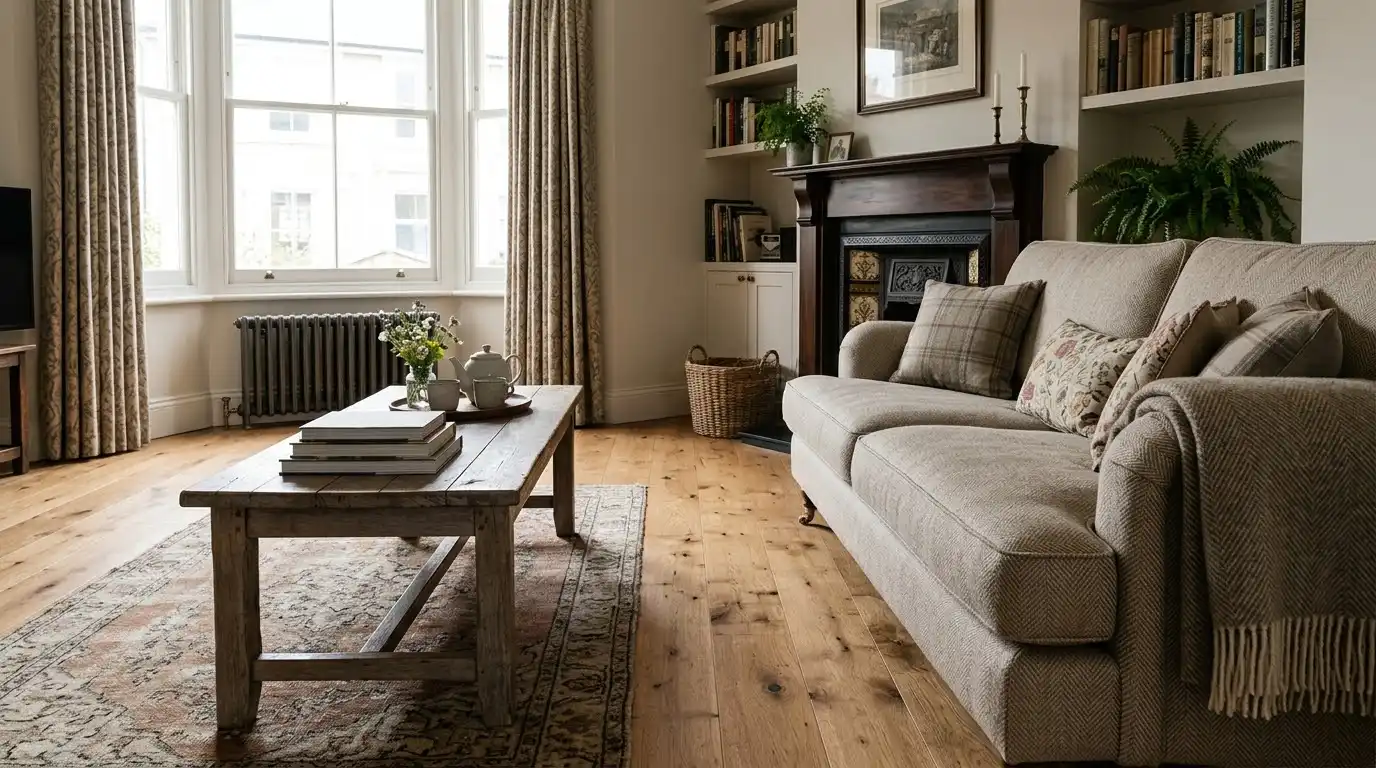
How to Choose the Right Sofa for Your Living Room

Choosing a sofa is the decision that sets the scale, the comfort and the colour of a living room for years. In most UK homes the sofa has to fit through narrow doorways, leave space for a coffee table and still seat the people who actually use the room. The right choice balances the wall length, the seat depth, the fabric durability and the clearance for everyday movement. Get those measurements right first and the style decisions become much simpler. A sofa that is the wrong size or the wrong material becomes a daily annoyance rather than the place everyone gathers.
Measure the Room and the Access Route First
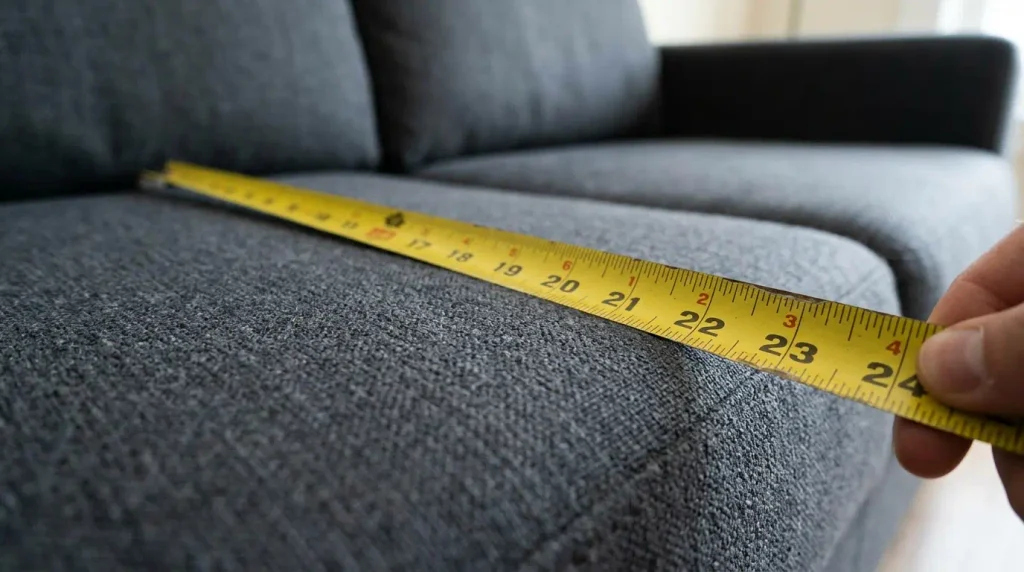
Start with the wall where the sofa will sit. Measure from corner to corner or from the nearest obstruction such as a chimney breast, radiator or doorway. Subtract 15 to 30 cm so the sofa does not look jammed against the ends. A common rule is that the sofa should occupy about two-thirds of the wall length. For a 3.6 metre wall that points toward a 2.2 to 2.4 metre sofa. Then measure the depth of the room from that wall to the opposite wall. You need at least 90 cm clear in front of the sofa for a comfortable walkway, more if two people need to pass. Add the coffee table clearance of 40 to 50 cm. Also measure every doorway, hallway and stair from the street to the room. Standard UK internal doors are 75 to 80 cm wide; many sofas will only fit if the legs come off or the piece arrives in sections. Tape the footprint on the floor and sit in the space for a few minutes to check the scale against your existing layout. Note any slopes in the floor of older terraces, because a long sofa can rock if the floor is not level.
Standard UK Sofa Sizes and What They Suit
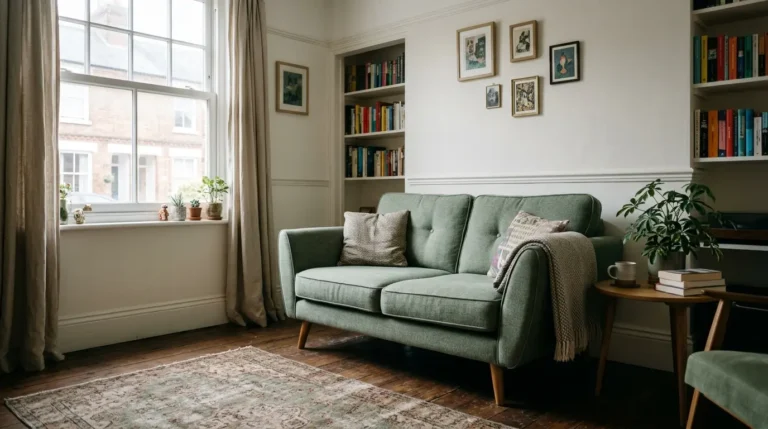
A two-seater usually measures 140 to 180 cm wide and suits smaller rooms or pairs with an armchair. A three-seater runs 180 to 220 cm and is the most common choice for family living rooms. Four-seaters and larger pieces start around 220 cm and need rooms over 4 metres wide once you leave walkway space. Seat depth is often overlooked. Most comfortable seats sit between 50 and 70 cm deep from the front of the cushion to the back. Deeper seats (90 cm or more) feel lounge-like but can make the room feel smaller and leave shorter people with their feet dangling. Seat height from the floor is typically 42 to 48 cm; higher seats are easier for older users to stand up from. Check the overall height if the sofa will sit under a window or shelves. These ranges come from UK retailers and give a practical starting point before you look at specific models. For rooms under 3.5 metres wide, a compact two-seater of 150 to 170 cm often works better than forcing a three-seater into the space.
Clearances That Keep the Room Usable
Leave 75 to 90 cm between the front of the sofa and the coffee table or the opposite furniture. Main traffic paths should be at least 80 cm wide. Keep the sofa 10 to 15 cm away from any radiator so heat can circulate and the back does not scorch. If the sofa has a chaise or reclining seats, measure the fully extended depth and make sure it does not block a doorway. In open-plan rooms the sofa can also act as a divider, but still leave a clear path from the kitchen to the seating area. These clearances are the difference between a room that feels comfortable and one where everyone constantly sidesteps furniture. Refer to how to arrange living room furniture so the sofa supports the rest of the layout rather than dictating every other piece. In bay-windowed rooms, measure the usable straight wall carefully; the curve often reduces the effective length by 20 to 30 cm.
Fabric, Leather and Construction Choices
Performance fabrics and tight weaves handle spills and pet claws better than loose linen or delicate velvet. Leather wipes clean and develops a patina, but quality full-grain or top-grain leather costs more and can feel cold in winter. Check whether the leather is protected or aniline; protected versions suit families with children. For frames, look for kiln-dried hardwood or a solid engineered wood with good joinery. Pocket-sprung seats hold their shape longer than foam alone. Removable, washable covers are worth the extra cost if the sofa will see daily use. Ask about the fire-safety rating; all UK sofas must meet the Furniture and Furnishings (Fire) (Safety) Regulations. A common mistake is choosing a beautiful fabric from a small swatch without testing how it feels after an hour of sitting or how it hides marks under your own lighting. Test samples against your flooring and existing curtains so the undertone works in both morning and evening light.
Common Mistakes and What to Check Before Ordering
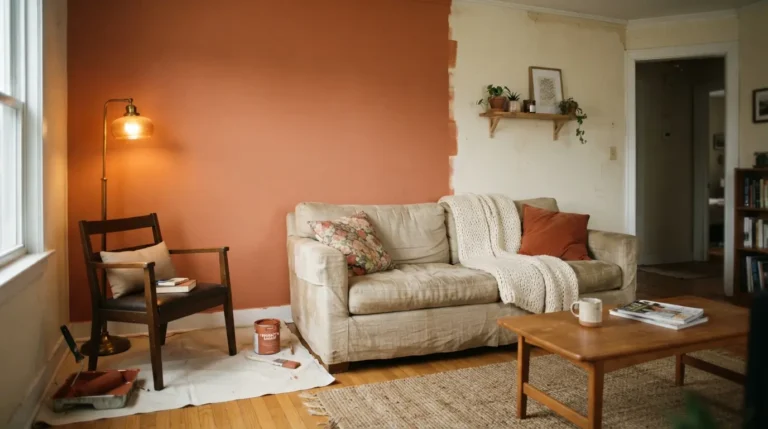
The biggest error is ordering before measuring the access route. A sofa that fits the room but will not go up the stairs is a return that costs time and money. Another frequent problem is ignoring seat depth; a deep sofa that looked perfect online feels like it swallows the room once it arrives. Check the exact assembled dimensions, the weight and whether the legs are removable. Confirm delivery options if the piece is modular. Test the fabric or leather sample in your room for several days. Ask about the guarantee on the frame and the cushions. If you are unsure about the colour against your existing paint, look at how to choose the right paint colour so the sofa and the walls work together. These checks take an afternoon and prevent most disappointments. Also confirm the return policy and whether the retailer offers a free returns collection, because sofa returns are bulky and expensive if you have to arrange them yourself.
Conclusion
The right sofa fits the wall, leaves comfortable clearances and uses a material that matches how the room is actually used. Measure the room, the access route and the clearances before you fall for a style. Check the construction and the fabric samples in your own light. With those practical steps complete, the sofa becomes the anchor that makes the rest of the living room easier to arrange and live in. Taking the time to measure twice and test samples once saves the cost and frustration of a sofa that never quite works.
FAQs
What size sofa fits a typical UK living room?
A three-seater of 180 to 220 cm wide suits most rooms of 3.5 to 4.5 metres. Always subtract walkway space and measure your specific wall before ordering.
How much space should I leave in front of the sofa?
Leave 40 to 50 cm to the coffee table and at least 90 cm for the main walkway past the seating area.
Is leather or fabric better for a family home?
Performance fabric or protected leather both work well. Leather wipes clean easily; a tight-weave performance fabric hides marks and can be more comfortable year-round.
One Comment