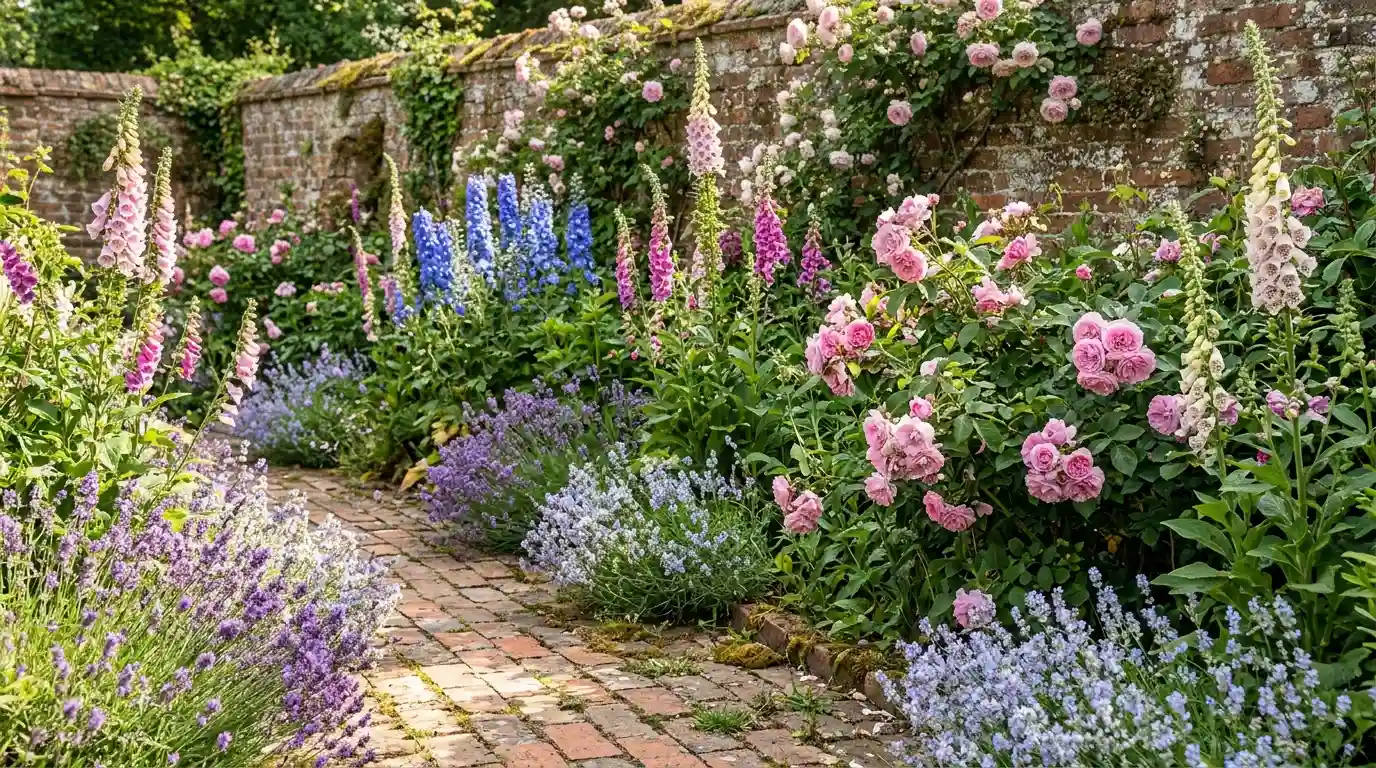
12 Cottage Garden Plant Ideas for a Romantic and Wild Look

A cottage garden thrives on dense, layered planting that looks slightly wild yet deliberate, with soft colours and plants that self-seed over time. For UK gardens this means choosing hardy perennials, biennials and climbers that cope with variable weather, group them in odd numbers, and give borders enough depth for three layers of height. The look works best against brick or stone walls, with paths that plants can spill over.
These twelve plant ideas form a practical backbone for a romantic cottage border. They cover structure, colour, scent and low maintenance once established. Pair them with a planting scheme that repeats groups along the border so the eye moves rather than stops at single specimens. Check soil drainage and aspect before ordering, as most prefer sun and reasonable drainage.
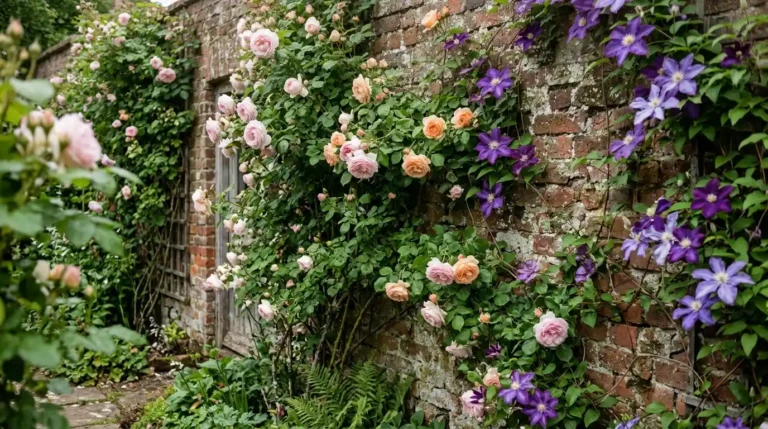
1. Climbing and shrub roses
Roses give the classic romantic structure. Choose repeat-flowering English roses such as Gertrude Jekyll or Generous Gardener for walls and arches. Plant them 1.2 metres apart at the back of a border at least 1.5 metres deep. Mulch annually and deadhead to keep flowers coming from June into autumn. Climbing forms need support wires fixed 50 mm off the wall so air can circulate. Avoid planting too deep; the graft union should sit just above soil level. Once established they need little beyond spring feed and a light prune.
For a full year-round scheme see how to plan a planting scheme for year-round colour in your garden.
2. Foxgloves for height and self-seeding
Digitalis purpurea produces tall spires of pink, white or apricot bells in early summer. They are biennial, so plant in year one and leave a few to set seed for the following year. Space 40 to 45 cm apart in the middle or back of the border. They prefer light shade and moist but not waterlogged soil. Once they appear they need almost no care beyond removing spent stalks if you want to limit self-seeding. Their height adds the vertical drama that makes a cottage border feel abundant rather than flat.
For a full year-round scheme see how to plan a planting scheme for year-round colour in your garden.
3. Delphiniums for dramatic blue spires
Pacific Giant or similar delphiniums reach 1.5 to 1.8 metres and flower in June and July. Plant in groups of three or five at the back, 40 cm apart, in full sun and well-drained soil. Stake early because the stems are heavy when in bloom. Cut back after the first flush for a possible second show. They dislike winter wet, so improve drainage on clay with grit. The strong vertical lines contrast with softer plants in front and give the border its classic English look.
For a full year-round scheme see how to plan a planting scheme for year-round colour in your garden.
4. Hollyhocks against walls and fences
Alcea rosea is the quintessential cottage biennial, with tall stems of single or double flowers in pink, white and yellow. Sow or plant 45 cm apart against a wall or fence where they can lean for support. They self-seed freely once established. Choose single-flowered forms if you want bees to reach the nectar easily. On heavy soil raise the planting area slightly to improve drainage. The plants look best when allowed to grow naturally rather than staked rigidly.
5. Hardy geraniums for front-edge spill
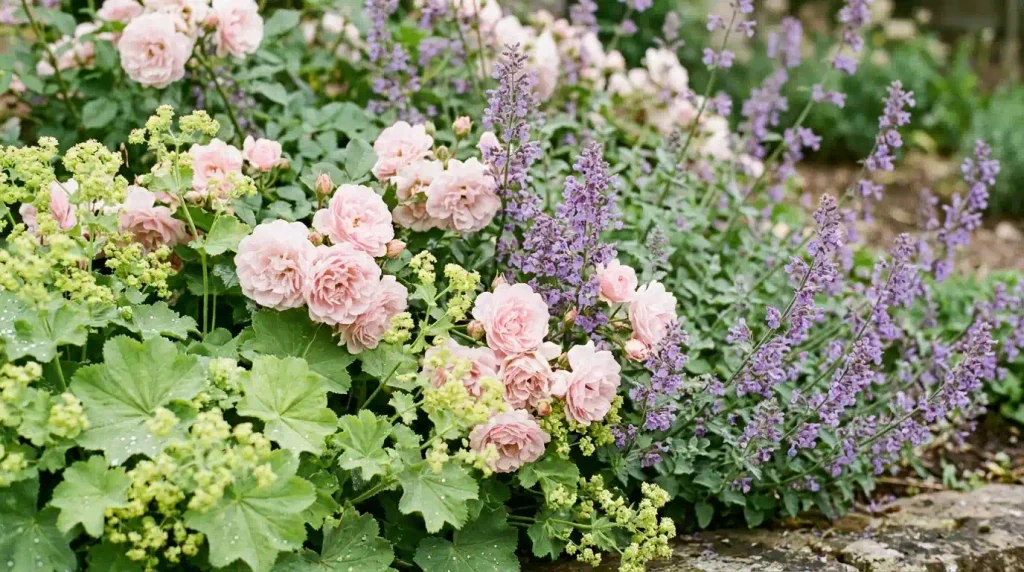
Geranium Rozanne or similar cranesbills flower for months from June and form dense clumps that spill over path edges. Plant five or more at 40 to 45 cm spacing along the front of the border. They tolerate a range of soils and need almost no staking. Cut back hard after the main flush if they become untidy and they will regrow quickly. Their long season fills gaps and softens the line between path and planting, which is essential for the informal cottage feel.
For a full year-round scheme see how to plan a planting scheme for year-round colour in your garden.
6. Lavender for scent and structure
Lavandula angustifolia Hidcote or Munstead stays compact and flowers from June to August. Plant in groups of five to seven at 40 cm apart in full sun and free-draining soil. Avoid heavy clay unless you improve it with grit. Prune lightly after flowering to keep shape, but never cut into old wood. The silver foliage and scent work well near paths where people brush past. In colder areas protect young plants in their first winter with a mulch of grit rather than organic matter that holds water.
7. Peonies for early summer romance
Herbaceous peonies such as Sarah Bernhardt open large ruffled blooms in May and June. Plant three in a group 90 cm apart in the middle layer, in sun and fertile soil. They dislike being moved once settled, so choose the spot carefully. Support the heavy flowers with circular stakes or pea sticks before they open. After flowering the foliage remains attractive. They take a couple of years to establish fully but then need little beyond an annual mulch and division every five to eight years if clumps become congested.
8. Alchemilla mollis for soft edges
Lady’s mantle produces frothy lime-green flowers and leaves that hold water droplets. Plant five or more at 35 cm spacing along the front so they tumble over the path. It self-seeds readily and tolerates partial shade. Cut back after flowering if you want to prevent excessive seeding, or leave it for the natural look. The plant fills gaps quickly and softens harder lines from paths or edging. It works in most UK soils once established.
9. Nepeta for long flowering and pollinators
Catmint such as Walker’s Low flowers from May to September and attracts bees. Plant five in a group at 40 cm apart in the middle or front. It prefers sun and well-drained soil and needs a hard cut back in midsummer to encourage a second flush. The soft grey-green foliage and blue flowers create a hazy effect that suits the romantic style. It is tough once established and rarely needs staking.
10. Verbena bonariensis for airy height
This tall, see-through perennial reaches 1.2 to 1.5 metres with purple flowers from July to October. Plant five at 45 cm apart so other plants can be seen through the stems. It self-seeds freely in mild areas. Stake lightly if the site is windy. The airy habit prevents the border looking heavy and extends the flowering season into autumn. It prefers sun and reasonable drainage and is easy from seed.
For a full year-round scheme see how to plan a planting scheme for year-round colour in your garden.
11. Aquilegia for spring self-seeding
Granny’s bonnets flower in May and June and then set seed that appears the following year. Scatter seed or plant in groups in the middle layer. They tolerate partial shade and most soils. Leave some to seed naturally for the wild look, or deadhead if you prefer control. The flowers come in soft pinks, blues and whites that fit the cottage palette. Once established they need almost no attention beyond removing old leaves in autumn.
12. Clematis and honeysuckle for vertical scent
Climbing clematis such as Montana or summer-flowering forms, plus honeysuckle, cover arches, fences and pergolas. Plant them with their roots in shade and heads in sun, at least 15 cm away from walls. Provide support and train new growth. Water well in the first year. The scent of honeysuckle near a seating area or path makes the garden feel more romantic after dark. Choose varieties that suit your pruning group so you do not cut off next year’s flowers by mistake.
Conclusion
These twelve plants create the layered, soft and slightly wild look that defines a cottage garden when planted densely in groups and allowed to self-seed. Give borders enough depth, improve drainage where needed, and repeat the key plants so the planting feels intentional rather than random. Once established the combination needs less work than a formal border yet delivers flowers and scent for most of the year. Start with the structural roses and climbers, then fill with the perennials that spill and seed.
FAQs
What is the best time to plant a cottage garden border in the UK?
Autumn is ideal for most perennials and roses so roots establish before summer. Spring works for tender or bare-root plants if you water well in the first season. Avoid planting in frozen or waterlogged soil.
How deep should a cottage border be?
Aim for at least 1.5 to 2 metres so you can layer tall plants at the back, medium in the middle and low spillers at the front. Narrower borders cannot achieve the full romantic effect.
Do cottage garden plants need a lot of maintenance?
The first two years need more weeding and watering. After that self-seeding and dense planting suppress weeds. Annual mulch, light staking of tall plants and selective deadheading keep the look going with modest effort.