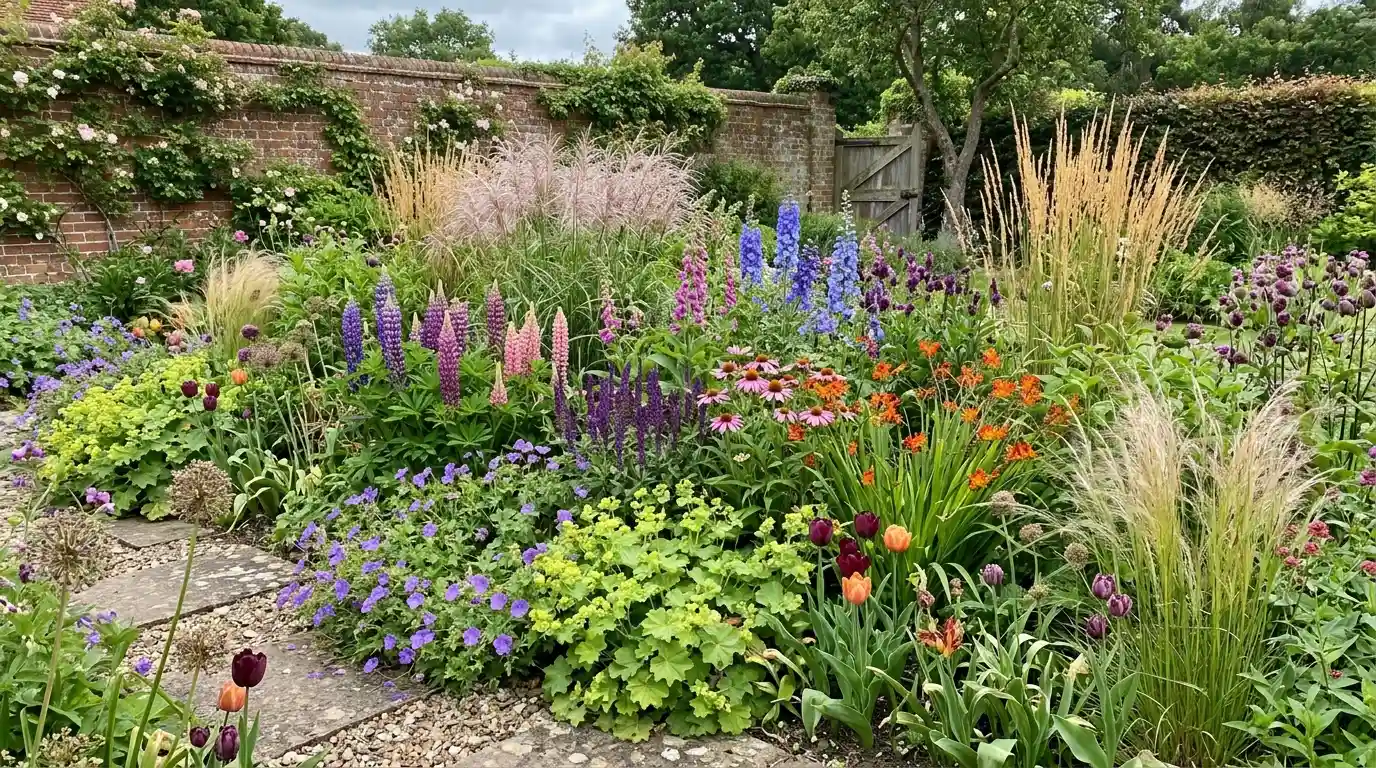
How to Plan a Planting Scheme for Year-Round Colour

A planting scheme that gives colour all year starts with a clear list of plants for each season and a layout that lets them perform without crowding. Spring, summer, autumn and winter each need something of interest, whether flowers, foliage, stems or seed heads.
Assess the light, soil and space first. Then choose reliable plants for each season and arrange them in layers. A simple seasonal calendar shows gaps before you buy. For outdoor structure ideas that complement planting see how to plan and install garden lighting.how to plan and install garden lighting
Assess the Site and List Seasonal Performers
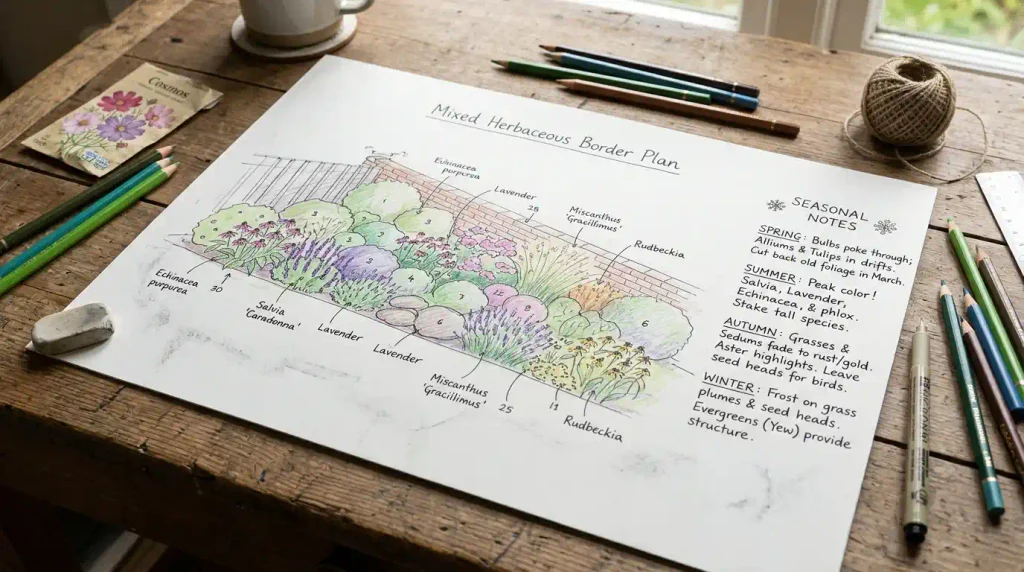
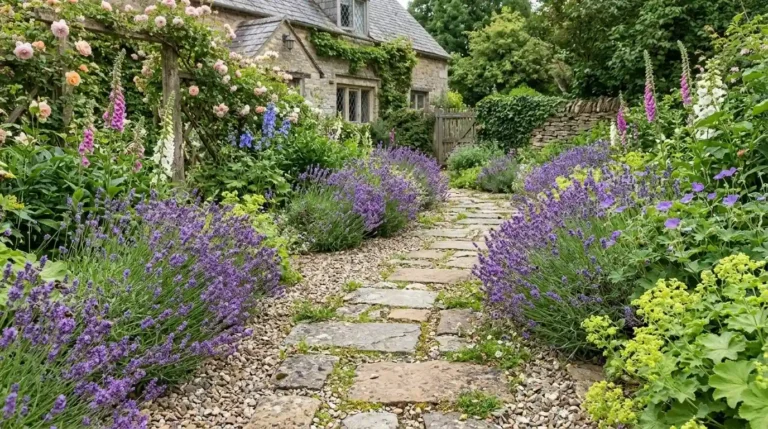
Note hours of sun, soil type and any dry or wet spots. South-facing borders suit many flowering perennials. Shady borders need foliage plants and shade-tolerant flowers. List plants for spring (bulbs, early perennials), summer (main flowers), autumn (late flowers, berries, seed heads) and winter (evergreens, stems, bark). Aim for at least two or three performers in each season.
Build Layers and Repeat Key Plants
Tall plants at the back, mid-height in the middle, low plants at the front. Repeat the same plant several times so the scheme feels unified. Include foliage plants that look good for months as well as short-flowering stars. Leave space for growth so nothing is smothered in year two.
Fill the Seasonal Gaps
If summer is strong but spring is thin, add early bulbs under the perennials. If autumn lacks interest, include plants with good seed heads or late flowers such as asters or grasses. Winter structure comes from evergreen shrubs, dogwood stems or ornamental grasses left standing. A few well-chosen plants in the weak seasons make the whole year better.
Maintenance That Keeps Colour Going
Deadhead regularly to prolong flowering. Cut back early performers so later plants have room. Mulch annually and divide overcrowded clumps. Leave some seed heads for winter interest and birds. The scheme improves as you edit it each year based on what actually performed.
Conclusion
Year-round colour comes from deliberate choice rather than buying whatever looks good in the garden centre that week. List the seasons, choose plants that match the site, and arrange them in layers. The result is a border that has something to look at in every month.
What plants give winter interest?
Evergreen shrubs, plants with coloured stems such as dogwood, ornamental grasses left standing, and early bulbs. A few of these stop the border looking empty from November to March.
How many plants do I need per season?
Aim for several plants that perform in each season so one failure does not leave a gap. Two or three reliable performers per season is a practical minimum for a medium border.
Can I add colour with annuals?
Yes, annuals fill gaps while perennials establish and give extra summer colour. Use them as temporary fillers rather than the main structure.