
12 Spa Bathroom Ideas to Create Your Own Home Retreat

A spa bathroom is less about marble and more about how the room behaves once the door closes. The best home retreats control light, temperature, scent, texture and clutter so the space supports slow rituals rather than just storage for towels. These twelve ideas focus on what actually changes the feel of a UK bathroom without assuming unlimited space or budget.
1. Start with a Freestanding Bath as the Focal Point
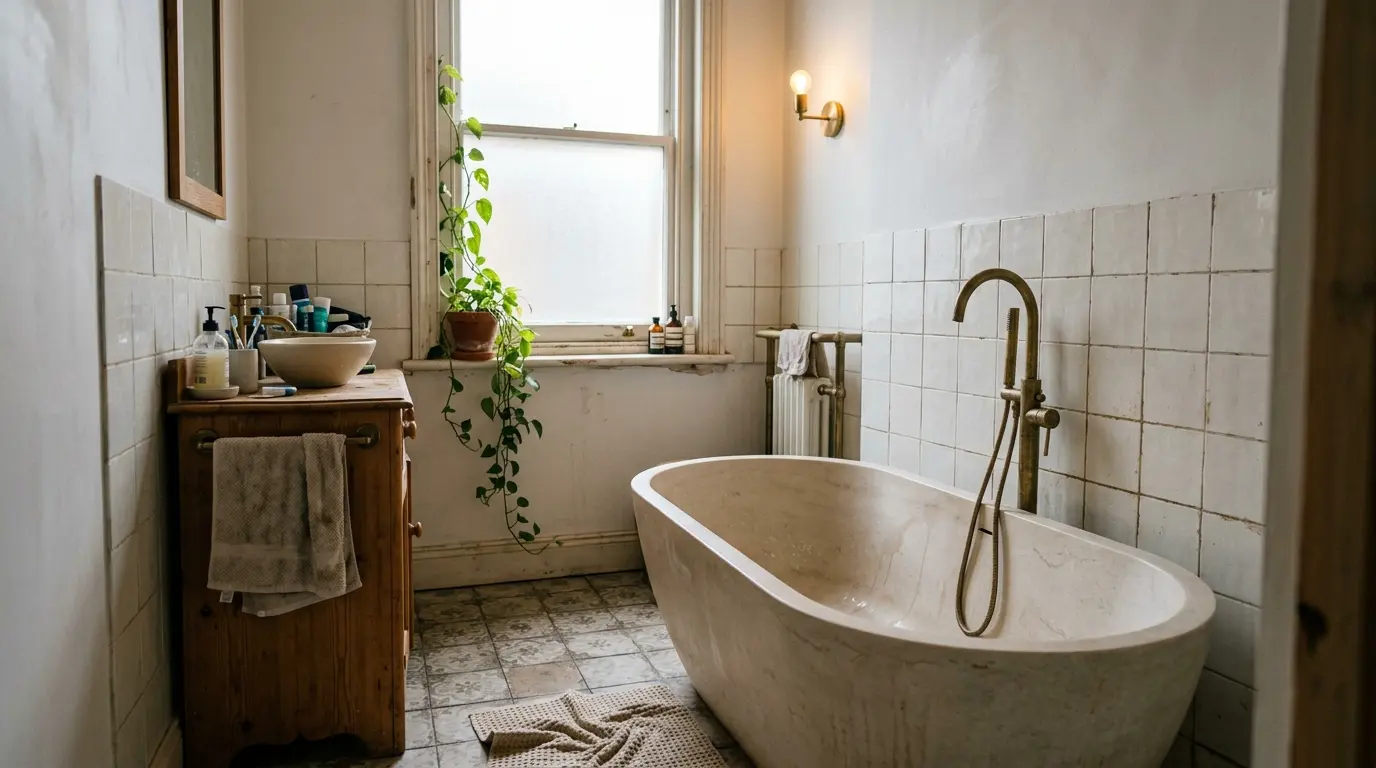
A freestanding bath immediately signals that the room is for soaking rather than quick showers. In British homes the practical issue is usually floor space and access for installation. Measure the clear area around the bath for at least 600 mm of walking space on the sides you will use, and check the floor can take the weight once filled. Stone or solid surface baths look more spa-like than acrylic, but they cost more and need careful handling during delivery. Pair it with a freestanding tap so nothing interrupts the silhouette. If your bathroom is small, a compact freestanding model still works better than a built-in bath for the retreat effect. See our guide on bathroom layout ideas for how this fits with other fittings.
2. Upgrade to a Rainfall or Dual Shower
A large rainfall shower head changes the experience more than almost any other single purchase. It spreads water rather than jetting it, which feels closer to a spa. Many UK homes need a pump or a thermostatic mixer that can handle lower pressure, so check your system before ordering. Add a handheld for practical washing. Built-in niches or a slim bench make the shower usable for longer sessions without feeling like a wet room afterthought. Pair this with a glass screen that goes nearly floor to ceiling to keep the room open.
3. Soften the Lighting
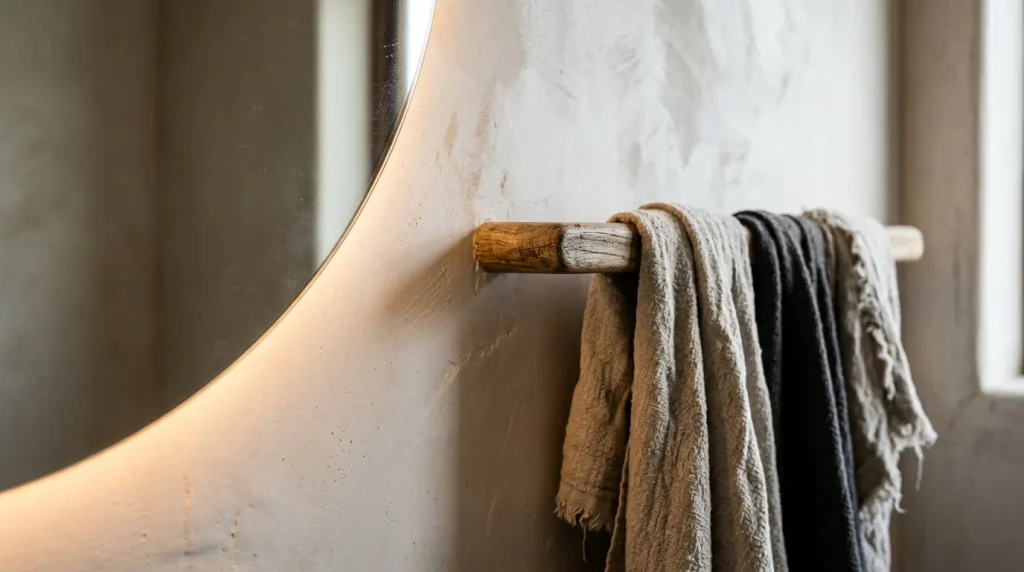
Harsh overhead downlights kill the spa mood. Layer three types of light: a dimmable main source, wall lights at face height for the mirror, and low-level or cove lighting for evening use. Warm colour temperature around 2700K works better than cool white in a retreat bathroom. Waterproof LED strips behind a mirror or under a floating vanity add glow without extra fittings. The practical test is whether you can see well enough to shave or apply product while the main lights are dimmed. Our article on how to create a spa bathroom on a budget covers simple swaps that achieve this.
4. Bring in Natural Materials and Texture
Stone, timber, linen and unglazed tiles all reduce the clinical feel of a standard UK bathroom. A timber vanity or open shelves in oak or ash warm the room instantly. Avoid high-gloss surfaces everywhere; they reflect light harshly and show every water mark. A textured plaster finish or limewash on one wall adds depth that paint cannot match. Keep timber sealed properly in a wet zone so it does not swell. The combination of matte stone and warm wood is the look most designers use when they want the room to feel considered rather than showroom.
5. Add Living Greenery
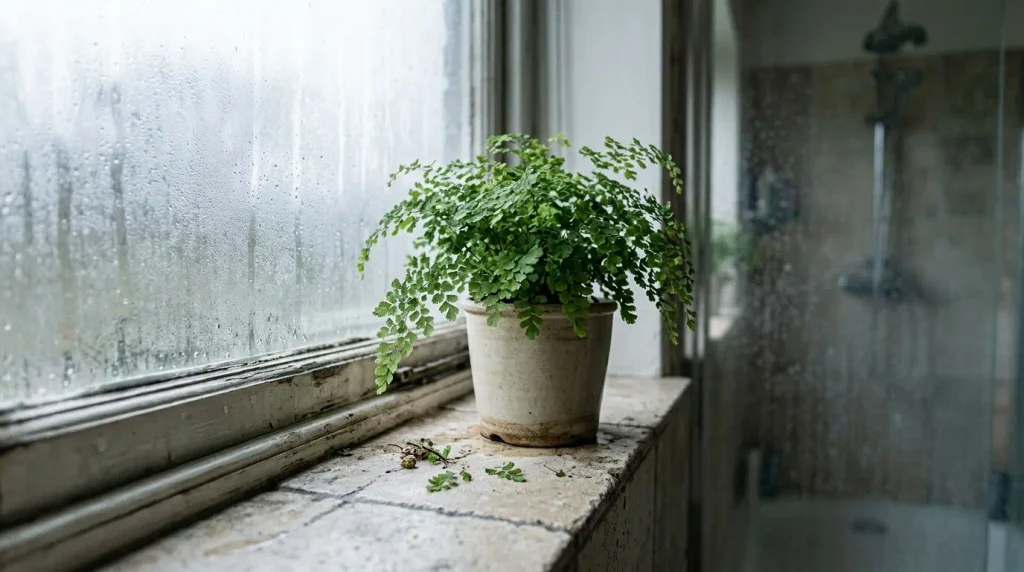
Plants improve both air and atmosphere. Choose species that tolerate humidity and lower light, such as ferns, peace lilies or trailing pothos. Place them on a windowsill, on open shelves, or in a hanging planter away from direct spray. A single large plant in a corner does more than many small ones. Avoid soil that stays permanently wet; use well-draining pots and empty saucers after watering. Botanical prints or a subtle wallpaper can support the greenery without adding more living plants if light is limited.
6. Create Dedicated Storage that Stays Hidden
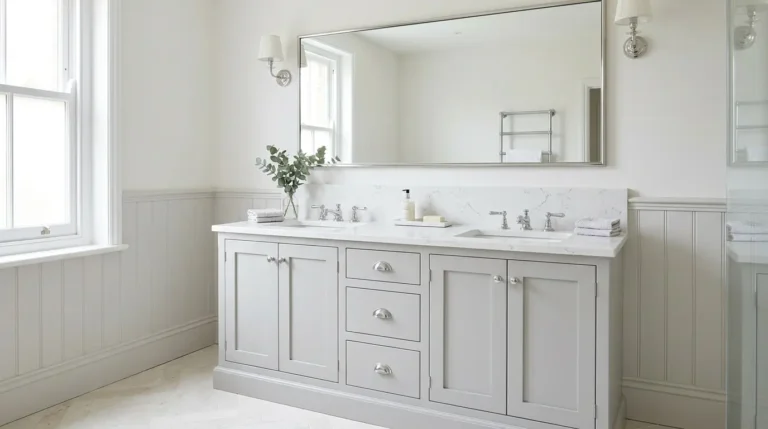
Clutter is the opposite of a retreat. A vanity with deep drawers, a tall slim cabinet, or recessed niches keep products out of sight. Hooks and rails for towels free up surfaces. The goal is that the room looks calm even when it is in daily use. In smaller British bathrooms a wall-mounted vanity with storage underneath often works better than a pedestal basin. Check our bathroom storage ideas for layouts that keep everything reachable without visual noise.
7. Choose Calming Colours with Intent
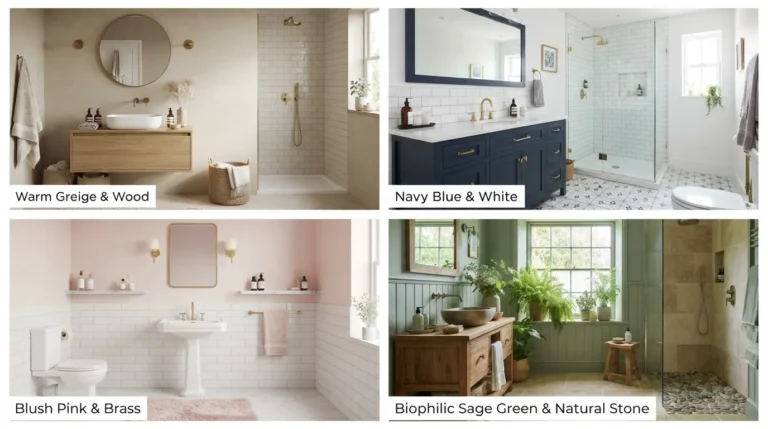
Soft greens, warm greys, deep navy and warm whites all appear regularly in spa-inspired bathrooms. The colour needs to work with the light the room actually gets. North-facing bathrooms benefit from warmer undertones so they do not look cold. Test large samples because bathroom lighting is rarely the same as the shop. Moisture-resistant paint is essential; standard emulsion fails quickly. Darker colours can feel enveloping and luxurious when the lighting is layered, but they need good task lighting around the mirror.
8. Install Underfloor Heating or a Heated Towel Rail
Warmth underfoot is one of the most noticeable spa upgrades. Electric underfloor heating mats are straightforward to retrofit in many UK bathrooms and can be controlled by a timer so they run only when needed. A heated towel rail keeps towels dry and adds gentle background warmth. Both reduce the shock of stepping out of a hot shower into a cold room. Factor in the cost of a qualified electrician if the circuit needs upgrading.
9. Add Scent and Soft Textiles
A reed diffuser or a few drops of essential oil on a warm towel rail change the first impression of the room. Lavender, eucalyptus and soft citrus are common choices. Thick cotton or linen towels, a bath mat that is not thin and shiny, and a linen robe hung on a hook all add the tactile side of a retreat. These are low-cost changes that support the larger fittings. Replace thin hotel-style towels with heavier ones; the difference is immediate.
10. Use Mirrors Thoughtfully
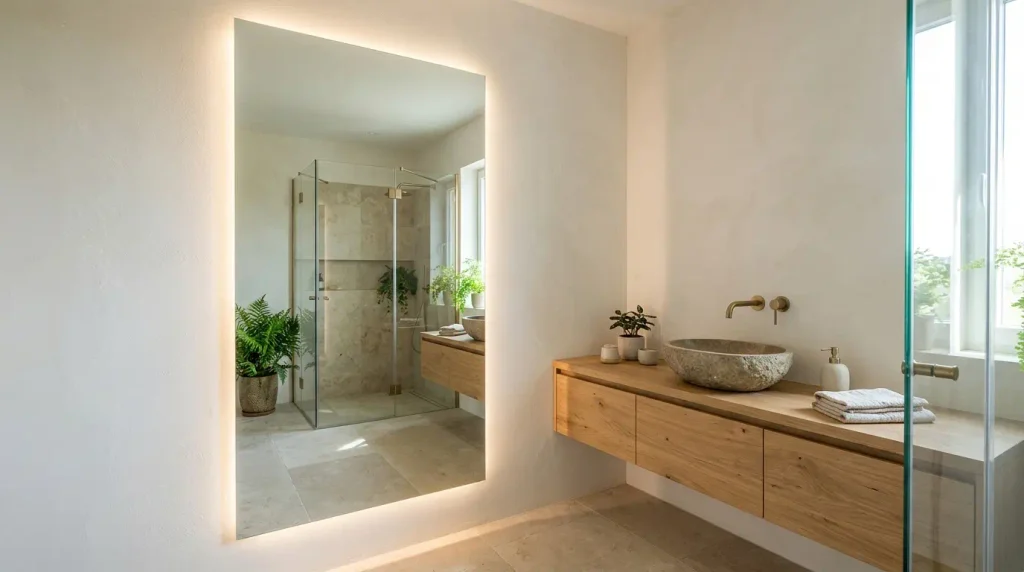
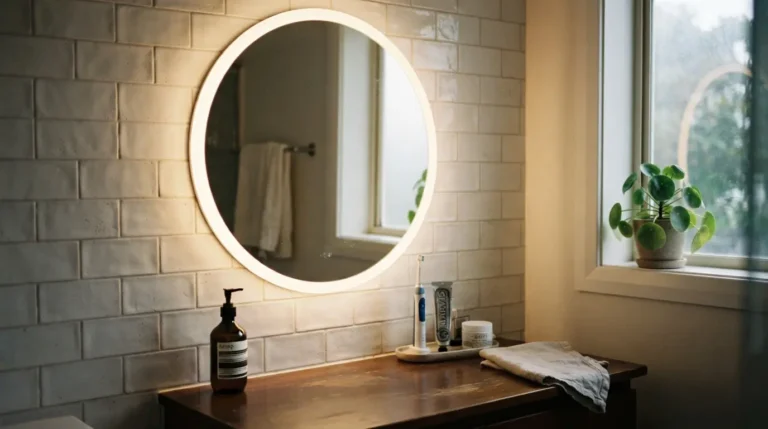
A large mirror expands the sense of space and bounces light. Frameless or thin-framed mirrors look cleaner in a spa setting. Backlit mirrors combine function and atmosphere. Place the mirror so it does not reflect the toilet or the most cluttered corner. In a small bathroom a full-height mirror on one wall can make the room feel larger without adding fittings.
11. Consider a Wet Room or Open Shower
Removing the shower tray and screen entirely creates a more continuous, spa-like floor plane. Proper tanking and drainage are non-negotiable in UK wet rooms; poor installation leads to leaks that are expensive to fix. The visual reward is a room that feels larger and less compartmentalised. A linear drain or discreet gulley keeps the floor clear. This is a higher-cost idea and usually needs a plumber and tiler who specialise in wet rooms.
12. Finish with Small Ritual Details
A wooden stool or low bench, a tray for bath products, a small clock or speaker for ambient sound, and a place to hang a robe all support the idea that the bathroom is a place to stay rather than pass through. These details cost little but signal intent. Avoid filling every surface; leave some empty space so the room still feels calm after a week of normal use.
Conclusion
A home spa bathroom is built from decisions that control atmosphere and reduce friction. Prioritise the bath or shower experience, the lighting, and the removal of clutter. Natural materials and greenery support the feeling without requiring a full renovation. Most of the ideas above can be staged: start with lighting, textiles and storage, then move to larger fittings when budget allows. The result should feel calm on an ordinary Tuesday evening, not only when it is styled for photos.
What is the most important feature for a spa bathroom?
Lighting and temperature control usually matter more than any single fitting. A freestanding bath or rainfall shower helps, but the room only feels like a retreat if you can dim the lights and step onto a warm floor.
Can a small bathroom feel like a spa?
Yes. Focus on a good shower, hidden storage, layered lighting and one natural material. Remove unnecessary items from surfaces. Many small UK bathrooms become more relaxing once the visual clutter is reduced and the lighting is softened.
How much does it cost to create a spa-style bathroom?
A basic refresh with lighting, textiles, paint and storage can be done for a few hundred pounds. Adding a freestanding bath, underfloor heating or a wet room moves into the low thousands and higher, depending on existing plumbing and electrics. Costs vary widely by region and specification.
Which colours work best in a spa bathroom?
Warm neutrals, soft greens and deeper navy or charcoal all work when paired with good lighting. Avoid stark pure white if the room feels cold. Always test samples in the actual bathroom at different times of day.

One Comment